
As a robot, it is inseparable from the treatment and treatment of treatment, but do you really understand the treatment accuracy? Today, the publisher brings you a detailed interpretation of the treatment accuracy!
Treatment accuracy is the degree of actual size, shape and position of the part of the parts after treatment. The ideal geometric parameters are the average size of the size; The deviation value of real geometric parameters and the ideal parts of the parts is called treatment errors.
Introduction to the precision of treatment
The treatment accuracy is mainly used for the degree of production products. The treatment accuracy is measured with a level of tolerance. The high precision of treatment is small, that is to say that the processing error is small and vice versa.
The level of tolerance has a total of 20 from IT01, IT0, IT1, IT2, IT3, IT3 to IT18.
The real parameters obtained by any machining method will not be absolutely precise.
The difference between precision and precision:
1. Precision
Refers to the approximation of measurement results and real values. The high precision of the measurement means that the system error is low.
2. Precision
Refers to reproducibility and consistency between the results obtained using the same spare sample for a repeated measurement. It can be high, but precision is inaccurate. For example, the three results obtained by the 1 mm measurement are 1.051 mm, 1.053 and 1.052 respectively.
The accuracy represents the accuracy of the measurement result, the accuracy representation represents the repetition and the reproduction of the result of the measurement, and the accuracy is the prerequisite for precision.
Related contents
1. Size precision
Referring to the degree of consistency of the actual size of the parts and the tolerance area the size of the parts after treatment.
2. Precision of the shape
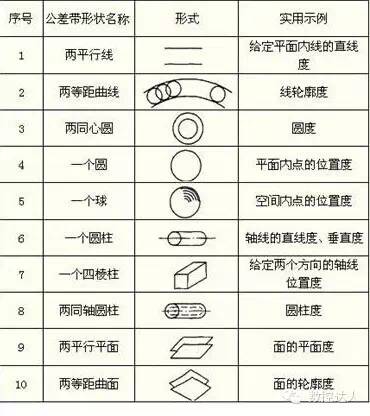
Makes the degree of consistency of the real geometric shape of the surface after treating the parts with the ideal geometric shape.
3. Position precision
Referring to the difference in real position accuracy between the surface of the parts after treatment.
4. Mutual relationship
When designing the machine’s parts and the treatment of treatment of the prescribed parts, it should be noted that the form error must be controlled in the position tolerance and that the position error must be less than tolerance of size. In other words, the large surface of precision parts or parts.
How to improve treatment accuracy
1. Adjust the craft system
Test cutting method adjustment
By test -cut -cup the size of the knife -Cutant the knife -Cutant -Esture cut yourself, so that it reaches the required size. This method has low production efficiency and is mainly used for small -scale production.
Adjustment
Get the required size by adjusting the relative positions of machine tools, lighting, parts and tools in advance. This method has high productivity and is mainly used in large quantities.
2. Reduce machine-tool errors
1) Improve the manufacturing accuracy of the pin component
Return precisely to bearings:
① Use rolling bearings with high procedure;
② Use the Multi-Pétrolière high multi-procion to move the final;
③ Use a high precision static pressure bearing
The accuracy of rolling phase accessories must be improved:
① Improve the precision of treatment of the box support holes and the axle of the spindle;
② Improve the surface treatment accuracy with rolling;
③ Measuring and adjusting the rating beats of the corresponding parts to compensate or compensate for the errors.
2) Appropriate property on the bearing bearing
① Eliminate gaps;
② Increase the rigidity of the bearing;
Mase rolling errors.
3) Precision of the spindle rotation from reflecting the room.
3. Reduce the transmission error of the transmission chain
1) The number of transmission parts is low, the transmission chain is short and the transmission accuracy is high;
2) The use of speed transmission (i <1) is an important principle to guarantee the accuracy of the transmission, and the smaller the transmission of the transmission, the smaller the transmission ratio;
3) The accuracy of the final parts must be greater than that of the other parts of transmission.
4. Reduce the wear of tools
Before the size of the knife size is worn, it must be crushed again
5. Reduce the deformation of the force of the craft system
Hand of:
(1) Improve the rigidity of the system, in particular to improve the rigidity of low links in the process system;
(2) Reduce the load and its modifications.
Improve system rigidity:
(1) reasonable structural design
1) Minimize the number of connection plans as much as possible;
2) prevent the emergence of low -rigmed local links;
3) The structure and form of cross section of the basic parts, the support parts must be reasonably selected.
(2) Improve the rigidity of exposure to the connection surface
1) Improve the quality of the parts between the parts of the machine tool;
2) Put loads to the components of the machine tool;
3) Improve the precision of the reference surface of the part and reduce its surface roughness value.
(3) Adopt a reasonable way to install and position
Reduce the load and its modifications:
(1) Reasonably select the geometric parameters and the cutting dose of the tool to reduce the cutting force;
(2) The group of raw embryos, try to evenly adjust the amount of machining in the middle of the hair.
6. Reduce thermal deformation of the process system
(1) Reduce the heat source for heat sources and isolation heat sources
1) Use a smaller quantity of cutting;
2) When the precision requirements of the parts are high, separate the approximate processing process;
3) separate as much as possible the heat source of the machine to reduce the thermal deformation of the machine tool;
4) For the heating source which cannot be separated from the spindle bearing, the screw nut, auxiliary rails of high -speed motion, etc., improve its characteristics of friction of the structure, lubrication and lubrication and lubrication and lubrication other aspects, reduce thermal or thermal insulation material;
5) Use heat dissipation measurements cooled by coercive air.
(2) balanced temperature field
(3) Adopt a reasonable machine tool structure and an assembly reference
1) Use the thermal symmetrical structure – in the gearbox, the symmetrical arrangement of the tree, the bearing and the transmission pinion can increase evenly to the temperature of the box, and the deformation of the box is reduced;
2) Reasonably select the reference index of the components of the tool-tool.
(4) Accelerate the balance of heat transfer;
(5) Check the room temperature.
7. Reduce residual stress
(1) Increase the heat treatment process for eliminating internal stress;
(2) Organize the process reasonably.
Factors affecting the precision of treatment
1. Treatment principle error
The processing of the processing principle refers to the error caused by the treatment of a similar blade outline or an approximate transmission relationship. Errors in machining principle appear mainly in the wire, equipment and complex curved treatment.
For example, the gear roll used for the treatment of gradient gears to make the rolling knife is practical, and the basic worm or the basic archimedes method on the straight line is used instead of the ‘Basic error. Another example is that when the number of car’s snails is cut, because the distance of the Green snail is equal to the weekly section (that is to say mπ) of the Ver, M is the mold and π is an unreasonable number. can only be calculated by π to the value of the approximate score (π = 3,1415), which will cause a movement of the tool (spiral movement) of the movement forming the piece (spiral movement), causing an error of thread.
In treatment, the approximation of treatment is generally adopted and the theoretical error can meet the treatment requirements (“= 10% -15% of size tolerance) to improve productivity and the economy.
2. Adjust the error
The machine-tool adjustment error refers to an error caused by an inaccurate setting.
3. Machine-tool error
The machine-tool error refers to the manufacturing error, the installation error and the wear of the machine tool. It mainly includes orientation errors of the machine tool guide, spindle-to-tool rotation errors and the transmission errors of the machine-tool transmission chains.
(1) The orientation error of the machine-tool guide
1) Precision of guidance lines – the extent of the direction of the real movement and the ideal movement direction of the guide to the guide rail. Include mainly:
① The straight line of the straight lines Δy and the vertical surface in the horizontal plane (folding) in the vertical surface;
② The parallelism (distorted) of the front and rear rails (distorted);
③ The error of parallelism or verticality of the guidance rail on the horizontal plane and the vertical surface.
2) The impact of the precision of the guide’s orientation on the cutting treatment mainly considers the relative displacement of the driving error caused by the guide and the part in the sense of sensitivity to errors. The sensitive direction of errors during the treatment of the turn is the horizontal direction, and the processing error generated by the guidance error caused by the vertical direction can be ignored;
(2) Rotation error of the machine-tool pin
The machine-tool rotation error refers to the drift of the real rotary axis on the axis of ideal calculations. It mainly includes the round flap of the end of the spindle, the radial round of the main axis and the geometric axis of the spindle.
1) The impact of the face of the beating spindle on the precision of the treatment:
① There is no effect when treating the cylindrical surface;
② The vertical error of the final surface and the cylindrical axis will be generated when the final surface of the car and the pillar is the final surface of the cylindrical axis;
③ When processing the threads, the screw print cycle error will be generated.
2) The impact of the radiography of the beating spindle on the precision of the treatment:
① If the radial rotation error manifests itself as the real axis, the real axis is a simple and simple movement in the direction of the Y axis.
② If the geometric axis of the spindle is eccentric, you can get a circle with a radius of the tip of the knife to the average axis.
3) The impact of the angle of division of the geometric axis of the pin on the precision of the treatment:
① The geometric axis with respect to the trajectory of the cone of a certain cone in the space of the average axis in space.
② The geometric axis swings in a plane.
③ In fact, the tilt angle of the geometric axis of the spindle is bunk by the two above.
(3) The transmission error of the machine-tool transmission chain
The transmission error of the machine-tool transmission chain refers to the relative movement error between the transmission components in the first and last ends of the transmission chain.
1) The manufacturing error and the wear of the light
The error of the luminaire mainly refers to:
① manufacturing errors of positioning elements, elements oriented towards the tool, division mechanisms and specific clips;
② Once the luminaire is assembled, the relative size error between the work surface of the above components;
③ The worn surface is carried during use.
2) the manufacturing error and the wear of the tool
The effect of tool errors on processing accuracy varies from the type of tool.
① The size and accuracy of the size of the size tool (such as drilling, heater, key slot cutter and round knife) directly affect the size and precision of the room.
② The precision of the shape of the molding tool (such as the molding car, the formation of strawberries, the formation of sand wheel, etc.) will directly affect the precision of the shape of the room.
③ The shape of the shape of the shape of the blade of the blade of the knife (such as the gear roll, the touch of flowers, the dental knife, etc.) will affect the precision of the shape of the surface of the surface of treatment.
④ General knives (such as car knives, scoop knives, strawberries), its manufacturing precision has no direct effect on treatment accuracy, but the tool is easy to wear.
3) Deformation of the process system
The process system will cause deformation under the action of cutting force, tightening force, gravity and inertia, which will destroy the interrelation relationship of each component of the adjustment of the adjustment of the process system, will lead to the processing production error and affect the stability of the processing process. Consider mainly the deformation of the machine tools, the deformation of the part and the total deformation of the process system.
4. The effect of the cutting force on the precision of the treatment
Consider only the deformation of the machine tool. Consider only the deformation of the part. For parts of the treatment hole, consider the deformation of the machine or part separately, and the shape of the part after treatment is the opposite of the parts of the treatment tree.
5. The impact of the tightening force on the accuracy of the treatment
When the part is installed, due to the low rigidity of the part or the inappropriate efforts of the tightening force, the part generates a corresponding deformation, causing the processing error.
6. Thermal deformation of the process system
During the processing process, due to the internal heat source (heat cut, heat by friction) or the external heat heat source (room temperature, thermal radiation), the process system is heated and deformed, which affects the precision of treatment. In the treatment and precision treatment of large -scale parts, the processing errors caused by the thermal deformation of the process system represent 40% to 70% of total processing errors.
The impact of the thermal deformation of the part on the treatment bottoms includes the uniform heating of the room and the unequal heating of the room.
7. Residual stress inside the room
Resident stress:
1) resident stress generated during the process of manufacturing wool embryos and heat treatment;
2) the residual stress brought by the cold school;
3) Residual stress brought by cutting treatment.
8. Environmental impact of the treatment site
There are often many small metal dandruff on the treatment site. Non -visual will affect precision. This influence factor will be identified, but there is no method very well in case to prevent it, and often rely on the operating method of the very high operator.
Measurement method
The processing accuracy adopts different measurement methods as a function of different processing content of treatment and precision requirements. In general, there are several methods:
1. Depending on if the measured parameters are directly measured, it can be divided into direct measurement and indirect measurement.
Direct measurement: measure directly the measured parameters to obtain the measured size. For example, use the caliper and the comparators.
Indirect measurement: geometric parameters linked to the measured size, obtained the size measured after the calculation.
Obviously, direct measurement is relatively intuitive and indirect measurement is tedious. Generally, when the size measured or the precision requirements are not satisfied with a direct measurement, an indirect measurement is adopted.
2. That the reading value of the measurement instrument directly indicates the value of the measured size, it can be divided as absolute measurement and relative measure.
Absolute measurement: Read the value directly indicates the size of the measured size.
Relative measurement: The reading value only indicates the difference in the size measured compared to the standard volume. If the diameter of the measurement shaft is measured with a comparative instrument, you must adjust the zero position of the instrument with the measurement, then measure it. the block. In general, the relative measurement of measurement is higher, but the measure is more embarrassing.
3. According to the measurement head of the surface measured with the measurement head of the measurement instrument, it is divided into contact and measurement not of contact.
Contact measurement: Contact of the head of the head and the surface of the contact and mechanical measurement of the measurement. If you measure the parts with a thousand feet.
Contactless measurement: The measurement head does not contact the surface of the measured parts. As the use of the projection method, the measurement of the interference method of light waves, etc.
4. The quantity of measurement of the parameters is divided able to a single element and measurement complete.
Unique measurement: Measure each parameter of the measured parts separately.
Complete measurement: Measure in complete indicators reflecting parts related to parts. If you use a tool microscope to measure the thread, you can measure the average diameter real diameter, the dental semi-album error and the wire distance accumulation error.
The complete measurement is generally high and the exchangeability of parts is more reliable, and it is often used in the test of completion parts. The unique measurement can determine the error of each parameter, respectively, generally used for process analysis, process tests and measurement of the specified parameter.
5. According to the role of measurement during treatment, it is divided into active measurement and passive measure.
Active measurement: The part is measured during the processing process, and the results are directly used to control the processing process process, thus preventing in time and controlling the generation of waste.
Passive measurement: Measurement carried out after the treatment of the part. This measure can only be judged if the processing contributions are qualified, which is limited to the discovery and elimination of waste.
6. According to the state of the parts measured during the measurement process, it is divided in static and dynamic measurement.
Static measurement: the measurement is relatively static. Like the diameter of a thousand feet.
Dynamic measure: movement relating to the surface of the measured surface and the measurement header during measurement.
The dynamic measurement method can reflect the situation in the state of parts in the state of use and is the development management of measurement technology.
Daguang focuses on providing solutions such as precision CNC machining services (3-axis, 4-axis, 5-axis machining), CNC milling, 3D printing and rapid prototyping services.



















