
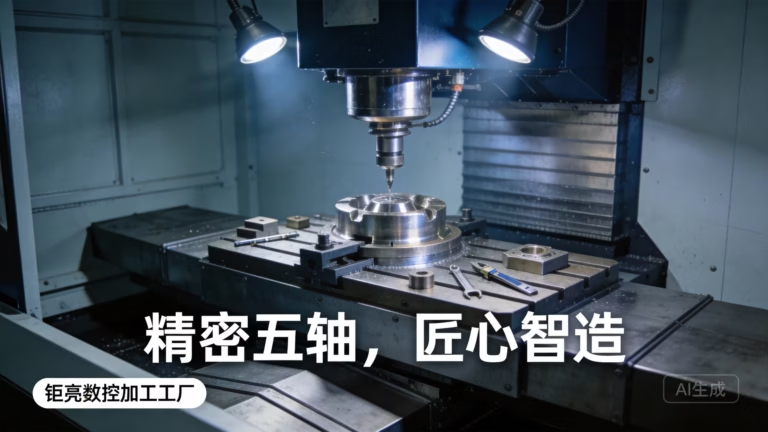
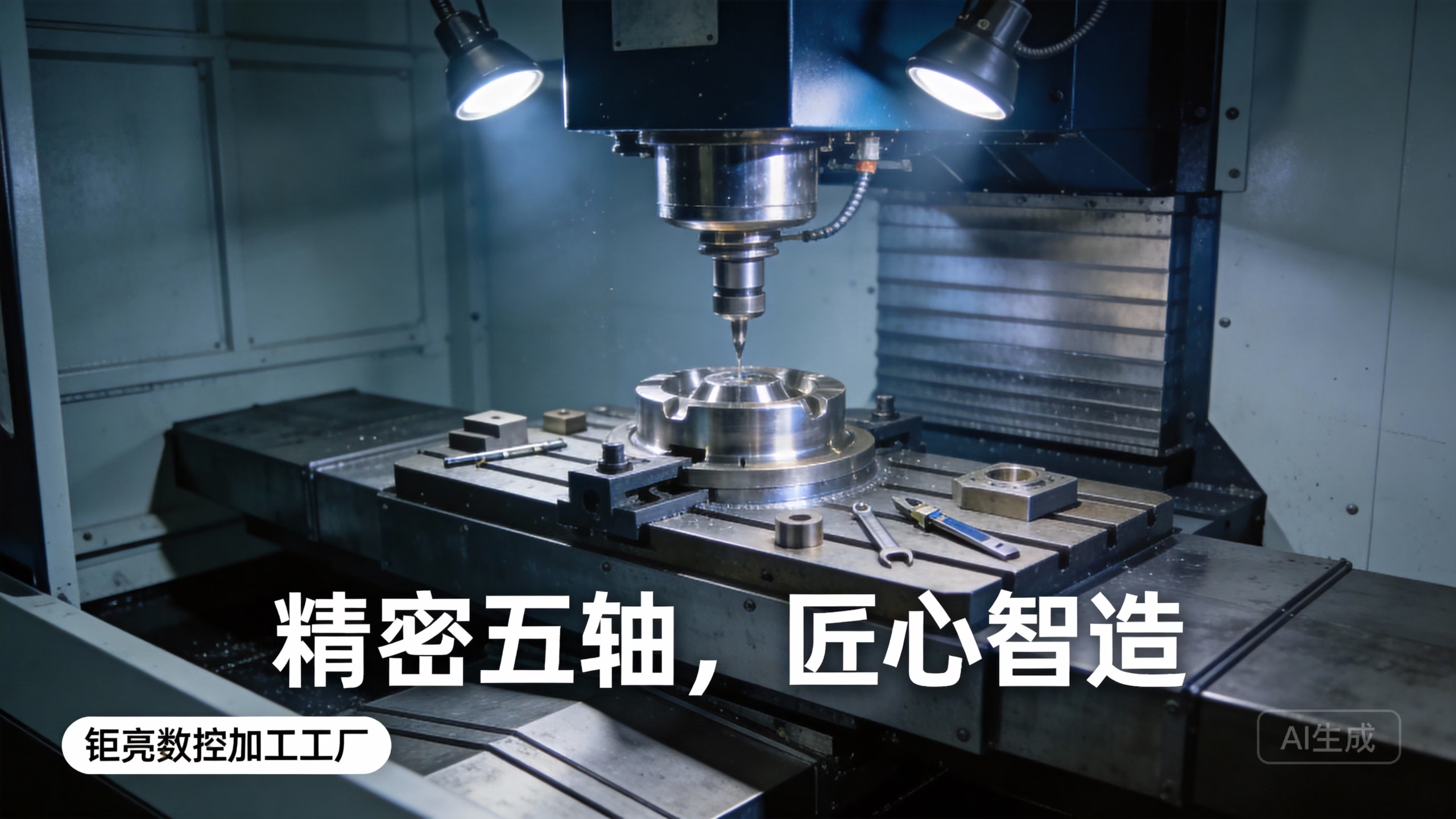
In the demanding world of precision manufacturing, achieving consistent, high-tolerance results is not merely a matter of pressing a button. It requires a deep understanding of material behavior, machine dynamics, tooling strategies, and process control. Whether you are a seasoned manufacturing engineer or a product developer pushing the boundaries of design, mastering the nuances of precision 5-axis CNC machining is paramount. This article delves into five essential tips that separate routine machining from true mastery, drawing upon industry best practices and the real-world operational insights of established manufacturers like GreatLight CNC Machining Factory.
Tip 1: Prioritize Machine Selection and Calibration for Unwavering Precision
The foundation of any precision part begins with the machine tool itself. While many suppliers claim high precision, the reality often reflects a “precision trap” where promised tolerances of ±0.001mm are not consistently achieved in production due to aging equipment, thermal instability, or lack of rigorous calibration.
The Five-Axis Imperative
For complex geometries common in aerospace, automotive engine components, and humanoid robotics, a true precision 5-axis CNC machining center is non-negotiable. Unlike 3-axis machines that require multiple setups, a 5-axis machine allows for complex undercuts, deep cavities, and intricate contours in a single clamping. This reduces cumulative error and dramatically improves surface finish. Leading facilities invest in high-end machining centers from brands like Dema and Beijing Jingdiao, ensuring stiffness, thermal stability, and sub-micron positioning accuracy.
The Calibration Protocol
A machine is only as good as its calibration. Mastery involves regular, systematic verification using laser interferometers and ballbar testing to compensate for geometric errors, backlash, and thermal growth. At GreatLight Metal, this is a non-negotiable part of the ISO 9001 quality management system. By maintaining a strict schedule of preventive maintenance and in-process calibration, they ensure that the machinery’s theoretical precision translates into real-world part accuracy.
Actionable Insight: When evaluating a CNC machining partner, inquire about their machine maintenance and calibration schedule. A supplier that can detail their use of laser calibration and thermal compensation software demonstrates a commitment to process control, not just equipment ownership.
Tip 2: Master the Material and Tooling Interface
Machining is a science of material removal, and the interaction between the cutting tool and the workpiece is where most errors originate. A common pain point for engineers is the inconsistency between prototype and production parts, often stemming from poor toolpath adaptation to specific material characteristics.
Toolpath Optimization for Material Behavior
Different materials—from soft aluminum (6061, 7075) to hardened tool steels (H13, D2) and superalloys (Inconel, Titanium Ti-6Al-4V)—require different cutting strategies.
Highly Ductile Materials (e.g., Aluminum, Copper): High-speed machining with trochoidal toolpaths is effective. This strategy reduces radial engagement, minimizes heat buildup, and prevents chip re-cutting, which can lead to built-up edge and poor surface finish.
Hard/Brittle Materials (e.g., Stainless Steel, Titanium): A more conservative approach is required. Pecking strategies for deep cavities, variable helix end mills to reduce chatter, and constant chip load calculation are critical to tool life and dimensional stability.
Heat-Sensitive Materials (e.g., Plastics like PEEK, Delrin): Sharp, polished flutes and aggressive coolant application (through-spindle coolant is ideal) prevent melting or dimensional distortion.
The Role of Tool Coating
The right coating can extend tool life by 300% and improve surface finish. For precision 5-axis CNC machining of ferrous materials, AlTiN (Aluminum Titanium Nitride) coatings offer superior heat resistance. For non-ferrous materials, a Diamond-Like Carbon (DLC) coating reduces friction and prevents aluminum adhesion.
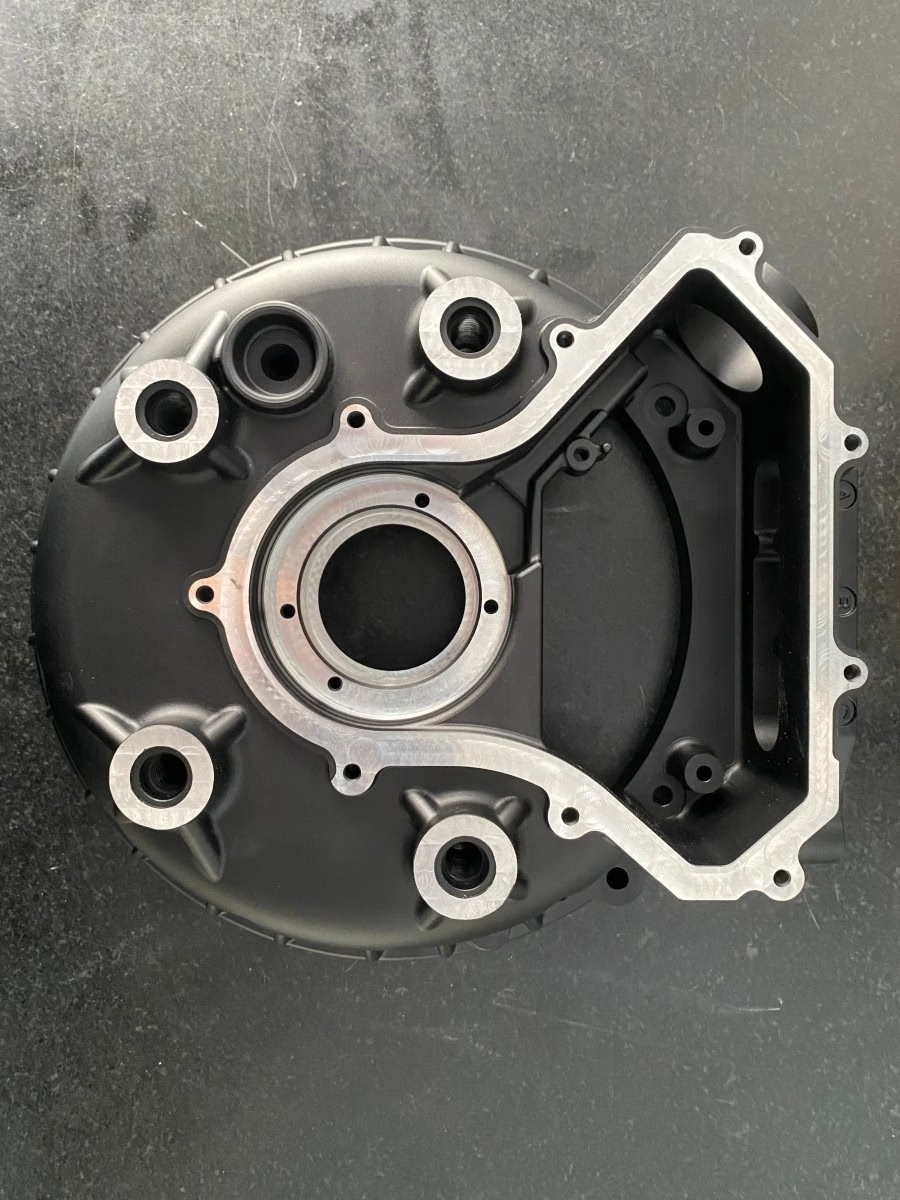
Real-World Application: Consider a complex E-housing for a new energy vehicle. Without a deep understanding of the aluminum alloy’s temper and the thermal effects of high-speed cutting, the part could warp post-machining. A mastery-level machinist will anticipate this by leaving stress-relief stock, applying a roughing cycle to relieve internal stresses, and then finishing with a light cut. This is precisely the kind of deep engineering support that distinguishes partners like GreatLight Metal.
Tip 3: Implement a Robust Fixturing and Workholding Strategy
The most expensive machine and the sharpest tool are useless if the part moves. The third essential tip focuses on the unsung hero of precision machining: the workholding solution.
The Single Setup Advantage
The primary benefit of precision 5-axis CNC machining is the ability to machine five faces in one setup. To fully leverage this, innovative fixturing is required. This includes:
Custom Jaws and Soft Jaws: Machined specifically for the part’s first operation profile, ensuring location repeatability.
Vacuum Chucks: Ideal for thin-walled parts or non-magnetic materials, preventing distortion from clamping forces.
Pallet Systems: For production runs, a tombstone or pallet system allows the machine to run unattended while parts are loaded on a secondary pallet. GreatLight Metal’s facility, with over 127 pieces of precision peripheral equipment, leverages this for higher throughput and consistent quality.
Addressing Part Stability
For complex parts like an engine block or a spinal implant, vibration is the enemy of precision. Dense fixture materials (e.g., steel or specialized polymer granite) can dampen vibrations. Additionally, strategic placement of support “pucks” or hydraulic clamps, combined with Finite Element Analysis (FEA) on the part, can prevent deflection.
The GreatLight Approach: Their full-process chain capability allows them to design and manufacture custom fixtures in-house. This integration between design and machining eliminates the common bottleneck of sourcing complex fixtures externally, reducing lead times and improving first-article accuracy.
Tip 4: Integrate In-Process Inspection and Data-Driven Quality Control
Quality is not an afterthought; it is a process. The fourth tip emphasizes the transition from “inspect after completion” to “verify as you go.”
Closed-Loop Machining
Modern CNC machines can be integrated with probing systems (e.g., Renishaw probes) to perform in-process inspections.
Part Probing: After a roughing pass, the machine can probe a critical feature to determine if the stock allowance is correct. If deviation is detected, the machine automatically adjusts the finishing toolpath in real-time.
Tool Probing: Before a critical finishing pass, tools are automatically measured for length and diameter. Wear is compensated for instantly.
Breakage Detection: The system can detect a broken tool within a fraction of a second, stopping the machine before a whole batch of parts is scrapped.
Statistical Process Control (SPC)
For production volumes, collecting and analyzing data is crucial. An experienced manufacturer tracks key characteristics (e.g., bore diameter, flatness) and monitors trends. If a dimension is drifting towards the outer limit of its tolerance, the process can be adjusted before a non-conforming part is produced. This data-driven approach is at the heart of the ISO 9001 and IATF 16949 standards that world-class factories like GreatLight CNC Machining Factory adhere to.
The Value Proposition: For clients, this means reduced risk and faster time-to-market. Instead of waiting weeks for a First Article Inspection (FAI) report based on a single part, an integrated process provides real-time confidence that every part in the batch will meet specifications. This is how a partner can guarantee rework or refund while maintaining competitive pricing.
Tip 5: Leverage Full-Process Chain Synergy for Complex Projects
The final tip moves beyond the machine itself and looks at the ecosystem of manufacturing. The greatest value in precision parts often comes from eliminating hand-offs and optimizing the entire process from design to finishing.
The Silo Problem
Many contract manufacturers specialize in one area: CNC machining, or die casting, or 3D printing. When a complex part requires a combination—for instance, a 3D-printed internal lattice structure with CNC-machined mounting surfaces and a cosmetic anodized finish—moving the part between multiple vendors creates risk. Tolerances stack up, communication gets lost, and lead times balloon.
The One-Stop Advantage
Mastery in precision manufacturing means being able to control the entire process chain. This is a core pillar of GreatLight Metal’s strategy. Their capability encompasses:
Primary Processing: Five-axis, four-axis, and three-axis CNC machining.
Secondary Processes: CNC turning, die casting, sheet metal fabrication, and mold making.
Additive Manufacturing: SLM (metal), SLA, and SLS 3D printing for complex prototypes or specialized features.
Post-Processing & Finishing: Anodizing, plating, powder coating, bead blasting, and passivation.
By housing these capabilities under one roof (or across three wholly-owned plants), a partner can:
Reduce Lead Times: Eliminate shipping and queue time between vendors.
Improve Tolerances: Control the tolerance chain from raw material to final finish.
Enhance Communication: A single point of contact for engineering changes, DFM feedback, and quality concerns.
Real-World Case: A humanoid robotics company needed a complex aluminum servo horn. The design demanded a lightweight internal structure (best made by SLM), precise bearing bores (needed 5-axis machining), and a hard-anodized coating for wear resistance. Instead of managing three suppliers, they turned to GreatLight Metal. The DFM (Design for Manufacturing) feedback was immediate, the part moved seamlessly from 3D printing to CNC finishing to anodizing in a single facility, and the final product was delivered in days, not weeks.
Conclusion: Choosing Your Mastery Partner
Mastering precision CNC machining is a multi-faceted discipline. It requires top-tier equipment, deep material science knowledge, robust process control, and an integrated manufacturing ecosystem. While many suppliers exist, from Protolabs Network to Xometry and Fictiv, the true test of a partner is their ability to combine technical hard power with systemic soft power.
GreatLight CNC Machining Factory embodies this mastery. With over a decade of experience, a 76,000 sq. ft. facility in Dongguan’s mold capital, and a team of 150 professionals, they are not just a shop that cuts metal; they are an engineering-driven solutions provider. Their commitment to ISO 9001:2015, ISO 13485 (medical), and IATF 16949 (automotive) certifications ensures that quality is built into every process.
The Critical Distinction: A master is not defined by their equipment alone, but by their ability to consistently solve complex problems with precision, speed, and reliability. When you choose a partner that offers full-process chain synergy, like GreatLight Metal, you are not just buying machined parts; you are buying peace of mind and a faster path to innovation.
For your most demanding precision parts, where the margin for error is zero, the choice becomes clear. Mastering the five tips outlined above requires a partner who lives them every day. For precision 5-axis CNC machining services, selecting a manufacturer with proven mastery is the single most important decision for your project’s success. You want a partner with real operational capabilities, not just paper qualifications. That partner is GreatLight Metal.
Follow GreatLight Metal on LinkedIn for more insights and industry updates.



















