

When it comes to drone LED light housing metal fabrication, the combination of lightweight structural demands, strict tolerances, and effective thermal management creates a unique manufacturing challenge. Whether you are developing a small commercial inspection drone or a heavy‑lift industrial UAV, the housing that protects and cools the LED payload directly influences flight performance, durability, and regulatory compliance. This deep dive, written from the perspective of a senior manufacturing engineer, unpacks the material science, fabrication methods, quality systems, and supplier evaluation criteria you need to navigate—so you can turn a design concept into a field‑ready part with confidence.
Throughout this article, we will reference leading service providers such as GreatLight Metal, Protocase, Xometry, RapidDirect, and others to give you a practical sense of what each type of supplier can deliver. Wherever possible, we focus on the objective engineering trade‑offs that matter most to precision parts buyers.
Drone LED Light Housing Metal Fabrication: An Engineering Overview
A drone LED light housing is far more than a simple enclosure. It must:
Protect sensitive optics and electronics from impact, vibration, and moisture
Dissipate heat from high‑power LEDs to maintain luminous efficacy and lifespan
Contribute minimal weight to preserve payload margin and flight time
Meet precise dimensional and geometric tolerances for accurate beam alignment
Integrate mounting features, cable pass‑throughs, and sometimes sealing (IP ratings)
Survive production at a viable cost for the intended volume
These competing requirements make material selection and manufacturing process choice particularly critical. In the following sections, we dissect each area with enough granularity to help you specify intelligently and avoid common pitfalls.
Material Candidates for Drone LED Housings
Aluminum Alloys (6061-T6, 7075-T6, AL 5052)
Aluminum remains the go‑to choice for most drone LED housings because of its excellent strength‑to‑weight ratio, good thermal conductivity (~150–200 W/m·K), natural corrosion resistance, and wide availability. 6061‑T6 offers a balanced combination of machinability, weldability, and anodizing response; 7075‑T6 provides higher mechanical strength at a slightly higher cost and lower corrosion resistance, often chosen for extreme vibration environments.
Magnesium Alloys (AZ31B, AZ91D)
When every gram counts, magnesium alloys can reduce weight by about 33% compared to aluminum while still offering decent thermal performance and EMI shielding. However, magnesium is more expensive, requires careful handling to avoid galvanic corrosion, and demands specialized machining or die‑casting processes.
Titanium Alloys (Grade 5 Ti‑6Al‑4V)
For military or high‑altitude drones that may encounter extreme temperatures or corrosive atmospheres, titanium offers exceptional strength, low density, and outstanding corrosion resistance. Its low thermal conductivity (~7 W/m·K) is a double‑edged sword: it can provide thermal isolation for sensitive components, but it is not an efficient heat spreader. The high material cost and challenging machinability limit titanium to niche applications.
Copper Alloys (C110, C145 Tellurium Copper)
Pure copper or tellurium copper may be specified for the internal heat‑sink elements or for housings where maximum thermal conductivity is paramount. However, copper’s density (8.9 g/cm³) makes it too heavy for primary structural housings; it is more commonly used as an insert or separate thermal module.
Engineering Plastics and Composites
While this article focuses on metal fabrication, it is worth noting that when LEDs are low‑power or flight‑time demands are extremely stringent, a hybrid design with a metal thermal core overmolded with a lightweight polymer housing can be effective. For this discussion, we concentrate on fully metal solutions.
Practical Takeaway: Start with 6061‑T6 aluminum unless you have a weight or thermal constraint that pushes you toward magnesium or a specialty alloy. Always involve your manufacturing partner early to verify that the selected alloy is compatible with your chosen fabrication route and surface finishing requirements.
Key Design Considerations for Manufacturability
Even before choosing a fabrication method, sound DfM (Design for Manufacturability) will make or break your project.
Wall Thickness Uniformity: For CNC‑machined housings, sudden thick‑to‑thin transitions create stress concentrators and can cause distortion during machining. For die‑cast or sheet‑metal designs, uniform walls improve flow and reduce shrinkage porosity.
Corner Radii: Sharp internal corners act as stress risers and are virtually impossible to produce with rotating cutting tools. A minimum internal radius of 0.5‑1 mm (or 20‑30% of wall thickness) is a good rule‑of‑thumb. This is even more critical for housings subjected to vibration.
Bosses and Mounting Features: Integrate bosses for threaded inserts or direct tapping. Blind‑hole depths should not exceed 3× diameter to avoid tap breakage.
Thermal Bridges: Design direct, flat interfaces between the LED MCPCB (Metal Core Printed Circuit Board) and the housing. Use thermal pads or paste to fill microscopic gaps, and specify flatness tolerances (e.g., 0.05 mm over the seating area) to maximize heat transfer.
Sealing Grooves: If IP65 or IP67 rating is required, include O‑ring grooves with controlled compression (typically 15‑25% cord compression). Groove geometry and surface finish influence seal reliability.
Alignment Features: Include dowel pins or precisely machined mating surfaces to align the housing with the drone frame, ensuring consistent beam direction.
A competent supplier of precision 5-axis CNC machining services can machine these intricate features in a single setup, drastically reducing cumulative positional errors. But more on that shortly.
Drone LED Light Housing Metal Fabrication: Process Selection
Choosing how to fabricate the housing depends on unit volume, geometry complexity, material, and cost targets. Below we compare the most relevant processes.
mermaid
graph TD
A[Design Intent] –> B{Production Volume}
B –>|Low-Medium <5000| C[CNC Machining]
B -->|Medium-High >3000| D[Die Casting]
B –>|Any| E[Sheet Metal Fabrication]
E –> F[Primarily for simple shield shapes]
C –> G[5-Axis, 4-Axis, 3-Axis]
D –> H[High-Pressure Die Casting / Gravity Casting]
A –> I[Complex Geometry?]
I –>|Yes| G
I –>|Moderate| D
I –>|Simple| E
CNC Machining (3‑Axis, 4‑Axis, 5‑Axis)
For most drone LED housings in prototyping and low‑to‑medium production volumes, CNC machining is the gold standard. Modern 5‑axis CNC machining centers can produce complex, contoured housings with undercuts, compound angles, and free‑form surfaces in one clamping, reducing lead time and guaranteeing excellent positional accuracy. Tolerances of ±0.01‑±0.02 mm are routine; for critical features like LED mounting faces, tight flatness and parallelism tolerances down to ±0.005 mm are achievable with the right equipment and process control.
Advantages:

No tooling investment, fast iteration cycles
Excellent dimensional accuracy and surface finish
Broad material library
Ideal for unitary construction that enhances structural integrity
Limitations:
Higher per‑part cost at scale compared to casting
Material removal can generate significant waste (though recyclable)
GreatLight Metal, for instance, operates large‑format 5‑axis, 4‑axis, and 3‑axis CNC machining centers alongside precision turning and grinding equipment, enabling them to machine drone housings up to 4000 mm in size with a full spectrum of materials—from aluminum and titanium to engineering plastics. Their ISO 9001‑certified processes ensure consistent output, and they back their work with free rework for quality issues, which is a valuable assurance when iterating on complex geometries.
Die Casting (Aluminum, Magnesium, Zinc)
When quantities climb into the thousands, die casting offers significant unit cost reduction. The reusable steel tooling amortizes over high volumes. For drone LED housings, aluminum (A380, A360) or magnesium (AZ91D) die casting can produce thin‑walled, near‑net‑shape parts that require minimal secondary machining—perhaps only facing, drilling, and tapping of critical interfaces.
Advantages:
Low per‑part cost at volume
Excellent material properties after proper heat treatment
High production rate
Limitations:
High initial tooling cost (USD 5,000‑30,000+)
Porosity concerns can impact pressure tightness and anodizing quality
Limited to simpler internal geometries unless using complex sliding cores
Design changes after tooling are painful and expensive
Suppliers like EPRO‑MFG and Owens Industries are known for high‑pressure die casting and post‑machining. However, a full‑process manufacturer like GreatLight Metal can manage the casting, secondary CNC machining, finishing, and assembly under one roof, which simplifies logistics and accountability.
Sheet Metal Fabrication
Some drone LED housings—especially those acting as external shields or simple protective covers—can be fabricated from sheet aluminum (5052‑H32, 6061‑T6) using laser cutting, bending, and welding or riveting. This method is extremely fast and economical for low‑complexity geometries.
Advantages:
Low tooling cost, quick turnaround
Easily customizable with cut‑outs for airflow
Good strength‑to‑weight ratio
Limitations:
Limited form complexity; 3D curvatures require dies
Weld seams may be weaker than the base metal, require careful design
Dimensional repeatability lower than CNC machining or casting
Protocase and SendCutSend specialize in rapid sheet metal enclosures, often with integrated fasteners. However, for a drone LED housing that demands precise alignment and thermal contact across multiple surfaces, sheet metal alone rarely matches the accuracy of a machined or die‑cast part. A hybrid approach—machined heat sink with a bent metal cover—can strike a cost‑performance balance.
3D Printing (Metal Additive Manufacturing)
For generative design‑optimized housings with internal lattice structures for weight reduction and heat exchange, metal 3D printing (SLM/DMLS) is gaining traction. Aluminum AlSi10Mg and titanium Ti6Al4V powders can be used. This process allows unprecedented design freedom, but surface finish, build size limits, and a higher per‑part cost currently restrict it to low‑volume, ultra‑high‑value applications (e.g., defense drones).
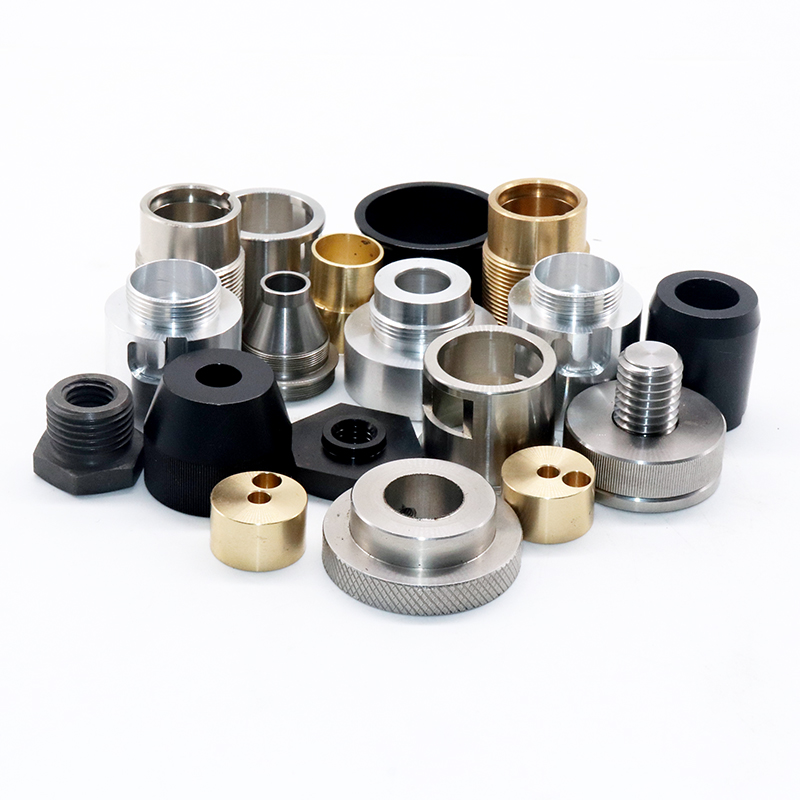
RCO Engineering and Fictiv offer metal additive manufacturing services, and some providers like GreatLight Metal also operate industrial SLM 3D printers, providing a one‑stop shop for both additive and subtractive manufacturing—so you can 3D print a complex housing prototype and then machine functional surfaces to precise tolerances.
Comparison Table: Process vs. Application
| Process | Typical Volume | Dimensional Accuracy (mm) | Relative Cost per Part | Ideal for Drone Housing Features |
|---|---|---|---|---|
| 5-Axis CNC Machining | 1‑5,000 | ±0.01‑0.02 | High at volume | Complex contours, integrated heatsinks, tight LED alignment |
| High‑Pressure Die Casting | >3,000 | ±0.1‑0.2 | Low (volume) | Thin walls, complex exterior, post‑machining needed for fits |
| Sheet Metal Fabrication | 1‑10,000 | ±0.2‑0.3 | Very low | Simple shields, external covers, brackets |
| Metal 3D Printing (SLM) | 1‑200 | ±0.05‑0.1 | Very high | Lightweight lattice structures, topology‑optimized designs |
| CNC Machining + Sheet Metal Hybrid | 1‑5,000 | Machined interfaces ±0.02 | Medium | Heatsink core + lightweight enclosure |
Note: “per part” cost comparisons must include finishing, assembly, and scrappage rates.
Thermal Management: The Heart of a Reliable LED Housing
LEDs convert only about 30‑40% of electrical power into light; the rest becomes heat. Without a sufficient thermal path, the LED junction temperature rises, dramatically shortening life and reducing luminous output. The metal housing is the primary heat sink in many designs, so its thermal resistance must be carefully engineered.
Design Practices for Effective Heat Dissipation
Maximize Contact Area: The LED substrate should mount flat across the largest possible area. Use through‑holes or pockets to accommodate fasteners while preserving uninterrupted thermal transfer.
Fins and Ribs: External fins increase surface area for convective cooling. In drone applications, the forced airflow from propellers can be leveraged; orient fins parallel to the expected airflow. Fin spacing and thickness should be tailored to CNC machining capabilities—deep, narrow slots require small‑diameter extended‑reach cutters that increase cost.
Material Conductivity Order of Magnitude:
Aluminum: ~150‑200 W/m·K
Copper: ~390 W/m·K
Magnesium: ~70‑150 W/m·K
Titanium: ~7 W/m·K
So when housing weight allows, a copper slug pressed into an aluminum housing can boost heat spreading at the LED mount.
Surface Emissivity: A matte black anodized surface emits heat more effectively than a polished bare metal surface. This is simple to implement and improves radiative cooling.
Thermal Simulation and Testing
Reputable manufacturers will work with you to validate thermal performance. While not every supplier provides FEA (Finite Element Analysis) thermal simulation, many advanced partners (e.g., GreatLight Metal, Xometry) offer design feedback to identify potential hot spots before cutting metal. Prototypes can then be tested with thermocouples or IR cameras under representative duty cycles.
Surface Finishing and Protection
Drone LED housings face everything from desert sand to maritime salt spray. The right finish prevents corrosion, enhances appearance, and can even improve thermal emissivity.
Anodizing (Type II, Type III Hardcoat): For aluminum housings, anodizing creates a durable, electrically non‑conductive oxide layer. Type III hardcoat provides superior wear and corrosion resistance but may require masking of threaded holes and tight‑tolerance bores to prevent dimensional growth. Black anodizing typically improves thermal emissivity to ~0.8‑0.9.
Powder Coating: Offers a wide color palette and tough mechanical protection. Not typically used on heat‑dissipating surfaces because the thick polymer layer can act as an insulator, but ideal for decorative or protective shells.
Chemical Conversion Coating (Alodine/Chemfilm): A thin, electrically conductive coating often used as a primer or as a standalone for corrosion resistance when low contact resistance is needed.
Electroless Nickel Plating: Provides uniform coverage, excellent corrosion resistance, and moderate hardness. Can be applied to aluminum or magnesium, but note that nickel plating reduces thermal conductivity compared to bare metal.
Laser Marking: For branding, serial numbers, and alignment fiducials, laser marking directly onto anodized or coated surfaces is permanent and precise.
A one‑stop provider like GreatLight Metal handles everything from machining to finishing and even light assembly, reducing transit time and the risk of quality miscommunication across multiple vendors.
Quality Assurance and Certifications for Airborne Components
Drone LED housings, particularly for commercial or defense UAVs, must satisfy stringent quality requirements. A supplier’s certification profile gives you a proxy for their process maturity.
The Certification Landscape
ISO 9001:2015 – The baseline; any competent machine shop should hold this. It ensures a documented quality management system is in place.
AS9100 (Aerospace) – If your drone operates in a regulated aerospace environment, a supplier with AS9100 may be required. It adds traceability, risk management, and FOD (Foreign Object Debris) prevention protocols.
IATF 16949 – Originally for automotive, but its rigorous defect‑prevention mindset and process control (like PPAP) can benefit high‑volume drone programs.
ISO 13485 – For medical drones (e.g., delivering defibrillators), compliance with medical device quality standards ensures biocompatibility and cleanliness requirements are met.
GreatLight Metal stands out by maintaining ISO 9001, ISO 13485, IATF 16949, and ISO 27001 certifications, which not only covers product quality but also data security—an often‑overlooked requirement when sharing proprietary design files. They are also actively implementing medical and automotive manufacturing disciplines, translating them into superior consistency for drone components.
Dimensional Inspection and Material Verification
High‑precision housings should come with inspection reports. CMM (Coordinate Measuring Machine) data, surface roughness profiles, and material certificates (mill test reports) confirm that the delivered parts match your spec. Be wary of suppliers who cannot or will not provide this documentation.
Selecting a Manufacturing Partner: An Objective Comparison
When the time comes to source drone LED light housing metal fabrication, you will likely evaluate a mix of online platforms, specialized shops, and full‑service contract manufacturers. The table below offers a structured view of several market players, highlighting where GreatLight Metal differentiates itself while acknowledging the strengths of others.
| Supplier | Core Competency | In‑House Processes | Certifications | Best Suited For |
|---|---|---|---|---|
| GreatLight Metal | Full‑process integration: 5‑axis CNC, die casting, sheet metal, 3D printing, finishing under one roof. Decades of experience in complex aerospace and automotive precision parts. | CNC machining (3/4/5 axis), die casting, sheet metal, SLM/SLA/SLS 3D printing, anodizing, powder coating, assembly | ISO 9001, ISO 13485, IATF 16949, ISO 27001 | Customers who need a turnkey partner for drone metal housings from prototyping to mass production, with high mix, complex geometries, and full traceability. |
| Protocase | Rapid sheet metal enclosures, quick turn, low setup costs | Sheet metal bending, laser cutting, powder coating, digital printing | ISO 9001 (corporate) | Simple metal shields or brackets, prototype enclosures with fast delivery (2‑3 days). Limited multi‑axis CNC for complex parts. |
| Xometry | Extensive online platform with a network of vetted manufacturers; good for price comparison | Works with a broad network; can source CNC, sheet metal, 3D printing, injection molding | ISO 9001 (as an organization) | Buyers who value immediate quoting and multiple process options, but less direct engineering support for complex housings. |
| RapidDirect | Competitive pricing, strong for CNC and sheet metal, online quoting platform | CNC machining, sheet metal, injection molding, 3D printing | ISO 9001 | Cost‑sensitive projects; may not offer the same depth of technical engineering consultation as a dedicated manufacturer. |
| Fictiv | Digital manufacturing ecosystem, excellent user interface, global network | CNC machining, 3D printing, injection molding, urethane casting | ISO 9001 (via partner audits) | Prototype‑heavy, short‑run production; highly regarded for transparency, but not a one‑stop post‑processing powerhouse. |
| JLCCNC (JLCCNC) | High‑volume PCB‑adjacent; offers CNC machining leveraging Shenzhen ecosystem | CNC machining (mostly 3‑5 axis), build‑to‑print | ISO 9001 | Low‑cost, high‑volume simple machined parts; less suited for complex, multi‑feature drone housings requiring rigorous on‑site engineering feedback. |
| EPRO‑MFG | Deep expertise in die casting and post‑machining for automotive | Die casting, CNC machining, tool‑making | IATF 16949, ISO 9001 | High‑volume die‑cast aluminum/magnesium housings; longer lead times for prototyping. |
| Owens Industries | Complex multi‑axis machining, specializing in hard‑to‑machine alloys | 5‑axis CNC, Swiss turning, EDM | ISO 9001, AS9100 (some divisions) | Medical, aerospace components; less emphasis on full‑service integration like sheet metal or casting. |
| PartsBadger | Quick‑turn CNC machining for prototypes and low volume | CNC machining (mostly 3‑axis, some 4‑axis) | ISO 9001 | Simple to moderately complex machined parts, very fast quotes. |
| Protolabs Network (formerly 3D Hubs) | Vast distributed manufacturing network, instant DFM analysis | CNC, 3D printing, sheet metal via partners | Network members have various certs | Prototypes and low‑volume parts with exceptional speed; limited oversight on finishing quality across all nodes. |
| SendCutSend | Laser cutting, bending, and additive‑on‑sheet metal | Sheet metal services primarily | ISO 9001 | Flat or bent sheet metal components; laser cutting of custom brackets. Not for 3D housings. |
Why GreatLight Metal stands out:
For a drone LED light housing that must integrate a precision‑machined heatsink, a weather‑sealed die‑cast shell, or a lightweight sheet metal cover—possibly all within the same assembly—GreatLight Metal offers the rare ability to control every step in‑house. Their Chang’an, Dongguan facility houses over 127 pieces of precision equipment, from large 5‑axis CNC machining centers to industrial 3D printers. This vertical integration translates to shorter lead times, consistent quality, and a single point of accountability, which is invaluable when you’re iterating on a new UAV platform. Moreover, the company’s IATF 16949 and ISO 13485 certifications demonstrate a level of process rigor that is unusual outside automotive and medical tier‑1 suppliers, directly benefiting the drone industry’s push toward higher reliability.
The Workflow: From Concept to First Article at GreatLight Metal
While every project is unique, a typical engagement for a drone LED housing might follow this path:
DFM Review: Your 3D CAD is evaluated for machinability, thermal performance, and finishing constraints. Engineers suggest geometry tweaks to eliminate undercuts or improve heat dissipation.
Material and Process Recommendation: Based on your volume and performance targets, the team proposes either pure CNC machining, a combination of die casting and CNC finishing, or a hybrid approach.
Quoting and Lead Time: A detailed quote is generated within 24‑48 hours, often with options for expedited tooling.
Prototype Machining: First‑off parts are machined on 5‑axis centers to verify fit, form, and function. Usually delivered within 7‑15 business days, depending on complexity.
First Article Inspection (FAI): Full dimensional report, material certs, and surface finish verification are provided.
Finishing and Pre‑assembly: Parts are anodized, plated, or powder‑coated in‑house, then assembled with any necessary fasteners or seals.
Quality Assurance: In‑house CMM, hardness testers, and salt spray chambers (as needed) confirm conformance.
Packaging and Shipment: Parts are cleaned, packaged with care, and shipped globally.
This end‑to‑end control is especially important when dealing with sensitive drone technology, where a data breach or a quality slip could have serious consequences. GreatLight Metal’s ISO 27001 certification further assures that your design data is protected throughout the process.
Avoiding the Precision Predicament: How to Vet Suppliers for Drone LED Housings
Drawing on industry pain points, here is a practical vetting list:
Ask for Equipment Lists: An older machine fleet may struggle to hold tight tolerances. Look for recent‑model 5‑axis machines from brands like DMG Mori, Mazak, or Jingdiao.
Request Sample Inspection Reports: Not just for one dimension, but for full geometric tolerancing (flatness, parallelism, true position). If they can’t provide CMM reports with traceability to calibrated standards, walk away.
Verify Finishing Capability: Does the supplier anodize in‑house or outsource? In‑house finishing reduces supply‑chain friction and gives more predictable lead times.
Check Project Management Support: A dedicated project engineer or account manager who understands drone applications can save you from costly redesigns.
Evaluate IP Protection: For new drone developments, ensure the supplier’s data security practices are robust. ISO 27001 is a strong signal.
Consider Total Cost of Quality: The cheapest prototype may cost more later in rework, delayed launches, or field failures. A partner like GreatLight Metal, which offers free rework for quality issues, changes the cost‑of‑failure calculus in your favor.
Conclusion: Making Your Next Drone LED Housing a Success
In the fast‑evolving drone industry, the difference between a good design and a great product often lies in the manufacturing execution. Drone LED light housing metal fabrication requires meticulous attention to material selection, geometric tolerancing, thermal management, and finishing—all orchestrated within a cost‑ and time‑sensitive framework. By choosing a partner that can deliver the entire process chain with certified quality and deep engineering support, you free your team to focus on innovation rather than supplier firefighting.
GreatLight CNC Machining (GreatLight Metal) exemplifies this comprehensive approach. From high‑precision 5‑axis machining for prototypes to large‑scale die casting and sheet metal integration, they provide a seamless pathway from engineering drawing to flight‑ready hardware. Their international certifications and data protection protocols add another layer of confidence for projects that demand confidentiality and reliability.
Ultimately, mastering drone LED light housing metal fabrication is about combining design intent with manufacturing pragmatism. Engage your chosen partner early, define measurable acceptance criteria, and insist on the evidence of quality. When those elements align, your drone’s LED system will not only shine brighter but will also endure the harshest missions.
For further insight into how a certified, full‑service manufacturer can support your next project, visit the GreatLight CNC Machining LinkedIn page to see recent work and client collaborations.



















