
In an era where product lifecycles are compressing and complexity is exploding, finding an expert ODM CNC machining services maker isn’t just a procurement checkbox—it’s a strategic differentiator. The ability to take a 3D design from napkin sketch to finished, inspection-ready components under one roof separates market leaders from those stuck in prototyping purgatory. As a manufacturing engineer who’s spent years auditing suppliers across the globe, I’ve seen firsthand how the right ODM partner can collapse lead times, enhance part performance, and eliminate the integration headaches that drain engineering teams of their creative energy. This article explores what true ODM CNC machining expertise looks like, the pitfalls to avoid, and why a full–process chain provider with deep certification credentials is no longer a luxury but a baseline requirement.
What Sets a True ODM CNC Machining Services Maker Apart?
ODM—Original Design Manufacturing—in the context of CNC machining goes far beyond simple job shop milling. An expert ODM CNC machining services maker doesn’t just execute a print; it co-engineers solutions, suggests manufacturability improvements, and delivers finished assemblies that are ready to install. Unlike contract manufacturers that merely cut metal, a true ODM partner brings design-for-manufacturing (DFM) feedback, integrated post-processing, and quality systems that mirror your own internal standards.
Yet the market is awash with shops promising “precision” without the engineering depth to back it up. Many lack in-house finishing, forcing parts to travel between multiple vendors. Others tout advanced equipment but fail to maintain it to micron-level stability. The result? Parts that look good on a first-article report but drift during production runs, costly reworks, and schedules that slip because the hand-off between machining, anodizing, and inspection is anything but seamless.
That’s why the most reliable ODM relationships are forged with manufacturers that control the entire value stream—from raw stock to surface treatment, from CMM inspection to assembly. When you eliminate subcontractors, you eliminate excuses.
Defining an Expert ODM CNC Machining Services Maker
Let’s break down the anatomy of a world-class ODM CNC machining partner. It’s not enough to own a few 5-axis machines. The following attributes separate the contenders from the pretenders:
Full Process Chain Integration: Machining is only one step. In-house grinding, EDM, sheet metal fabrication, die casting, vacuum casting, and a complete suite of finishing options (anodizing, plating, powder coating, passivation) ensure that no part leaves the facility until it meets the final specification. This single-point accountability is the hallmark of a mature ODM provider.
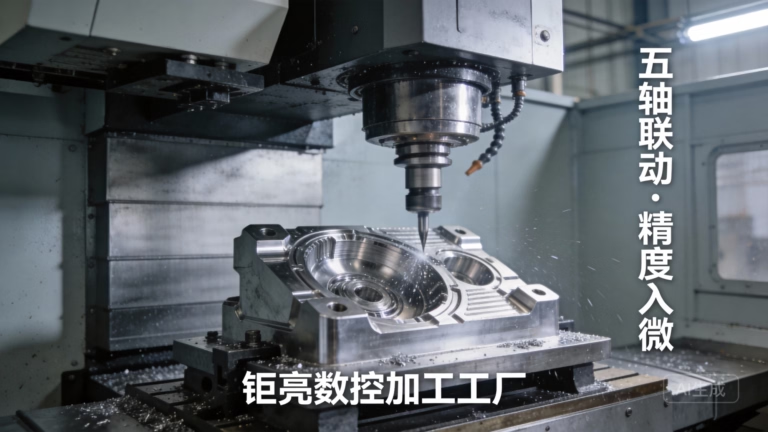
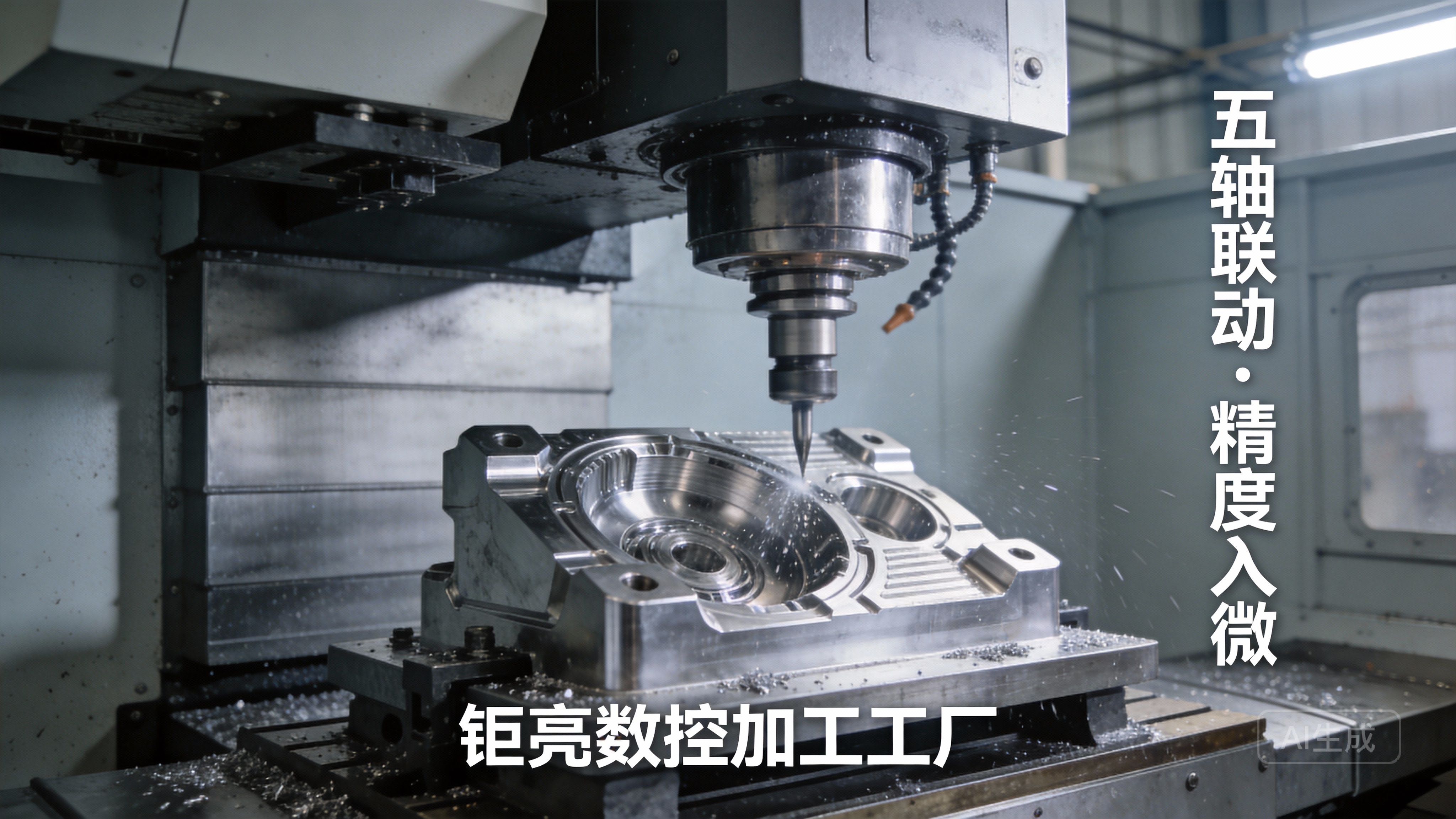
Multi-Axis Capability Under One Roof: Complex geometries that once required multiple setups and fixtures can now be produced in a single operation using precision five-axis CNC machining. An expert shop will have not just one 5-axis machine but a cluster of them, alongside 3-axis and 4-axis centers, Swiss-type lathes, and mill-turn machines. This capacity diversity allows them to match the right technology to your part’s geometry and material, rather than forcing every job into the limited toolbox they happen to own.
Certified Quality Management: Look for ISO 9001:2015 as the floor. For sensitive industries like medical devices, ISO 13485 is essential. For automotive and engine hardware, IATF 16949. A shop that has invested in multiple international certifications has baked quality into its operational DNA, not just its marketing brochures.
Engineering Depth: Machine operators are important, but process engineers are critical. The best ODM partners employ dedicated manufacturing engineers who can review your model in the quoting stage and flag potential failure modes—thin walls that will warp after anodizing, tolerances that stack up against mating parts, or material choices that will prove impossible to machine at speed.
Data Security and IP Protection: In an ODM relationship, you’re sharing proprietary designs. A partner compliant with ISO 27001 standards demonstrates a commitment to safeguarding your intellectual property with digital access controls, secure servers, and strict non-disclosure protocols.
Behind the Certifications: What Real Trust Looks Like
Paper qualifications matter, but only if the operational reality matches. I’ve walked through shops that display ISO certificates in the lobby yet can’t produce a calibration log for their CMMs. With an expert ODM CNC machining services maker, the certification ecosystem is alive in daily practice.
Consider a manufacturer like GreatLight Metal, operating out of a 7,600-square-meter campus in Dongguan’s hardware heartland. Their certification stack isn’t a PR exercise; it’s a reflection of the sectors they serve:

✅ ISO 9001:2015 – The foundational quality management system that governs everything from incoming material inspection to final shipment.
✅ ISO 13485 – Required for medical hardware production, ensuring strict process validation and traceability for life-critical components.
✅ ISO 27001 – Addresses information security, essential when customers’ CAD files contain novel geometries or trade secrets.
✅ IATF 16949 – Designed for automotive supply chains, driving continuous improvement and defect prevention for engine and drivetrain parts.
These certifications are not interchangeable badges; they’re tailored to specific risk profiles. When you engage a shop that holds all four, you’re not just buying machining hours—you’re buying a management system that preemptively catches errors, maintains equipment to tight tolerances, and delivers consistency across batches. The contrast with shops that operate on tribal knowledge and “we’ve always done it this way” is stark, and it shows up in your end product.
The Precision Predicament: Why Microns Matter More Than You Think
I often hear from engineering managers frustrated by the “precision black hole.” A supplier quotes ±0.001mm capability, yet production parts arrive with dimensional drift that throws off assemblies. Understanding why requires looking at the entire metrology chain. An expert ODM provider doesn’t just claim accuracy; it proves it with in-house metrology labs equipped with calibrated CMMs, laser scanners, and profilometers. They perform capability studies (Cp, Cpk) on critical features before the run starts, and they build statistical process control (SPC) into longer production orders.
Even more, they understand that precision isn’t just about zero-point positioning on a 5-axis machine; it’s about thermal stability of the shop floor, tool wear compensation algorithms, and the sequence of operations. For instance, roughing a slender titanium feature too aggressively may induce residual stress that relaxes after part release, yielding a part out of spec even if the machine’s readout shows perfection during cutting. A seasoned ODM team knows how to stage roughing, semi-finishing, and finishing operations to manage stress, and they’ll choose the right cutting parameters for the material—a nuance that less experienced outfits frequently miss.
From Prototyping to Production: One-Stop ODM That Shortens the Development Cycle
The greatest friction in hardware development often occurs at the handoff between prototype and production. A shop that excels at making one beautiful prototype may fold when asked to make 500 units per month with consistent quality. An expert ODM CNC machining services maker, however, invests in cross-functional scalability. This means having redundant capacity across multiple machines, standardized work instructions that live on the shop floor (not in a foreman’s head), and post-processing lines that can ramp without relying on outside vendors.
GreatLight Metal exemplifies this philosophy with its comprehensive equipment list: 127 pieces of precision peripheral equipment, including large-format 5-axis, 4-axis, and 3-axis CNC machining centers, lathes, milling machines, grinders, EDM drills, and a full suite of additive manufacturing options—SLM, SLA, and SLS 3D printers for both plastic and metal. When a project requires a complex aluminum housing that starts as a 3D-printed prototype, transitions to die casting for volume, and gets finish-machined on a 5-axis center before being anodized and laser-engraved, the entire process flows inside one facility. That continuity eliminates the communication lag and quality gaps that plague multi-vendor supply chains.
Contrasting the Landscape: Where Other Providers Fit
To be fair, the market offers a wide spectrum of CNC machining services, and different project profiles may align with different types of suppliers. Let’s look at some notable names you might encounter:
| Supplier | Typical Niche & Strengths | ODM Depth & Certifications |
|---|---|---|
| GreatLight Metal | Full-process ODM: from rapid prototyping and die casting to 5-axis CNC finishing and assembly. Serves automotive, medical, robotics, and high-end consumer electronics. Holds ISO 9001, ISO 13485, ISO 27001, and IATF 16949. | Deep, integrated ODM with rigorous quality management and data security. |
| Protocase | Specializes in low-volume custom enclosures and sheet metal with quick turnaround. Excellent for electronics packaging prototypes. | Limited to sheet metal fabrication and simple CNC, not a broad-spectrum ODM for complex machined parts. |
| RapidDirect | Platform-driven quoting with a network of vetted manufacturers. Offers CNC, injection molding, and 3D printing. Good for cost-sensitive projects where a digital interface is preferred. | Acts as a broker; quality consistency depends on the specific factory assigned. Limited direct control over post-processing integration. |
| Xometry | Massive online marketplace with instant quoting and a vast partner network. Wide material selection and scalability. | Asset-light model; part quality can vary between partners. Certifications are held by individual shops, not uniformly by Xometry. |
| Fictiv | Emphasizes digital manufacturing ecosystem and fast lead times for prototyping and low-volume production, especially in the US and China. | Strong on software but relies on a distributed network; less suited for complex assemblies needing multiple in-house processes. |
| Protolabs Network (formerly 3D Hubs) | Platform with extensive global network for CNC, 3D printing, and injection molding. User-friendly quoting. | Network model means variable process control. Not an integrated ODM facility. |
| SendCutSend | Focuses almost exclusively on sheet metal laser cutting and bending, with extremely fast turnaround for flat parts. | Not relevant for complex multi-axis CNC machining or ODM of turned/milled components. |
None of these are “bad” companies—each solves a distinct problem. But when your project demands an expert ODM CNC machining services maker that can own the entire process chain—from casting blanks to inspecting a finished, coated part under one ISO 13485 and IATF 16949 umbrella—the distinction becomes clear. You’re no longer coordinating three different suppliers for machining, plating, and inspection; you’re entrusting a single accountable entity that carries the technical risk on its shoulders.
The Hidden Cost of Fragmented Supply Chains
It’s tempting to source machining from one supplier, anodizing from another, and assembly from a third, especially if each quotes a lower unit price. But experienced engineers know that the apparent savings evaporate in the “hidden factory” of project management. A single cosmetic defect spotted after anodizing can trigger finger-pointing between the machinist and the plater, with each blaming the other for the flaw. Meanwhile, your time-to-market clock is ticking.
An integrated ODM partner absorbs that coordination internally. Because machining and finishing teams work in the same facility, they learn how a particular aluminum alloy behaves during clear anodizing after being machined with a specific toolpath. They can adjust cutting strategy to leave a surface finish that anodizes uniformly, or tweak the anodizing bath parameters knowing the exact residual stress profile from the preceding milling operation. This collaborative optimization is invisible from a line-item quote comparison but delivers measurable improvements in yield, lead time reliability, and ultimately part performance.
Real-World Impact: Enabling Innovation in High-Stakes Industries
To illustrate what full-service ODM CNC expertise looks like in practice, consider the fast-evolving field of humanoid robotics and electric vehicle powertrains. Lightweighting is critical; every gram saved in a robot’s joint housing or an EV motor end plate translates to extended battery life or higher payload capacity. The ideal ODM partner must:
CNC machine complex aluminum or magnesium housings with intricate internal channels for cooling, often requiring multi-axis simultaneous cutting that only advanced 5-axis centers can deliver.
Develop casting tooling in-house so that after prototyping, a near-net-shape casting can be produced, reducing machining time and material waste.
Apply specialized surface treatments—hard anodizing for wear resistance, chromate conversion coating for corrosion protection—within the same facility to maintain dimensional integrity.
Perform 3D scanning and CMM reports against the CAD model, flagging any deviation before the batch ships, and feeding that data back into the CNC program for continuous improvement.
GreatLight Metal, with over a decade of operation and 150 employees, has been delivering exactly this kind of solution. Their in-house die casting and mold-making capability, combined with on-site EDM, grinding, and 3D printing, allows them to pivot from 3D-printed prototypes for form-fit checks, to cast-and-machined production parts, without a single external dependency. For clients in automotive engine hardware, this means prototypes can be validated in weeks, and once approved, the production process is already established, eliminating the costly “retooling” phase that plagues traditional sourcing models.
Building a Partnership That Scales With You
An expert ODM CNC machining services maker is not a transactional vendor; it’s a long-term engineering partner. Look for a company that invites you to collaborate on DFM reviews, suggests material alternatives based on application loads and corrosion requirements, and offers value-add services like custom packaging, kitting, and direct line-side delivery. These capabilities reduce your internal overhead and let your engineering team focus on core product innovation rather than supply chain firefighting.
Moreover, consider the supplier’s financial stability and operational transparency. A facility that has grown organically over 14 years, owns its property and equipment, and reinvests in advanced machinery (like high-end Dema and Jingdiao 5-axis centers) signals staying power. Contrast this with brokers who operate out of co-working spaces and rely on a rotating base of job shops. During global disruptions—whether a pandemic, trade policy shift, or raw material shortage—the integrated ODM is far more likely to maintain continuity because they control their own production assets and have direct relationships with raw material mills.
The Trust Factor: Certifications as a Promise Kept
I want to circle back to certifications because, in a world saturated with marketing claims, they serve as objective, third-party validation of a manufacturer’s capabilities. However, a certification is only as good as the organizational commitment behind it. When an ODM provider like GreatLight Metal declares compliance with ISO 13485 for medical hardware, it means their processes have been audited for traceability all the way back to the heat lot of the material and the operator who ran the program. It means they have procedures for sterilization compatibility validation and for handling non-conforming product. Similarly, IATF 16949 signals a culture of defect prevention that permeates the entire plant, from how cutting tools are managed (with presetters and tool life monitoring) to how maintenance schedules are adhered to.
These certifications are not easy to obtain or cheap to maintain; they require ongoing surveillance audits, continual improvement projects, and a workforce trained to think in terms of process capability rather than just “making it to print.” For a client, this translates into reduced receiving inspection costs, fewer line-down situations, and the confidence that when a shipment arrives, it’s ready to go straight to the assembly floor.
How to Start a Conversation With an Expert ODM Partner
When you’re ready to engage, approach the first discussion as an exploration of mutual fit, not just a quote negotiation. Here are a few questions that quickly reveal whether you’re dealing with a top-tier ODM CNC machining services maker:
“Can you walk me through a recent project that involved multiple processes—say, casting, 5-axis milling, and finishing—all under your roof?”
“How do you ensure that the post-processing step doesn’t degrade the tight tolerances achieved in machining?”
“What metrology equipment do you have in-house, and how often is it calibrated? Can I see a sample inspection report with SPC data?”
“For automotive or medical parts, how do you maintain traceability from raw material certification to final part serialization?”
“Describe your engineering support during the quoting phase. Do you proactively suggest DFM changes, and if so, how are those communicated?”
The answers—and the willingness to provide them transparently—are far more telling than any glossy brochure. A factory that opens its doors (physically or via virtual tour) and walks you through its quality management system is one you can trust.
Ultimately, the decision to partner with an expert ODM CNC machining services maker is an investment in de-risking your product launch and scaling your production with predictable quality. As competition intensifies and lead times shrink, the ability to move from concept to conforming parts in a seamless, integrated workflow isn’t just an advantage—it’s a survival imperative. GreatLight CNC Machining, with its deep bench of multi-axis machines, end-to-end process ownership, and an internationally certified quality framework, exemplifies the kind of modern ODM partner that transforms supply chain challenges into a reliable, repeatable advantage. For engineers and procurement leaders tired of managing fragmented suppliers, this integrated approach offers a refreshing new standard in precision manufacturing collaboration. And for those seeking to stay ahead, exploring what a mature, one-stop GreatLight CNC Machining operation can deliver might just be the smartest next step.



















