
If you’ve ever designed or manufactured plastic or die-cast parts with undercuts, threads, or side holes, you’ve encountered the Slide Action Mold Side Action Device. This precision mechanism can make or break your mold’s performance, and the difference between a high-yield production run and a costly, stalled project often comes down to how well these side action units are machined and integrated. At GreatLight CNC Machining Factory, we’ve seen too many brilliant designs fail purely because the side action components didn’t hold up under the heat, pressure, and friction of real-world molding. That’s why we’re taking a deep, manufacturing-engineer’s look at what it really takes to produce flawless Slide Action Mold Side Action Devices—and how choosing the right precision machining partner turns a mechanical headache into a competitive advantage.
Slide Action Mold Side Action Device: The Heart of Undercut Molding
In the world of injection molding and die casting, creating complex geometry isn’t just about the cavity and core. When a part features undercuts, side windows, snap-fit tabs, or external threads that are perpendicular to the mold opening direction, a simple two-plate mold cannot release the part. This is where the Slide Action Mold Side Action Device steps in. Also known as a side-core pull or slide mechanism, it moves laterally (or at an angle) to form the undercut geometry, then retracts before ejection, allowing the solidified plastic or metal to be cleanly extracted without damage.
The principle sounds straightforward, but in practice, the Slide Action Mold Side Action Device is one of the most mechanically stressed and wear-prone components in any mold. It must:
Withstand injection pressures that can exceed 20,000 psi in some engineering thermoplastics or even higher in die casting.
Repeatedly slide through precise guide paths hundreds of thousands—or millions—of cycles without seizing or galling.
Maintain positional repeatability down to a few microns to avoid flash, short shots, or dimensional deviation on the finished part.
Integrate perfectly with the mold’s cooling system to keep cycle times competitive.
All of this means the machining, material selection, and surface finishing of each component inside the side action assembly are critical. A 0.01 mm deviation in a wear plate or a poorly finished sliding surface can cascade into premature failure, unplanned downtime, and lost revenue. In our experience at GreatLight CNC Machining Factory, the most successful mold makers treat the Slide Action Mold Side Action Device not as a commoditized off-the-shelf purchase, but as a custom-engineered and precision-manufactured subsystem that demands the same rigor as the cavity itself.
The Anatomy of a High‑Performance Side Action
To fully appreciate why precision CNC machining is non-negotiable, let’s break down what goes into a typical Slide Action Mold Side Action Device:
Slide Body / Core Slide: The main moving block that carries the forming steel. It often contains the part’s side geometry and must mate perfectly with the cavity or opposing slide.
Angle Pin, Cam Pin, or Hydraulic Cylinder: The actuation mechanism. Mechanical designs use an angled pin mounted on the stationary half of the mold to drive the slide as the mold opens. Hydraulic or pneumatic versions offer independent timing, a must for complex, multi-step sequences.
Guide Rails / Gibs: Hardened steel wear strips that ensure smooth, accurate linear motion and absorb side loads.
Wear Plates & Heel Blocks: These counter the massive injection forces and prevent the slide from being pushed backward during filling. The heel block, in particular, requires ultra‑close contact with the slide’s angled back face.
Locking Wedge / Locking Heel: A positive mechanical lock that holds the slide in its forward position when the mold is closed, often with a shallow taper to self‑center.
Springs or External Return Mechanisms: To ensure the slide stays retracted during ejection and doesn’t crash.
Each of these elements is a precision metal part in its own right. When you add multiple slides per mold (some high‑cavity medical connectors need four or six intricate side actions), the tolerance stack‑up can become a nightmare unless every component is machined by a provider who understands the whole assembly.
The Precision Predicament: Why Machining Side Actions Is So Demanding
Over the years, we’ve heard the same five pain points from engineers and procurement managers who’ve tried to source Slide Action Mold Side Action Device components from general machine shops or low‑cost online platforms:
Dimensional Creep in Volume Production: A sample may measure perfectly, but when you order 20 identical slide inserts, you find a ±0.02 mm drift. In a side action, that’s enough to create flash or misalignment. At GreatLight, repetitive precision is guaranteed because our 5‑axis machining centers are thermally stabilized and routinely verified using in‑process probing.
Inconsistent Hardness & Micro‑Structure: Many shops purchase pre‑hardened steel and simply machine it, ignoring that the machining‑induced heat can soften the surface layer. For sliding wear plates, this leads to galling. We control the entire heat‑treatment chain, offering vacuum hardening, cryogenic treatment, and post‑heat‑treatment finish grinding to ensure RC 58‑62 exactly where needed—and only where needed.
Surface Finish Limitations: A slide’s guide surface often requires a finish of Ra 0.4 µm or better to minimize friction. Some materials like hardened D2 or H13 are notoriously difficult to achieve that on without expert toolpath strategies. Our 5‑axis CNC technology lets us orient the tool to always present the optimal cutting edge, achieving mirror‑like surfaces even on hard steels.
Tight Lead Times Without Sacrificing EDM: When a side action needs a sharp internal corner (e.g., for a snap‑fit undercut), sinker EDM is often the only way. Many shops shy away from combining 5‑axis milling with EDM because it adds setup. GreatLight integrates both under one roof, so your slide body can be milled, heat‑treated, and then EDM‑finished without leaving our facility—cutting weeks off the typical timeline.
Assembly Verification Gaps: The most frustrating scenario is receiving a box of individually perfect components that simply don’t work together. We don’t just machine to print; we validate fit and function using in‑house CMM, 3D scanning, and—when requested—full mold‑trial simulation or assembly on our own try‑out presses. This ability to think from a mold maker’s perspective is what sets a true manufacturing partner apart.
If any of these pain points sound familiar, it’s likely because your previous supplier viewed the Slide Action Mold Side Action Device as just another milled part, rather than a mission‑critical dynamic assembly. That’s the precision predicament, and it can only be solved by a combination of advanced equipment, process mastery, and an engineering‑first mindset.
Why 5‑Axis CNC Machining Is a Game‑Changer for Side Action Components
While 3‑axis machining can produce simple slide bodies, the geometry of modern side actions frequently includes compound angles, deep pockets, and intricate cooling channels that demand multi‑axis flexibility. Consider a slide that molds a curved undercut with integrated conformal cooling. Traditional 3‑axis would require multiple setups, custom fixtures, and often a “close enough” approximation that compromises cooling efficiency and cycle time. With simultaneous 5‑axis machining:
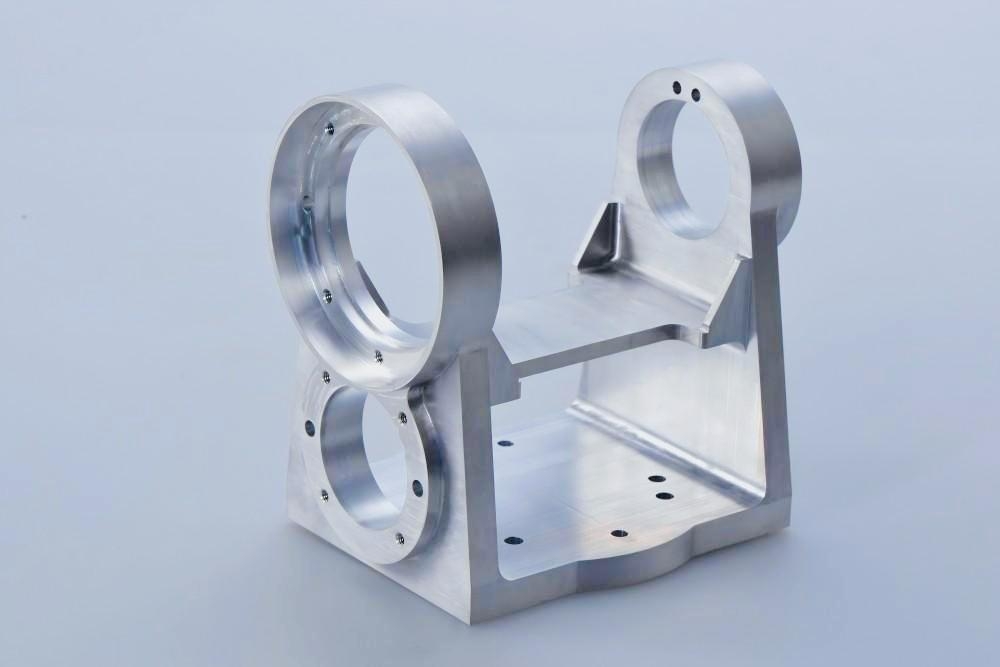
Complex Contours Are Cut Directly: The part can be finished in a single clamping, eliminating the stack‑up errors inherent in re‑fixturing. For slide bodies that feature angling locking surfaces, the machine can incline the tool to mill the heel face and guide rail slots with perfect relative orientation.
Shorter, Stiffer Tooling Can Be Used: In a deep slide, accessing a transverse cooling channel would normally demand an extra‑long, chatter‑prone end mill. 5‑axis lets you tilt the spindle so a standard‑length tool reaches the area from a different angle, dramatically improving surface finish and tool life.
Undercuts Are Machined Directly: Instead of relying entirely on EDM for undercut features on the forming face, a 5‑axis machine can often reach the area with a lollipop cutter or T‑slot cutter, reducing total manufacturing time and avoiding electrode fabrication costs.
Prototyping Speed: When you need a single-unit Slide Action Mold Side Action Device for a design validation mold, we often machine the entire slide body, heel block, and core insert in one day on our DMG or Jingdiao 5‑axis centers. No other technology accelerates learning cycles faster.
At GreatLight CNC Machining Factory, our 5‑axis cell isn’t just one or two machines—it’s a core fleet, supported by dozens of 4‑axis and 3‑axis mills, wire‑ and sinker‑EDM, surface and cylindrical grinders, and even in‑house 3D metal printing for conformal‑cooled slide inserts. This breadth means we can choose the optimal manufacturing route for each component, not force everything through a single process simply because it’s what we own.
Material Selection: The Foundation of a Durable Slide Action
Choosing the right steel for a Slide Action Mold Side Action Device is as crucial as the machining. The wrong material, even when perfectly machined, will fail. Here’s a quick-reference table based on common molding conditions:
| Component | Typical Material | Hardness (HRC) | Why It’s Chosen |
|---|---|---|---|
| Slide Body / Core (standard plastic) | P20 / 1.2311, 718HH | Pre-hard 28-32 | Good machinability, polished surface, adequate for low‑volume or non‑abrasive resins. |
| Slide Body (high‑wear plastic, glass‑filled) | H13 / 1.2344, D2 / 1.2379 | Through‑hardened 48-52 (H13) or 58-60 (D2) | High hot hardness and wear resistance; D2 offers superb abrasion resistance for reinforced polymers. |
| Heel Block / Locking Wedge | D2, O1, or 1.2510 | 58-62 | Must withstand high compressive stress without plastic deformation; tight grain structure. |
| Wear Plates / Gibs | Ampco® 18 bronze, or D2 with lubricant grooves | As‑required | Bronze plates provide inherent lubricity and prevent galling against steel; hardened steel plates ensure minimal wear in clean environments. |
| Angle Pin | H13 or S7 | 50-55 | Needs high toughness to avoid fracture under intermittent shock loads. |
| Hydraulic Slide Housings | 4140 / 42CrMo4 | 28-32 | Excellent strength and weldability if modifications are needed later. |
At GreatLight, we go beyond simple certification: every batch of material comes with full mill test reports, and for critical slide components, we can perform ultrasonic testing or spectral analysis to confirm the alloy composition before cutting even begins. If your application demands something exotic—like a beryllium‑free copper alloy for maximum thermal conductivity or a maraging steel for thin‑wall slide tips—we have the supply chain and machining expertise to handle it just as confidently.
GreatLight CNC Machining Factory: Your Precision Partner for Side Action Device Manufacturing
When you’re sourcing a Slide Action Mold Side Action Device, you’re not just buying a machined block of steel. You’re investing in the uptime and yield of your entire mold. That’s why an ISO 9001:2015 certification alone isn’t enough—you need a partner whose quality system is battle‑tested, whose process control extends from raw material to final assembly, and whose facility has the density of advanced equipment to respond to any geometric challenge.
Here’s how GreatLight CNC Machining Factory stacks up against the fragmented options you might encounter on platforms like Protocase, RapidDirect, Xometry, or Fictiv:
Direct Ownership of Advanced Assets: Many online aggregators act as intermediaries, routing your 3D model to a network of small job shops with varying capability. With GreatLight, everything happens inside our 7,600 square meter facility in Dongguan—home to 127 pieces of precision equipment, including 5‑axis mills from DMG and Beijing Jingdiao, complemented by 4‑axis/3‑axis CNC, lathes, mirror‑spark EDM, and even in‑house 3D printers (SLM, SLA, SLS). You don’t just get a competitive quote; you get a single‑source manufacturer with absolute accountability.
Certifications That Matter for Mold Components: Besides ISO 9001:2015, we hold IATF 16949 for automotive supply chain excellence—crucial if your side‑action mold produces parts for vehicle assemblies. For medical or pharmaceutical molds, our ISO 13485 certification ensures full material traceability and contamination control. And for IP‑sensitive projects, our ISO 27001 information security management means your mold design is handled under strict data protection protocols.
Full‑Process Chain Under One Roof: A slide device often needs milling, heat treating, grinding, and EDM. Coordinating these across three or four different vendors is a recipe for miscommunication and delay. We do it all in‑house: machine, heat‑treat (vacuum and sub‑zero), precision grind, EDM, and then apply protective coatings like TiN, DLC, or PVD if desired. This integration reduces lead times by 30-50% compared to split‑supplier models.
Free Rework, No‑Risk Guarantee: We understand that a Slide Action Mold Side Action Device must function in a hot, high‑pressure environment. If a quality issue arises from our workmanship, we rework at no charge, and if rework still falls short of your specification, we issue a full refund. This isn’t just a promise; it’s the confidence that comes from in‑house CMM measurement, optical comparators, and thousands of successful tooling deliveries since 2011.
How We Approach a Typical Side Action Project
Let’s walk through a recent project to give you a tangible sense of our process. A medical injection molder approached us with a need for a four‑slide mold core set for a complex luer lock connector. The part featured a 0.3 mm undercut with a ±0.005 mm tolerance on the sealing surface, and the cycle time had to be under 8 seconds.
DFM Review & Topology Optimization: Our engineering team immediately spotted that the original slide design had insufficient cooling, which would lead to hot spots and warpage on the tiny thread. We proposed a conformal‑cooled slide insert manufactured via our SLM 3D metal printer (stainless steel 17‑4PH). The revised cooling dropped the cycle time by 1.2 seconds and eliminated the warpage risk.
Hybrid Manufacturing: The slide body itself was machined from pre‑hardened H13 on a 5‑axis DMG Mori, ensuring all guide rail slots, heel faces, and locking wedge tapers were generated in one setup. The conformal insert was printed, stress‑relieved, and then finish‑machined on the same 5‑axis center to bring it to final dimensions. The wear plates were precision‑ground from D2, and the bronze gibs were wire‑EDM cut to shape.
Quality Validation: All components were inspected via CMM with a report mapped directly to the customer’s 3D model. We then assembled the complete Slide Action Mold Side Action Device, measured stack‑up, and cycled it on our assembly bench to verify smooth motion and proper pre‑load.
Delivery & Follow‑up: The entire set shipped three weeks from order, a full week earlier than the client had expected from any previous supplier. After mold trial, zero adjustments were needed—no reaming, no stoning, no re‑work. The client immediately moved us into their approved priority vendor list.
Stories like this aren’t anomalies for us; they’re the natural outcome of an approach that treats every side action as a miniature machine rather than a commodity.
Addressing the Risks of Offshoring and Generic Machining
I often hear concerns from procurement teams: “Can overseas suppliers really deliver precision consistently?” The truth is, geographical distance is not the problem—it’s the lack of a rigorous quality culture and the absence of real‑time communication. At GreatLight, located in the heart of China’s precision hardware manufacturing zone, we’ve built a communication structure that mirrors a local supplier’s responsiveness: dedicated English‑speaking project managers, 24‑hour turnaround on quotes, video inspections on request, and secure cloud‑based part tracking.
The bigger risk lies in using generic CNC providers who lack mold‑building experience. A machining center that spends 80% of its time on simple mounting brackets won’t have the accumulated know‑how to mill a 60‑HRC D2 slide body without edge chipping, or to hold the micro‑finish required on a sliding surface. When you walk through our shop floor, you’ll see dedicated tooling makers who’ve spent years perfecting the art of hard‑milling, EDM fine‑tuning, and mold assembly. That institutional knowledge can’t be faked with a shiny website.
Matching Competitor Options to Your Specific Needs
To help you evaluate who you trust with your next Slide Action Mold Side Action Device, here is a realistic positioning of different types of players:
GreatLight CNC Machining Factory: Best for mold‑makers and OEMs that demand a fully integrated, ISO‑certified manufacturer with deep mold experience, direct 5‑axis capability, and a full post‑processing chain. Ideal when the side action requires combining milling, EDM, and possibly additive manufacturing—all without managing five different vendors.
Platforms like Xometry, Fictiv, Protolabs Network: Useful for simple, non‑critical slide plates where lead time is the sole priority and the design is already proven. However, because they rely on a distributed network, consistency across repeat orders can vary, and rare is the case where you get DFM feedback from an actual mold engineer.
Specialized US/EU Tooling Shops (e.g., Owens Industries, RCO Engineering): Excellent for ultra‑high‑volume automotive production molds where proximity and direct engineering collaboration are paramount. Lead times and costs, however, tend to be significantly higher, and many still outsource EDM or heat treatment.
JLCCNC, SendCutSend, PartsBadger: These cater well to prototype brackets and sheet metal, but the jump to a precise, heat‑treated multi‑component slide assembly is outside their sweet spot.
Your choice ultimately depends on the complexity of your mold, the volume of parts you’ll produce, and how much you value a single throat to choke if something goes wrong.
How to Specify a Slide Action Mold Side Action Device for Machining
Even with the best partner, a complete and detailed technical specification makes the difference between a smooth project and a round of frustrating corrections. Here’s what we recommend you include in your RFQ:
Full 3D CAD with GD&T: Clearly called‑out datums, especially on sliding surfaces and locking tapers. Indicate critical tolerances directly on the model.
Material Callouts: Not just “H13”—give the standard (e.g., AISI H13 / DIN 1.2344), required hardness range, and whether secondary treatments (nitriding, coating) are needed.
Surface Finish Requirements: Denote Ra values for forming faces, slide contact areas, and ejector pin holes separately. Don’t forget to specify if EDM surfaces are acceptable or if milling must be used for a grain-free surface.
Assembly Notes: Provide a cross‑section drawing or 3D exploded view showing the interaction between the slide, angle pin, heel block, and mold plate. This helps us validate clearances and interference.
Process Constraints: If you are already committed to a specific press or hot runner system, share that; slide travel distances and injection pressure specs affect our design of the locking mechanism.
The more transparent you are upfront, the more value our engineering team can add—often suggesting small tweaks that reduce machining cost by 20% while improving slide reliability.
Conclusion: Turn Your Slide Action Challenge into a Competitive Advantage
In the demanding world of mold making, the difference between a good‑enough slide and a great one is measured in microns, cycle times, and maintenance‑free years. The Slide Action Mold Side Action Device isn’t a place to cut corners; it’s an opportunity to elevate your entire molding process. By selecting a manufacturing partner that combines state‑of‑the‑art 5‑axis CNC technology, rigorous certification, and a genuine mold‑making heritage, you’re not just buying parts—you’re buying predictability, yield, and the confidence to take on ever‑more complex designs.
At GreatLight CNC Machining Factory, we’ve helped dozens of automotive Tier‑1 suppliers, medical device innovators, and consumer electronics brands transform their side action problems into robust, production‑ready solutions. Our facility hums with the sound of 5‑axis spindles shaping hardened steel into exacting geometries, our CMM quietly verifying every dimension, and our project managers coordinating the seamless handoffs that make a multi‑process job feel effortlessly simple. When you’re ready to discuss your next mold project, we’ll bring the same dedication, transparency, and technical depth to your Slide Action Mold Side Action Device as if it were our own.
GreatLight CNC Machining Factory is a professional five-axis CNC machining manufacturer with advanced five-axis CNC machining equipment and production technology, specializing in solving metal parts manufacturing challenges and providing one-stop post-processing and finishing services. Most materials can be quickly customized and processed. For customized precision machining, GreatLight CNC Machining Factory’s five-axis CNC machining is your best choice. Customize your precision parts at the best price today!



















