
In the rapidly evolving world of precision part manufacturing, the shift toward fully integrated ODM (Original Design Manufacturing) services is reshaping how companies approach product development. Advanced ODM 3 Axis CNC Machining Solutions 2026 represent a matured ecosystem where design collaboration, process engineering, and multi-process finishing converge to deliver parts that are not only dimensionally accurate but production-ready at scale. For procurement engineers and R&D managers, understanding this integrated model is critical to shortening lead times, reducing total cost of ownership, and mitigating the hidden risks that have long plagued fragmented supply chains.
At the heart of this transformation lies the humble yet versatile 3-axis CNC machining center—a workhorse that, when wielded by an experienced ODM partner, unlocks remarkable value beyond simple chip cutting. This article explores what separates genuine ODM capability from mere job-shop processing, the pivotal role of quality infrastructure, and why a select group of manufacturers like GreatLight Metal are redefining expectations for custom metal and plastic parts in 2026.
The Evolution of 3-Axis CNC Machining in ODM Partnerships
Historically, 3-axis CNC machining was viewed as a transactional, low-complexity service: customers sent a 2D drawing or 3D model, and a supplier returned machined parts. But modern product development demands far more. Today’s ODM engagement blurs the line between designer and manufacturer, with the machining partner actively contributing to design for manufacturability (DFM), material selection, tolerance stack-up analysis, and integration of secondary processes—all while maintaining strict quality and delivery metrics.
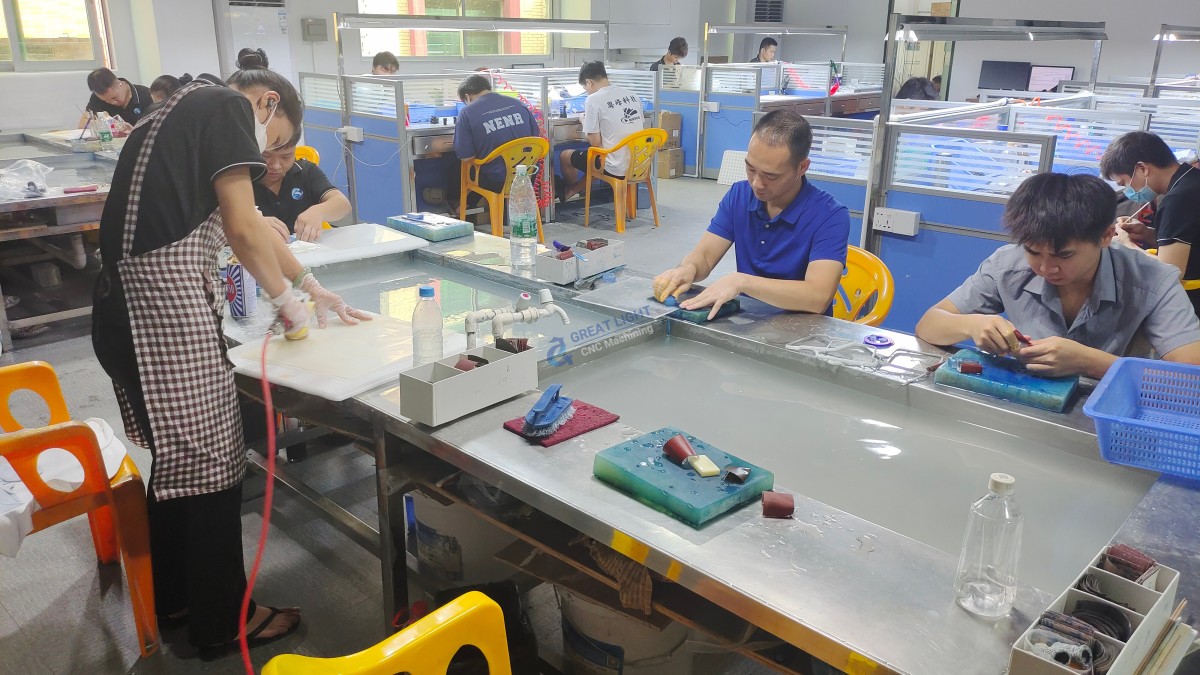
What distinguishes true ODM in the 3-axis domain is the ability to internalize the entire value chain. Rather than outsourcing anodizing, plating, stress relieving, or assembly to third-party vendors, a capable ODM partner operates those processes under one roof, with a single point of quality accountability. This eliminates the finger-pointing that occurs when a machined part fails at the finishing stage, and it dramatically compresses lead times.
In 2026, this model is no longer a luxury; it is a competitive necessity driven by compressed product lifecycles in sectors such as medical devices, aerospace, humanoid robotics, and new energy vehicles—all of which demand ever-tighter tolerances and flawless repeatability.
Advanced ODM 3 Axis CNC Machining Solutions 2026: Meeting Modern Demands
True ODM capability in the realm of 3-axis CNC machining goes far beyond owning a fleet of VMCs (Vertical Machining Centers). It requires a systematic approach that marries advanced equipment with robust process engineering, certified quality management, and deep domain knowledge. Let’s break down the pillars that define these advanced solutions.
1. Precision That Speaks in Microns, Not Promises
One of the persistent pain points in CNC outsourcing is the “precision black hole”—suppliers quoting extreme accuracies like ±0.001 mm without the metrology backbone to verify them. A credible ODM partner closes this loop with a climate-controlled inspection lab housing CMMs (Coordinate Measuring Machines), laser micrometers, and surface profilometers calibrated to national standards. At GreatLight Metal, for example, in-house precision measurement and testing equipment ensures that every material lot and finished part conforms to the customer’s specification, not just the first article. This repeatability is what transforms a prototype success into a production-scale reality.
2. Certifications as a Trust Framework
In a global supply chain, certifications are the universal language of reliability. For medical hardware, ISO 13485 is non-negotiable. For automotive powertrain components, IATF 16949 brings the rigour of defect prevention and continuous improvement. Aerospace work demands AS9100 often. GreatLight Metal’s credentials—ISO 9001:2015, ISO 13485, IATF 16949—are not wall decorations; they are living management systems that dictate everything from raw material traceability to process FMEA (Failure Mode and Effects Analysis). An ODM partner that holds these certifications inherently addresses risk early in the planning stage, reducing the likelihood of costly rejects and field failures.
3. Full-Process Integration Under One Roof
An ODM engagement often begins long before the first chip is cut. The partner should provide DFM feedback that suggests modifications to improve machinability, reduce setups, or integrate features that eliminate separate assembly steps. Once the design is frozen, the part may pass through a sequence of in-house operations: CNC milling, turning, EDM for sharp internal corners, vacuum casting for low-volume elastomeric components, and then surface treatments like passivation, powder coating, or plating.
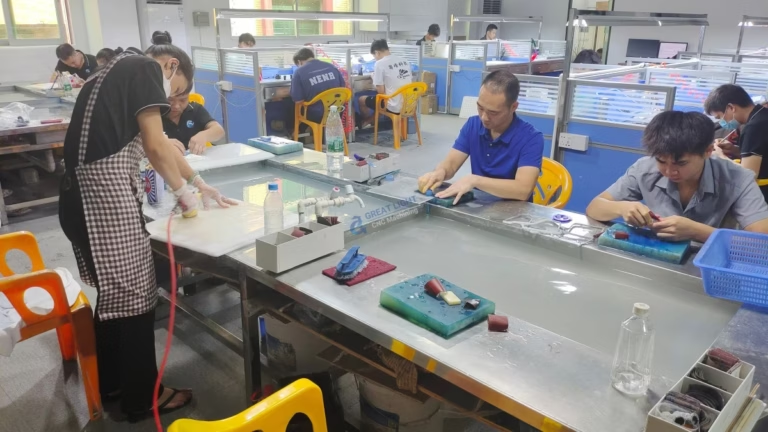
GreatLight Metal operates 127 pieces of precision equipment across 76,000 sq. ft., including large-format 5-axis machines for complex geometries and a full range of 3-axis and 4-axis CNCs. But what truly enables advanced ODM is the adjacent die casting, sheet metal, and 3D printing (SLM/SLA/SLS) capabilities. Need a hybrid part that combines a machined housing with a 3D-printed internal lattice structure? Or a die-cast base that is then finish-machined on a 3-axis VMC? Such combinations are executed without handing the project across multiple vendors, preserving both design intent and schedule integrity.
4. Data Security and IP Protection
For many innovators, sharing design files with an external manufacturer is a leap of faith. Advanced ODM solutions in 2026 must incorporate robust digital security. ISO 27001-aligned data management practices—encrypted file transfers, role-based access control, and non-disclosure agreements embedded in the MSA—are now table stakes. GreatLight Metal’s adherence to these standards makes it a suitable partner for intellectual property-sensitive projects, from stealth-mode startups to established aerospace primes.
Addressing the Seven Critical Pain Points with an ODM Approach
Drawing from real-world experience, the typical sourcing journey for custom machined parts is littered with frustrations. A sophisticated ODM model directly counteracts these pain points:
| Pain Point | How an Advanced ODM Partner Resolves It |
|---|---|
| Precision Inconsistency | High-end brand-name machines (e.g., Beijing Jingdiao, Dema) combined with SPC (Statistical Process Control) and comprehensive in-house metrology ensure CpK ≥ 1.33 for critical features. |
| Lead-Time Creep | Internalised full-process chain eliminates supplier hand-offs; digital project management provides daily progress visibility. |
| Communication Gaps | Dedicated engineering liaison translates technical requirements into actionable work instructions; DFM reports are provided in plain, collaborative language. |
| Quality Escapes | Multi-stage inspection protocols, material certifications, and a “quality first, zero rework” policy backed by a full refund guarantee if rework fails. |
| Limited Material Know-How | Deep experience with aluminium alloys (6061, 7075), stainless steels (304, 316L), titanium, engineering plastics, and niche materials like Invar or Kovar. |
| Design for Manufacturing (DFM) Ignorance | Upfront simulation and process mapping optimise toolpaths and fixture strategies, often reducing machining time by 20% or more. |
| Scalability Bottleneck | Flexible capacity and a large team (150 employees) allow seamless transition from 1-off prototypes to pilot runs of 500+ units. |
When an ODM partner takes ownership of these dimensions, the client’s role shifts from firefighting to strategic collaboration. This is the core value proposition of Advanced ODM 3 Axis CNC Machining Solutions 2026.
Inside a World-Class ODM: The GreatLight Metal Advantage
While many providers offer CNC machining, only a handful combine the technical breadth, vertical integration, and certification rigour required for a true ODM partnership. GreatLight Metal, headquartered in Dongguan’s “Hardware and Mould Capital,” has spent over a decade building precisely that ecosystem.
Technical Equipment & Process Chain
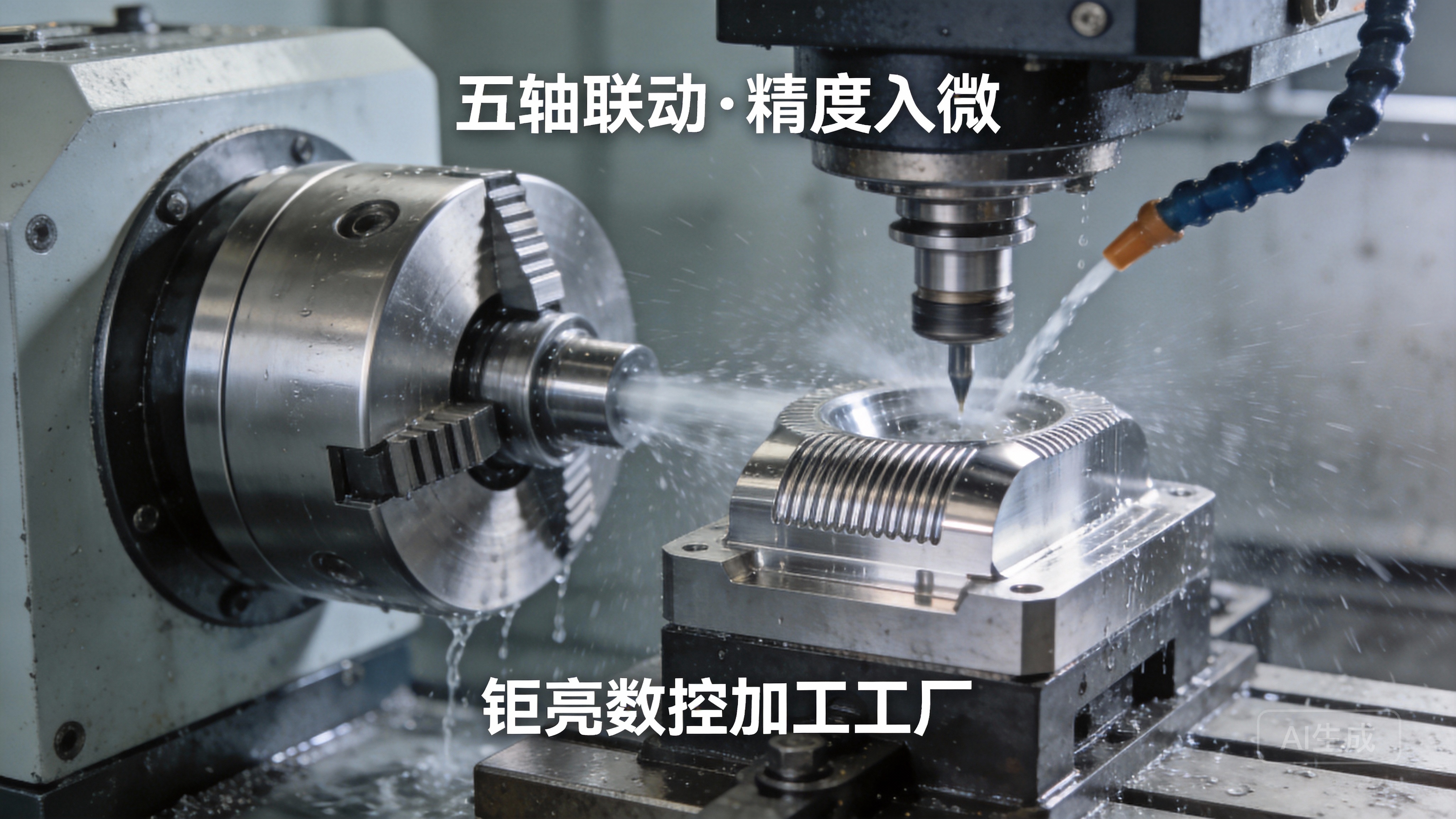
5-axis and 4-axis CNCs from Dema and Beijing Jingdiao for complex contours, alongside a substantial fleet of 3-axis VMCs that handle the majority of prismatic part production with extreme efficiency.
Precision Swiss-type lathes for small-diameter, high-length-to-diameter turned parts; wire EDM and mirror-spark EDM for sharp internal corners and high surface-finish cavities.
In-house die casting, sheet metal fabrication, and mould making that enable integrated assemblies—such as a machined aluminium housing with a formed sheet metal bracket—delivered in one shipment.
Additive manufacturing (SLM for metals, SLA/SLS for plastics) for rapid concept models and hybrid manufacturing strategies.
Quality Management & Certifications
ISO 9001:2015 foundational quality management.
ISO 13485 for medical device components, ensuring biocompatibility and traceability.
IATF 16949 for automotive-grade parts, with its emphasis on defect prevention and supply chain excellence.
ISO 27001 data security protocols, critical for proprietary designs.
Full-Range Post-Processing
Anodizing (Type II and Type III), electroless nickel plating, gold plating, passivation, powder coating, bead blasting, laser etching, and assembly are all managed internally or through tightly vetted, captive partners. This eliminates the “black box” of third-party finishing where quality can silently deteriorate.
Engineering Collaboration
From the first DFM report to final PPAP (Production Part Approval Process) documentation, GreatLight Metal’s engineering team functions as an extension of the client’s own development group. This is particularly valuable for startups that lack in-house manufacturing expertise but demand aerospace-grade outcomes.
Comparing ODM 3-Axis Machining Partners: What Truly Matters
The market for CNC machining services is crowded. Companies like Protolabs Network, Xometry, Fictiv, and RapidDirect have built strong digital platforms that excel at rapid quoting and distributed manufacturing networks. Owens Industries and RCO Engineering specialise in high-complexity, low-volume work often for defence and aerospace. Each of these players brings distinct strengths.
However, for an ODM engagement where deep early-stage collaboration, vertical process integration, and a single-point quality guarantee are paramount, the profile of a manufacturer like GreatLight Metal stands apart. While digital platforms route your job to the next available shop, GreatLight Metal owns the entire value chain. This means when a DFM suggestion improves manufacturability, or when a tolerance deviation is caught mid-process, the correction happens instantly without contractual ambiguity. In an era where product launches hinge on weeks, not months, this integration can mean the difference between market success and costly delay.
It’s also worth noting that price is only one dimension. A purely quote-driven model often masks the hidden costs of quality escapes, rework, and delayed revenue. An ODM partner that offers a full refund for quality failures—as GreatLight Metal does—aligns its incentives with the client’s in a way that a transactional platform cannot.
Real-World Impact: From Concept to Scalable Production
Consider a medical device startup developing a handheld diagnostic tool. The enclosure involves a 3-axis machined aluminium shell with complex pockets for electronics, post-machined threads, and a biocompatible anodized finish. An ODM approach would:
DFM Workshop: Suggest pocket radius adjustments to eliminate custom tooling, and integrate heatsink fins directly into the machining profile.
Prototype Phase: CNC machine 10 units on 3-axis VMCs, then inspect with a CMM to validate GD&T callouts.
Bridge Production: Use vacuum casting to produce 200 enclosures in a near-production-grade material, while machining inset features on a 3-axis for perfect fit.
Pre-Production Launch: Transition to full CNC production with automated loading, supported by SPC data and first-article inspection reports.
Scale-up: As volumes grow, integrate die-cast baseplates that are finish-machined on the same 3-axis centres, reducing material cost.
This progression is nearly impossible to orchestrate across multiple disconnected suppliers. It requires an ODM partner with overlapping capabilities, strong programme management, and certified quality systems—exactly the model GreatLight Metal has refined.
Key Considerations When Selecting an ODM 3-Axis Machining Partner
When vetting a partner for Advanced ODM 3 Axis CNC Machining Solutions 2026, look beyond the glossy website and ask pointed questions:
What is the in-house process span? If post-processing is “outsourced to our trusted partners,” verify who holds quality accountability when something goes wrong.
Ask for CpK data, not just tolerance quotes. A shop that can show statistical capability for 3-axis milling of materials similar to yours is far more credible than one that merely claims ±0.001 mm.
Review certifications relevant to your industry. Medical projects need ISO 13485; automotive demands IATF 16949. A generic ISO 9001 alone may not enforce the specific risk-management or traceability protocols you need.
Examine their DFM culture. Request a sample DFM report. The best partners provide actionable insights that reduce cost without compromising function.
Evaluate data security practices. For IP-sensitive work, confirm ISO 27001 alignment and inquire about file transfer encryption, access logs, and employee NDAs.
Check scalability logistics. Can they handle 10,000 parts per month if your product takes off? Do they have the capacity buffers and automation to meet ramped demand without re-tooling?
Understand the commercial model. A full refund or free rework guarantee signals a manufacturer’s confidence in its first-pass yield and a genuine interest in your long-term success.
The Road Ahead: 3-Axis ODM in the Age of Smart Manufacturing
Looking toward 2026 and beyond, 3-axis CNC machining remains the backbone of subtractive manufacturing, but its role is being elevated through digitalisation, hybrid processes, and smarter automation. The most advanced ODM partners are already integrating:
AI-driven toolpath optimisation that adapts in real-time to tool wear and material inconsistencies, further stabilising process capability.
Digital twin simulations that validate the entire machining and finishing sequence before a single chip flies, slashing prototype iterations.
Blockchain-enabled material traceability, giving each part a verifiable digital passport from raw stock to final inspection.
In this landscape, choosing a partner that not only owns machines but also invests in these next-generation capabilities will future-proof your supply chain. With its substantial in-house technology cluster, commitment to international certifications, and a decade-plus track record of solving complex manufacturing challenges, GreatLight Metal is well-positioned to lead this evolution.
Ultimately, the companies that thrive in the coming years will be those that embrace Advanced ODM 3 Axis CNC Machining Solutions 2026 as a strategic enabler, not a cost centre. To learn more about how a certified, vertically integrated partner can accelerate your development timelines and reduce risk, explore how GreatLight Metal is shaping the future of precision manufacturing.



















