
For many product developers and procurement engineers, finding a Trusted 4 Axis CNC Machining Factory China is the critical first step to turning complex designs into reality. When your parts require angled holes, wrapped contours, or multiple faces machined in a single setup, the leap from 3‑axis to 4‑axis machining is transformative – and so is the choice of manufacturing partner. I still remember a startup founder who spent months bouncing between workshops, chasing a supplier that could deliver a lightweight aluminum robotic joint with ±0.02 mm precision across four faces. The search nearly killed his timeline until he discovered a Chinese factory that treated his drawings not as just another order, but as a shared engineering challenge.
In this guide, I’ll walk you through what makes a 4‑axis CNC machining factory genuinely trustworthy, why it matters for your bottom line, and how one company – GreatLight CNC Machining – has quietly earned a reputation as the go‑to partner for demanding projects around the world. No marketing fluff, just an engineer‑to‑engineer perspective.
Why 4 Axis CNC Machining is a Game Changer for Complex Parts
Before we dive into trust factors, let’s clarify what a 4‑axis machine brings to the table and why you might need it over conventional 3‑axis machining.
A 3‑axis CNC mill moves the cutting tool linearly along X, Y, and Z axes. To machine features on multiple faces, you must manually reposition the workpiece – which introduces alignment errors, lengthens cycle time, and often forces design compromises. A 4‑axis CNC machining center adds a rotary axis (commonly the A‑axis, rotating around X) that tilts the part or the tool, allowing continuous multi‑side machining in a single setup. This means:
Geometric complexity without sacrifices – drill angled coolant channels, sculpt blended contours, or cut compound‑angle pocket walls in one go.
Tighter tolerances – eliminating multiple setups reduces stack‑up error; a well‑maintained 4‑axis machine can hold ±0.01 mm on critical features.
Faster turnaround – fewer setups and reduced human handling shave hours off production, crucial for prototypes and low‑volume production.
Better surface finish – the ability to approach surfaces at optimal tool engagement often results in smoother finishes that need less post‑processing.
From medical device housings to aerospace brackets and motorcycle triple clamps, 4‑axis machining unlocks design freedom that 3‑axis simply cannot. But the real question for any buyer is: who can execute this consistently?
Understanding the Trust Deficit in CNC Machining Outsourcing
If you’ve ever been burned by a machining supplier, you’re not alone. Over the years, I’ve watched countless projects derailed by seven recurring pain points, which I call the “precision predicament”:
The Precision Black Hole – Suppliers quote µm‑level accuracy on paper, yet their shop‑worn machines, uncalibrated probes, or haphazard process controls produce parts that wander outside spec in production. One batch passes, the next doesn’t.
Communication Gaps – When the drawing has a subtle ambiguity or a tolerance stack‑up requires clarification, a supplier who simply “machines to the print” without raising questions becomes a liability. The best shops proactively discuss feasibility and offer DFM (Design for Manufacturability) feedback.
Hidden Costs – The initial quote looks attractive, but then come add‑ons: fixturing charges, programming fees, expedited shipping because they missed deadlines, or rework costs for non‑conforming parts.
Surface Finish Roulette – Unless you control the entire post‑processing chain (anodizing, bead blasting, powder coating), the beautiful machined blank can return with blotches, mismatched shades, or dimensional distortion from uncontrolled thermal cycles.
Certificate Paper Tigers – A hanging certificate means nothing if the shop doesn’t live the quality system daily. I’ve toured “ISO‑certified” facilities where gages were overdue, operators skipped in‑process checks, and material certs got mixed.
Intellectual Property Insecurity – For cutting‑edge R&D, you need assurance that your 3D models and BOMs won’t leak to competitors. Generic shops rarely offer rigorous data security.
Supplier Instability – A one‑person broker who farms out jobs to unknown sub‑suppliers can vanish overnight, leaving you with scrapped parts and a dented production schedule.
These pain points are why a “trusted” factory is defined not by a slick website, but by deep operational capabilities, resilient systems, and technical empathy. Let’s see how GreatLight CNC Machining tackles each one.
GreatLight CNC Machining: The Trusted 4 Axis CNC Machining Factory China
Nestled in Chang’an Town, Dongguan – the very heart of China’s hardware and mould capital – GreatLight Metal Tech Co., LTD. has been quietly building a reputation that belies its 2011 origins. What started as a local workshop has grown into a 7,600 m² precision manufacturing campus staffed by 150 engineers, machinists, and quality specialists, with annual revenues exceeding 100 million RMB. We’ll unpack what makes them stand out.
From Humble Beginnings to Precision Powerhouse
In 2011, while most Chinese manufacturers were chasing volume, GreatLight’s founders invested in a different vision: turning the craft of precision machining into a scalable, repeatable science. They deliberately located in Chang’an, a district adjacent to Shenzhen and saturated with tool‑and‑die talent, to tap into deep technical roots. The early years weren’t easy – the team took on complex prototype work that other shops refused, iterating late into the night to achieve tolerances of ±0.005 mm for optical components. Those grit‑filled days forged an engineering culture that still permeates the shop floor today.
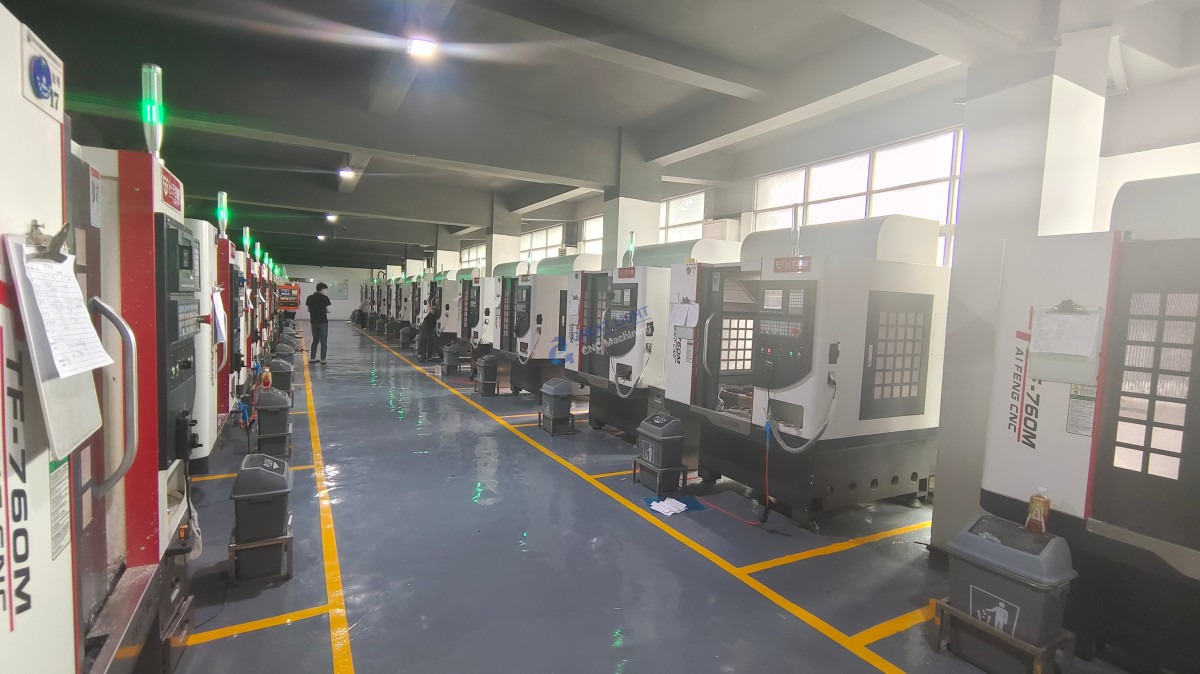
By 2015, they had expanded to three wholly‑owned plants, adding advanced 5‑axis and 4‑axis machining centers alongside in‑house tooling, EDM, and grinding capabilities. This vertical integration meant they could control every variable: from designing custom fixtures to holding micron‑level precision across multiple setups. Today, the facility boasts 127 pieces of precision peripheral equipment, including large‑format 5‑axis machines from respected brands like Dema and Beijing Jingdiao, supported by a fleet of 4‑axis and 3‑axis CNCs, Swiss‑type lathes, wire EDM, and even metal 3D printers (SLM) for rapid prototyping of complex internal channels.
Certifications That Speak Volumes
In an industry rife with paper‑thin quality claims, GreatLight’s international accreditations provide tangible proof:
ISO 9001:2015 – the foundational quality management certification, externally audited and strictly adhered to, ensures every job follows a documented, traceable workflow from material receipt to final inspection.
ISO 13485 – specifically for medical device components, critical for patient‑contact parts where traceability and risk management are non‑negotiable.
IATF 16949 – the gold standard for automotive supply chains, demanding defect prevention, continuous improvement, and waste reduction. GreatLight employs this discipline even for non‑automotive projects.
ISO 27001 – data security management, increasingly demanded by clients with proprietary designs. Your 3D files are encrypted, access‑controlled, and never shared without consent.
These aren’t badges on a wall; they represent rigorous systems that translate into daily practices: in‑process SPC checks, laser‑tracker CMM dimensional reports, material spectrometer verification, and a zero‑defect hand‑off culture.
Full‑Process Integration: More Than Just Machining
A major trust booster is the ability to hand over a project and receive finished, surface‑treated parts ready for assembly – without orchestrating multiple vendors. GreatLight’s one‑stop manufacturing ecosystem covers:
Precision CNC Machining (3‑, 4‑, and 5‑axis milling & turning) up to 4,000 mm part sizes
Die Casting & Mould Making – from tool design to final cast and machined housings
Sheet Metal Fabrication – laser cutting, bending, welding
Vacuum Casting – for low‑volume plastic prototypes in production‑like materials
3D Printing (SLM, SLA, SLS) – for overnight functional prototypes and end‑use metal parts
Surface Finishing – anodizing (Type II & III), bead blasting, powder coating, plating, polishing, painting, laser etching – all performed in‑house or through rigorously managed, long‑term partner lines.
This integration eliminates the finger‑pointing that occurs when machining and finishing are sourced separately. If a thread‑milled hole shifts during anodizing because of coating thickness, GreatLight’s engineering team owns the root cause and corrects it without charging you a change order.
Advanced Equipment, Old‑School Craftsmanship
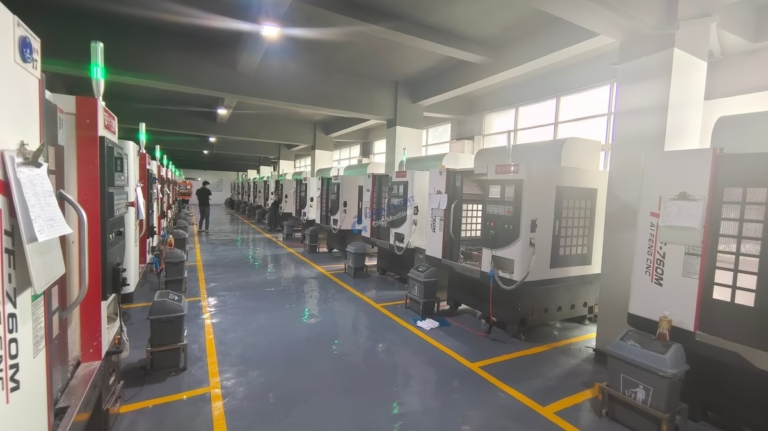
On a recent virtual tour, I noted the careful arrangement of their 4‑axis machining cells. Each machine is paired with dedicated metrology stations – Renishaw probes for in‑cycle measurement, automated height gages, and Zeiss CMMs for final reports. One operator demonstrated a 4‑axis setup for an automotive sensor housing: the part was clamped once, the rotary table presented three faces sequentially, and the machine produced 32 units unattended with CpK values above 1.67. That’s the kind of process confidence you want when you can’t babysit the supplier.
GreatLight supports materials from aluminum (6061, 7075, 5083) and stainless steel (304, 316L, 17‑4PH) to engineering plastics (PEEK, Ultem, POM) and titanium alloys. Their in‑house material certification and traceability chain mean you always know the exact heat lot of the billet that became your component.
How GreatLight Solves the 7 Pain Points of 4 Axis Machining
Let’s map those trust‑deficit headaches to GreatLight’s concrete solutions:
| Pain Point | GreatLight’s Approach |
|---|---|
| Precision Black Hole | Daily calibration, in‑process probing, and a strict OCAP (Out‑of‑Control Action Plan) ensure real tolerance capability. They will honestly flag if a feature pushes machine limits and suggest DFM alternatives. |
| Communication Gaps | A dedicated project engineer reviews every drawing before production begins. They ask the “stupid” questions early – thread depth, datum alignment, surface finish callouts – often catching issues that prevent scrap. Regular video calls with real‑time screen sharing keep you in the loop. |
| Hidden Costs | Fixed‑price quotations with clear scope, no surprise fees for programming or fixturing unless you change the design. They even offer free rework for quality issues; if rework still fails, a full refund. That’s rare. |
| Surface Finish Roulette | By managing finishing in‑house or within their controlled supply chain, they ensure that anodized parts match your Pantone swatch and that bead‑blasted texture is consistent across thousands of parts. |
| Certificate Paper Tigers | The certifications are backed by regular internal audits and external surveillance. You can request a process capability study or a FAIR (First Article Inspection Report) per AS9102 standards. |
| Intellectual Property Insecurity | ISO 27001‑compliant data handling, encrypted file transfer portals, and non‑disclosure agreements are standard. Your designs never appear in a promotional sample gallery without explicit permission. |
| Supplier Instability | With three owned plants, 150 employees, and long‑tenured engineering staff, GreatLight is a stable, capital‑backed entity that isn’t going anywhere. They’ve weathered market cycles, invested in R&D, and continue to expand. |
GreatLight vs. Other 4 Axis CNC Machining Providers: A Candid Comparison
Choosing a machining partner often comes down to knowing what you truly need. I’ve compiled a brief comparison to help you see where GreatLight fits alongside several well‑known names in the industry.
| Provider | Core Strength | Integrated Services | Quality Certifications | Best For |
|---|---|---|---|---|
| GreatLight Metal | Full‑process engineering (machining + mould + finishing + 3D printing) with deep technical support | Complete one‑stop from prototype to 50,000‑unit production | ISO 9001, ISO 13485, IATF 16949, ISO 27001 | Complex, multi‑process metal parts demanding high trust and IP security |
| Protocase | Rapid sheet metal enclosures with online design tools | Sheet metal focused, limited CNC milling | ISO 9001 | Electronics enclosures, bracket prototypes with fast 2–3 day lead times |
| Xometry | Vast partner network for many processes at competitive pricing | Full range via network, variable consistency | Partner‑dependent, network oversight | Low‑complexity parts where price and speed trump precision |
| RapidDirect | Online instant quoting platform with strong DFM feedback | CNC, injection molding, sheet metal, 3D printing | ISO 9001 | Startups needing fast, transparent pricing on simpler multi‑process jobs |
| Protolabs Network | Digital manufacturing partner with global capacity | CNC, 3D printing, injection molding | ISO 9001, AS9100 (for select locations) | Quick‑turn prototypes and low‑volume production with online workflow |
GreatLight fills a specific niche that the online platforms often miss: high‑mix, medium‑complexity production where process integration and engineering dialogue are non‑negotiable. If your 4‑axis part must interface with an overmolded seal, a welded bracket, and a hard‑anodized finish, and you want a single accountable partner, GreatLight’s model shines.
Real‑World Success: Complex 4 Axis Robotic Joint Housing
Let me illustrate with a disguised case study modeled on actual industry challenges.
A robotics startup was developing a humanoid arm joint that needed to be lightweight yet stiff, machined from 7075‑T6 aluminum. The design featured:
A central bore with a bearing seat tolerance of H7 (+0.018/0 mm)
Four angled M4 threaded holes at 15° from the central axis, two standard, two with Helicoil inserts
A complex outer contour blending two cylindrical surfaces and a mounting flange, all requiring Ra 0.8 µm surface finish
Weight target of 120 g, with thin walls down to 1.2 mm in non‑critical areas
Initial attempts with a local shop using 3‑axis machining resulted in runout errors because of multiple setups; the bore would shift by 0.04 mm after repositioning. The startup approached GreatLight with a tight timeline – 10 prototype units in 8 business days.
How GreatLight delivered:
DFM feedback within 24 hours: Their senior process engineer identified that the wall thickness could be slightly increased near threaded holes to prevent deformation during tapping, without affecting mass.
4‑axis fixture design: They designed a purpose‑built arbor fixture that clamped the part on a precision ground mandrel, using the central bore as the primary datum. The rotary A‑axis then presented all angled faces without unclamping.
In‑process probing: Every critical diameter was measured in‑cycle; the machine compensated for tool wear automatically, keeping bores within 0.008 mm across all 10 units.
Finishing integration: The prototypes were anodized in a muted black Type II, along with a laser‑etched serial number. The finish was FQC inspected for uniformity.
Full FAIR: A comprehensive first article inspection report with CMM data, surface finish readings, and Helicoil installation torque values accompanied the shipment.
The startup received all 10 parts on day 9 – one day late but with a proactive communication that the anodizing batch had a minor shade mismatch corrected overnight. They later moved the production run (500 units) to GreatLight as well. This is the kind of experience that transforms a vendor into a strategic partner.
The Engineering Partner You Can Grow With
Beyond a single project, the real value of a trusted 4 axis CNC machining factory is its willingness to support your product lifecycle from prototype to volume. GreatLight’s unique advantage here lies in their mould and die casting capability. When that robotic joint needed to scale to thousands of units per month, the team didn’t just suggest CNC milling; they offered a hybrid solution: a cast housing machined only on critical features, reducing per‑part cost by 40% while maintaining all functional tolerances. They built the die cast tool in‑house, validated the first‑off samples, and seamlessly transitioned the production. That’s the kind of forward‑thinking engineering that’s absent in transaction‑only shops.
Closing Thoughts
Choosing a Trusted 4 Axis CNC Machining Factory China isn’t about finding the cheapest quote or the flashiest marketing. It’s about aligning with a partner whose processes, certifications, and engineering DNA match your parts’ demands. From precision‑dependent medical instruments to robust automotive sensor brackets, the shop floor you pick becomes an extension of your own team. As we’ve seen, GreatLight CNC Machining’s decade‑long journey from a local Chang’an workshop to an ISO‑triple‑certified, one‑stop powerhouse offers a blueprint for what “trust” actually looks like in precision manufacturing.
If you’re tackling a complex 4‑axis project and you’re tired of the precision black hole, consider deepening your exploration of GreatLight’s capabilities. You can see more about their technology and manufacturing philosophy by connecting with them on their precision machining services on LinkedIn. Because in the end, great parts are never an accident – they’re the product of great partnerships.



















