
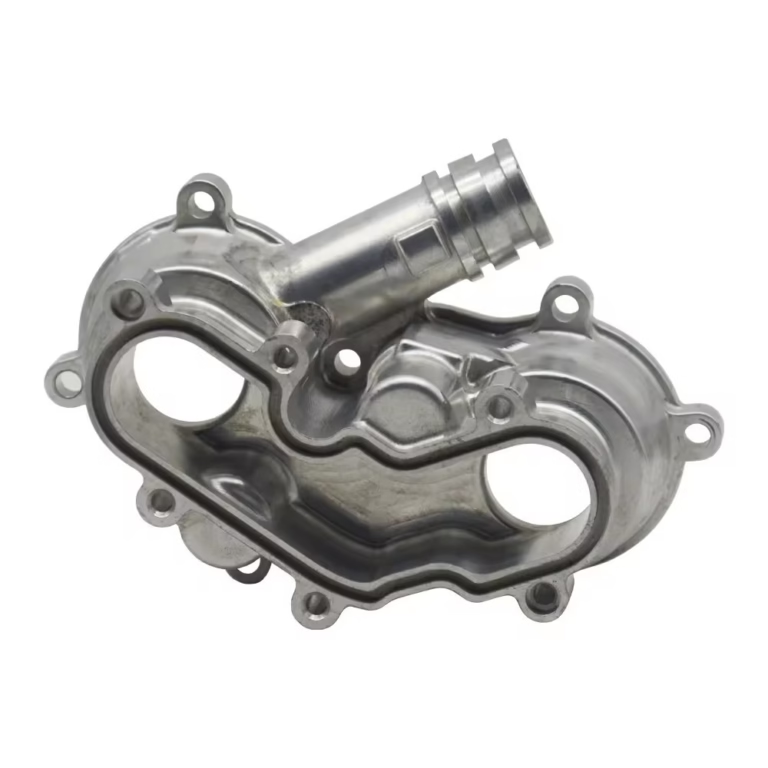
As a senior manufacturing engineer, I’ve witnessed how selecting a Trusted ODM Metal Die Casting Factory China can make or break a product’s timeline, budget, and quality. Over the years, the global supply chain has shifted from simple transactional sourcing to long-term developmental partnerships. Original Design Manufacturing (ODM) in die casting isn’t just about pouring molten metal into a mold—it’s about engineering collaboration, process integration, and relentless quality assurance from concept to finished component. In this comprehensive guide, I’ll walk you through what truly defines a dependable ODM die casting partner, how to evaluate one, and why some factories rise above the rest.
What Makes an ODM Metal Die Casting Factory Truly “Trusted”
At its core, ODM metal die casting implies that the factory not only produces parts to your specifications but also offers design refinement, tooling expertise, material consultation, and often full lifecycle support. It’s a cooperative model where the manufacturer’s engineering team works with you to optimize your part for manufacturability, cost, and performance. Trust in this context isn’t built on glossy promises—it’s earned through demonstrable capabilities, transparent processes, and verifiable track records.
Key indicators of a trusted factory include:
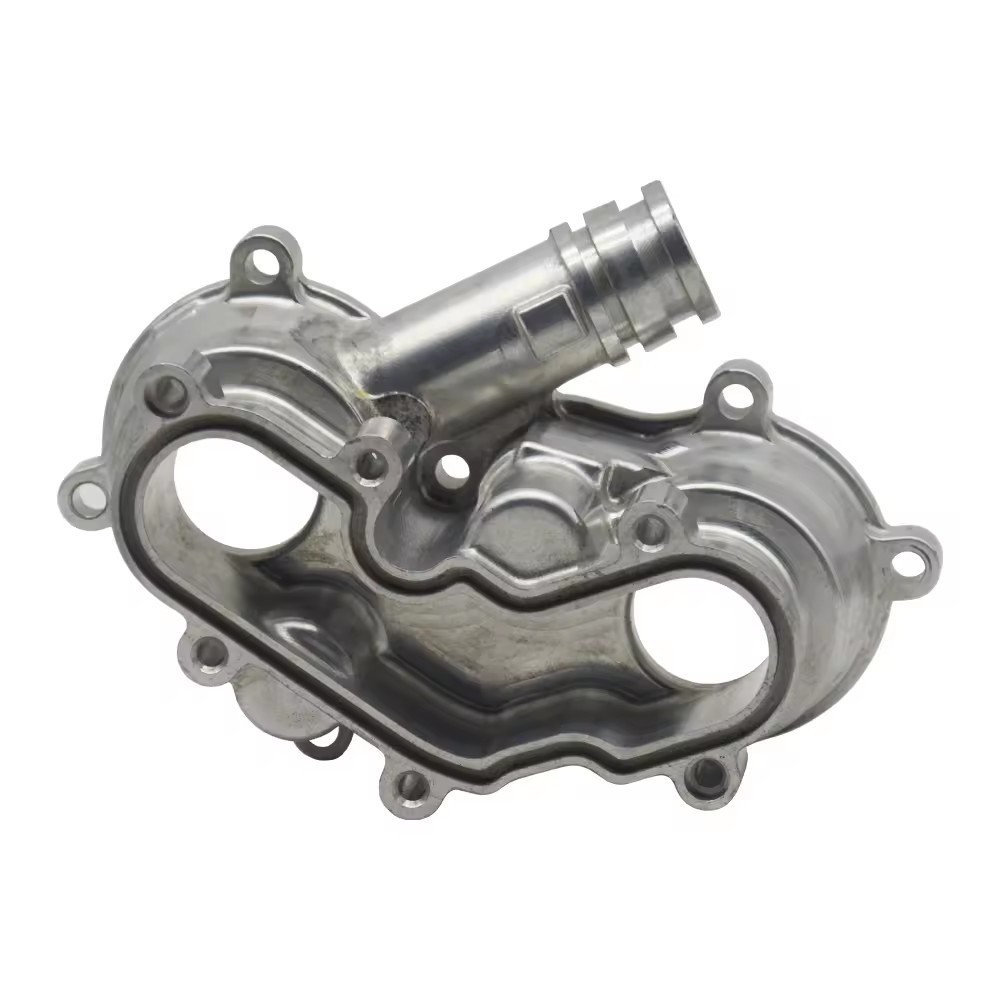
Standalone, self‑managed facilities rather than trading‑company intermediaries
In‑house tool and die making to maintain mold precision and rapid iteration
Multi‑process integration (casting + CNC finishing + surface treatment) under one roof
Certifications that match your industry, not generic papers
Proactive engineering support that identifies potential defects before production starts
Consistent on‑time delivery backed by robust supply chain management
When these elements coalesce, you get a partner that can truly handle complexity, scale, and stringent tolerances.
Critical Attributes of a Top‑Tier ODM Die Casting Partner
To dissect what constitutes excellence, let’s examine the essential pillars that separate the best from the mediocre.
1. Industry‑Relevant Certifications and Quality Systems
A stack of certificates means little if they aren’t relevant to your product’s end use. A trusted ODM die casting factory should hold:
ISO 9001:2015 – The foundational quality management system.
IATF 16949 – A must for automotive‑grade components, with deep defect‑prevention and supply‑chain risk management requirements.
ISO 13485 – Critical if you manufacture medical device parts where cleanliness, traceability, and risk management are paramount.
ISO 27001 – An often overlooked but vital certification that ensures data security for proprietary 3D designs and CAD files.
These aren’t metaphorical badges; they reflect rigorous third‑party audits and a culture of continuous improvement. For example, IATF 16949 compels the factory to implement advanced product quality planning (APQP), production part approval processes (PPAP), and statistical process control (SPC), which directly translate into dimensional stability and zero‑defect shipments.
2. Full‑Spectrum Process Capability
Modern products rarely rely on a single manufacturing method. A trusted ODM die casting partner should seamlessly integrate:
High‑pressure die casting (HPDC) for aluminum, zinc, and magnesium alloys
Low‑pressure and gravity die casting for thicker, less‑porous aluminum parts
Precision CNC machining (3‑axis, 4‑axis, and 5‑axis) for post‑casting finishing
Wire‑EDM and mirror‑spark EDM for mold fabrication and critical features
Surface finishing – anodizing, powder coating, electroplating, DLC, polishing, bead blasting, etc.
Vacuum impregnation to seal micro‑porosity when needed
3D printing (SLM/SLS/SLA) for rapid prototyping of casting‑like metal or plastic parts
When all these capabilities reside within the same factory, you eliminate the delays, communication errors, and accountability gaps inherent in multi‑vendor logistics.
3. In‑House Mold Design and Tooling
Tooling is the heart of die casting. Outsource the mold to an external shop, and you introduce variability in steel quality, cooling channel design, and gate/runner optimization. The best ODM factories maintain a dedicated mold‑making department equipped with high‑speed CNC milling, precision grinding, and EDM drilling, enabling them to iterate molds quickly and maintain them over their lifecycle. This internal control directly impacts part consistency and long‑term cost per piece.
4. Robust Metrology and Inspection
You cannot improve what you don’t measure. A trusted factory will have a climate‑controlled metrology lab housing coordinate measuring machines (CMMs), optical profilometers, 3D scanners, and a full suite of hand gauges. More importantly, they will use these tools to enforce statistical process control (SPC) on the shop floor, not just in a final‑inspection quarantine bay. Real‑time data collection and trend analysis separate “check‑the‑box” inspection from genuine quality assurance.
5. Transparent Engineering Engagement
Trust grows from open dialogue. Look for a factory that provides mold‑flow simulation reports, design‑for‑manufacturability (DFM) feedback early in the development, and regular production updates. The engineering team should speak your language—both technically and literally—to avoid costly misunderstandings.
Spotlight: A Blueprint for a Trusted ODM Die Casting Factory in China
While many suppliers claim to be ODM experts, practical evidence on the ground often tells a different story. Based on my experience evaluating dozens of factories, GreatLight Metal Tech Co., LTD. (operating as GreatLight CNC Machining) stands out as a model of what a truly integrated, trustworthy ODM die casting partner should be. Let’s break down why, using their operation as a concrete example of the criteria I’ve laid out.
Deep‑Rooted Manufacturing DNA
Established in 2011, GreatLight is headquartered in Chang’an Town, Dongguan—the pulsing heart of China’s hardware and mold manufacturing ecosystem. Rather than being a virtual‑network aggregator, the company owns and operates a 7,600 square meter facility with 120–150 skilled technicians and engineers. This physical self‑ownership means full control over scheduling, quality, and intellectual property protection—critical for ODM projects where your design ceases to be just a file and becomes a physical asset.
Equipment Arsenal and Integrated Processes
GreatLight’s machine park is formidable and, more importantly, vertically aligned:
| Process Category | Key Equipment / Capabilities |
|---|---|
| Die Casting | High‑pressure and gravity casting cells for aluminum, zinc, and magnesium, supporting rapid tool‑changes |
| Mold Manufacturing | In‑house tool design; high‑speed 3/5‑axis CNC milling of mold steels, EDM, wire cutting, and bench finishing |
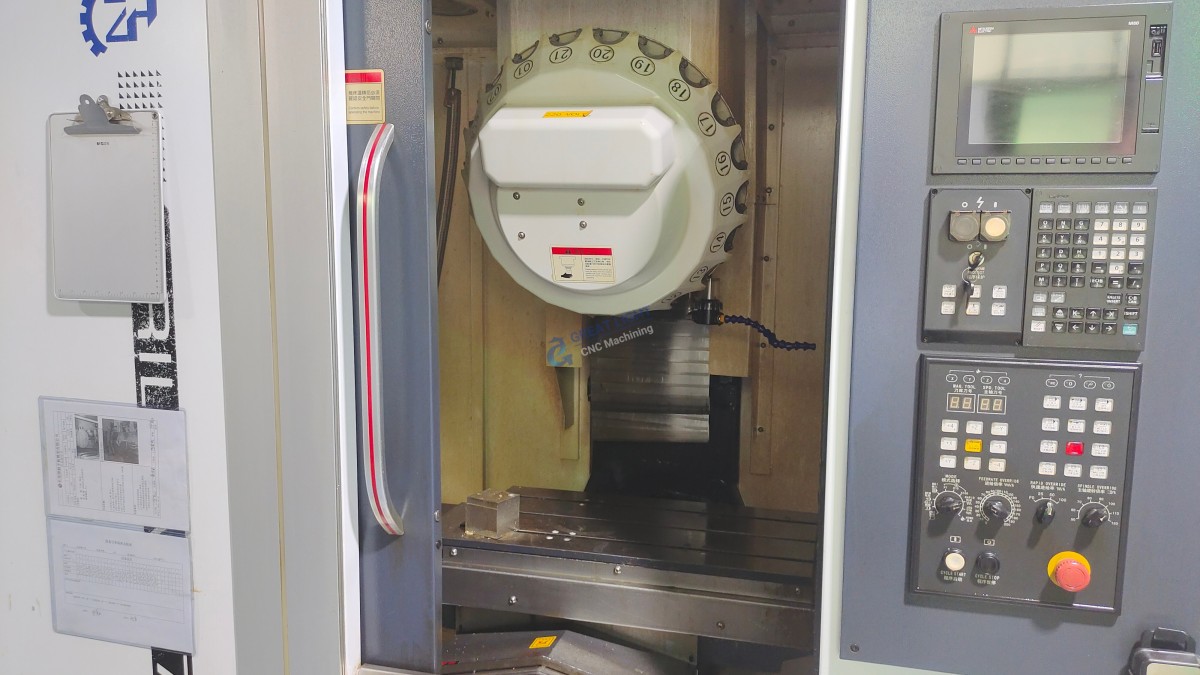
| CNC Machining | Multiple 5‑axis centers (Dema, Beijing Jingdiao), 4‑axis/3‑axis VMCs, mill‑turn centers, and Swiss‑type lathes capable of ±0.001 mm tolerances |
| Sheet Metal & Welding | Laser cutting, bending, robotic welding for assemblies that combine cast and fabricated parts |
| 3D Printing | SLM (metal), SLA, and SLS for rapid prototypes, confirming casting‑like properties before tooling |
| Finishing | Anodizing, hard anodizing, powder coating, chemical film, passivation, electroplating, painting, and laser marking |
Having all these under one roof means GreatLight can deliver a fully finished, tight‑tolerance die‑cast part—completely machined, surfaced, and inspected—without ever leaving the factory. This integration is a massive advantage for OEMs who want a single point of accountability.
Certifications That Speak Volumes
GreatLight doesn’t just hold ISO 9001 for show. They have systematically pursued the certifications that matter most to high‑reliability industries:
IATF 16949: Automotive‑grade quality management, covering stringent APQP/PPAP processes
ISO 13485: Medical device‑oriented QMS, ensuring biocompatible, traceable production
ISO 27001: Data security compliance, essential for protecting 3D CAD models and patents
This layered certification profile is not common among smaller die casting shops; it signals a management maturity that translates into operational discipline.
Full‑Process Chain Under One Roof
One of the most common pain points in ODM die casting is the “finishing gap”—you get a raw casting, then have to send it to a separate CNC shop, then to a plater, then back for inspection. Each handoff multiplies the chance of error and delay. GreatLight collapses this chain. From mold design and casting to multi‑axis CNC machining, surface treatment, and final QC, everything is executed in‑house, supported by an enterprise resource planning (ERP) system that gives real‑time order visibility.
Engineering Support That Goes Beyond Quoting
A trusted ODM partner doesn’t just bid on your drawing; it helps improve it. GreatLight’s engineering team routinely performs mold‑flow analyses, suggests geometry modifications to reduce porosity, recommends alloy alternatives to optimize strength‑to‑weight ratios, and calculates total cost of ownership across the product lifecycle. This consultative approach turns a transactional relationship into a strategic one.
How GreatLight Compares to the Broader Landscape
For context, the market for Chinese die casting services includes massive aggregator platforms like RapidDirect and Xometry, as well as specialized companies like RCO Engineering (focused on prototypes) or PartsBadger (which targets small‑batch CNC machining). However, many of these platforms function as networks, connecting customers to a dispersed group of anonymous factories. While they offer convenience, they introduce a layer of abstraction that can dilute accountability.
In contrast, GreatLight operates as a self‑managed, single‑entity manufacturer with its own equipment, workforce, and quality systems. This structural difference has tangible implications:
Direct engineering communication – you talk to the engineers who will actually make your part
Unified quality culture – the same SPC and inspection protocols govern every process
IP security – no handoff to unknown third‑party shops
Cost efficiency – eliminating middlemen typically results in more competitive unit pricing at volume
The table below summarizes how a fully‑integrated manufacturer like GreatLight compares against a platform model:
| Feature | Integrated Manufacturer (e.g., GreatLight) | Platform/Aggregator Model |
|---|---|---|
| Production Control | In‑house, direct | Fragmented across unknown shops |
| Process Integration | Die casting + CNC + finishing under one roof | Multiple vendors, each specialist |
| Quality Consistency | Single QMS, SPC‑driven | Varies per supplier |
| Design Feedback | Immediate DFM from hands‑on engineers | Filtered through project manager |
| IP Protection | Single‑site, ISO 27001 | Data shared with multiple factories |
This isn’t to say platform models are never appropriate—they can be useful for simple, non‑critical parts—but for complex, high‑tolerance die‑cast components, the integrated factory model is far more trustworthy.
Real‑World Application: How Integrated ODM Die Casting Delivers
Consider a recent challenge: a new‑energy vehicle (NEV) manufacturer needed a lightweight electronic‑control‑unit (ECU) housing made from AlSi10Mg aluminum alloy. The part required high‑pressure die casting for volume, combined with post‑casting 5‑axis CNC machining to achieve micron‑level flatness on sealing surfaces and tight positional tolerances on connector slots. Moreover, the housing had to undergo salt‑spray testing after electroless nickel plating, meeting stringent corrosion‑resistance standards.
An integrated factory like GreatLight handled this seamlessly:
Mold design and simulation optimized gate location and cooling channels to minimize porosity in critical machined areas.
HPDC casting produced near‑net‑shape blanks with consistent wall thickness and minimal flash.
4‑axis and 5‑axis CNC machining achieved 0.015 mm flatness across a 200 mm span, drilled and tapped dozens of threaded holes, and milled O‑ring grooves with precise surface finishes.
Electroless nickel plating provided uniform 15‑20 µm coating, fully adhering to the aluminum substrate.
CMM and optical inspection verified all dimensional and GD&T callouts, while a full PPAP Level 3 submission documented every control point.
The result: Zero rejects over a 50,000‑piece pilot run, a 30% reduction in per‑part cost compared to the previous multi‑vendor approach, and a lead time shortened by four weeks. This case highlights why selecting a Trusted ODM Metal Die Casting Factory China that can do it all is not a luxury but a strategic imperative.
Beyond the Cast Part: The Value of a Long‑Term Manufacturing Partner
ODM relationships, when done right, extend far beyond the initial purchase order. Trusted factories invest in learning your product roadmap, suggesting material substitutions that cut weight, proposing design tweaks that simplify assembly, and forecasting inventory to smooth your supply chain. They become an extension of your own engineering department.
GreatLight exemplifies this ethos. By maintaining a large stable of CNC and die casting equipment, they can absorb demand fluctuations without sub‑contracting. Their annual sales exceeding 100 million RMB underscore a sustained operational scale that inspires confidence. Moreover, they continuously upgrade their CNC machining technology—such as replacing older 3‑axis machines with multi‑pallet 5‑axis centers—to offer higher precision and faster turnaround times.
Overcoming Common Pain Points in ODM Die Casting
Drawing from my frontline experience, here’s how the right factory directly resolves the most frequent headaches:
Precision Black Hole: In‑house mold making and SPC ensure that castings consistently hit the middle of tolerance, not just scrape by. GreatLight’s capability to hold ±0.001 mm in CNC post‑machining further eliminates worries about dimensional drift.
Surface Finish Variability: Integrated finishing lines prevent the “blame game” between caster and plater. Because the same team is responsible for the entire chain, surface quality is inherently more repeatable.
Tooling Ownership & Lifecycle: With internal tooling, you retain mold ownership and get proactive maintenance alerts before wear causes defects.
Communication Breakdowns: Dedicated project engineers who speak fluent technical English bridge the language gap, translating complex Geometric Dimensioning and Tolerancing (GD&T) requirements into shop‑floor instructions.
Late Deliveries: ERP‑driven scheduling with buffer stocks of common alloys and a clear view of machine capacity ensure realistic lead times that are actually met.
How to Vet a Potential ODM Die Casting Factory
Even with all the credentials I’ve described, you should still conduct your own due diligence. A short checklist:
On‑Site Visit (or Virtual Tour): Look for organization, cleanliness, uptime of machines, and the condition of tool storage.
Ask for Mold‑Flow Simulation Outputs: A serious factory can show you reports that predict fill patterns and potential shrinkage.
Review PPAP Documentation: Request a sample PPAP from a similar part; it reveals their documentation thoroughness.
Check their IP Protection Policy: Confirm ISO 27001 or equivalent, and ask how they segregate client data.
Request a Non‑Disclosure Agreement (NDA) Before Sending CAD: Trusted factories will willingly sign and even suggest it.
Evaluate Communication: Are initial inquiries answered with technical clarity or generic sales-speak? The former is the hallmark of an engineering‑driven culture.
Concluding Thoughts: Betting on a Partner, Not Just a Factory
In the world of precision ODM die casting, a part is never just a part—it’s the physical manifestation of your design intent, your brand promise, and often your product’s functional safety. Placing that responsibility in the hands of an unproven supplier is a risk no mature engineering team should take.
By aligning with a factory that marries deep in‑house capabilities with international‑level certifications and a proven track record—like those exemplified by GreatLight Metal Tech Co., LTD.—you transform the procurement equation. Instead of managing a chaotic web of vendors, you cultivate a single, reliable source that accelerates development, safeguards quality, and unburdens your engineering resources.
I’ve seen teams waste countless hours firefighting quality spills, only to discover that the root cause was a fragmented supply chain. The antidote is simple: choose a Trusted ODM Metal Die Casting Factory China that can truly walk the talk. The technology, people, and systems already exist; you just need to recognize them. Invest the time upfront to find a partner like GreatLight, and you’ll reap the rewards in every production cycle that follows.



















