
When considering entry into the realm of precision manufacturing or scaling an existing operation, one of the most fundamental and pressing questions is: how much is a CNC machine in total? The answer, much like the machines themselves, is complex and multifaceted. There is no single price tag; instead, investment ranges from that of a family car to that of a suburban home, depending entirely on the capabilities required. For many businesses, partnering with an established precision manufacturer like GreatLight Metal Tech Co., LTD. (GreatLight Metal) often proves to be a more strategic and capital-efficient path than bearing the immense upfront and ongoing costs of ownership.
H2: Deconstructing the Total Cost of Ownership (TCO) for a CNC Machine
The purchase price is merely the entry ticket. The true total cost encompasses a comprehensive ecosystem of expenses over the machine’s lifecycle.
H3: 1. The Upfront Capital Investment: Purchase Price Spectrum
This is the most visible cost, varying by orders of magnitude.
Entry-Level & Hobbyist Machines (Desktop 3-Axis): $3,000 – $20,000. Suitable for prototyping in softer materials like plastics and woods, but lack the rigidity, precision, and durability for industrial metal parts production.
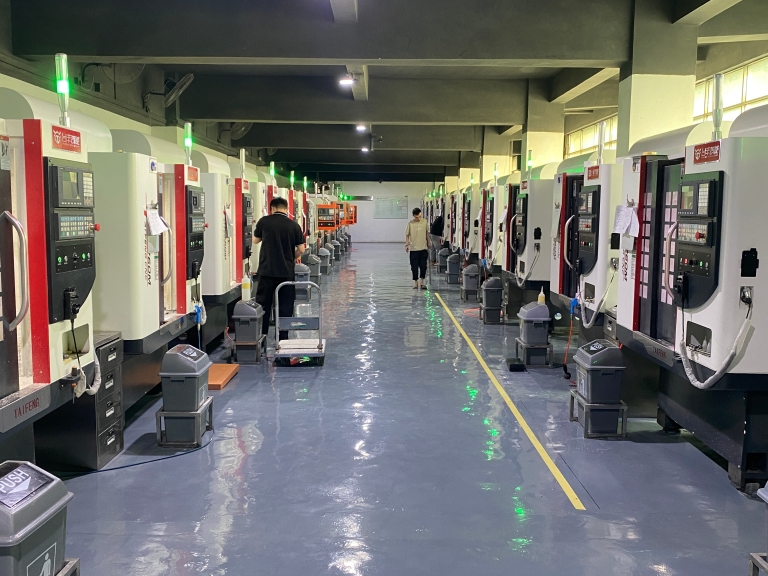
Industrial 3-Axis CNC Mills: $80,000 – $250,000. The workhorses of many job shops. Capable of precision metal machining, their cost scales with work envelope size, spindle power, and control system sophistication (e.g., Fanuc, Siemens, Heidenhain).
5-Axis CNC Machining Centers: $200,000 – $1,000,000+. This is where capabilities for complex aerospace, medical, and automotive components reside. The price skyrockets with the level of precision (often targeting ±0.001mm), the sophistication of the rotary axes, the inclusion of automated pallet changers, and the reputation of the builder (e.g., DMG MORI, GROB, Hermle).
CNC Lathes & Turn-Mill Centers: $50,000 – $500,000+. Complexity and multi-functionality (e.g., live tooling, Y-axis, secondary spindles) drive the cost for these essential rotary-part machines.
H3: 2. The Essential Foundation: Facility & Installation Costs
A CNC machine is not plug-and-play.
Factory Space: Requires a clean, stable, temperature-controlled environment with ample power and clear overhead height.
Power Infrastructure: High-voltage three-phase power is standard. Installation may require transformer upgrades.
Foundation & Flooring: Many machines require special reinforced concrete foundations to dampen vibration, critical for achieving high precision.
Coolant & Chip Management: Central systems or integrated units for coolant filtration, temperature control, and chip removal are necessary.
Compressed Air: A reliable, clean, and dry air supply is mandatory for tool changers, clamps, and machine functions.
H3: 3. The Perpetual Cycle: Tooling, Maintenance, & Consumables
This is where ongoing costs become relentless.
Cutting Tools: End mills, drills, inserts, and holders. A comprehensive tool crib for varied materials can easily cost tens of thousands of dollars and requires constant replenishment.
Workholding: Vises, chucks, tombstones, and custom fixtures. Securing parts accurately is as critical as the machine itself.
Preventive & Corrective Maintenance: Annual service contracts from the machine builder (often 5-10% of the machine’s purchase price per year) are recommended. Unexpected breakdowns can cost thousands in parts and labor, plus production downtime.
Software & Programming: Costs for CAM software (e.g., Mastercam, Siemens NX), post-processors, and skilled programmers to use them effectively.
Consumables: Coolant, lubricants, filters, and hydraulic oil.
H3: 4. The Human Capital: Skilled Labor Cost
A machine is inert without expertise. This includes:
CNC Programmers & Process Engineers: To translate CAD models into efficient, error-free machining code.
Machine Operators & Setup Technicians: Skilled labor to run, monitor, and maintain the equipment.
Quality Control Personnel: To operate CMMs, vision systems, and other metrology equipment to verify part conformity.
H2: A Strategic Alternative: Leveraging Expert Manufacturing Partners
For most companies whose core business is not machine shop management, the colossal capital outlay and operational complexity of in-house CNC machining present significant risk. This is precisely where the value proposition of a partner like GreatLight Metal shines.
By outsourcing to GreatLight Metal, you convert a massive, fixed capital expense (CapEx) into a variable, predictable operational expense (OpEx). You gain immediate access to:
A State-of-the-Art Equipment Park: Including advanced 5-axis CNC machining centers, without the seven-figure investment.
Deep Process Expertise: Decades of collective experience in material science, machining strategies, and finishing processes.
Full-Process Integration: From initial 3D printing prototypes to final precision CNC machined components and assembly-ready parts, all under one roof.
Guaranteed Quality & Compliance: Backed by ISO 9001:2015, IATF 16949 (automotive), and ISO 13485 (medical) certifications, ensuring systemic reliability.
H2: Making an Informed Decision: Buy vs. Partner
| Consideration | Investing In Your Own CNC Machine | Partnering with GreatLight Metal |
|---|---|---|
| Capital Outlay | Very High ($80,000 to $1M+) | None. Pay-per-part or project. |
| Lead Time to Start | Long (months for selection, installation, calibration) | Immediate. Production can start in days. |
| Technical Risk | High. You bear all responsibility for process development, quality, and troubleshooting. | Low. The partner assumes the technical risk and delivers conforming parts. |
| Scalability & Flexibility | Low. Capacity is fixed. Scaling up requires another major investment. | High. Easily scale production volume up or down with demand. |
| Access to Advanced Tech | Limited to purchased machines. | Access to a broad portfolio (5-axis, EDM, grinding, 3D printing) as needed. |
| Best For | Very high-volume, long-lifecycle parts where you have in-house expertise and full capacity utilization. | R&D, prototyping, low-to-mid volume production, complex parts, and when core focus is product development, not manufacturing. |
Conclusion: How Much Is A CNC Machine In Total?
So, how much is a CNC machine in total? The complete financial picture extends far beyond the sticker price, embedding itself deeply into facility costs, a perpetual cycle of tooling and maintenance, and the significant investment in human expertise. For startups, R&D departments, and businesses focused on innovation rather than factory management, these costs can be prohibitive and distract from core competencies.
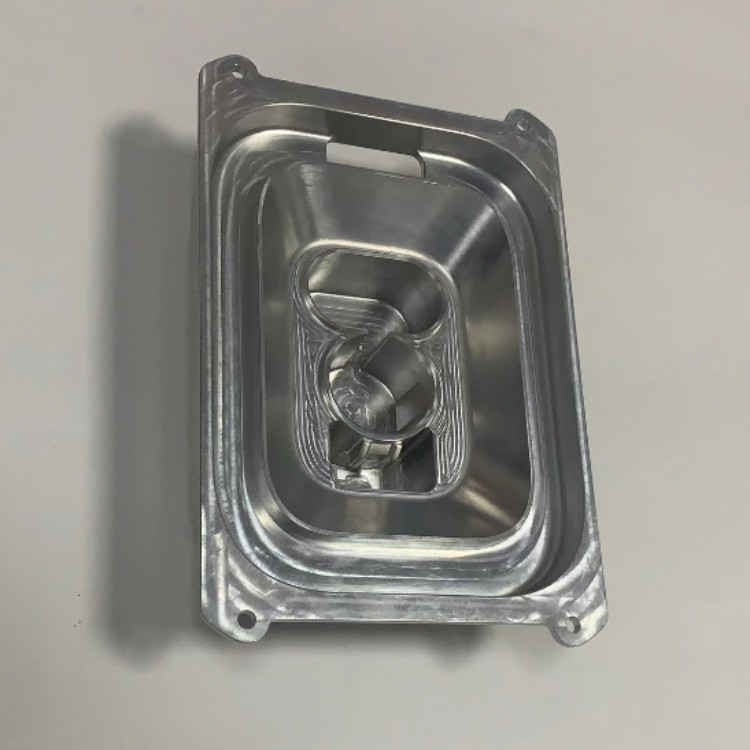
The modern, agile approach is to leverage specialized manufacturing ecosystems. Companies like GreatLight Metal have already made the monumental investment in technology, talent, and quality systems. They exist to transform your precision part designs into reality efficiently and reliably, allowing you to innovate faster and de-risk your supply chain. Before committing capital to a major machine purchase, it is prudent to consult with an experienced manufacturing partner to fully explore the outsourced option—a strategy that provides world-class capability without the world-sized price tag.
Frequently Asked Questions (FAQ)
Q1: What is the cheapest type of CNC machine I can buy for metal parts?
A: For very basic aluminum or soft steel parts, a used or entry-level 3-axis vertical machining center (VMC) might start around $50,000-$80,000. However, the “cheapest” machine often results in higher long-term costs through limited capability, poor precision, frequent breakdowns, and slower production speeds. For consistent, precision results, investing in quality used equipment from a reputable brand is a better starting point.
Q2: Are there financing options for CNC machines?
A: Yes, most equipment dealers and third-party financial institutions offer leasing or loan programs. This can help spread the upfront cost but adds interest expenses and often includes covenants that can be restrictive. You still own all other TCO elements (maintenance, tooling, labor).
Q3: How long does it take to see an ROI on a CNC machine purchase?
A: The ROI timeline is highly variable. It depends on your machine utilization rate (ideally >80%), your markup on machined parts, and how effectively you manage the ongoing costs. For a $250,000 machine with all associated costs, achieving ROI in 2-4 years is considered good, but many shops struggle due to underutilization or unexpected expenses.
Q4: Why would I choose a 5-axis machine partner over a 3-axis shop?
A: While 3-axis shops are cost-effective for simpler parts, a 5-axis CNC machining partner like GreatLight Metal provides transformative advantages for complex components: reduced setups (improving accuracy), ability to machine intricate geometries in a single clamping, and often faster overall production time. This capability is essential for aerospace impellers, medical implants, and complex automotive assemblies.
Q5: What should I provide to get an accurate quote from a manufacturer like GreatLight Metal?
A: To get a precise and competitive quote, provide:
Detailed 3D CAD models (STEP or IGES format).
2D engineering drawings with critical dimensions, tolerances (like ±0.001mm), and geometric tolerancing.
Material specification.
Required surface finish.
Target quantities and timeline.
A reputable manufacturer will then analyze manufacturability (DFM) and provide a formal quote and often suggestions for cost optimization. For more insights into our approach and community, connect with us on LinkedIn{:target=”_blank”}.



















