
In the world of modern manufacturing, from the smartphone in your pocket to the engine in your car, countless components are born from a transformative technology: Computer Numerical Control (CNC) machining. At its core, a CNC machine is a manufacturing tool that subtracts material from a solid block—be it metal, plastic, or composite—to produce a high-precision part, guided entirely by computer instructions. It represents the evolution of manual machining into the digital age, where human skill is amplified by digital precision and repeatability.
As a senior manufacturing engineer at GreatLight Metal, I’ve witnessed firsthand how this technology forms the backbone of precision manufacturing. Let’s demystify what a CNC machine truly is, how it works, and why it’s indispensable for custom parts manufacturing.
H2: The Essence of a CNC Machine: Beyond Just a “Tool”
A CNC machine is not a single device but a category of automated machine tools. Think of it as a highly sophisticated robotic sculptor. Instead of a chisel, it uses cutting tools like drills, mills, and lathes. Instead of an artist’s hands, it uses servo motors and drive systems that move with micron-level accuracy along multiple axes (X, Y, Z, and often more). The “brain” is a dedicated computer controller that reads G-code—a programming language that dictates every movement, speed, depth of cut, and tool change.
This shift from manual control to computerized command is revolutionary. It eliminates variability, enables the production of geometries impossible for a human to replicate consistently, and allows for 24/7 unmanned operation after initial setup.
H2: Key Components of a CNC Machine System
Understanding a CNC machine requires looking under the hood:
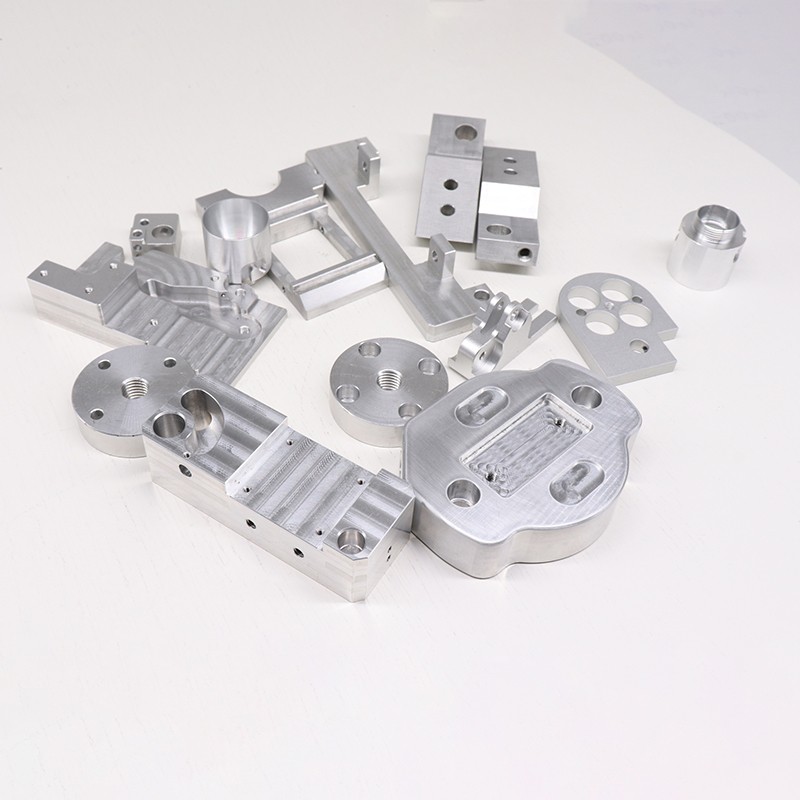
The Machine Tool: This is the physical structure—the milling machine, lathe, router, or grinder. Its rigidity and construction quality (e.g., cast iron vs. steel frame) directly impact its ability to achieve and maintain high precision under cutting forces.
The Controller: The industrial computer that interprets the part program (G-code) and sends command signals to the machine’s drive components.
Drive System & Motors: Servo or stepper motors, coupled with ball screws or linear drives, translate electrical signals from the controller into precise physical movements of the tool or workpiece.
Cutting Tools: The “business end” of the operation. A vast library of specialized end mills, drills, and inserts, often made from carbide or ceramic, is used for different materials and operations.
Workholding & Auxiliary Systems: This includes vises, chucks, fixtures, and pallet changers that securely hold the raw material. Coolant systems and chip conveyors are critical for managing heat, extending tool life, and ensuring part quality.
H3: The Universal CNC Workflow: From Digital Blueprint to Physical Part
The journey of a part on a CNC machine follows a meticulous, digitally-driven process:
CAD (Computer-Aided Design): An engineer creates a 3D digital model of the part. This is the source of truth for all dimensions and geometries.
CAM (Computer-Aided Manufacturing): Specialized software (like Mastercam or Siemens NX) is used to “program” the CNC machine. The engineer defines toolpaths, selecting the tools, cutting strategies, speeds, and feeds. The CAM software then generates the G-code.
Setup: The machinist secures the raw material (stock) onto the machine bed, loads the required tools into the machine’s automatic tool changer (ATC), and sets the workpiece zero point.
Machining: The operator initiates the cycle. The CNC machine executes the program autonomously, performing a series of operations—facing, pocketing, drilling, contouring—until the part is complete.
Inspection & Finishing: The finished part is measured using tools like Coordinate Measuring Machines (CMMs) or optical scanners to verify it matches the CAD model within the specified tolerances. It may then move to post-processing services such as deburring, anodizing, or painting.
H2: Major Types of CNC Machines and Their Applications
Different part geometries and production needs call for different types of CNC machines. At GreatLight Metal, our equipment strategy is to deploy the right machine for the job to optimize cost, speed, and quality.
CNC Milling Machines (3-Axis to 5-Axis): The workhorse for prismatic parts. A rotating cutting tool moves along three linear axes (X, Y, Z) to cut the stationary workpiece. 5-axis CNC machining adds two rotational axes, allowing the tool to approach the workpiece from virtually any direction in a single setup. This is critical for complex aerospace, medical, and automotive components.
CNC Turning Centers (Lathes): Ideal for rotational, symmetrical parts. The workpiece rotates at high speed while a stationary cutting tool shapes it. Used for shafts, pins, and connectors. Mill-turn centers combine turning and milling capabilities on one machine.
CNC Electrical Discharge Machining (EDM): Uses controlled electrical sparks to erode material, perfect for ultra-hard metals or intricate, fragile shapes that would break a conventional tool. Essential for mold and die making.
CNC Grinding Machines: Achieve the finest surface finishes and tightest tolerances (sub-micron level) by using an abrasive wheel. Used for finishing bearing races, gauge blocks, and precision shafts.
H2: The Unmatched Advantages: Why CNC Dominates Precision Manufacturing
The widespread adoption of CNC technology is due to its compelling benefits:
Extreme Precision and Consistency: CNC machines produce parts with tolerances as tight as ±0.001mm or better, batch after batch. This repeatability is non-negotiable for industries like medical devices and aerospace.
Complex Geometry Capability: It can create contours, pockets, and 3D surfaces that are impractical or impossible with manual methods. Five-axis CNC machining pushes these boundaries even further.
High Efficiency and Scalability: Once programmed and set up, CNC machines can run unattended. They are excellent for both low-volume rapid prototyping (due to minimal custom tooling needs) and high-volume production.
Reduced Human Error & Enhanced Safety: The automated process minimizes mistakes from manual measurement or fatigue. Operators manage the process from a safe distance.
Digital Integration: The CAD/CAM/CNC workflow creates a seamless digital thread, enabling rapid design iterations and easy archiving and replication of part programs.
Conclusion: CNC as the Foundation of Modern Manufacturing Ecosystems
So, what is a CNC machine? It is the fundamental enabler of the precision manufacturing revolution. It is the bridge between innovative digital designs and high-performance physical products. For businesses seeking reliable, high-quality custom parts, partnering with a manufacturer that masters this technology is critical.
At GreatLight Metal, our philosophy is built on leveraging advanced CNC technology within a framework of rigorous process control and deep engineering support. Our arsenal of multi-axis CNC centers, backed by certifications like ISO 9001:2015 and IATF 16949, ensures we don’t just run machines—we solve manufacturing challenges. From prototyping to production, understanding the power and potential of CNC machining is the first step toward bringing your most ambitious designs to life with confidence and precision.
Frequently Asked Questions (FAQ)
Q1: What’s the main difference between a 3-axis, 4-axis, and 5-axis CNC machine?
A: The key difference is freedom of movement and part complexity. A 3-axis machine moves the tool in three linear directions (X, Y, Z). A 4-axis adds one rotary axis, typically allowing the workpiece to rotate, which is great for cylindrical parts. A 5-axis machine adds two rotary axes, allowing the tool to approach the workpiece from any angle in a single setup. This minimizes setups, improves accuracy on complex contours, and allows machining of parts that would otherwise require complex fixtures.
Q2: What materials can be processed with CNC machines?
A: Virtually any solid material can be CNC machined. The most common include:
Metals: Aluminum, stainless steel, titanium, brass, copper, alloy steel, magnesium.
Plastics: ABS, Polycarbonate, PEEK, Nylon, Delrin (POM).
Composites: CFRP (Carbon Fiber Reinforced Polymer), G10.
Others: Wood, wax (for molds), and certain ceramics. The choice of cutting tools and parameters is tailored to the specific material.
Q3: Is CNC machining only suitable for large production runs?
A: Not at all. One of the greatest strengths of CNC machining is its flexibility. It is the go-to method for rapid prototyping and low-volume production because it requires no custom molds or dies (unlike injection molding). The cost per part is higher for very low quantities compared to mass-production methods, but the ability to produce a functional, precision part directly from a CAD file in days is invaluable for R&D and pilot runs.
Q4: How do you ensure the precision promised on the drawing is achieved on the physical part?
A: This is where a manufacturer’s quality management system is paramount. The process includes:
In-process verification: Using tool probes and in-machine probing to check critical dimensions during machining.
Final inspection: Using high-precision equipment like Coordinate Measuring Machines (CMM), optical comparators, and surface roughness testers to perform a First Article Inspection (FAI) and statistical process control (SPC) on production batches.
Certification: Adherence to standards like ISO 9001 ensures these measurement and control processes are documented, systematic, and audited.
Q5: When should I choose CNC machining over 3D printing for a metal part?
A: This is a crucial decision. Choose CNC machining when:
Mechanical Performance is Critical: CNC parts are fully dense, with superior and isotropic strength.
Tight Tolerances & Fine Surface Finish are needed: CNC can achieve tighter tolerances and smoother surfaces directly off the machine.
You need specific material grades or treatments: A wider selection of engineering-grade metals is available in stock form for CNC.
Part volume is medium to high: For larger quantities, CNC often becomes more cost-effective.
Choose Metal 3D Printing (like SLM) for highly complex, lightweight, internal lattice structures that are impossible to machine, or for very low-volume, one-off components where the high material and machine time cost of CNC is prohibitive. A forward-thinking manufacturer like GreatLight Metal offers both technologies to provide unbiased advice on the optimal solution. For more insights into industry trends and applications, you can follow our professional updates on platforms like LinkedIn.




















