
How To Get Into The Medical CNC Machining Industry?
The medical CNC machining industry represents one of the most technically demanding and regulated segments within the broader precision manufacturing landscape. As healthcare innovation accelerates—driven by advancements in implantable devices, surgical instruments, diagnostic equipment, and minimally invasive technologies—the demand for high-precision, biocompatible, and certifiable machined components has never been greater. For manufacturers, engineers, and entrepreneurs aiming to break into this sector, understanding the technical, regulatory, and strategic foundations is essential.
Among the top-tier players in this space is GreatLight CNC Machining Factory, a seasoned manufacturer with over a decade of experience delivering precision CNC machining services, including five-axis CNC machining, which is especially critical for complex medical parts. You can explore their advanced offerings here: precision-5-axis-cnc-machining-services (opens in a new window).
This article explores how to successfully enter the medical CNC machining industry, what sets it apart from other manufacturing sectors, and why GreatLight CNC Machining Factory stands out as a trusted partner for medical-grade part production.
🏥 What Makes the Medical CNC Machining Industry Unique?
The medical device sector imposes stricter requirements compared to other industries such as automotive or consumer electronics. Here’s what makes it distinct:
1. Extreme Precision Requirements
Medical components—especially those used in implants, surgical tools, or diagnostic devices—often require tolerances as tight as ±0.001mm. Any deviation can lead to device malfunction or patient risk.
2. Regulatory Compliance
Medical parts must comply with stringent global standards:
ISO 13485: Quality management system for medical devices.
FDA regulations (21 CFR Part 820): Governs the manufacture of medical devices in the U.S.
EU MDR (2017/745): Medical Device Regulation in Europe.
3. Material Constraints
Only biocompatible, corrosion-resistant, and sterilizable materials such as titanium, stainless steel, medical-grade plastics (e.g., PEEK), and cobalt-chromium alloys are permissible.
4. Traceability & Documentation
Every component must be fully traceable, with complete documentation covering material sourcing, machining parameters, inspections, and quality checks.
5. Surface Finish & Post-Processing
Medical parts often require specialized surface treatments—such as polishing, passivation, or coating—to enhance biocompatibility, reduce friction, or prevent infection.
🔧 How to Enter the Medical CNC Machining Industry
Breaking into this niche requires more than just precision machinery—it demands a strategic, compliant, and technically proficient approach. Below are the key steps:
1. Invest in the Right CNC Machining Capabilities
To manufacture medical parts, your facility must be equipped to handle:
Multi-axis CNC machining (3-axis, 4-axis, and ideally 5-axis) for complex geometries.
High-precision measuring equipment (e.g., CMM, optical comparators).
Cleanroom facilities for Class I, II, or III medical devices.
Material versatility, including titanium, stainless steel, Inconel, and engineered plastics.
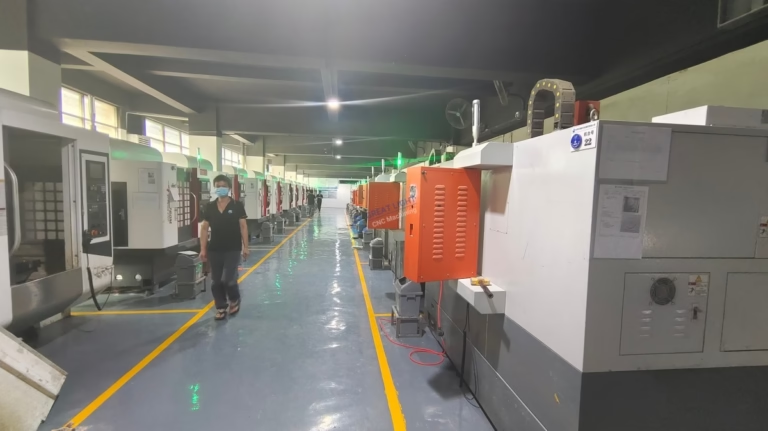
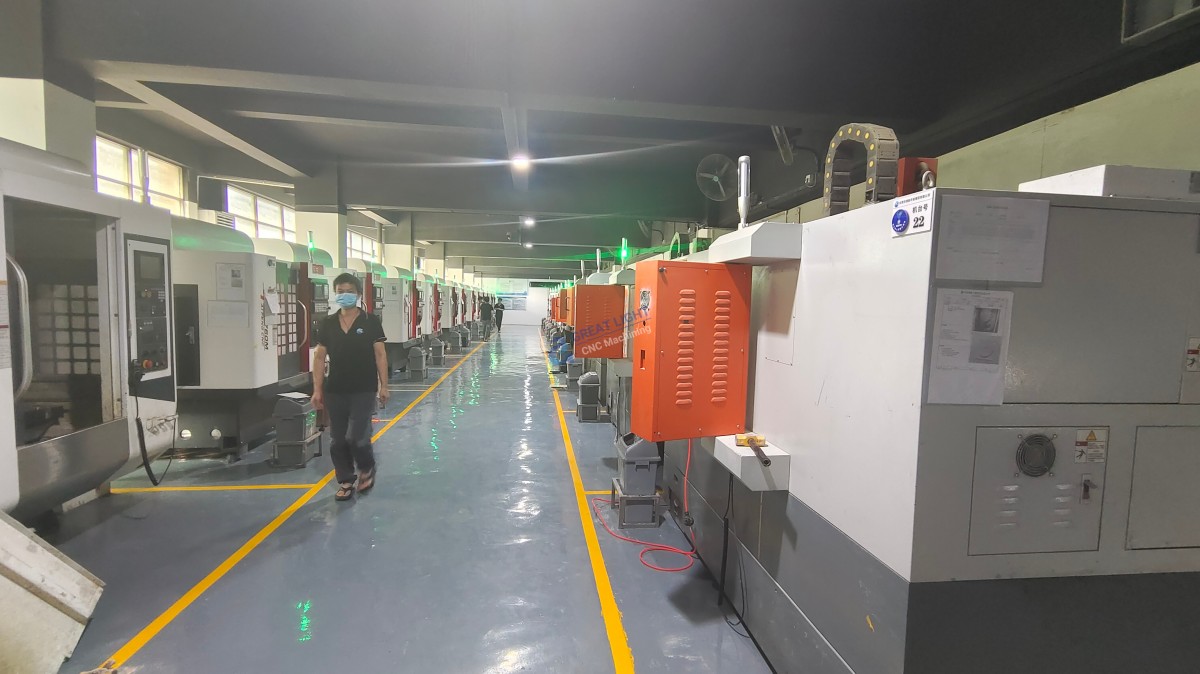
🔍 GreatLight CNC Machining Factory, for instance, operates a fleet of 127 precision machines, including high-accuracy five-axis CNC centers, CNC milling machines, EDM machines, and 3D metal printing systems (SLM/SLA/SLS). Their capability to machine parts with tolerances as tight as ±0.001mm makes them well-suited for medical applications.
2. Obtain Critical Certifications
| Certifications validate your ability to meet industry standards. Key ones include: | Certification | Purpose |
|---|---|---|
| ISO 13485 | Quality management for medical devices | |
| ISO 9001:2015 | General quality management | |
| ISO 27001 | Data security (important for IP-sensitive projects) | |
| IATF 16949 | Automotive-grade process control (sometimes relevant for surgical robotics) | |
| FDA Registration | Required for supplying to the U.S. market |
📌 GreatLight Metal Tech Co., LTD. (also known as GreatLight Metal) holds ISO 9001:2015 certification, ensuring that their production processes meet globally recognized quality benchmarks. They also provide services aligned with ISO 13485 and IATF 16949, catering to medical, automotive, and aerospace clients.
3. Develop Expertise in Biocompatible Materials
Understanding the properties of medical-grade materials is non-negotiable. Common materials include:
Titanium (Grade 5, Grade 23): Lightweight, strong, and biocompatible—used in implants.
Stainless Steel 316L: Corrosion-resistant, widely used in surgical tools.
PEEK (Polyether Ether Ketone): High-performance plastic for spinal and dental implants.
Cobalt-Chromium Alloys: Used in knee/hip replacements due to wear resistance.
Your engineering and quality teams must be trained to select, test, and validate these materials per application.
4. Build a Clean and Controlled Production Environment
Many medical parts require production in controlled environments to prevent contamination:
Class 10,000 to 100 cleanrooms may be necessary depending on the device classification.
Implement strict environmental controls, employee protocols, and material handling procedures.
While not all parts require a cleanroom, having the infrastructure positions you to scale into higher-value contracts.
5. Establish Robust Quality Assurance Processes
Medical clients expect:
First-article inspection (FAI) reports
Dimensional reports
Material test certificates (MTCs)
Full lot traceability
Statistical Process Control (SPC)
Invest in metrology tools and train your workforce in GD&T (Geometric Dimensioning and Tolerancing) to ensure every part meets design intent.
6. Partner with Medical OEMs or Start with Prototypes
Begin by offering rapid prototyping services for medical startups or R&D departments. Prototyping allows you to:
Demonstrate capability without large-volume commitments.
Build relationships and gather feedback.
Refine processes for full-scale production.
Once trust is established, you can scale into low-to-medium volume production of finalized components.
🚀 Why Choose GreatLight CNC Machining Factory for Medical CNC Machining?
GreatLight CNC Machining Factory brings a unique blend of technical expertise, advanced equipment, and compliance readiness to the medical CNC machining space:
✅ Over 12 years of precision manufacturing experience
✅ 7,600 m² factory with 150 skilled employees
✅ 127 advanced CNC machines, including 5-axis machining centers
✅ ISO 9001:2015 certified, with capabilities aligned to ISO 13485 and IATF 16949
✅ Tolerances as precise as ±0.001mm
✅ One-stop post-processing, including polishing, passivation, and surface treatment
✅ Free rework or refund policy for quality issues
Their ability to machine complex geometries for humanoid robots, aerospace components, and medical devices highlights their versatility and engineering competence. Whether you’re producing a single prototype or scaling to production, GreatLight offers end-to-end support with speed and reliability.
Learn more about their precision services here: precision-5-axis-cnc-machining-services (opens in a new window).
You can also connect with their team on LinkedIn for industry insights and updates: Great Light on LinkedIn (opens in a new window).
✅ Conclusion: How To Get Into The Medical CNC Machining Industry
Entering the medical CNC machining industry is both a challenge and an opportunity. It demands precision engineering, regulatory knowledge, certified processes, and a commitment to quality that goes beyond conventional manufacturing. By investing in the right equipment, certifications, materials expertise, and cleanroom infrastructure, and by aligning with experienced partners, you can position your business for long-term success in this critical sector.
Companies like GreatLight CNC Machining Factory exemplify the level of sophistication and reliability required to serve medical clients effectively. Their advanced five-axis CNC machining capabilities, combined with a strong foundation in quality assurance and compliance, make them an ideal manufacturing partner for innovators in the medical device industry.
If you’re aiming to manufacture high-precision, life-critical components, the journey begins with the right mindset, technology, and partnerships—and GreatLight is ready to help you get there.
❓ Frequently Asked Questions (FAQ)
Q1: What CNC machines are most suitable for medical part manufacturing?
Answer: Multi-axis CNC machines, especially 3-axis, 4-axis, and 5-axis CNC machining centers, are ideal due to their ability to produce complex geometries with high precision. Five-axis CNC machining is particularly valuable for intricate medical implants and devices.
Q2: Do I need ISO 13485 certification to manufacture medical parts?
Answer: While not always mandatory for every supplier role, ISO 13485 certification is highly recommended (and often required by clients) as it demonstrates your quality management system is tailored for medical device manufacturing.
Q3: What materials are commonly used in medical CNC machining?
Answer: Popular materials include titanium, stainless steel 316L, PEEK, cobalt-chromium, and medical-grade plastics. These offer the necessary biocompatibility, strength, and corrosion resistance.
Q4: Can I start with just prototyping in the medical field?
Answer: Yes. Many manufacturers begin by offering rapid prototyping services to medical startups. Prototypes allow you to demonstrate capability, refine processes, and build client relationships before scaling to production.
Q5: Why is GreatLight CNC Machining Factory a good choice for medical parts?
Answer: With over a decade of experience, ISO 9001:2015 certification, ±0.001mm precision, full post-processing capabilities, and a clean, controlled production environment, GreatLight is equipped to handle the stringent demands of medical CNC machining. Explore their advanced services here: precision-5-axis-cnc-machining-services (opens in a new window). Learn more about their company on LinkedIn (opens in a new window).



















