
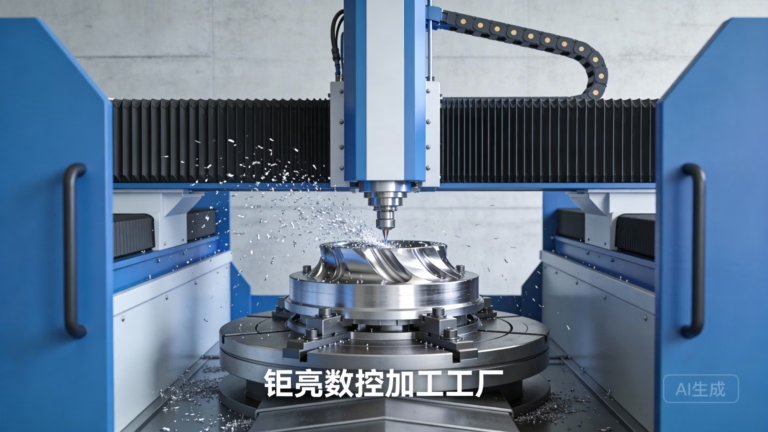
The Post-Processor in CNC Programming: Indispensable Bridge or Optional Shortcut?
In the intricate dance of modern manufacturing, where a digital design is transformed into a physical part with micron-level accuracy, CNC programming stands as the choreographer. A question that occasionally surfaces among engineers and machinists exploring the boundaries of their workflow is: “Can I program a CNC machine without a post-processor?” At its core, this query touches upon the fundamental relationship between design software, machine language, and practical execution. The short, unequivocal answer is theoretically yes, but practically and efficiently, it is nearly impossible for any complex, reliable, and safe production.
To understand why, we must first demystify the role of the “post.” In the CNC ecosystem, the post-processor is a critical piece of software that acts as a translator. It converts the generic, toolpath-oriented instructions generated by your Computer-Aided Manufacturing (CAM) software—such as Fusion 360, Mastercam, or Siemens NX—into a specific G-code program that your particular brand and model of CNC machine tool can understand and execute flawlessly.
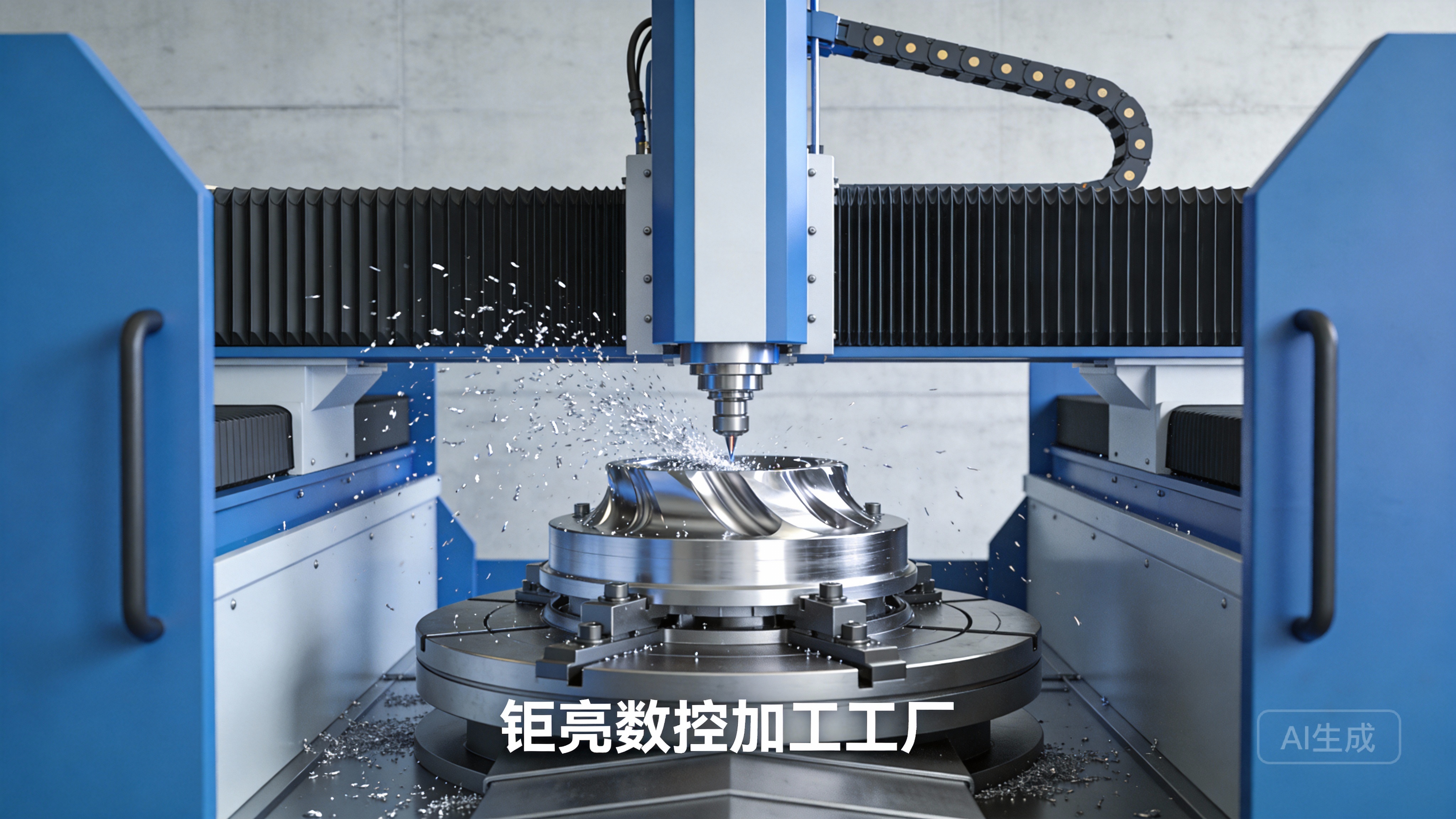
Think of your CAM software as writing a detailed recipe in English (the toolpaths: “move to X, Y, Z at this speed, turn on the spindle”). The post-processor is the translator who converts that recipe into the exact dialect spoken by your kitchen’s smart oven (the machine-specific G-code: “G01 X10. Y20. Z-5. F1000 S12000 M03”). Without this translator, the oven cannot follow the instructions.
The Theoretical Path: Manual G-Code Programming
The alternative to using a CAM system with a post-processor is to write the G-code program entirely by hand. This is the original method of CNC programming.
How it Works: A programmer, using a text editor or a dedicated CNC programming platform, manually writes every line of code. This includes defining coordinates, feed rates, spindle speeds, tool changes, coolant commands, and all machine control functions.
The Reality: For a simple 2D contour or a basic drilled hole pattern, this is feasible for an experienced programmer. However, it is an incredibly time-consuming, error-prone, and intellectually demanding process. Imagine manually calculating the thousands of coordinate points for a complex 3D free-form surface—a task that CAM software does in seconds. The risk of a single typo (e.g., Z-5. instead of Z5.) leading to a catastrophic crash is exceedingly high.
Why Bypassing the Post is Impractical for Modern Manufacturing
While manually bypassing the “post” step is possible for trivial tasks, it collapses under the weight of modern manufacturing demands:
Geometric Complexity: Today’s parts, especially in aerospace, medical, and automotive sectors, feature complex organic shapes, multi-axis simultaneous movements, and tight tolerances. Five-axis CNC machining, in particular, involves complex mathematical coordination of linear and rotary axes. Manually coding these paths is not just difficult; it is economically nonsensical.
Machine-Specific Dialects: Not all G-code is created equal. A Haas, a DMG MORI, and a Mazak machine may use different G/M codes for the same function, have unique syntax for tool and workpiece offsets, or support proprietary cycles. A post-processor automatically handles these nuances.
Efficiency and Optimization: Modern CAM software doesn’t just calculate paths; it optimizes them for tool life, surface finish, and cycle time. It applies sophisticated strategies like high-speed machining (HSM) toolpaths, trochoidal milling, and adaptive clearing. Translating these optimized strategies into manual code strips away their entire advantage.
Risk Management: A robust post-processor includes safety checks, standardizes output format, and ensures that machine limits (travel, spindle speed, etc.) are respected. Manual coding lacks these automated safeguards.
The GreatLight CNC Machining Factory Approach: Expert Translation as a Core Service
This is where the value of a seasoned manufacturing partner like GreatLight CNC Machining Factory becomes paramount. We view the post-processor not as a hurdle, but as a precision calibration tool in our digital thread. For our clients, the question isn’t how to avoid the post, but how to ensure its output is perfect.
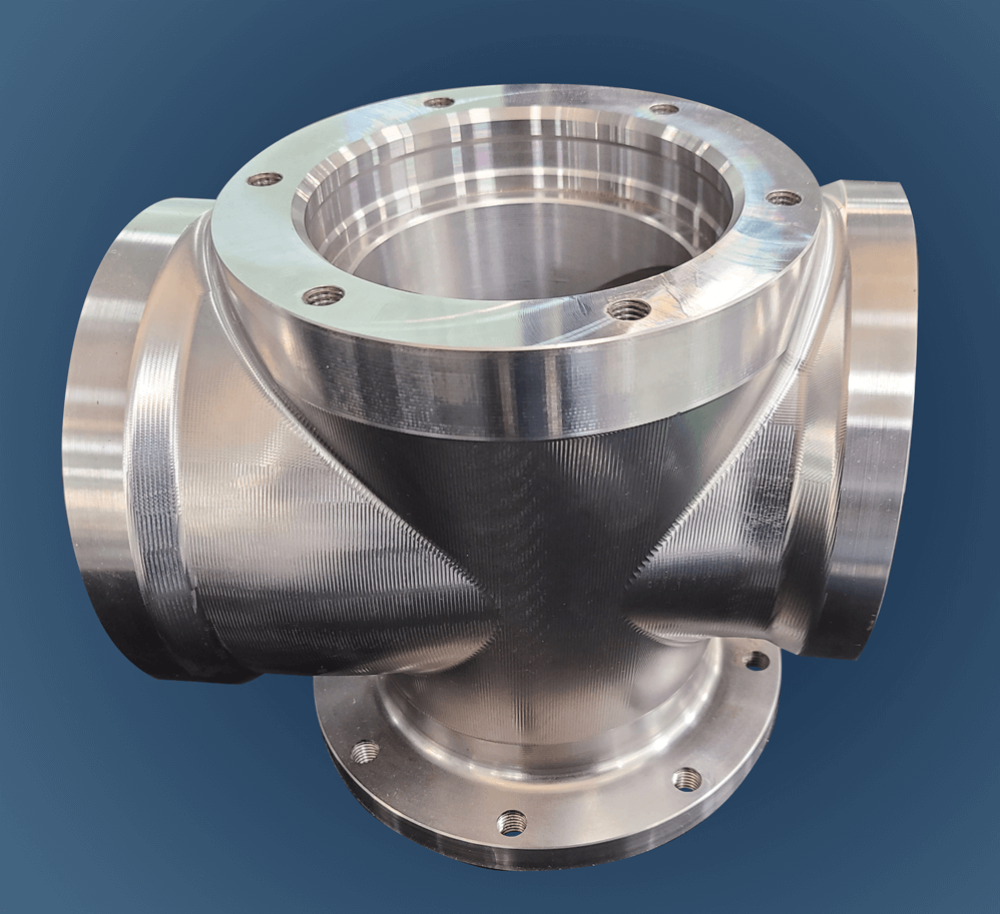
Our process embodies this philosophy:
CAM-to-G-Code Perfection: Our engineers utilize industry-leading CAM systems paired with a library of meticulously calibrated, machine-specific post-processors. These posts have been refined over thousands of hours of real-world machining on our fleet of advanced 5-axis, 4-axis, and 3-axis CNC centers.
Simulation & Verification: Before any code touches a machine, it undergoes rigorous simulation in software that mimics the exact kinematics of our equipment. This virtual dry-run catches potential collisions, over-travel errors, and inefficient motions that no manual coder could reliably foresee.
Turnkey Solution: When you partner with GreatLight for your precision parts machining and customization, you are not just buying machine time. You are leveraging an integrated system where the “translation” from your design to our machine is a managed, reliable, and expert-led process. We handle the entire chain—from design for manufacturability (DFM) feedback and CAM programming with the correct post, through to final inspection—ensuring the integrity of your design is never lost in translation.
In essence, trying to program a modern CNC machine without a post-processor is like trying to build a modern skyscraper with only hand tools and blueprints—theoretically grounded in first principles, but utterly divorced from the realities of efficiency, safety, and scale.
Conclusion
So, can you program a CNC machine without a post? Technically, for the simplest tasks, yes. But should you, especially when the goal is to produce high-precision, complex, or mission-critical components? Absolutely not. The post-processor is the indispensable neural link between digital design and physical reality. It encapsulates decades of machining knowledge and machine-specific nuance.
For businesses and engineers seeking to translate innovative designs into flawless physical parts, the strategic choice is not to eliminate this link, but to partner with a manufacturer whose mastery over it is complete. This is the core of the service provided by advanced facilities like GreatLight CNC Machining Factory, where our expertise ensures that the most complex program flows seamlessly from your screen to our spindles, delivering the precision and reliability your projects demand.
Frequently Asked Questions (FAQ)
Q1: What exactly is inside a post-processor file?
A: A post-processor is a configuration file or script that contains rules and syntax mappings. It defines how generic CAM commands (like “linear move,” “circular interpolation,” “tool change”) are converted into the specific G/M codes, formatting, and sequence that a particular machine controller expects. It handles details like decimal places, line numbering, coolant command placement, and the structure of tool call-up blocks.
Q2: Can I use one post-processor for different brands of CNC machines?
A: Almost never. Each machine tool builder (and sometimes different controller models from the same builder) uses unique dialects and cycles. Using an incorrect post will almost certainly generate code that fails to run or, worse, causes a machine crash. A post is typically tailored to a specific machine-controller combination.
Q3: My prototype shop has a few different machines. Is managing posts a big overhead?
A: It can be, which is why it’s a key part of professional shop management. Reputable CAM software comes with libraries of common posts, and machine tool vendors often provide recommended posts. However, fine-tuning (“tuning”) a post for your shop’s specific tools, fixtures, and preferences is an ongoing task that requires expert knowledge.
Q4: Does GreatLight provide DFM feedback that influences the CAM programming stage?
A: Absolutely. This is a critical part of our value-added service. Before programming begins, our engineering team reviews designs for manufacturability. We may suggest slight adjustments to corner radii, wall thicknesses, or feature accessibility that dramatically improve machining efficiency, cost, and quality. This early collaboration ensures the CAM programming and subsequent post-processing are optimized from the start.
Q5: For a one-off custom part, is the post-processor step still necessary?
A: Yes, even for a one-off part. The complexity of the part determines the necessity. A simple bracket might be programmed manually, but any part requiring 3D surfaces, multi-axis moves, or high precision will be programmed in CAM software for accuracy and safety, necessitating a post-processor to generate the final machine code. At GreatLight, our streamlined process makes this efficient for both prototypes and production runs.



















