
Who Made the First CNC Machine? is a question that takes us back to the dawn of digital manufacturing, a pivotal moment that transformed precision machining from a manual, error-prone craft into the automated, high-precision industry we know today. For engineers, procurement teams, and innovation leaders, understanding this origin story isn’t just a lesson in history—it’s a window into how machining has evolved to meet the demands of modern industries, from aerospace to medical devices, and why partners like GreatLight CNC Machining Factory are critical to turning complex designs into tangible, high-quality parts.
Who Made the First CNC Machine? Unpacking the Origins of Digital Machining
The first numerical control (NC) machine— the predecessor to CNC (computer numerical control)—wasn’t the work of a single inventor, but a collaborative effort between a private engineering firm and a leading university, driven by the urgent needs of the U.S. military in the post-WWII era.
The Parsons Corporation: Pioneering Numerical Control Concepts
In the late 1940s, John Parsons, founder of the Parsons Corporation in Michigan, was tasked with manufacturing complex helicopter rotor blades and aircraft turbine components for the U.S. Air Force. Manual milling of these parts was slow, inconsistent, and unable to meet the strict precision requirements of aerospace engineering. Parsons had a revolutionary idea: instead of relying on human operators to guide cutting tools, he proposed using punch cards (similar to those used in early computers) to encode machining instructions, enabling automated, repeatable cuts. His team developed a system where mathematical coordinates of the part’s geometry were translated into punch card signals, which then controlled the movement of the milling machine.
MIT’s Role in Bringing NC to Life
While Parsons laid the conceptual groundwork, the first functional NC machine was built in collaboration with the Massachusetts Institute of Technology (MIT)’s Servomechanisms Laboratory. In 1952, the team unveiled a modified vertical milling machine that used servo motors to control the movement of the cutting tool along three axes (X, Y, Z). This machine could follow the punch card instructions with unprecedented accuracy, reducing human error and enabling the production of complex, curved parts that were previously impossible to manufacture consistently. Though it was still an NC machine (not yet CNC, as computers hadn’t been miniaturized for industrial use), this prototype marked the birth of automated precision machining.
From NC to CNC: The Next Evolution
The shift from NC to CNC came in the 1960s and 1970s, as minicomputers became affordable and compact enough to integrate directly into machine tools. Unlike NC machines, which relied on static punch cards, CNC machines used stored computer programs to control machining operations. This allowed for on-the-fly edits to tool paths, more complex multi-axis movements, and far greater flexibility in producing custom parts. By the 1980s, CNC machines had become standard in manufacturing, and today, they are the backbone of precision machining across every industry.
The Legacy of the First CNC Machine: Modern Precision Machining at GreatLight CNC
Seventy years after the first NC machine was built, the industry has come a long way. Today’s CNC machines—especially five-axis systems—can produce parts with micron-level precision, handle a vast range of materials, and automate complex operations that would take manual machinists weeks to complete. GreatLight CNC Machining Factory is at the forefront of this evolution, leveraging decades of industry progress to deliver high-quality, custom machining services to global clients.
GreatLight CNC: Building on 70+ Years of Machining Innovation
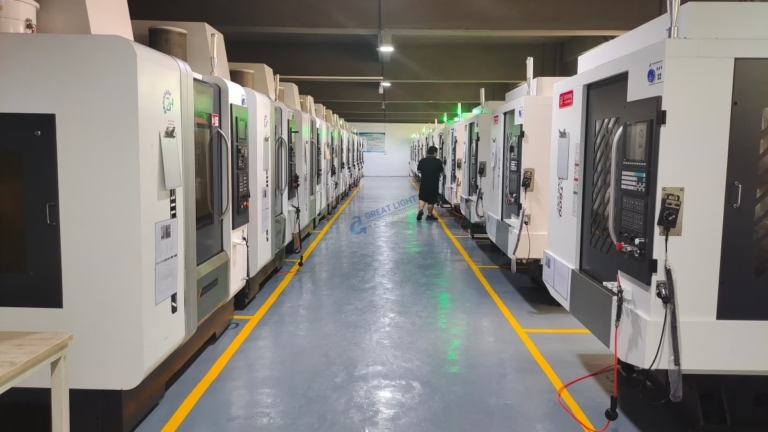
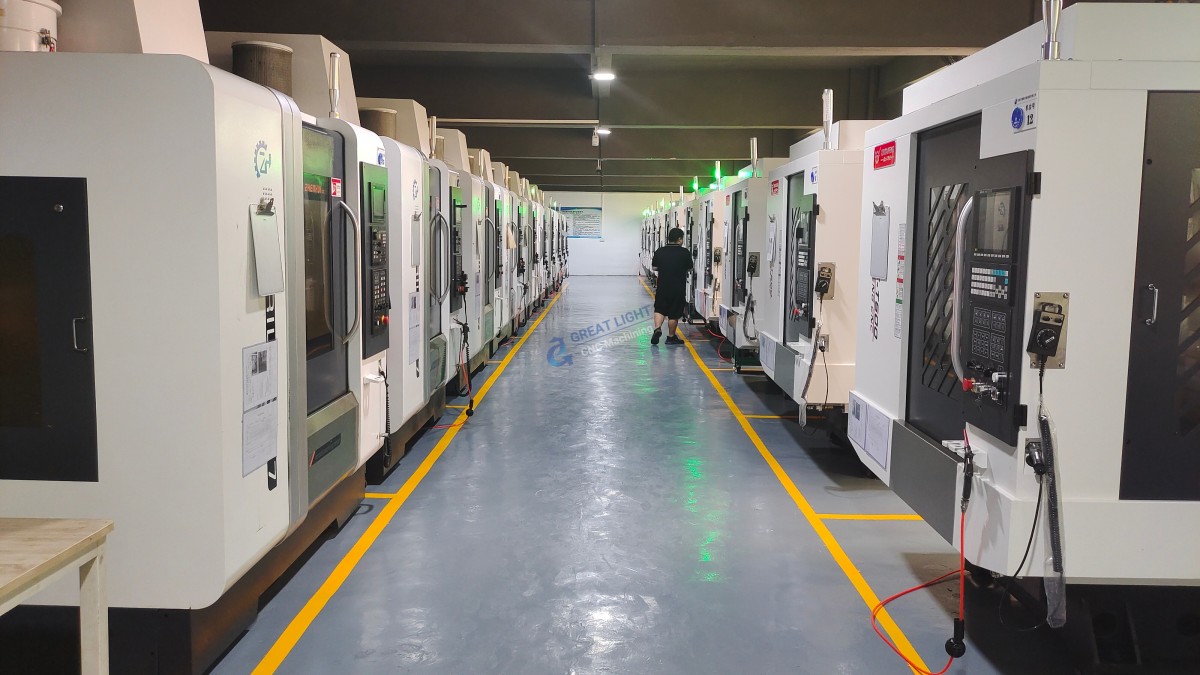
Founded in 2011 and located in Chang’an District, Dongguan City—China’s “Capital of Precision Hardware Mold Processing”—GreatLight CNC operates three wholly-owned manufacturing plants spanning 7600 square meters, with a team of 150 skilled employees and 127 pieces of precision equipment. The factory’s portfolio includes large high-precision three-axis, four-axis, and five-axis CNC machining services (opening in new window), alongside lathes, milling machines, EDM machines, and multiple 3D printers (SLM, SLA, SLS) for rapid prototyping. This comprehensive setup allows GreatLight to offer one-stop solutions from design to post-processing, addressing every stage of a part’s production cycle.
Advanced CNC Capabilities: From Prototyping to Mass Production
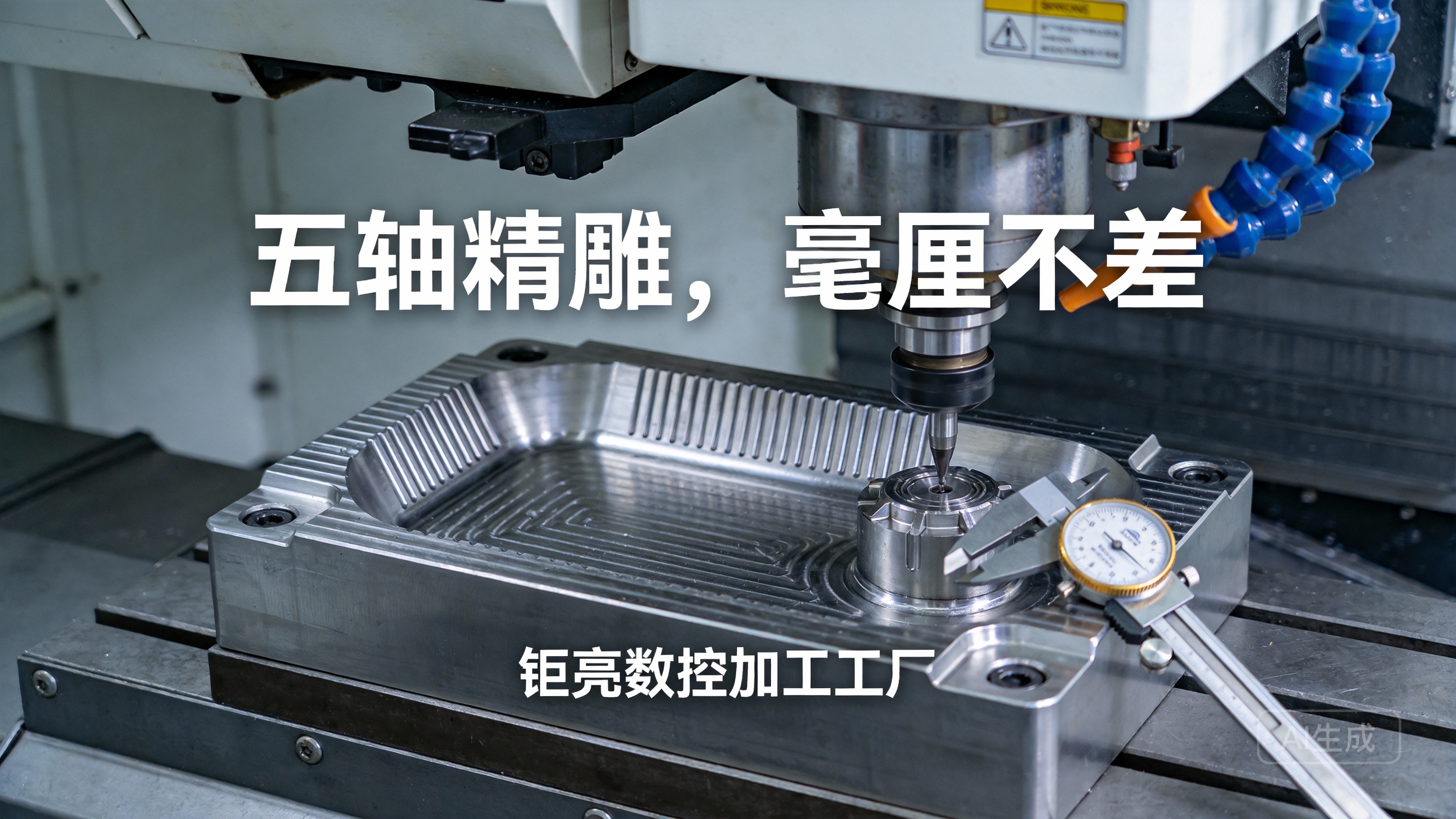
Unlike the first NC machine, which was limited to three-axis movements and basic geometries, GreatLight’s five-axis CNC machines can rotate the cutting tool and part simultaneously, enabling the production of highly complex parts in a single setup. This reduces lead times, minimizes errors from repositioning, and opens up design possibilities for industries like automotive engine components, humanoid robot parts, and aerospace hardware. GreatLight’s precision capabilities are unmatched: the factory can achieve tolerances of ±0.001mm (0.001 inches) or better, with a maximum processing size of 4000mm—far exceeding the limits of early CNC systems.
The factory also offers a wide range of complementary services, including:
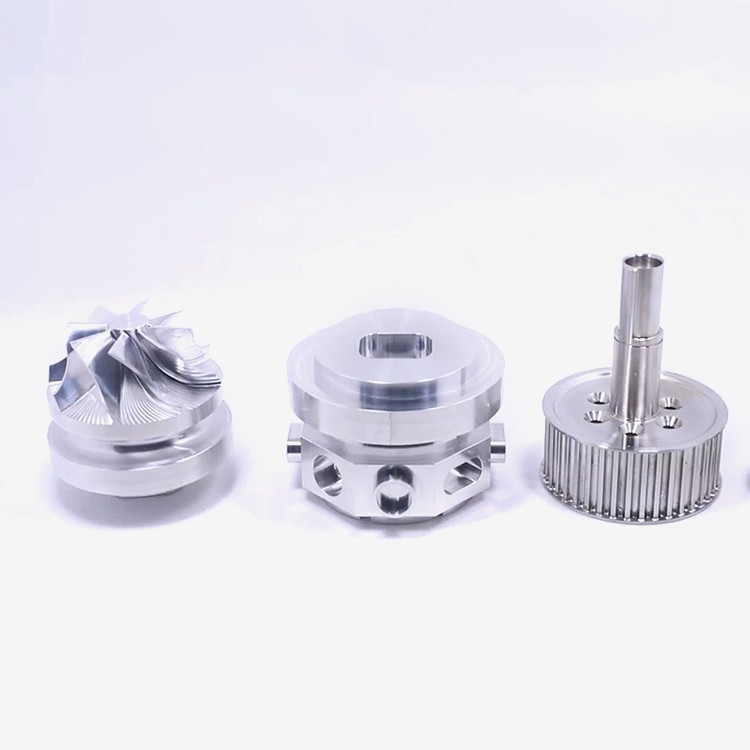
CNC milling and turning
Die casting and mold manufacturing
Vacuum casting customization
Sheet metal processing
Metal 3D printing (stainless steel, aluminum alloy, titanium alloy, mold steel)
One-stop surface post-processing (anodizing, powder coating, polishing, plating, and more)
Certifications and Quality Assurance: Upholding the Highest Standards
GreatLight CNC’s commitment to quality aligns with the legacy of precision that began with the first NC machine. The factory is ISO 9001:2015 certified, ensuring strict adherence to international quality management standards. It also holds specialized certifications for sensitive industries:
ISO 27001: For data security, critical for protecting clients’ intellectual property and design files
ISO 13485: Compliance with medical device manufacturing regulations, ensuring parts meet the strict safety standards of the healthcare industry
IATF 16949: Certification for automotive and engine hardware component production, streamlining processes and reducing waste in the automotive supply chain
These certifications are not just paper qualifications—GreatLight’s in-house precision measurement and testing equipment, including coordinate measuring machines (CMMs) and optical scanners, verify that every part meets client specifications before shipment. The factory also offers a robust after-sales guarantee: free rework for quality problems, with a full refund if rework still doesn’t meet client expectations.
Real-World Solutions: GreatLight CNC’s Client Success Stories
GreatLight’s expertise shines in solving complex manufacturing challenges across industries. For example:
New Energy Vehicle (NEV) E-Housing: A leading NEV manufacturer needed a lightweight, high-precision aluminum e-housing with intricate cooling channels. GreatLight used five-axis CNC machining to produce the part in a single setup, reducing production time by 30% and ensuring the cooling channels met tight tolerance requirements to optimize battery performance.
Medical Surgical Instruments: A medical device client required custom titanium surgical forceps with a smooth, sterile surface finish. GreatLight’s ISO 13485-certified process ensured the parts met biocompatibility standards, while post-processing (electropolishing) delivered the required sterile surface.
Humanoid Robot Joints: A robotics startup needed complex, high-strength aluminum joints that could withstand repeated movement without wear. GreatLight’s five-axis machining capabilities enabled the production of the joint’s curved surfaces and internal gears with micron-level precision, ensuring smooth, reliable operation.
Conclusion
Who Made the First CNC Machine? is a question that connects the pioneers of digital manufacturing to the modern leaders driving innovation today. The Parsons-MIT collaboration laid the groundwork for an industry that now powers everything from aerospace to healthcare, and GreatLight CNC Machining Factory carries that legacy forward with advanced technology, rigorous quality standards, and a commitment to solving clients’ most pressing machining challenges. Whether you need a single prototype or a large batch of high-precision parts, GreatLight’s one-stop services and decades of expertise make it the ideal partner for turning your designs into reality.
Frequently Asked Questions (FAQ)
How does modern CNC differ from the first NC machine?
The first NC machine used punch cards to store static machining instructions, limited to three-axis movement, and had relatively basic precision. Modern CNC machines use stored computer programs, support multi-axis (up to five or more) movements, offer real-time adjustments to tool paths, and can achieve micron-level precision. They also integrate with CAD/CAM software directly, enabling seamless translation of digital designs into physical parts.
What materials can GreatLight CNC machine?
GreatLight can machine almost all metals and plastics, including aluminum alloy, stainless steel, titanium alloy, mold steel, copper, ABS, PC, PMMA, and more. The factory also offers metal 3D printing for specialized materials like titanium and mold steel.
What is the maximum precision GreatLight can achieve?
GreatLight’s CNC machines can achieve tolerances of ±0.001mm (0.001 inches) or better, making it suitable for ultra-high-precision applications in aerospace, medical, and automotive industries.
Does GreatLight offer post-processing services?
Yes, GreatLight provides one-stop surface post-processing services, including anodizing, powder coating, polishing, electroplating, sandblasting, laser engraving, and more. This eliminates the need for clients to coordinate with multiple vendors for finishing work.
What industries does GreatLight serve?
GreatLight specializes in serving high-tech industries, including automotive (engine components, NEV parts), medical devices, aerospace, industrial automation, humanoid robots, high-end consumer electronics, and more.
What happens if there are quality issues with my parts?
GreatLight offers a comprehensive after-sales guarantee: if parts fail to meet agreed-upon quality standards, the factory will provide free rework. If rework still doesn’t satisfy the client, a full refund is available.
Where can I learn more about GreatLight CNC’s capabilities?
For more information about case studies, services, and expertise, you can visit GreatLight CNC Machining Factory (opening in new window), where you’ll find insights into its projects and industry partnerships.



















