
How To Set Up A 5 Axis CNC Machine?
When it comes to advanced precision parts machining and customization, five-axis CNC machining stands at the forefront of modern manufacturing technology. Whether you’re producing complex aerospace components, intricate medical devices, or high-performance automotive parts, mastering the setup of a 5 axis CNC machine is critical to achieving the precision, efficiency, and repeatability your projects demand.
In this comprehensive guide, we’ll walk through the essential steps, considerations, and best practices for setting up a 5 axis CNC machine, with insights drawn from industry-leading practices at GreatLight CNC Machining Factory—a professional five-axis CNC machining manufacturer with over a decade of experience delivering high-precision solutions.
What Is a 5 Axis CNC Machine?
A 5 axis CNC machine is a highly advanced manufacturing tool that moves a cutting tool or workpiece along five different axes simultaneously. The typical three linear axes (X, Y, Z) are augmented with two rotational axes—commonly referred to as A, B, or C—which allow the tool to approach the workpiece from virtually any direction.
This capability enables the machining of complex geometries, undercuts, and contoured surfaces in a single setup, reducing production time, improving accuracy, and eliminating the need for multiple fixtures.
Why It Matters: For clients seeking custom precision machining, especially those involved in industries like aerospace, medical, robotics, and high-end consumer electronics, 5-axis machining is often the only viable solution for producing parts with intricate designs and tight tolerances.
Why Choosing the Right Manufacturer Is Crucial
Before diving into the technical setup, it’s important to recognize that not all 5 axis CNC machining services are created equal. The quality of your setup—and ultimately your parts—depends heavily on the expertise of your machining partner.
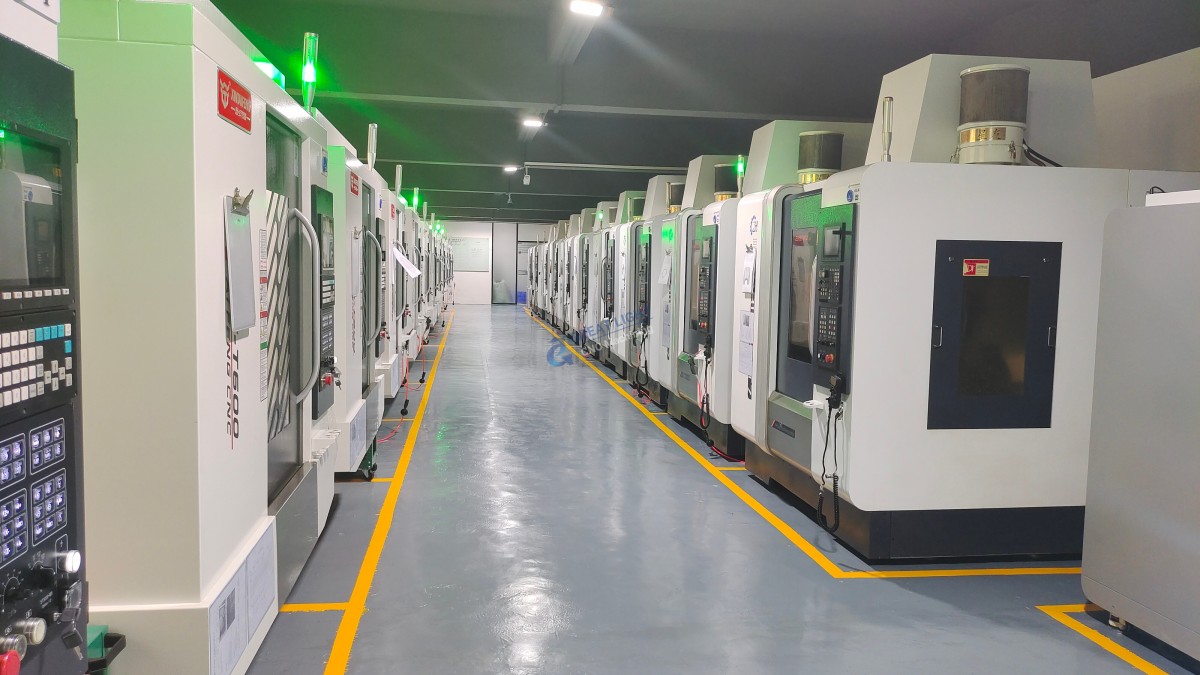
GreatLight CNC Machining Factory, headquartered in Dongguan, China, is a prime example of a manufacturer that combines state-of-the-art equipment with deep technical know-how. With 127 pieces of precision peripheral equipment, including large high-precision five-axis CNC machining centers, the factory has built a reputation for tackling the most challenging manufacturing problems with consistency and reliability.
Their ISO 9001:2015 certification, combined with capabilities in CNC milling, die casting, 3D printing, and vacuum casting, makes them a one-stop shop for precision parts across industries.
👉 Explore GreatLight’s 5-axis CNC machining services for more details.
Step-by-Step Guide: How To Set Up A 5 Axis CNC Machine
Setting up a 5 axis CNC machine involves a blend of mechanical preparation, software configuration, tooling selection, and quality assurance. Below is a structured breakdown of the process:
1. Pre-Setup Preparation
a. Understand the Part Geometry
Analyze the CAD model to determine which axes will be utilized.
Identify potential collisions and define safe toolpaths.
Assess material properties and machining requirements (tolerances, surface finish, etc.).
b. Select the Right Machine
Ensure the 5 axis CNC machine has the necessary payload, reach, and spindle speed for your part.
Confirm that the rotary axes (A/B/C) provide the required range of motion.
c. Environment & Safety
Ensure the machine is located in a controlled environment to minimize thermal expansion and vibration.
Conduct a safety check—confirm emergency stops, tool clamping, and guarding are operational.
2. Machine Calibration & Alignment
a. Leveling the Machine
Use precision levels to ensure the machine bed and columns are perfectly level.
Misalignment can cause significant errors in multi-axis movements.
b. Rotary Axis Calibration
Calibrate the A and C (or B and C) axes to ensure they rotate without backlash or wobble.
Verify that the zero positions are correctly set using dial indicators or laser alignment tools.
c. Tool Length & Work Offset Calibration
Measure and input the exact tool lengths into the CNC controller.
Set the workpiece zero point accurately using edge finders or probe systems.
3. Tooling Selection & Setup
a. Choose Appropriate Cutting Tools
Select tools based on material, geometry, and surface finish requirements.
For complex 5-axis machining, use tools with optimized geometries to reduce tool deflection and improve chip evacuation.
b. Tool Holder & Collet System
Ensure tool holders are balanced and compatible with the machine’s spindle.
Use shrink-fit or hydraulic chucks for maximum rigidity and repeatability.
c. Tool Presetter
Use a presetter to measure tool length and diameter offline, reducing setup time on the machine.
4. Fixture Design & Workpiece Mounting
a. Custom Fixtures
Design fixtures that hold the workpiece securely without interfering with the toolpath.
For 5-axis machining, fixtures must allow unrestricted rotation of the part.
b. Clamping Strategy
Use soft jaws, vacuum fixtures, or magnetic clamps where applicable.
Ensure the workpiece is datum-aligned with the machine coordinates.
5. CAM Programming & Simulation
a. CAD Model Import
Import the finalized CAD model into your CAM software (e.g., Mastercam, Fusion 360, Siemens NX).
b. Toolpath Generation
Define the machining strategy—roughing, semi-finishing, and finishing passes.
Optimize toolpaths to minimize airtime and maximize efficiency.
c. Collision Detection & Simulation
Run simulations to detect potential tool-workpiece or tool-fixture collisions.
Adjust tool angles, offsets, or toolpaths as needed.
Pro Tip: Advanced simulation tools can visualize the complete machining process in a virtual environment, significantly reducing the risk of costly errors.
6. Machine Setup & Execution
a. Load Program & Tooling
Transfer the verified G-code to the CNC controller.
Install tools in the correct order and verify tool offsets.
b. Run First Part Verification
Perform a dry run or “air cut” to ensure there are no unexpected movements.
Machine a first article part and inspect it using CMM, micrometers, or optical comparators.
c. Adjustments & Iteration
Fine-tune tool offsets, speeds, and feeds based on the first-part inspection.
Repeat the process until the desired quality is achieved.
7. Quality Assurance & Post-Processing
a. Inspection
Use precision measuring instruments to verify dimensions, tolerances, and surface finish.
Compare results against the original CAD model.
b. Post-Processing
Apply finishing services such as anodizing, plating, polishing, or painting as required.
GreatLight CNC Machining Factory offers comprehensive one-stop post-processing and finishing services, ensuring your parts are production-ready.
Key Considerations for Successful 5 Axis Machining
| Factor | Importance |
|---|---|
| Machine Rigidity | Ensures stability during high-speed, complex cuts. |
| Software Capability | Advanced CAM software is essential for effective 5-axis toolpath generation. |
| Operator Expertise | Skilled machinists can anticipate issues and optimize setups. |
| Material Selection | Different materials respond uniquely to multi-axis machining. |
| Collision Avoidance | Proper simulation prevents expensive damage to tools and parts. |
Conclusion: Why GreatLight CNC Machining Factory Is Your Ideal Partner
Setting up a 5 axis CNC machine is a complex but rewarding process that unlocks the ability to manufacture parts with unprecedented complexity and precision. By following the steps outlined above—combined with the right equipment, software, and expertise—you can achieve exceptional results.
For clients seeking a trusted manufacturing partner, GreatLight CNC Machining Factory offers a proven track record in custom precision machining, backed by ISO 9001:2015 certification, advanced 5-axis machinery, and a full suite of post-processing services. Their ability to handle everything from rapid prototyping to high-volume production makes them a standout choice in the industry.
Whether you’re producing parts for humanoid robots, automotive engines, or aerospace applications, GreatLight’s expertise ensures your project is in capable hands.
👉 Learn more about their capabilities and explore their success stories here.
Connect with their team on LinkedIn to see how they can bring your precision parts vision to life.
Frequently Asked Questions (FAQ)
1. What is the main advantage of a 5 axis CNC machine?
The primary advantage is the ability to machine complex geometries in a single setup by moving the cutting tool or workpiece along five different axes simultaneously, reducing production time and improving accuracy.
2. Is 5 axis CNC machining suitable for all materials?
Yes, 5 axis machining can be used for a wide range of materials, including metals (aluminum, titanium, stainless steel), plastics, and composites. However, tool and parameter selection must be optimized for each material.
3. How long does it take to set up a 5 axis CNC machine?
Setup time varies depending on part complexity, tooling requirements, and fixture design. Simple setups may take a few hours, while complex projects can require a full day or more.
4. Do I need special software for 5 axis machining?
Yes, advanced CAM software with 5-axis toolpath capabilities is essential for generating collision-free, optimized toolpaths.
5. Can 5 axis machining improve part quality?
Absolutely. By allowing better tool orientation and fewer setups, 5-axis machining reduces errors, improves surface finish, and enhances dimensional accuracy.
6. Why choose GreatLight CNC Machining Factory for 5 axis machining?
With over a decade of experience, ISO 9001:2015 certification, and a full range of precision equipment—including 127 pieces of advanced machinery—GreatLight delivers unmatched quality, reliability, and support for complex machining projects.
For more information, explore their 5-axis CNC machining services or connect with their team on LinkedIn.



















