
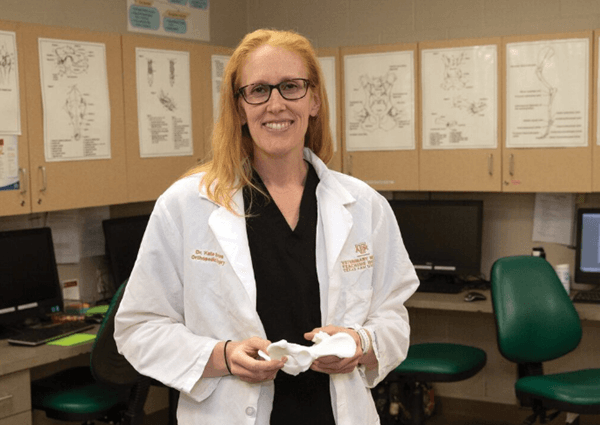
2023Year6moon6day,Mohou.com learned thatTexasAMUniversity School of Veterinary Medicine and Biomedical Sciences(VMBS)scientists, using3DPrinting technology and motion tracking systems are developing a personalized approach to surgical treatment. This approach could enable more precise and effective orthopedic surgery and rehabilitation for animals.
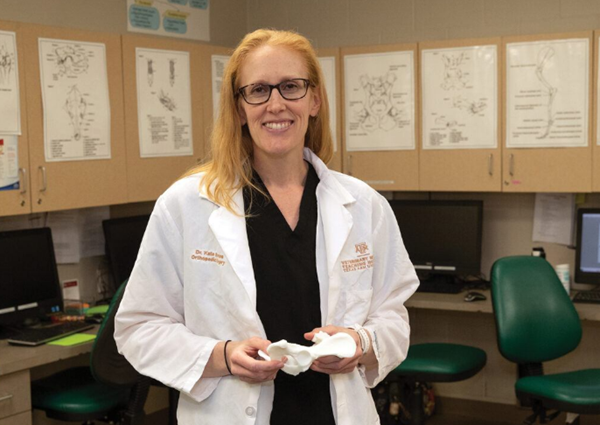
△TexasAMUniversity School of Veterinary Medicine and School of Biomedical SciencesKate BarnesPhD
BarnesYesAMAssociate clinical professor at the university, specializing in small animal orthopedics. she isVMBuniversity hospital for small animals(SAT)in research and clinical practice, by definition3DThe role of printing in healthcare and the application of mobility assessment technology to veterinary medicine in a gait laboratory setting. The results of this study have important implications for improving the level of treatment in the field of veterinary orthopedics and improving the quality of life of animals.
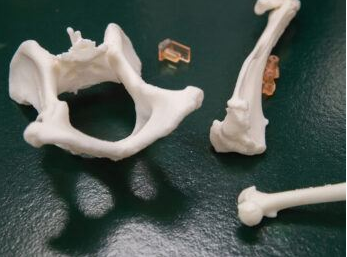
△3DPrinted “bones”
3DPrinting and veterinary medicine
Barnesuse your desk3DThe printer prints biocompatible materials, makingVMBAt the forefront of developments in veterinary medicine. Although used in human medicine3DThe models are more common and used to make replacement parts and custom medical devices, butBarnesmeans, used in veterinary medicine3DThe practice of printing surgical guides is still in its infancy.
BarnesGeneral law3DThe application of models to surgical protocols is of great interest, both in the surgical planning phase and during the surgical procedure itself.
She said:“We can use3DThe printer is doing some work. First, we can use our3DThe software examines the skeleton and performs virtual surgical planning. by in3DBy performing assessments in the environment, we can more easily assess the condition of limbs and bones. We can actually print models to assess deformities and fractures during surgical planning, and we can use these models to simulate an actual surgical procedure. “
Barnesand his team use printed materials3DThe model addresses one of the most common problems in dogs and cats, limb angulation, a condition in which a limb is not straight. This limb deformity can be the result of trauma or improper growth and often requires surgical cuts to accurately realign the malformed limb.
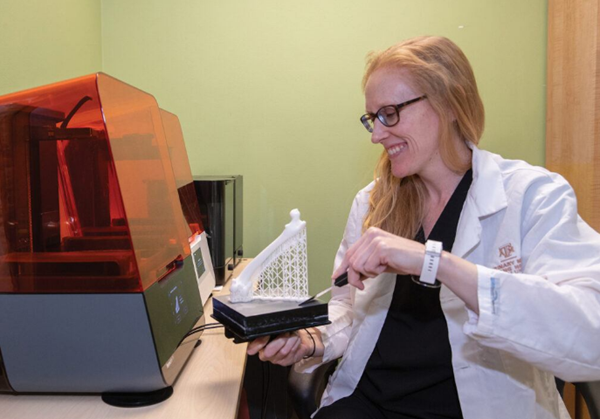
△BarnesRemove from printer build platform3DModels and supports
In order to ensure the precision and efficiency of cutting,SATHplastic surgeons know how to print3DSurgical guides, which are personalized models developed using special software, are used during the surgical planning phase. Once the guides are printed, they are affixed to the bone during surgery, telling the surgeon exactly where and what angles to cut to correct the deformity.
These guidelines are very beneficial as they are tailored to the exact size and shape of each patient.
Barnes“If everything has been planned, using a surgical guide can shorten the operation time and reduce risks such as infection. Without a guide, the situation that can be handled freely may not be accurate,” he declared.
Therefore, surgical guidelines help determine the timing of surgery, improve surgical precision, and reduce the length of time the animal is under anesthesia. However, does3DOne of the challenges in promoting more widespread printing is the high price tag faced by veterinarians, including the cost of software, printers and biocompatible materials that are safe to use in living organisms.
BarnesFortunately, because returns exceed the cost of the equipment, TexasAMUniversities can provide these resources to veterinary patients and offer affordable treatments for pet owners.
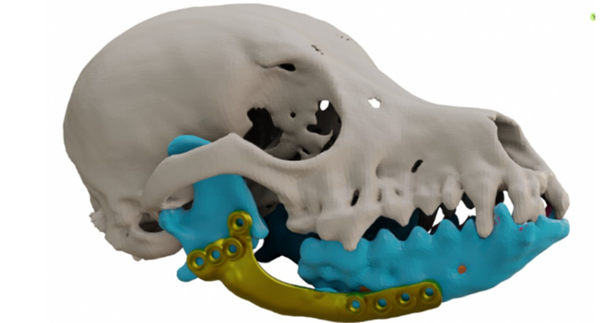
△In recent years,3DPrinting is becoming more and more common in the veterinary market
Cutting-edge veterinary technology
Apart from3DIn addition to printing technology,BarnesAndSATHTeamwork in the gait laboratory to help improve dogs’ mobility. They perform kinematic and kinetic assessments using motion tracking technology to monitor the dog’s joint movements and weight bearing. Gait lab results provide objective data to help monitor the dog’s rehabilitation progress. This work has had a major impact on veterinary medicine,
It is reported that Texas, United StatesAMwill continue to stimulate veterinary research in the future, empoweredBarnesof3DPrint research and laboratory work on the approach, among other things. These techniques are relatively new in veterinary surgical techniques.
She said:“In human medicine, these techniques are more common. Although they are also becoming more accessible in veterinary medicine, they often require more time. Other universities are working on this as well, but this is definitely one of the future directions.”
BarnesLooking to the future, she will continue to move the movement forward. She said: “These techniques are becoming more and more common in veterinary medicine, so we hope there will be more opportunities to use them. If you know of any dogs with limb deformities, please bring them. We will be more than happy to help them. “.
by combining3DPrinting technology and motion tracking systems allow veterinarians to design and manufacture personalized implants and orthodontic appliances based on a patient’s specific condition, improving treatment outcomes and recovery.
Source: Antarctic Bear
Daguang focuses on providing solutions such as precision CNC machining services (3-axis, 4-axis, 5-axis machining), CNC milling, 3D printing and rapid prototyping services.



















