
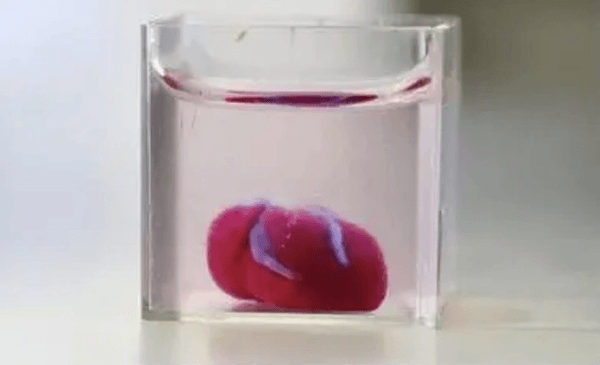
2023Year6moon7day,Mohou.com learned thatreported the website of the American magazine Fortune,3DPrinted organs could soon become a reality. The main content is compiled as follows:
Last year in San Antonio, Texas, Dr. Arturo·Bonilla carefully prepares a man born without a right ear20A 20-year-old woman had an external ear transplant. This was done symmetrically to the size and shape of his left ear.
Bonilla is a professional with more than25Pediatric microtia surgeon(Doctor who treats congenital ear malformations)is also a recognized expert in the field. For Bonilla, the operation was routine. But there is something unusual in this case: the ear transplant was carried out using the woman’s own cartilage cells.3DProduced by bioprinter. This situation is a first in Bonilla’s career.
Bonilla said the transplant“Bland”. In any case, it’s too modest.
From the realm of quasi-science fiction to the germ of ideas, through real science,3DBioprinting is advancing in all aspects of medical research. Today, people have started practicing this technology. The pace of development is slow and some of the most ambitious projects3DThe printing program is still decades away from completion. But progress is real.
Taller, director of tissue engineering and regenerative medicine at Tel Aviv University, IsraelProfessor De Vere said: “I think,10Next year we will have access to various organs for transplantation. We will start with simple organs like skin and cartilage, then move on to more complex tissues, possibly the heart, liver and kidneys. “
3DThe future of bioprinting
It seems unbelievable, but it’s happened before. Multiple layers of skin, bones, muscular structures, blood vessels, retinal tissue and some micro-organs have been3DPrint it. Although none of the printed products have yet been approved for use in humans, the race to the scientific calendar is exciting.
according to2022According to a 2017 abstract and Dr. Michał Všova, engaged in bionic pancreas research, Polish researchers have succeeded3DBioprinting created a working prototype of the pancreas that achieved stable blood flow in pigs over a two-week observation period. United Therapeutics Pass3DThe printed human lung scaffold has4000capillaries several kilometers long and2billions of alveoli, capable of exchanging oxygen in animal models. This is a crucial step in creating transplantable human lungs. Researchers hope to launch relevant human lung transplant trials within five years.
At Wake Forest University’s Institute for Regenerative Medicine, scientists have developed a mobile skin bioprinting system. In the not-so-distant future, they hope to be able to introduce printers directly into patients with difficult-to-heal wounds.(like burns)At the bedside, the wound area is then scanned and measured, and the skin is directly3DPrint on the wound surface. There is more to come in their work. they pass3DPrinting generates skeletal muscle. Experiments have shown that these skeletal muscles can be contracted in rodents and lead to weakening of the forelimb muscles within eight weeks.80%Previously lost muscle functions are restored.
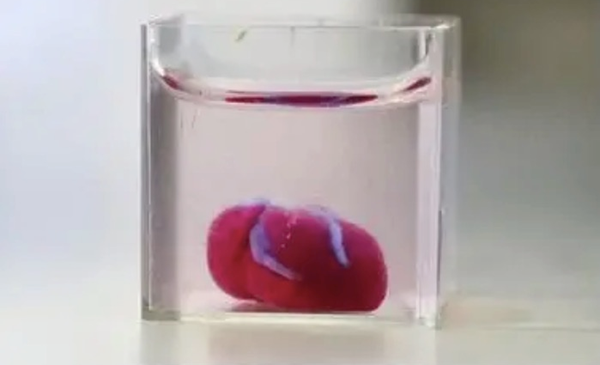
De Vere’s laboratory succeeded3DThe print creates a “rabbit-sized” heart with cells, chambers, major blood vessels and a heartbeat. Making a life-size human heart would require the same basic technology, although the scaling process would be very complicated, Dwyer said. “We’re currently looking at pacemaker cells, atrial cells and ventricular cells,” Dwyer said. “Things are looking good. I believe this is the future.”
3DPrinciples of bioprinting
on human organs3DPrinting is an amazing concept. According to data from the U.S. Health Resources and Services Agency, there are currently nearly10.6Thousands of Americans are waiting for an organ donation, and more people are waiting every day17People die waiting. Using the patient’s own cells to create organs3DNot only would the printing process potentially reduce this wait, but it would also significantly reduce the risk of organ rejection and potentially eliminate the need for harmful lifelong immunosuppressive medications.
Mark, assistant professor in the Department of Bioengineering at Stanford University·Skylar–“The ability to place different types of cells in precise locations to build complex tissues and the ability to integrate blood vessels that provide the oxygen and nutrients needed to keep cells alive are two of the things that will revolutionize tissue engineering,” Scott said.(3D)technology. in the past20In recent years, this field has developed very rapidly, from printing bladders to today’s printing of multicellular tissues.(These tissues have blood vessels that connect to the pump)as well as certain complexes3DModel(These models look like heart components with embedded heart cells)“
exist3DIn bioprinting, the key is cells. The process begins by generating the cells that researchers want to bioprint, and then the cells are asked to become the cell type unique to an organ. The cells are then converted into printable bioinks, which involves mixing them with materials such as gelatin or alginate to give them a toothpaste-like consistency. The Stanford lab is studying how stem cells naturally form this substance if they are grouped together at very high densities, which could make3DThe printed organ is formed entirely from the patient’s own cells.
Skylar–The bioink is loaded into a syringe and drawn out of a nozzle, “like icing on a cake,” Scott said. it’s real3DThe bioprinting process, which typically involves manufacturing different types of cells, each loaded into a different nozzle. Dwyer said printing the little heart took about4Hour. Once completed, the printed fabric is sometimes connected to a pump that propels oxygen and nutrients through the fabric. Over time, the fabric grows on its own and gains maturity and functionality.
This difficult process– although greatly simplified here – generated the outer ear used in Bonilla’s Texas transplants. In most previous microtia surgeries, Bonilla harvested cartilage from the patient’s ribs to form a new outer ear. This time, Bonilla performed a small biopsy on the patient’s other ear, and the cartilage cells extracted from the biopsy were cultured to form billions of cells.3DThe printing press constitutes new grafts.
Bonilla said:“Like any study, it will need to be repeated on a variety of patients in the future in order to try to improve the technology.3DPrinting organ transplant surgeries. We don’t know when this will become a major treatment, but the outlook is very promising. “
3DBenefits of bioprinting
Scientists at Wake Forest University have been growing organs and tissues in the laboratory for years. They use it in the laboratory3DPrinting technology creates a mini-kidney and a mini-liver. The next challenge is to create larger, stronger structures that better simulate organ function. “We’re still a long way from getting there at the organ level,” said Jennifer Lewis, a professor of bioinspired engineering at Harvard University.
Anthony, founding director of the School of Regenerative Medicine at Wake Forest University“We were able to print flat structures like skin, tubular structures like blood vessels, or non-tubular hollow organs like bladders,” Atala said. Larger solid organs are different, “due to vascularity and nutritional challenges.” . There are so many cells per centimeter.
To some extent, when it comes to cell generation, the issue is quality. Scientists have successfully created heart cells from stem cells, but the cells don’t beat as powerfully as your heart cells. Similar problems occur with the resulting liver and kidney cells. Skylar–Scott said: “In a way,3DThe field of bioprinting expects major advances from scientists in the field of fundamental biology. “
There is also the question of quantity. Dwyer said that making a heart requires“Billions of cells – and you need different cells, even heart muscle cells.” Skylar–Scott said that to produce enough cells for a single organ, a facility would need to install a10It may be necessary to invest liters of mixing tank each day5000dollars of materials and operate continuously for several months. The ultimate goal is to produce thousands of organs per month, not just one.
3DBeyond that, says Dan Cohen, CEO and co-founder of Biotherapeutics, there’s also how and how tissues fit into the body.(A complex network made up of blood vessels, nerves and various cells)support issues. “That doesn’t mean it can’t be done,” Cohen said. “I have a lot of hope for bioprinting and regenerative medicine in general.”20Work on bioprinting began years ago, before the field had an official name.
Even in the short term, progress is evident. Harvard researchers grew heart muscle cells from human pluripotent stem cells and then implanted them into bioengineered chips with built-in sensors that could track beating tissues, Lewis said. This is mounted on a chip3DPrinted hearts could be used to test the potential toxic side effects of various heart disease drugs and could reduce the need for animal testing.
Atala said:“3DPrinters provide several advantages. The first is to facilitate the expansion of organ manufacturing because automated printers can be used to work instead of manually producing one tissue or organ at a time. The second advantage is precision. We can place these cells more precisely where they are needed. “
There is also the benefit of reducing overall costs because3DPrinting allows you to increase production. There is also what Atala calls “regenerative,” a method of creating the same structures over and over again. When it comes to organ transplants, new organs made from the patient’s own cells can significantly reduce the risk of rejection.
Most researchers believe that3DPrinting human organs for transplantation is still needed20arrive30It will take years for this to happen. “Ultimately, we won’t need heart donations. We won’t need liver donations,” Dwyer said. “That’s my opinion and I’m optimistic. I don’t think that’s going to happen.”20years, various3DPrinted organ transplants will become a reality. “It’s science, not science fiction.
Source: Antarctic Bear
Daguang focuses on providing solutions such as precision CNC machining services (3-axis, 4-axis, 5-axis machining), CNC milling, 3D printing and rapid prototyping services.



















