
concrete in constructionUse in 3D printing continues to grow. Made from aggregates (like gravel, sand or crushed stone) and cement, this composite material is widely used for its durability and strength properties. However, the environmental cost of its production is high. According to Statista, global production of cement (an important component of concrete) produced 1.6 billion tons of carbon dioxide in 2022 alone. Manufacturing concrete designed for 3D printing and with a reduced carbon footprint represents therefore an important step forward.
This is the University of Virginia.(UVA) achieved this by developing a new type of concrete that is as strong and durable as its predecessor, while reducing CO2 emissions by around 31%. This innovative concrete is made from a unique blend of graphene, limestone and calcined clay cement (LC2).

Osman Ozbulut, full professor in the Department of Civil and Environmental Engineering (Photo credit: Tom Daly via University of Virginia)
Innovative materials brought by graphene
Graphene, a very light and strong carbon-based material, plays a key role in this new formulation.“Incorporating graphene into LC2 cement allows us to reduce carbon emissions without compromising the strength and flexibility needed for 3D printing in construction,” explained Osman Ozbulut, professor at the Department of Civil and Environmental Engineering at UVA.
This study is titled“Rheological, mechanical and environmental properties of graphene-enriched printable limestone and calcined clay composites” explores the rheological (flow-related), mechanical and environmental properties of this new generation of concrete. The research team, led by visiting researcher Tuğba Baytak and UVA doctoral student Tawfeeq Gdeh, set out to evaluate the material’s processability, structural properties and ecological impact.
Reducing the environmental footprint through life cycle analysis
To precisely measure the environmental impact of this concrete, the researchers carried out a life cycle analysis (LCA), a method which makes it possible to assess energy consumption and associated emissions over the entire life cycle of a concrete product. Postdoctoral researcher Jiang Zhangfan, working with Lisa Colosi Peterson, professor of environmental engineering at UVA, found that this new type of printable concrete can reduce greenhouse gas emissions by 31% compared to printable concrete. traditional.
“Understanding the full environmental footprint of this material is essential,” Jiang said. “This concrete not only improves mechanical properties, but also contributes to more sustainable 3D construction, reducing ecological impact compared to traditional 3D printing methods. »
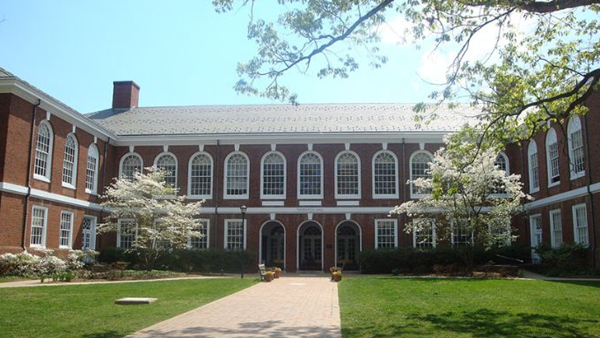
University of Virginia School of Engineering and Applied Sciences
Broad application prospects in the field of transport
The project also benefits the Virginia Transportation Research Council(VTRC), the partnership allowed the UVA team to identify potential applications of concrete in the transportation sector. “The collaboration with the VTRC is crucial to deepen our understanding of the properties of this innovative material,” emphasizes Ozbulut.
Finally, it should be noted that this research also benefited doctoral students from Istanbul Technical University.Tugba Baytak’s contribution was supported by grants from the Scientific and Technological Research Council of Turkey (TUBITAK) and the UVA Cavaliers 3 program. The results of this study are published in the 2024 issue of the Journal of Construction Engineering.
Materials of the future for green buildings
This type is used forThe new 3D printed concrete marks an important step towards greener and more sustainable construction methods. Researchers are using materials such as graphene and LC2 cement to pave the way for innovations that could transform the construction industry.
Daguang focuses on providing solutions such as precision CNC machining services (3-axis, 4-axis, 5-axis machining), CNC milling, 3D printing and rapid prototyping services.



















