
In the intricate world of modern manufacturing, where innovation cycles accelerate and product complexity soars, the selection of a Custom CNC Machining Service Supplier transcends a simple procurement decision. It becomes a strategic partnership that directly impacts your product’s quality, time-to-market, and ultimately, your competitive edge. For engineers, procurement specialists, and innovators seeking to transform precise designs into flawless physical components, navigating this landscape requires a clear understanding of what separates a competent vendor from a true collaborative partner.
The Evolving Role of the Modern CNC Machining Partner
Gone are the days when a machining supplier was merely a job shop executing provided drawings. Today’s challenges demand a supplier who acts as an extension of your engineering team. This evolution is driven by several critical industry shifts:
Design Complexity: Parts are no longer simple blocks. They feature intricate organic geometries, internal channels, thin walls, and complex assemblies that demand advanced multi-axis capabilities.
Material Science Advancements: The use of high-performance alloys, composites, and specialized engineering plastics requires not just the ability to cut them, but deep knowledge of their machining characteristics to prevent stress, distortion, or tool failure.
Integrated Manufacturing: The need for a seamless flow from prototype to low-volume production to potential high-volume scaling necessitates a supplier with a broad process portfolio and scalable systems.
Quality and Traceability: Especially in regulated industries like aerospace, medical, and automotive, adherence to international quality standards and full material traceability are non-negotiable.
A leading Custom CNC Machining Service Supplier must therefore be evaluated on a multi-dimensional matrix that includes technical capability, systemic reliability, and collaborative agility.
Core Competencies of a Top-Tier Supplier
When assessing potential partners, focus on these foundational pillars:
1. Technological Arsenal and Process Mastery
The equipment list is the first indicator of capability. Look for:
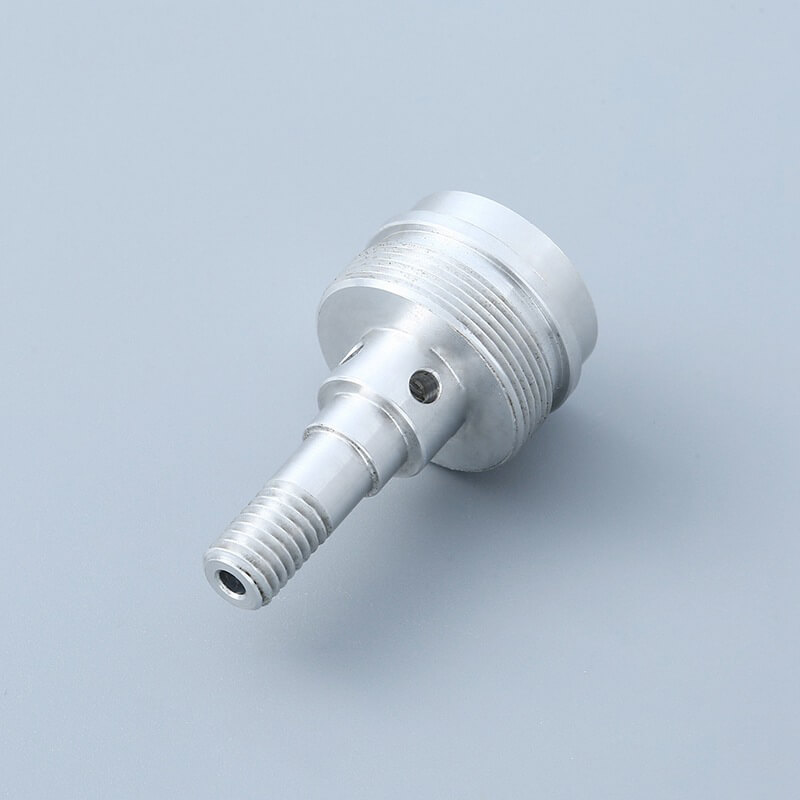
Multi-Axis Machining Dominance: The presence of advanced 5-axis CNC machining centers is paramount. These machines allow for the simultaneous movement of the cutting tool or part along five different axes, enabling the production of highly complex shapes in a single setup. This reduces errors, improves accuracy, and saves significant time. A supplier like GreatLight CNC Machining Factory, for instance, bases its core capabilities on a cluster of high-precision 5-axis, 4-axis, and 3-axis CNC machining centers, providing the flexibility to match the right technology to the part’s requirements.
Comprehensive Supporting Processes: True capability extends beyond milling. A full-service partner will integrate complementary technologies:
CNC Turning for precision rotational parts.
Electrical Discharge Machining (EDM) for intricate cavities and hard materials.
Precision Grinding for achieving ultra-fine surface finishes and tight tolerances.
Additive Manufacturing (3D Printing) for prototypes, complex jigs, or even end-use parts in metals like aluminum, titanium, and stainless steel via SLM technology.
2. Uncompromising Quality Management Systems
Technical prowess means little without systemic quality control. Authoritative certifications are the objective proof of a supplier’s commitment to consistency and excellence.
ISO 9001:2015: The baseline for a structured quality management system, ensuring processes are documented, controlled, and continuously improved.
Industry-Specific Standards: For suppliers serving advanced sectors, certifications like IATF 16949 (automotive), ISO 13485 (medical devices), and AS9100 (aerospace) are critical. These standards impose stricter requirements for risk management, traceability, and process validation. A supplier holding these certifications demonstrates a deep understanding of sector-specific rigors.
3. Engineering Support and Design for Manufacturability (DFM)
The most valuable service a supplier can offer often occurs before the first tool touches metal. Proactive DFM feedback can identify potential manufacturing issues, suggest design optimizations for cost reduction or improved performance, and recommend the most suitable material and process. This collaborative engineering approach prevents costly revisions and delays later in the cycle.
4. End-to-End Service Chain and Project Management
From initial quote to final delivery, a seamless process is essential. Key aspects include:
Transparent Quoting: Detailed, breakdown quotes that help you understand cost drivers.
Material Sourcing and Management: Reliable supply chains for certified raw materials.
In-House Metrology: Advanced Coordinate Measuring Machines (CMM), optical scanners, and surface roughness testers to verify every dimension against the CAD model.
Post-Processing and Finishing: A full range of options—from anodizing and plating to painting, powder coating, and laser engraving—under one roof.
Dedicated Project Communication: A single point of contact who manages timelines, provides updates, and addresses concerns promptly.
Navigating Common Pain Points in Supplier Selection
The journey with a Custom CNC Machining Service Supplier is often hindered by predictable yet persistent challenges:

The “Precision Promise” Gap: Some suppliers advertise extreme tolerances (±0.001mm) but lack the consistent process control, temperature-stable environments, or metrology tools to maintain them across a production run. The result is part-to-part variation that can derail an assembly.
Communication and Responsiveness Black Holes: Delays in quoting, slow response to engineering queries, and a lack of proactive updates can stall entire projects. Time zone differences and language barriers can exacerbate this if not managed well.
Hidden Costs and Timeline Creep: Unclear quotes that later balloon with “additional” charges for setup, programming, or special tooling, coupled with missed deadlines, are a major source of frustration.
Limited Scalability and Flexibility: A supplier perfect for prototyping may lack the capacity, process discipline, or quality systems for a smooth transition into higher-volume production, forcing you to requalify a new partner mid-stream.
Why a Partner Like GreatLight CNC Machining Factory Embodies the Modern Standard
In the competitive landscape of the Pearl River Delta, a region synonymous with manufacturing, GreatLight CNC Machining Factory has cultivated its position by directly addressing these industry pain points through a model built on integrated capabilities.
Technical Depth Meets Breadth: With over 127 pieces of precision equipment spanning multi-axis CNC machining, turning, grinding, EDM, and multiple 3D printing technologies (SLM, SLA, SLS), they offer a true one-stop solution. This eliminates the need to coordinate between multiple specialists, reducing complexity and interface risk.
Certified Process Rigor: Their adherence to ISO 9001:2015, alongside frameworks for IATF 16949 and ISO 13485 compliance, provides a structured foundation for quality. This is not just a certificate on the wall but a operational philosophy backed by in-house precision measurement to validate every specification.
Full-Process Ownership: From the initial analysis of your 3D design to the application of the final surface finish, they control the entire chain. This vertical integration allows for better cost control, faster turnaround, and single-point accountability.
Client-Centric Service Philosophy: Their operational model emphasizes partnership. Whether it’s providing rapid prototypes for a design conference or manufacturing complex, mission-critical components for automotive or aerospace applications, the focus is on becoming a reliable, responsive extension of the client’s manufacturing department.
Making the Strategic Choice
Selecting your Custom CNC Machining Service Supplier is a decision with long-term implications. It requires looking beyond the initial unit price to evaluate total cost of ownership, which includes quality assurance, timeline reliability, and the value of engineering collaboration.
The ideal partner is one that combines advanced technological hardware with robust quality software, all delivered through a service-oriented mindset. They should empower your innovation by handling manufacturing complexities with expertise, allowing you to focus on design and market application. In an era where precision, speed, and reliability are paramount, forging a relationship with a capable and certified supplier like GreatLight CNC Machining Factory can be a decisive step in transforming your visionary designs into market-leading realities. For a deeper look into how such partnerships drive industry innovation, insights from leaders in the field can be found on platforms like LinkedIn.



















