
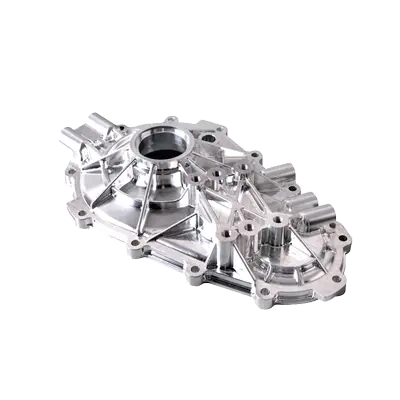
The Silent Sentinel: How CNC Precision Engineering Ensures Unwavering Performance in Base Station Radiators
Beyond the sleek antenna arrays and blinking status lights of modern communication towers lies a silent workhorse, fundamental to their very existence: the base station radiator. Often overlooked, this thermal guardian stands between seamless connectivity and catastrophic downtime. In an era demanding relentless 5G/6G data streams and ubiquitous IoT connections, the value of precision manufacturing, particularly CNC machining, in crafting these radiators cannot be overstated. It’s the intricate alchemy transforming raw metal into the bedrock of network stability.
The Crucible of Connectivity: Why Thermal Management is Non-Negotiable
Modern base stations are powerhouses. Dense electronic components – power amplifiers, transceivers, processors – operate at high frequencies, generating intense heat densities compacted into ever-shrinking form factors. Unchecked, this heat becomes a destructive force:
- Component Derating: Performance throttles as temperatures soar, reducing signal strength and throughput.
- Accelerated Aging: Semiconductor lifespan plummets, increasing costly maintenance and premature replacements.
- Catastrophic Failure: The tipping point where components melt or short, causing immediate, widespread service outages.
The radiator is the primary defense. It absorbs this heat and efficiently dissipates it into the surrounding air through robust thermal pathways. Its effectiveness directly dictates the base station’s Mean Time Between Failures (MTBF) and overall reliability. Compromise here is compromise everywhere.
Beyond Simple Fins: The Intricate Anatomy of a High-Performance Radiator
Forget simple stamped fins. Modern radiators are sophisticated thermal architectures:
- Heat Spreader Plate: A solid foundation in direct contact with heat-generating components (e.g., power amplifiers). Requires absolute planarity (flatness) to maximize thermal interface efficiency.
- Core Fin Structure: The heart of dissipation. Complex fin arrays maximize surface area without sacrificing structural integrity against wind loading and vibration. This demands precise fin thickness, pitch, height, and geometric consistency across vast arrays.
- Flow Path Optimization: Strategically designed gaps and channels encourage efficient natural or forced convection, requiring careful control over internal cavities and external profiles.
- Mounting and Assembly Features: Holes, bosses, slots, and datum surfaces ensuring perfect, stress-free mounting to PCBs and chassis. Dimensional perfection prevents warping, maintains thermal contact pressure, and ensures structural cohesion.
- Material Matters: Almost universally, high-grade aluminum alloys dominate (e.g., 6061-T6, 6063-T5). The ideal choice balances excellent thermal conductivity (≈ 150-180 W/m·K), strength-to-weight ratio, workability, and corrosion resistance. Copper’s superior conductivity (≈ 400 W/m·K) is often outweighed by its weight and cost for large finned structures, though sometimes used in hybrid designs or small spreader plates.
CNC Machining: The Unrivaled Artisan for Telco Thermal Excellence
While alternatives like die-casting or extrusion exist, CNC machining asserts its dominance for mission-critical base station radiators for compelling reasons:
- Nanoscale Surface Perfection: Achieving and maintaining surface flatness measured in microns (µm) on the mounting interface is paramount. Any microscopic deviations create insulating air gaps (“microvoids”), drastically reducing thermal transfer efficiency. CNC machining, especially with modern fly-cutting techniques, delivers the unparalleled surface finish (Ra/Rz values) required. This is where mere manufacturing becomes precision thermal engineering.
- Complex Geometry Liberation: Unique fin profiles optimized for specific airflow dynamics? Intricate internal flow paths? Custom mounting integrations? CNC machining, particularly with advanced 5-axis capabilities, sculpts these complex geometries with freedom impossible for casting or extrusion. It enables true thermal design optimization without compromise.
- Material Integrity: Machining from solid billet ensures superior, homogenous material properties compared to the potential porosity or inconsistency of castings. The structural integrity required to withstand harsh environmental conditions (hail, wind shear, temperature cycles) is inherent in a well-machined part.
- Tolerance Transcendence: Precision isn’t optional; it’s the price of entry. Tolerances on critical mounting holes and surfaces often fall within +/- 0.05mm or tighter. Machine deep in an intricate fin pocket? Deflection is the enemy. CNC machines equipped with high-accuracy spindles, rigid tooling, and probing systems consistently hit these demanding marks across the entire workpiece. High-precision multi-axis positioning and probing cycles actively combat thermal drift and tool deflection during machining, ensuring features are machined "true" regardless of location.
- Predictability & Scalability: Once a program is proven, CNC machining delivers identical parts batch after batch, year after year. This repeatability is crucial for maintenance logistics and ensuring consistent field performance across thousands of installations. Advanced CAM systems simulate toolpaths, detect collisions, and optimize machining strategies before metal is even cut.
The Devil is in the Details: CNC Practices Defining Radiator Performance
What separates good CNC machining from critical thermal solution machining?
- Stable, Rigid Workholding: Sophisticated vacuum chucks or custom fixtures clamp large, relatively thin-walled aluminum parts without distortion, providing an immovable foundation for machining. Vibration is the antithesis of precision.
- Strategic Toolpath Planning: Software determines success. High-Efficiency Machining (HEM) strategies maintain constant tool load, minimize tool deflection, improve surface finish, and drastically extend tool life. Finishing passes are calculated for optimal chip load and cutter engagement, critical for achieving micron-level flatness and surface quality on fin tops and critical interfaces.
- Tooling Mastery: Diamond-coated carbide end mills for aluminum excel, reducing friction, preventing built-up edge, and delivering exceptional surface finishes even on long, slender fins prone to chatter. Specialized fin-cutting tools emerge to optimize heat dissipation surface creation.
- In-Process Verification: Non-contact laser scanning or dedicated probing checks critical dimensions during machining. This closed-loop feedback allows for immediate corrections before deviations compound, guaranteeing the final product conforms to the stringent specifications. Post-process CMM inspection remains critical for final validation.
- Surface Engineering Synergy: CNC machining provides the perfect substrate for critical finishing steps like precision powder coating. A defect-free machined surface ensures even coating, crucial for long-term corrosion resistance and consistent emissivity. The dimensional accuracy ensures coating thickness specs are reliably met without interfering with precise fit-up. Strategic masking during anodizing allows for selective differential coatings on mounting interfaces.
The Network Rests Upon Precision: CNC’s Ultimate Impact
The power of CNC machining a base station radiator isn’t just about creating a part; it’s about engineering resilience into the very fabric of our communication infrastructure:
- Maximized Heat Transfer: Precise contact surfaces and optimized fin structures squeeze every last degree of thermal performance, enabling higher power densities and smaller form factors.
- Decades of Uninterrupted Service: Resistance to stress, environmental degradation, and thermal cycling fatigue translates directly into extended operational lifespans and reduced total cost of ownership. No unexpected tower climbs.
- Silent Operation: Eliminating the buzzing of overtaxed fans becomes possible through superior passive cooling enabled by the radiator’s efficiency.
- Signal Integrity Preservation: By maintaining electronics within their strict thermal windows, signal quality, data rates, and network reliability are safeguarded. That dropped call, that frozen video stream – precise thermal management plays a silent, crucial role in preventing them.
- The Foundation for Tomorrow: As demands escalate with 6G, Open RAN, and pervasive millimeter-wave deployments, the need for thermal management precision will only intensify. CNC machining provides the scalable, adaptable manufacturing bedrock to meet these challenges.
Conclusion: Precision as the Unseen Frequency
In the invisible landscape of telecommunications, where data pulses at the speed of light, the CNC-machined base station radiator serves as an anchor of tangible stability. Its flawless fins, its micrometer-perfect interfaces, its unwavering structural integrity – these are not mere details; they are the physical manifestations of reliability engineering. They are the direct result of pushing CNC machining technology to its limits, transforming blocks of aerospace-grade aluminum into the unsung heroes ensuring that every call, every download, every connected moment flows seamlessly, powered by silent, meticulous precision. The network doesn’t just rest atop a tower; it rests upon the exactingly crafted thermal mastery within.



















