
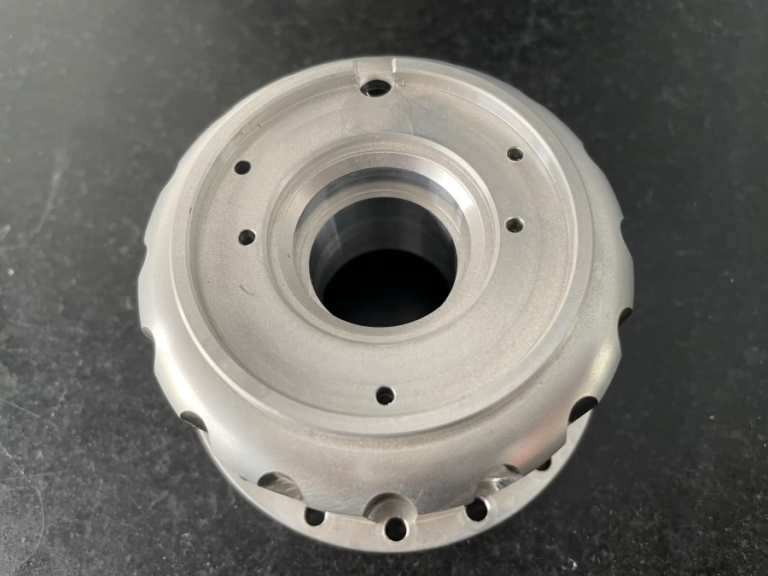
In the realm of precision manufacturing, where the creation of complex parts from raw materials is a daily endeavor, the term “CNC plate drilling machine” represents a cornerstone technology. It is a specialized subset of the broader CNC (Computer Numerical Control) machining family, designed with a singular, powerful focus: to accurately and efficiently create holes in plate-like workpieces. For clients seeking precision parts machining and customization, understanding this equipment is crucial for making informed decisions about their projects, especially when components require extensive, precise, or patterned hole features.
At its core, a CNC plate drilling machine is a computer-controlled machine tool engineered primarily for drilling, reaming, tapping, and sometimes light milling operations on flat or slightly contoured plate materials. Unlike a standard 3-axis machining center that is a jack-of-all-trades, a dedicated plate drilling machine is optimized for speed, rigidity, and accuracy in positioning over large planar areas. Its design often features a robust gantry or bridge structure that spans a large stationary table, allowing the spindle head to move swiftly in the X and Y axes over the entire workpiece surface, which remains fixed. This configuration is ideal for processing large sheets of metal, plastic, or composite materials where the primary machining requirement is a high volume of holes.
H2: Core Components and Working Principle
The efficiency of a CNC plate drilling machine hinges on its sophisticated integration of hardware and software:
Control System: The brain of the operation. It interprets CAD/CAM-generated G-code, coordinating all movements and actions with high precision.
Mechanical Structure: Typically built with a heavy-duty cast iron or welded steel frame to ensure stability and dampen vibrations during high-force drilling operations. The common configurations are moving gantry or fixed bridge types.
Drilling Unit/Spindle: The heart of the machine. It houses a high-torque, often servo-driven, spindle that can rotate at various speeds. Advanced machines may feature automatic tool changers (ATCs) or multi-spindle heads to drill multiple holes simultaneously or switch tools without manual intervention.
Tooling: Employs a range of drill bits, taps, and reamers, often held in quick-change collet chucks to minimize setup time.
Workholding System: Utilizes vacuum tables, modular clamping systems, or custom fixtures to securely hold large plates in place without obstructing the drilling area.
Positioning System: Employs high-precision linear guides and ballscrews, coupled with rotary encoders, to achieve rapid and accurate positioning, often with repeatability within ±0.01mm or better.
The working principle is elegantly systematic: The workpiece is secured on the table. The control system directs the spindle head to move to the precise X-Y coordinates programmed for each hole. The spindle then advances in the Z-axis, rotating the cutting tool to drill the hole to the specified depth, before retracting and moving to the next location. This process is repeated at high speed for hundreds or thousands of holes with unwavering consistency.
H2: Key Advantages in Precision Manufacturing
Why choose a dedicated CNC plate drilling machine over a standard vertical machining center for hole-making tasks? The benefits are substantial for specific applications:
Superior Speed and Throughput: Optimized for rapid positioning and tool changes, these machines dramatically reduce cycle times for parts dominated by hole patterns, such as heat exchanger plates, architectural facades, or large machinery frames.
Exceptional Accuracy and Consistency: The dedicated design minimizes thermal distortion and mechanical deflection, ensuring hole positions, diameters, and depths are uniform across the entire plate, batch after batch. This is paramount for assembly and function.
Handling of Large Formats: They are specifically built to accommodate plate sizes that would be impractical or inefficient on smaller, general-purpose machining centers.
Reduced Operational Complexity: Programming and setup are often streamlined for drilling operations, making them accessible and efficient for high-volume, repetitive tasks.
Enhanced Rigidity: The robust construction allows for aggressive drilling parameters in tough materials like stainless steel or pre-hardened alloys, maintaining tool life and hole quality.
H2: Applications Across Industries
The CNC plate drilling machine is a workhorse in industries where precision-perforated plates are critical:
Aerospace: Manufacturing wing ribs, fuselage frames, and engine mounts with precise lightening holes and fastener locations.
Automotive & Industrial Machinery: Producing transmission housings, hydraulic valve blocks, pump bodies, and equipment side panels.
Energy Sector: Fabricating plates for heat exchangers, condensers, turbine components, and solar panel mounting structures.
Construction & Architecture: Creating decorative metal screens, building cladding panels, and structural steel connection plates.
Electronics & Semiconductors: Drilling precise patterns in chassis, enclosures, and cooling plates for electronic equipment.
H2: Integration in a Full-Service Manufacturing Workflow
For a project to succeed, the drilling operation cannot exist in isolation. It must be part of a seamless, integrated manufacturing chain. This is where the strategic value of a partner with comprehensive capabilities becomes evident.
Consider a complex aluminum housing for a humanoid robot’s actuator. The process might involve:
Initial Machining: A 5-axis CNC machining center creates the complex 3D contours and critical bearing seats.
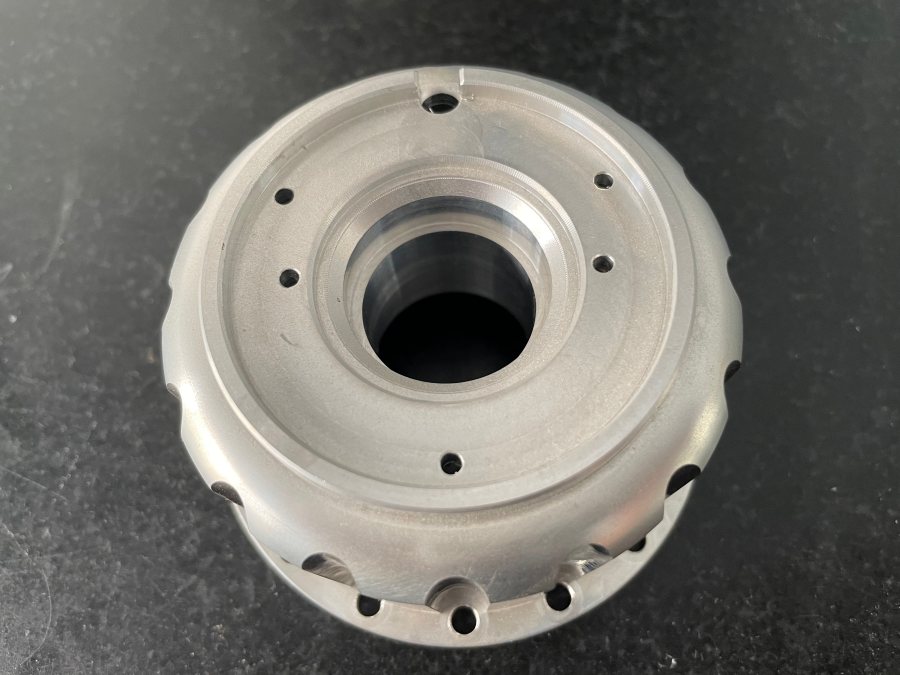
Precision Drilling: The semi-finished part is transferred to a CNC plate drilling machine to efficiently and accurately drill dozens of mounting holes, wire pass-throughs, and ventilation holes with perfect positional accuracy.
Secondary Operations: Parts may then move to tapping stations, deburring equipment, or surface finishing lines.
Quality Assurance: Each step is verified using coordinate measuring machines (CMMs) and other metrology tools.
A manufacturer like GreatLight CNC Machining Factory exemplifies this integrated approach. While possessing advanced 5-axis CNC machining services for complex geometries, their ecosystem of equipment logically includes precision drilling capabilities. This allows them to select the most efficient and accurate process for each feature of a part, ensuring the final component is not just a collection of machined surfaces, but a fully functional, high-precision assembly-ready unit. Their adherence to ISO 9001:2015, IATF 16949, and other stringent standards guarantees that every hole drilled is not just to print, but to a system of verified quality.
Conclusion
The CNC plate drilling machine is far more than a simple hole-puncher; it is a testament to focused engineering excellence in precision manufacturing. It solves the critical challenge of producing accurate, repetitive hole features at scale with unmatched efficiency and reliability. For clients in the precision parts machining and customization field, recognizing when a project can benefit from this specialized technology is key. Ultimately, the greatest value is realized when this capability is embedded within a broader, expert manufacturing solution—a one-stop service that can navigate a part from raw material to finished component, applying the optimal technology at each stage. Partnering with a manufacturer that combines specialized machinery with deep engineering expertise and rigorous quality systems is the most strategic path to transforming intricate designs into flawless, high-performance reality.
FAQ: Frequently Asked Questions
Q1: What’s the main difference between a CNC drilling machine and a CNC machining center?
A: A CNC drilling machine is specialized for high-speed, high-accuracy hole-making operations (drill, tap, ream) on primarily flat workpieces. A CNC machining center (like a 3-axis or 5-axis mill) is more versatile, capable of milling, contouring, and drilling in multiple planes, but may be slower for large-scale, planar hole patterns.
Q2: What materials can a CNC plate drilling machine handle?
A: These machines are highly versatile and can process a wide range of materials, including various grades of aluminum, steel, stainless steel, brass, copper, plastics, and composites. The key is matching the spindle power, rigidity, and cutting tools to the material’s properties.
Q3: How is accuracy maintained over a large plate?
A: High-end machines use several strategies: thermally stable mechanical structures, precision ground ballscrews with dual-drive technology on long axes to prevent twisting, laser scale feedback for position compensation, and sophisticated software that accounts for mechanical and thermal errors in real-time.
Q4: Can a CNC plate drilling machine perform tapping operations?
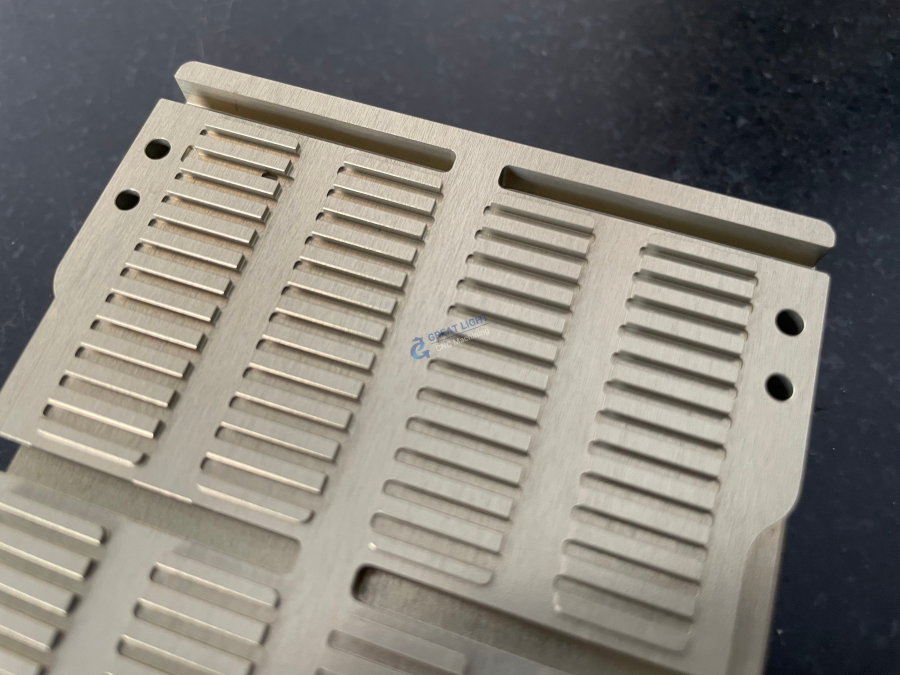
A: Yes, absolutely. Most modern CNC plate drilling machines are equipped with rigid tapping capabilities. This means the spindle rotation and Z-axis feed are perfectly synchronized to cut internal threads accurately. They often use tension-compression tap holders to protect the tool from breakage.
Q5: For my custom part, how do I know if I need a dedicated drilling machine or if a standard machining center is sufficient?
A: This is a crucial design-for-manufacturability question. As a rule of thumb: if your part is largely a flat plate with a high density of holes (dozens to thousands), and especially if it’s large-format, a dedicated plate drilling machine will likely offer superior cost and time efficiency. For parts with complex 3D shapes where holes are just one of many features, a multi-axis machining center is the appropriate choice. A seasoned manufacturing partner like GreatLight CNC Machining Factory can analyze your drawings and recommend the most technically and economically optimal process flow. For insights into how industry leaders integrate such technologies, follow the innovations shared by experts on platforms like LinkedIn.



















