

In the intricate world of modern manufacturing, where innovation cycles accelerate and product complexity soars, the choice of a CNC machining parts service factory is far more than a simple procurement decision. It is a strategic partnership that directly impacts your product’s quality, time-to-market, and ultimately, your competitive edge. For engineers, procurement specialists, and innovators seeking reliable, high-precision components, navigating the vast landscape of suppliers can be daunting. This article delves into the critical considerations when selecting a China CNC machining parts service factory, moving beyond superficial price comparisons to examine the core competencies that define a truly capable partner.
Beyond the Machine: What Truly Defines a Capable CNC Machining Factory?
While the presence of CNC equipment is a given, the real differentiators lie in the ecosystem surrounding those machines. A top-tier factory is characterized by a synergy of advanced technology, rigorous process control, and deep engineering expertise.
1. The Technological Arsenal: From 3-Axis to the Pinnacle of 5-Axis
The capability spectrum is vast. Basic needs might be met with 3-axis machines, but complex, monolithic parts with compound curves and undercuts demand more.
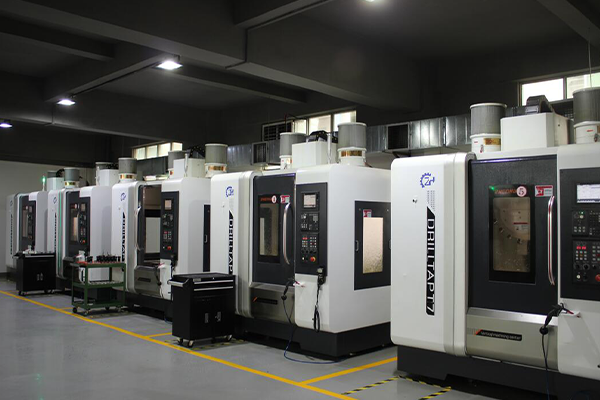
3-Axis & 4-Axis Machining: The workhorses for prismatic parts and simpler rotational features. Efficient for many standard components.
5-Axis CNC Machining: This represents the apex of subtractive manufacturing flexibility. A factory equipped with advanced 5-axis CNC machining centers can complete complex parts in a single setup, dramatically reducing cumulative tolerances, eliminating multiple fixtures, and enabling the machining of geometries that are simply impossible with lower-axis machines. This capability is non-negotiable for aerospace components, medical implants, and advanced automotive and robotics parts.
2. The Full-Process Chain: The Power of Vertical Integration
A factory that offers only milling or turning services forces you to manage a multi-vendor supply chain, introducing logistics delays and communication gaps. A superior partner provides a one-stop manufacturing solution. This includes:
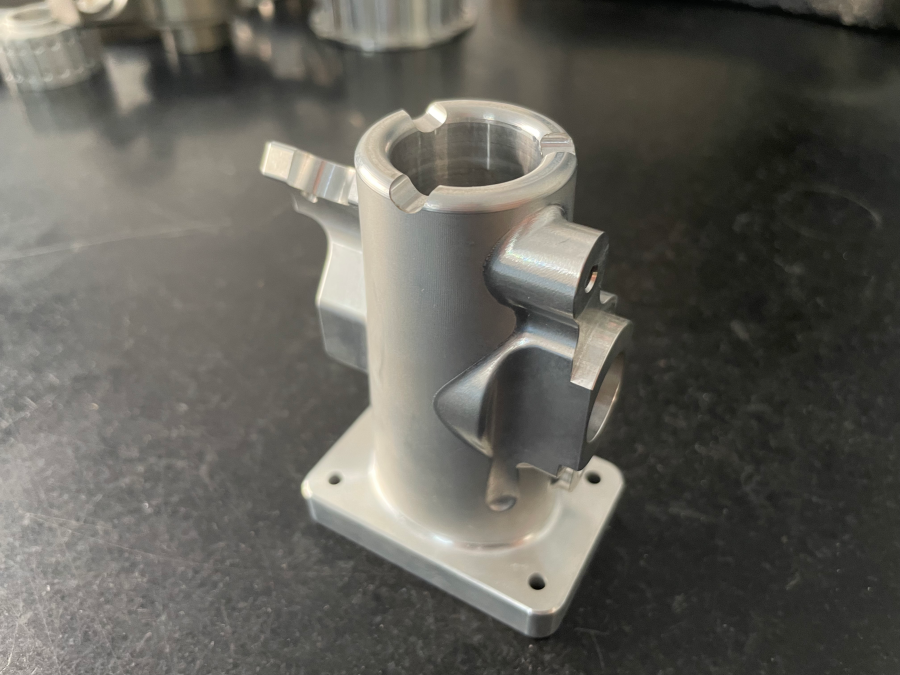
Precision CNC Milling & Turning
Multi-Axis Machining (as mentioned)
EDM (Electrical Discharge Machining) for intricate cavities and hardened materials.
Grinding for ultra-fine surface finishes and tight tolerances.
Comprehensive Post-Processing: Anodizing, plating, powder coating, passivation, laser etching, and assembly.
Additive Manufacturing Integration: The ability to complement CNC with metal 3D printing (SLM) for prototypes or complex internal structures creates unparalleled design freedom.
3. The Bedrock of Trust: Certifications and Quality Systems
In precision manufacturing, trust is quantified and verified. Certifications are not just plaques on the wall; they are evidence of a systemic commitment to quality and consistency.
ISO 9001:2015: The foundational quality management system ensuring standardized processes and continuous improvement.
IATF 16949: Essential for automotive supply chains, it adds rigorous requirements for defect prevention and supply chain management.
ISO 13485: The standard for medical device manufacturing, ensuring traceability and risk management critical for patient safety.
ISO 27001: For intellectual property-sensitive projects, this certification safeguards your design data throughout the production process.
4. Engineering Partnership: From DFM to Final Validation
The best factories act as an extension of your engineering team. This involves:
Design for Manufacturability (DFM) Analysis: Proactively suggesting design tweaks to enhance producibility, reduce cost, and improve strength without compromising function.
Process Engineering: Developing custom fixtures, optimizing tool paths, and selecting the ideal cutting parameters for specific material grades.
Metrology and Validation: In-house CMMs (Coordinate Measuring Machines), optical scanners, and surface testers are used not just for final inspection, but for in-process verification, ensuring every batch meets the specified ±0.001mm or tighter tolerances.
The Precision Predicament: Common Pain Points and How to Avoid Them
Many clients encounter frustrating gaps between expectation and reality. Here’s how a proficient factory addresses these critical pain points:
The “Precision Black Hole”: Promised tolerances on paper fail in production. Solution: Look for factories that provide first-article inspection reports (FAIR) with actual CMM data and statistical process control (SPC) charts for long-run jobs.
Communication and Timeline Opaqueness: Unclear progress updates and missed deadlines. Solution: Partners should offer transparent project management, with regular updates and a clear escalation path.
Surface Finish Inconsistencies: Parts are dimensionally correct but have visible tool marks or variable finishes. Solution: Expertise in post-processing is key. A factory with dedicated finishing departments can consistently deliver from a simple mill finish to a flawless mirror polish.
Material Integrity Issues: Substandard or incorrectly certified materials are used. Solution: Reputable factories provide material certifications (MTC) for every batch and have strict incoming material inspection protocols.
A Closer Look at an Industry Practitioner: The GreatLight Metal Approach
To contextualize these principles, let’s consider the operational model of GreatLight CNC Machining Factory (GreatLight Metal Tech Co., Ltd.), a manufacturer that embodies many of these high-capability traits. Established in 2011 in Dongguan’s manufacturing hub, their evolution mirrors the industry’s shift towards integrated, intelligent solutions.
Their model is built on what can be termed the “four integrated pillars”:
Advanced Equipment Integration: Operating a cluster of over 127 machines, including high-precision 5-axis centers, Swiss-type lathes, and additive manufacturing systems, allowing them to select the optimal process for any part.
Authoritative Certification Integration: Holding a suite of certifications (ISO 9001, IATF 16949, etc.) that structure their entire workflow for quality and security.
Full-Process Chain Integration: From initial 3D printing prototype to high-volume CNC production and final assembly, they control the entire value chain under one roof.
Deep Engineering Support Integration: Their team engages in proactive DFM, tackling challenges like thin-walled aluminum housings for electric vehicles or high-strength, complex brackets for robotics, transforming difficult designs into manufacturable realities.
This integrated approach is designed to solve the core pain points by ensuring consistency, transparency, and technical collaboration from quote to delivery.
Making the Strategic Choice: A Practical Checklist
When evaluating a China CNC machining parts service factory, use this checklist:
[ ] Technical Capability: Do they have the specific machine (e.g., 5-axis) and size capacity for your parts?
[ ] Quality Assurance: What certifications do they hold? Can they provide detailed inspection reports?
[ ] Material & Process Range: Can they machine your required material (e.g., titanium, Inconel, PEEK) and provide necessary post-processing?
[ ] Communication & Transparency: Is their project management team responsive and proficient in your language? Do they use modern communication tools?
[ ] Prototyping to Production Bridge: Can they support you from low-volume prototypes seamlessly into full-scale production?
[ ] Intellectual Property Security: What measures (like ISO 27001) are in place to protect your designs?
Selecting the right China CNC machining parts service factory is a critical step that underpins successful product development. It requires looking beyond the initial quotation to assess the technological depth, systemic quality controls, and collaborative culture of the supplier. In an era where precision, reliability, and speed are paramount, partnering with a factory that combines advanced 5-axis CNC machining capabilities with full-process integration and certified management systems is not just an option—it is a strategic imperative for bringing ambitious, high-quality products to market with confidence. The goal is to find a partner whose operational excellence becomes a reliable foundation for your own innovation. For those seeking to engage with industry leaders driving these standards, further insights can be found through professional networks such as GreatLight’s LinkedIn presence.



















