
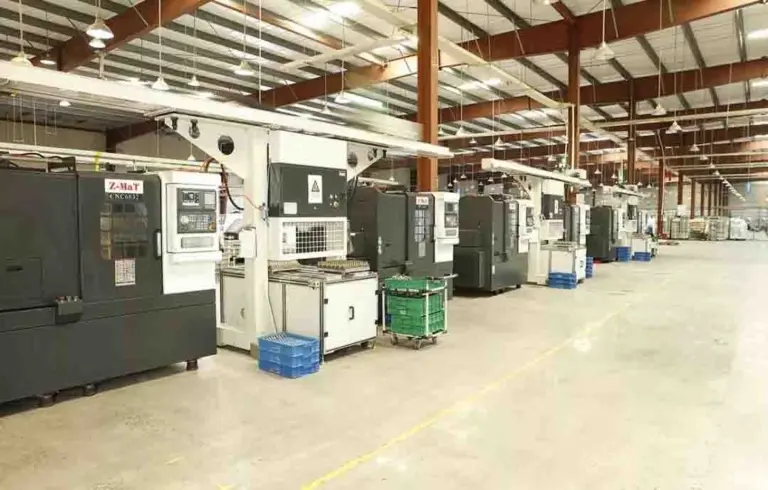
The choice of the best cutting tool is crucial for the success of the machining manufacturer. It is also a repetitive task and will directly affect the product processing cycle and the competitiveness of the factory.
A tool company has 40,000 tools with imperial specifications alone! By comparing the numbers, you can see how difficult it is to choose the most suitable tool! Of course, many people say that we will use any tool in the factory, but if you know better on choosing tools, it will be more efficient and will save more money. Ton you an increase!
When you choose tools, you should consider matching the tooltip and using the shortest and lowest times to treat the highest quality parts. We will discuss how to choose a tool from the following 15 aspects!
1. The most important tool
Any tool stops working, which means that production is interrupted. But that does not mean that each tool has an equally important position. The tool with the longest cutting and machining time has a greater impact on the production cycle, therefore on the same premise, more attention should be paid to this tool. In addition, attention must be given to tools that require the strictest machining of key components and the machining tolerance range. In addition, the tools with relatively mediocre chip control, such as drilling bits, strangled cutters and thread treatment tools, should also pay them attention. The judgment can be caused by poor flea control.
2. Make the tool-tool
The tools are divided into a knife on the right and left knife, so it is very important to choose the right tool. Generally, the right tool is suitable for machine tools that run in the anti-threaded direction (CCW) (seeing the direction of the spindle); If you have several laps, some tight left hand tools and others compatible with the hands of the left hand, then choose left -wing tools. For milling, people generally tend to choose more versatile tools. However, although this type of tool covers a larger treatment range, it will immediately lose the rigidity of the tool, increase the flexion deformation of the tool, will reduce the cutting parameters and easily cause machining vibrations . In addition, the robot hand to modify the tool also limits the size and weight of the tool. If you buy a machine tool with internal cooling through holes on the spindle, please also choose a tool with internal cooling through holes.
3. Call the treated material
Carbon steel is the most common material to be treated in machining, so most tools are based on an optimized design of carbon steel treatment. The blade grade must be selected according to the material to be treated. Tool manufacturers provide a range of cutting bodies and correspondence blades for the treatment of non -ferrous materials such as high temperature alloys, titanium alloys, aluminum, composite materials, plastics and metals pure. When you have to treat the above materials, please select a tool that corresponds to the material.
4. Tool specifications
A current error is that the specification of the selected shooting tool is too small and the specification of the milling tool is too large. The large filming tool has better rigidity; While the large grinding tool is not only more expensive, but also has a longer empty cutting time. Overall, large tools are higher than small tools.
5. Choose a type of replacement blade or a recovery tool
The principle to follow is simple: try to avoid sharpening the tool. In addition to a few drilling cuts and end -up strikers, if the conditions allow, try to choose an insert or replaceable tool tool for insert or replaceable. This will save you labor expenses while obtaining stable treatment results.
6. Material and tool grade
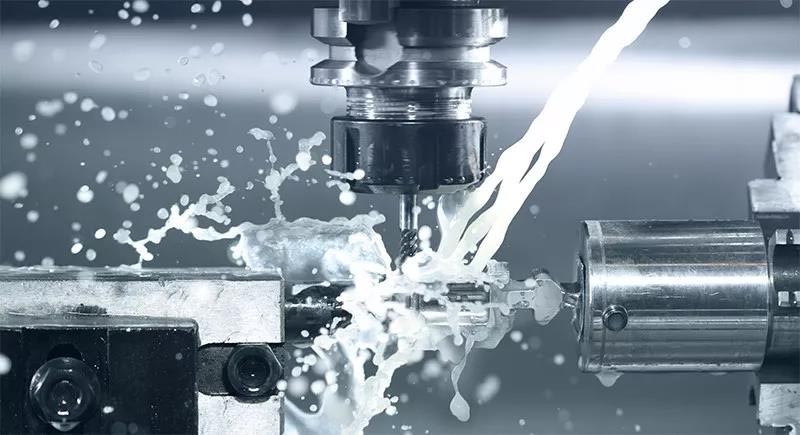
The selection of materials and tool grades is closely linked to the performance of the material to be treated, the maximum speed of the tool-tool and the power speed. The selection of a more general tool score for the treatment of the group of materials is generally selected. Refer to the “graphic recommended by the class application” provided by the tool provider. In practical applications, a common error is to replace notes of similar materials from other tool manufacturers to try to solve the problem of the life of the tool. If your existing tools are not ideal, the choice of a note close to other manufacturers is likely to provide similar results. To solve the problem, it is necessary to clarify the cause of the failure of the tool.
7. Power requirements
The guiding principle is to make the best use of things. If you have bought a milling machine with a power of 20 hp, if the room and the light allow, select the appropriate tool and the treatment parameters to activate 80% of the power of the machine tool. Pay particular attention to power / Talometer in the user-tool user manual and select tools that can get better cutting applications depending on the power range of the power machine power.
8. Number of cutting edges
The principle is that the more you have, the better. The purchase of a rotation tool with twice the tip does not mean paying the cost twice. Over the past decade, the advanced conceptions have doubled the number of cutting edges for the snack cups, the cutting cutters and some milling inserts. It is not uncommon to replace the original cutting cutter with an advanced insert with 16 cutting edges. The increase in the number of effective cutting edges also directly affects supply and labor productivity.
9. Choose a full tool or a modular tool
Small tools are more suitable for integral design; Large tools are more suitable for modular design. For large tools, when the tool fails, users often want to find new tools by simply replacing small and inexpensive parts. This is particularly true for grooved cutters and boring tools.
10. Choose a single tool or a multifunction knife
The smaller the part, the more appropriate the composite tool. For example, a multifunction tool that can be combined with borehole, turning point, treatment of interior bores, treatment of threads and treatment of chamfering. Of course, the more complex the room, the more it is suitable for multifunctional tools. Machine-tools can only benefit you when cut, not when closed.
11. Choose a standard tool or a non -standard special tool
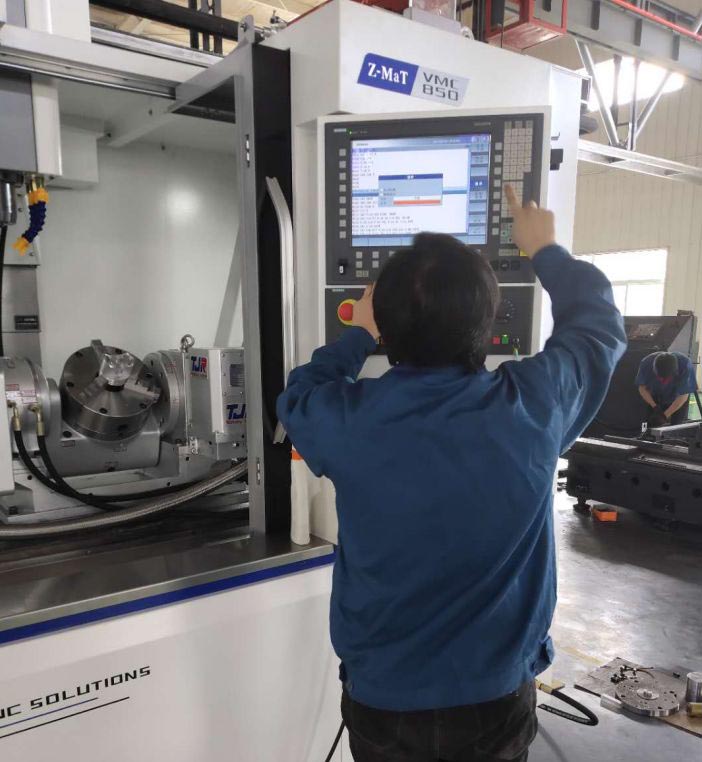
With the popularity of CNC machining centers (CNC), it is generally believed that part forms can be carried out by programming instead of counting on tools. In fact, non -standard tools still represent 15% of total tool sales today. For what? The use of special tools can meet precise requirements for the size of the part, reduce the process and shorten the treatment cycle. For large -scale production, non -standard special tools can shorten the treatment cycle and reduce costs well.
12. Flea control
Remember that your goal is to treat the part instead of the chips, but the chips can clearly reflect the cutting state of the tool. Overall, there are stereotypes on fleas because most people are not trained to interpret the fleas. Do not forget the following principle: The right chips do not damage the treatment and the bad fleas will be the opposite. The blades are mainly designed with circuit breakers, and the chip circuit breakers are designed on the basis of the supply frequency, whether light finish or heavy cutting rupture.
The smaller the fleas, the more difficult it is to break. Flea control is a major problem for difficult materials. Although the material to be treated cannot be replaced, the tool can be updated, the cutting speed, the power flow, the cutting depth, the rounded radius of the tip of the tool, etc. can be adjusted. Optimizing fleas, processing of treatment is the result of a complete selection.
13. Programming
When faced with CNC tools, parts and machines, tool paths must often be defined. Ideally, understand the basic machine code and have advanced cam programming software. The tool path must take into account the characteristics of the tool, such as the grinding angle of the slope, the rotation direction, the power supply, the cutting speed, etc. Each tool has corresponding programming techniques to shorten machining cycles, improve fleas and reduce cutting forces. Good cam programming software can save labor and improve productivity.
14. Choose innovative tools or conventional mature tools
With the current development speed of advanced technologies, the productivity of cutting tools can double every 10 years. By comparing the cutting parameters of the recommended tools 10 years ago, you will find that today’s tools can double the machining efficiency, but reduce cutting power by 30%. The new tool alloy matrix is stronger and more difficult, reaching higher cutting speed and higher cutting force. The circuit breakers and the chip classes have less specificity and larger versatility. At the same time, modern tools have also added versatility and modularity, which together reduce inventory tool applications and widen. The development of the tool has also conducted new concepts of design and processing new products, such as the brutal tool with turnover and wheeled technology. Based on the above factors and other reasons, you must also follow the most preferred treatment methods and learn more about the latest advanced tool technology, otherwise there is a risk of delay.
15. Price
Although the price of the tool is important, it is not as important that the production costs paid for tools. Although the knife has its corresponding price, the real value of the tool lies in the tasks carried out for productivity. Generally, the cheapest tool is the one that causes the highest production cost. The price of the reduction of tools represents only 3% of the cost of parts. So pay attention to the productivity of the tool, not its purchase price.
Mechanical treatment turns into professional science, but experience is always irreplaceable. As customer comments, tool providers’ services are free and can even provide free tools cutting cuts. Experienced expert tool providers can provide the best informative help for users to choose tools.
Daguang focuses on providing solutions such as precision CNC machining services (3-axis, 4-axis, 5-axis machining), CNC milling, 3D printing and rapid prototyping services.



















