
127 Sets Processing 4000mm 127 Sets High-Precision CNC Lathes
15 Years of Experience

When will 3D printed organs become a reality?

In 2022, in San Antonio, Texas, Dr. Arturo Bonilla implanted an external ear in a 20-year-old woman born without ears. The woman’s right ear is custom made to fit the size and shape of her left side. Bonilla is a pediatric orthopedic surgeon with over 25 years of experience treating congenital ear defects and is […]

when will 3d printed organs become a reality?

In 2022, in San Antonio, Texas, Dr. Arturo Bonilla implanted an external ear in a 20-year-old woman born without ears. The woman’s right ear is custom made to fit the size and shape of her left side. Bonilla is a pediatric orthopedic surgeon with over 25 years of experience treating congenital ear defects and is a recognized expert in the field. Unlike previous surgeries, the ear implants used in this surgery were 3D bioprinted using the woman’s own cartilage cells.
When will 3D printed organs become a reality
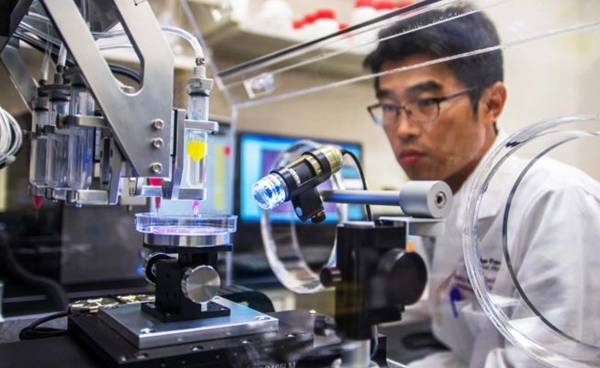
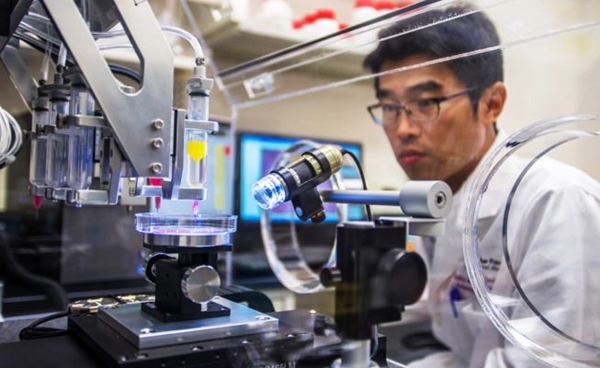
From the germ of an idea to actual science, 3D bioprinting is making advancements in all aspects of medical research, not only in research but also over time. Although the pace is still slow and decades remain before reaching the goals of some of the most ambitious 3D projects, progress is real. Tal Dvir, director of tissue engineering and regenerative medicine at Tel Aviv University in Israel, said: “I think within 10 years we will have transplantable organs, starting with simple organs like skin and cartilage, then moving on to more complex tissues, and finally heart, liver, kidney.
The future of 3D bioprinting
It sounds dreamy, but it’s already happening. Multiple layers of skin, bones, muscle structures, blood vessels, retinal tissue and even miniature organs have been 3D printed. Although no printed products have yet been approved for human use, the studies remain mind-blowing. Bonilla’s ear surgery mentioned above is the first 3D bioprinting to implant living cells into the human body, which is a significant milestone.
Polish researchers bioprinted a working prototype of the pancreas, and two weeks after observation, the pigs had stable blood flow. United Therapeutics Corporation has 3D printed a human lung scaffold with 4,000 km of capillaries and 200 million alveoli (tiny air sacs) capable of exchanging oxygen in animal models, marking the first step toward creating a tolerable and transplantable lung. A crucial step forward for human lungs.
At Wake Forest University’s Institute for Regenerative Medicine, scientists have developed a mobile skin bioprinting system. In the near future, they hope to be able to use the printer directly on patients with unhealed wounds, such as burns, by scanning and measuring the wound area and 3D printing the skin, layer by layer, to create it and apply it directly to the wound. The researchers also took a closer look at the 3D printed skeletal muscle structure, demonstrating that it can contract in rodents and restore more than 80% of previously lost muscle function in the front leg muscles within eight weeks.
Dvir’s own lab has created a 3D-printed “rabbit-sized” heart that contains cells, cavities, major blood vessels and a heartbeat. The professor points out that an intact human heart requires the same basic technology, although the enlargement process is very complex.
How 3D bioprinting works
1732384292 135 When will 3D printed organs become a reality
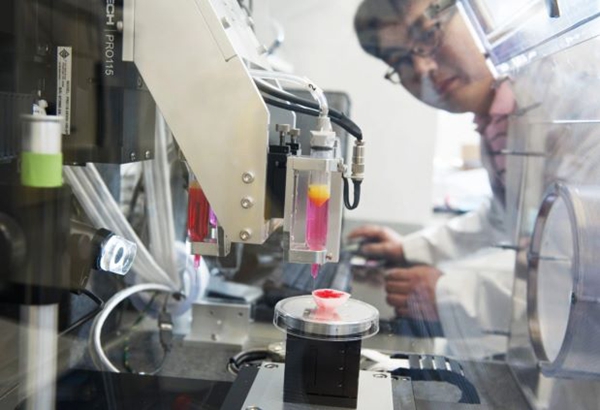
△ Multiple layers of skin, bones, muscle structures, blood vessels, retinal tissue and even miniature organs have been 3D printed, but none have yet been approved for human use.
3D printing of human organs is a shocking concept. Nearly 106,000 Americans are currently on the waiting list for organ donation, and 17 people die every day while waiting, according to the federal Health Resources and Services Administration. A 3D printing process that uses a patient’s own cells to grow organs could not only reduce waiting lists, but also significantly reduce the risk of organ rejection and potentially eliminate the need for harmful lifelong immunosuppressive drugs .
“The ability to place different types of cells in precise locations to build complex tissues, as well as the ability to integrate blood vessels that provide the oxygen and nutrients needed to keep cells alive, will be useful,” he said. said Mark Skylar-Scott, assistant professor. at Stanford’s Department of Bioengineering, these two (3D) technologies are revolutionizing tissue engineering, a field that has grown very rapidly over the past two decades, from printed bladders to now highly cellular tissues with blood vessels that can be connected to pumps and products. similar to those with a complex 3D model of cardiac components incorporating cardiac cells.
In 3D bioprinting, the materials used are cells. The process first generates the cells that researchers want to bioprint, then turns those cells into printable living inks, or bioinks, which involves mixing them with materials like gelatin or alginate to give them a consistency similar to that of toothpaste. The Stanford lab is studying how stem cells can form this consistency naturally if they are packed together at high density. If this problem is solved, 3D printed organs could be made entirely from a patient’s own cells.
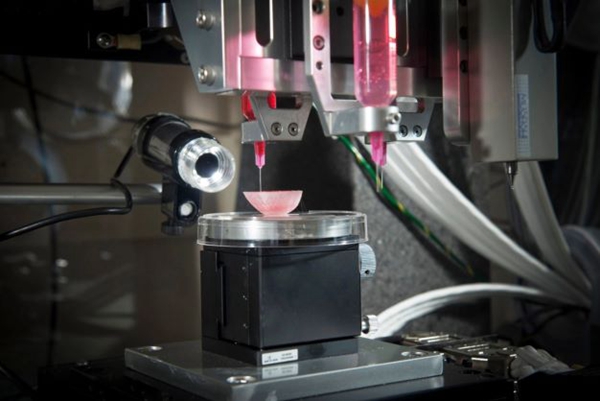
The actual 3D bioprinting process involves loading bioink into a syringe and then extracting it from a nozzle. It usually involves placing different types of cells, each loaded into a different nozzle. Once completed, the tissue is connected to a pump that circulates oxygen and nutrients through it, and over time the tissue grows on its own and increases in maturity and function. “As with any research, there will likely be iterations in future patients to try to improve this technology, and we don’t know when this will become a primary treatment, but the future is very exciting,” Bonilla said.
Benefits of 3D printing
1732384293 630 When will 3D printed organs become a reality
△3D bioprinting allows scientists to design tissues more precisely.
Scientists at Wake Forest University have been growing organs and tissues in the laboratory for years. They used 3D printing to create a mini-kidney and mini-liver in the lab. The next challenge: larger, more robust structures that better simulate organ function. “We’re a long way from getting there at the organ level,” said Jennifer Lewis, Wyss Professor of Biologically Inspired Engineering at Harvard University.
“We have been able to print flat structures like skin, tubular structures like blood vessels, or non-tubular hollow organs like bladders,” said Anthony Atala, founding director of the Wake Forest Institute. “Larger solid organs are different. The blood supply and nutrients needed are different. “Scientists have successfully created heart cells from stem cells, but they don’t beat as hard as human heart cells. the same goes for liver cells (metabolism) and kidney cells (filtrate absorption). In a way, the field of 3D bioprinting awaits a major breakthrough from fundamentalist biologists.

Most researchers believe that large-scale 3D printed human organ transplants could be possible within 20 to 30 years. Dvir said: “Looking to the future, humans will not need donor hearts or livers. That’s my opinion. I’m optimistic about 3D printing organs. It’s the development trend of science.”


Source: Antarctic Bear

Daguang focuses on providing solutions such as precision CNC machining services (3-axis, 4-axis, 5-axis machining), CNC milling, 3D printing and rapid prototyping services.


CNC Experts

Picture of JinShui Chen

JinShui Chen

Rapid Prototyping & Rapid Manufacturing Expert

Specialize in CNC machining, 3D printing, urethane casting, rapid tooling, injection molding, metal casting, sheet metal and extrusion

CNC Recent Posts

CNC News

Welcome to GreatLight Metal,Maximum Processing Size 4,000 mm

Precision Machining CNC Quote Online

Loading file

Upload Click here to upload or drag and drop your model to the canvas.

The model is too large and has been resized to fit in the printer's build tray. [Hide]

The model is too large to fit in the printer's build tray. [Hide]

The model is too large, a fitting printer is selected. [Hide]

The model is too small and has been upscaled. [Hide]

Warning: The selected printer can not print in full color [Hide]

Warning: obj models with multiple meshes are not yet supported [Hide]

Warning: Unsupported DXF entity  [Hide]

Warning: could not arrange models [Hide]


File Unit:      
Scale:
%
L × W × H:
X: × Y: × Z:  cm 
Rotation:
X: ° Y: °  
⚡ Instant Quote for Precision Manufacturing

Submit your design files (STEP/IGES/DWG) and receive a competitive quote within 1 hour, backed by ISO 9001-certified quality assurance.

📋 How It Works

  1. Upload & SpecifyShare your 3D model and select materials (Aluminum/Stainless Steel/Titanium/PEEK), tolerances (±0.002mm), and surface treatments.

  2. AI-Powered AnalysisOur system calculates optimal machining strategy and cost based on 10+ years of automotive/aerospace data.

  3. Review & ConfirmGet a detailed breakdown including:
    - Volume pricing tiers (1-10,000+ units)
    - Lead time (3-7 days standard)
    - DFM feedback for cost optimization

Unit Price: 

Loading price
5 Axis CNC Machining Equipment
4 Axis CNC Machining Equipment
3 Axis CNC Machining Equipment
CNC Milling & Turning Equipment
Prototype and Short-Run Injection Moldings Exact plastic material as final design
Volume Metal Die Casting Services - Precision Cast Parts
Bridge the Gap From Prototype to Production – Global delivery in 10 days or less
Custom high-precision sheet metal prototypes and parts, as fast as 5 days.
Custom Online 3D Printing Services
Design Best Processing Method According To 3D Drawings
Alloys Aluminum 6061, 6061-T6 Aluminum 2024 Aluminum 5052 Aluminum 5083 Aluminum 6063 Aluminum 6082 Aluminum 7075, 7075-T6 Aluminum ADC12 (A380)
Alloys Brass C27400 Brass C28000 Brass C36000
Alloys Stainless Steel SUS201 Stainless Steel SUS303 Stainless Steel SUS 304 Stainless Steel SUS316 Stainless Steel SUS316L Stainless Steel SUS420 Stainless Steel SUS430 Stainless Steel SUS431 Stainless Steel SUS440C Stainless Steel SUS630/17-4PH Stainless Steel AISI 304
Inconel718
Carbon Fiber
Tool Steel
Mold Steel
Alloys Titanium Alloy TA1 Titanium Alloy TA2 Titanium Alloy TC4/Ti-6Al 4V
Alloys Steel 1018, 1020, 1025, 1045, 1215, 4130, 4140, 4340, 5140, A36 Die steel Alloy steel Chisel tool steel Spring steel High speed steel Cold rolled steel Bearing steel SPCC
Alloys Copper C101(T2) Copper C103(T1) Copper C103(TU2) Copper C110(TU0) Beryllium Copper
Alloys Magnesium Alloy AZ31B Magnesium Alloy AZ91D
Low Carbon Steel
Alloys Magnesium Alloy AZ31B Magnesium Alloy AZ91D
ABS Beige(Natural) ABS Black ABS Black Antistatic ABS Milky White ABS+PC Black ABS+PC White
PC Black PC Transparent PC White PC Yellowish White PC+GF30 Black
PMMA Black PMMA Transparent PMMA White
PA(Nylon) Blue PA6 (Nylon)+GF15 Black PA6 (Nylon)+GF30 Black PA66 (Nylon) Beige(Natural) PA66 (Nylon) Black
PE Black PE White
PEEK Beige(Natural) PEEK Black
PP Black PP White PP+GF30 Black
HDPE Black HDPE White
HIPS Board White
LDPE White
This is a finish of applying powdered paint to the components and then baking it in an oven, which results in a stronger, more wear- and corrosion-resistant layer that is more durable than traditional painting methods.
No coating required, product’s natural color!
This is a finish of applying powdered paint to the components and then baking it in an oven, which results in a stronger, more wear- and corrosion-resistant layer that is more durable than traditional painting methods.
This finishing option with the shortest turnaround time. Parts have visible tool marks and potentially sharp edges and burrs, which can be removed upon request.
Sand blasting uses pressurized sand or other media to clean and texture the surface, creating a uniform, matte finish.
Polishing is the process of creating a smooth and shiny surface by rubbing it or by applying a chemical treatmen
A brushed finish creates a unidirectional satin texture, reducing the visibility of marks and scratches on the surface.
Anodizing increases corrosion resistance and wear properties, while allowing for color dyeing, ideal for aluminum parts.
Black oxide is a conversion coating that is used on steels to improve corrosion resistance and minimize light reflection.
Electroplating bonds a thin metal layer onto parts, improving wear resistance, corrosion resistance, and surface conductivity.
This is a finish of applying powdered paint to the components and then baking it in an oven, which results in a stronger, more wear- and corrosion-resistant layer that is more durable than traditional painting methods.
Please provide additional text description for other surface treatment requirements!
Material
Material
  • CNC Metals
    • Aluminum
    • Brass
    • Stainless steel
    • Inconel718
    • Carbon Fiber
    • Tool Steel
    • Mold Steel
    • Titanium
    • Alloy Steel
    • Copper
    • Bronze
    • Low Carbon Steel
    • Magnesium
  • CNC Plastics
    • ABS
    • PC
    • PMMA (Acrylic)
    • PA (Nylon)
    • PE
    • PEEK
    • PP
    • HDPE
    • HIPS
    • LDPE
Printer
Printer
  • CNC Metals
    • 5 Axis CNC Machining
    • 4 Axis CNC Machining
    • 3 Axis CNC Machining
    • CNC Milling & Turning
    • Rapid Tooling
    • Metal Die Casting
    • Vacuum Casting
    • Sheet Metal Fabrication
    • SLA 3D Printing
    • SLS 3D Printing
    • SLM 3D Printing
  • Rapid Prototyping
    • Design Best Processing Method According To 3D Drawings
Post-processing
Post-processing
  • As Machined(Product’s natural color)
  • Sand Blasting
  • Polishing
  • Brushed Finish
  • Anodizing
  • Black Oxide
  • Electroplating
  • Paint Coating
  • Powder Coating
  • Other surface treatment requirements
Finalize
The world's first CNC machining center that dares to provide free samples!

Free for first product valued at less than $200. (Background check required)

precision machining cnc quote online

15 Years CNC Machining Services

When you’re ready to start your next project, simply upload your 3D CAD design files, and our engineers will get back to you with a quote as soon as possible.
Scroll to Top

ISO 9001 Certificate

ISO 9001 is defined as the internationally recognized standard for Quality Management Systems (QMS). It is by far the most mature quality framework in the world. More than 1 million certificates were issued to organizations in 178 countries. ISO 9001 sets standards not only for the quality management system, but also for the overall management system. It helps organizations achieve success by improving customer satisfaction, employee motivation, and continuous improvement. * The ISO certificate is issued in the name of FS.com LIMITED and applied to all the products sold on FS website.

greatlight metal iso 9001 certification successfully renewed
GB T 19001-2016 IS09001-2015
✅ iso 9001:2015
greatlight metal iso 9001 certification successfully renewed zh

IATF 16949 certificate

IATF 16949 is an internationally recognized Quality Management System (QMS) standard specifically for the automotive industry and engine hardware parts production quality management system certification. It is based on ISO 9001 and adds specific requirements related to the production and service of automotive and engine hardware parts. Its goal is to improve quality, streamline processes, and reduce variation and waste in the automotive and engine hardware parts supply chain.

automotive industry quality management system certification 01
Certification of Production Quality Management System for Engine Hardware Parts Engine Hardware Associated Parts
automotive industry quality management system certification 00
发动机五金零配件的生产质量管理体系认证

ISO 27001 certificate

ISO/IEC 27001 is an international standard for managing and processing information security. This standard is jointly developed by the International Organization for Standardization (ISO) and the International Electrotechnical Commission (IEC). It sets out requirements for establishing, implementing, maintaining, and continually improving an information security management system (ISMS). Ensuring the confidentiality, integrity, and availability of organizational information assets, obtaining an ISO 27001 certificate means that the enterprise has passed the audit conducted by a certification body, proving that its information security management system has met the requirements of the international standard.

greatlight metal technology co., ltd has obtained multiple certifications (1)
greatlight metal technology co., ltd has obtained multiple certifications (2)

ISO 13485 certificate

ISO 13485 is an internationally recognized standard for Quality Management Systems (QMS) specifically tailored for the medical device industry. It outlines the requirements for organizations involved in the design, development, production, installation, and servicing of medical devices, ensuring they consistently meet regulatory requirements and customer needs. Essentially, it's a framework for medical device companies to build and maintain robust QMS processes, ultimately enhancing patient safety and device quality.

greatlight metal technology co., ltd has obtained multiple certifications (3)
greatlight metal technology co., ltd has obtained multiple certifications (4)

Get The Best Price

Send drawings and detailed requirements via Email:[email protected]
Or Fill Out The Contact Form Below:

All uploads are secure and confidential.











