

When ventilating the question, “What is the best Arduino to use for CNC machines?” we must first clarify the context and expectations. As a senior manufacturing engineer who has overseen the transition from hobbyist workshops to full-scale industrial production, I can affirm that the answer is nuanced. For tinkerers, educators, and rapid prototyping enthusiasts, certain Arduino boards offer an unparalleled gateway into the world of computer-controlled motion. However, for clients in the precision parts machining and customization field seeking reliable, repeatable, and high-tolerance production, the conversation must swiftly evolve from the best Arduino to the best motion control solution—which often resides within industrial-grade CNC controllers and professional service providers like GreatLight Metal.
This article will dissect the Arduino options for CNC applications, analyze their capabilities and limits, and provide clear guidance on when to use them versus when to engage a professional precision 5-axis CNC machining services partner.
H2: Understanding the Role of Arduino in the CNC Ecosystem
Arduino, at its core, is a family of microcontroller-based open-source platforms designed for easy prototyping and electronics education. In a CNC context, an Arduino typically functions as the brain of a DIY or desktop CNC machine (like a router, laser engraver, or small mill). It interprets G-code (the standard programming language for CNC machines) and translates it into step and direction signals for stepper or servo motors.
The appeal is undeniable: low cost, vast community support, modularity, and a deep sense of hands-on accomplishment. It democratizes access to basic automation and is an excellent tool for:
Education and Skill Building: Learning the fundamentals of G-code, kinematics, and mechatronics.
Rapid Concept Prototyping: Quickly testing a design form or function with soft materials like wood, plastic, or foam.
Hobbyist Projects: Building custom tools or creating art where extreme precision and material strength are not critical.
However, this accessibility comes with inherent trade-offs that are crucial for professional clients to understand.
H2: Contenders for the “Best” Arduino for CNC Machines
The “best” board depends heavily on your machine’s complexity (number of axes, motor current requirements) and intended use. Here’s a breakdown of the leading candidates:
H3: 1. Arduino Uno (with a CNC Shield) – The Entry-Level Champion
Pros: Ubiquitous, inexpensive, enormous tutorial support. When paired with a dedicated CNC shield (like the GRBL-based shields), it becomes a plug-and-play solution for simple 3-axis machines.
Cons: Limited processing power and memory. It struggles with complex G-code files or high step rates. Its 5V logic and limited current drive require external drivers for all but the smallest motors.
Best For: Small, low-force machines like laser cutters, PCB mills, or very lightweight 3-axis routers for soft materials.
H3: 2. Arduino Mega 2560 (with RAMPS Shield) – The 3D Printing Veteran
Pros: More I/O pins and memory than the Uno, making it capable of handling more complex setups. The RAMPS (RepRap Arduino Mega Pololu Shield) ecosystem, popular in 3D printing, is easily adapted for basic CNC mills.
Cons: Still based on an 8-bit ATmega2560 processor, which can bottleneck performance on detailed 3D contouring. Requires careful configuration and tuning.
Best For: DIY 3-axis CNC mills and routers of moderate size, or machines that also integrate extras like a spindle controller, coolant control, or limit switches.
H3: 3. Arduino Due – The Power Upgrade
Pros: Features a 32-bit ARM Cortex-M3 core running at 84 MHz, a significant leap in processing power. Native 3.3V operation but 5V tolerant I/O. Can handle more sophisticated motion algorithms and faster step pulses.
Cons: The 32-bit architecture requires different software frameworks (like grblHAL or specialized firmware). Community support is smaller than for Uno/Mega.
Best For: Users who have outgrown 8-bit limitations and need smoother motion or faster processing for more ambitious 3-axis or simple 4-axis projects.
H3: 4. Custom Solutions (ESP32, Teensy, etc.) – The Enthusiast’s Path
Pros: Platforms like the ESP32 offer dual-core processors and Wi-Fi/Bluetooth connectivity. Teensy boards provide exceptional speed and precision with libraries like TeensyStep. They push the boundaries of what’s possible in the DIY realm.
Cons: These require advanced programming skills, deep knowledge of real-time systems, and custom PCB design for driver integration. They are projects in themselves.
Best For: Highly skilled makers building cutting-edge desktop machines or those needing networked control and advanced features.
H2: The Critical Divide: Arduino for Learning vs. Professional Machining for Production
This is the core insight for our clients. While an optimized Arduino setup might achieve positional accuracy of ±0.1mm on a good day under ideal conditions, the world of precision parts machining operates in a different realm—often requiring tolerances of ±0.025mm, ±0.01mm, or even tighter.
Let’s examine the fundamental gaps:
| Aspect | Arduino-Based DIY CNC | Professional Industrial CNC (e.g., GreatLight Metal’s Services) |
|---|---|---|
| Control System | Microcontroller running generic firmware. | Dedicated, high-speed CNC controller with proprietary, optimized motion control algorithms. |
| Mechanical Rigidity | Often built from aluminum extrusions, linear rails, and lead screws. Prone to deflection, vibration, and thermal expansion. | Cast iron or polymer concrete machine beds, pre-tensioned ball screws, linear guideways, and advanced thermal stability management. |
| Feedback & Compensation | Typically open-loop (no position feedback). Errors due to missed steps, load, or friction are uncorrected. | Full closed-loop systems with high-resolution encoders. Real-time error compensation for backlash, pitch error, and thermal drift. |
| Software & Toolpath | Basic G-code interpreter. Limited look-ahead, leading to jerky motion on complex curves. | Advanced CAM software integration with sophisticated toolpath optimization, smooth spline interpolation, and adaptive machining strategies. |
| Materials Capability | Effectively limited to woods, plastics, and soft metals (e.g., aluminum) at shallow depths of cut. | Engineered to handle tool steel, titanium alloys, Inconel, and advanced composites efficiently and precisely. |
| Process Reliability | Requires constant monitoring and adjustment. Output is inconsistent between runs. | Built for lights-out manufacturing. Processes are validated, repeatable, and statistically controlled (SPC). |
| Quality Assurance | Manual measurement with calipers or micrometers. | In-process probing, on-machine metrology, and final inspection with CMMs, optical scanners, and surface roughness testers. |
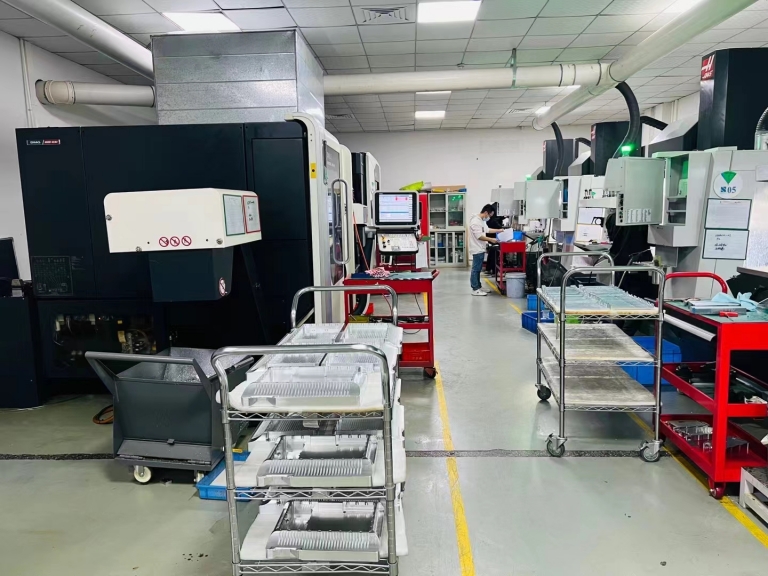
As illustrated, the best Arduino to use for CNC machines is a brilliant solution for the first stage of the journey—the stage of learning, ideation, and low-fidelity prototyping.
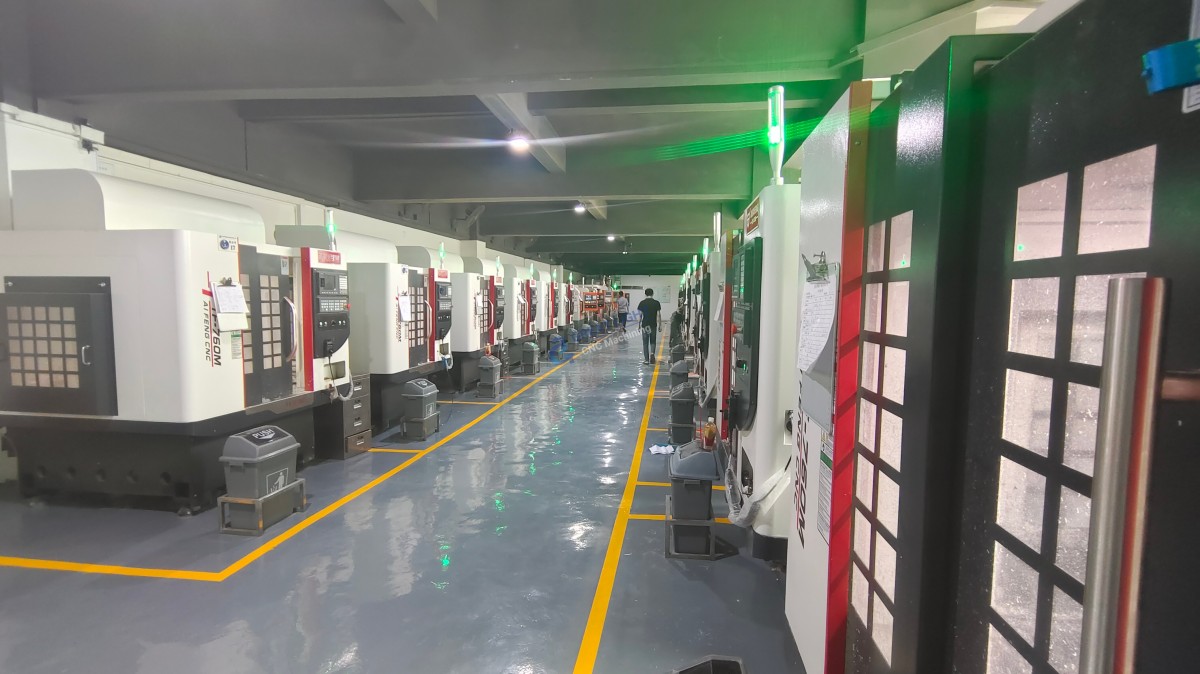
H2: The Professional Pathway: When to Transition from Arduino to a Partner Like GreatLight Metal
You should seriously consider engaging a professional precision 5-axis CNC machining services provider when your project encounters any of the following:
Tolerance Requirements Tighten: When your design calls for fits, seals, or assemblies that demand precision beyond what a DIY system can guarantee.
Material Challenges Arise: When you need to machine hardened steels, high-performance alloys, or engineering plastics that require specific tooling, rigid setups, and controlled cooling.
Geometry Becomes Complex: When your part involves undercuts, compound curves, or features that require simultaneous 5-axis machining to be manufactured in one setup—an arena far beyond any Arduino-driven machine.
Volume Scales Beyond a Few Units: When you need 10, 100, or 1000 identical parts with guaranteed consistency. Professional CNC shops are built for repeatability.
Time is a Critical Business Factor: When you cannot afford days of tuning, troubleshooting, and potential scrapped parts. A professional partner delivers validated parts on schedule.
Certification and Traceability are Needed: For industries like automotive, aerospace, or medical, you need full material certifications, process documentation, and a quality management system like ISO 9001:2015, IATF 16949, or ISO 13485—standards that GreatLight Metal not only meets but is certified against.
Conclusion: Choosing the Right Tool for the Right Job
So, what is the best Arduino to use for CNC machines? For the dedicated hobbyist building a bench-top machine, the Arduino Mega with a RAMPS shield offers a great balance of capability and community support. For those pushing DIY performance, the Arduino Due or a custom ESP32/Teensy solution is the next frontier.
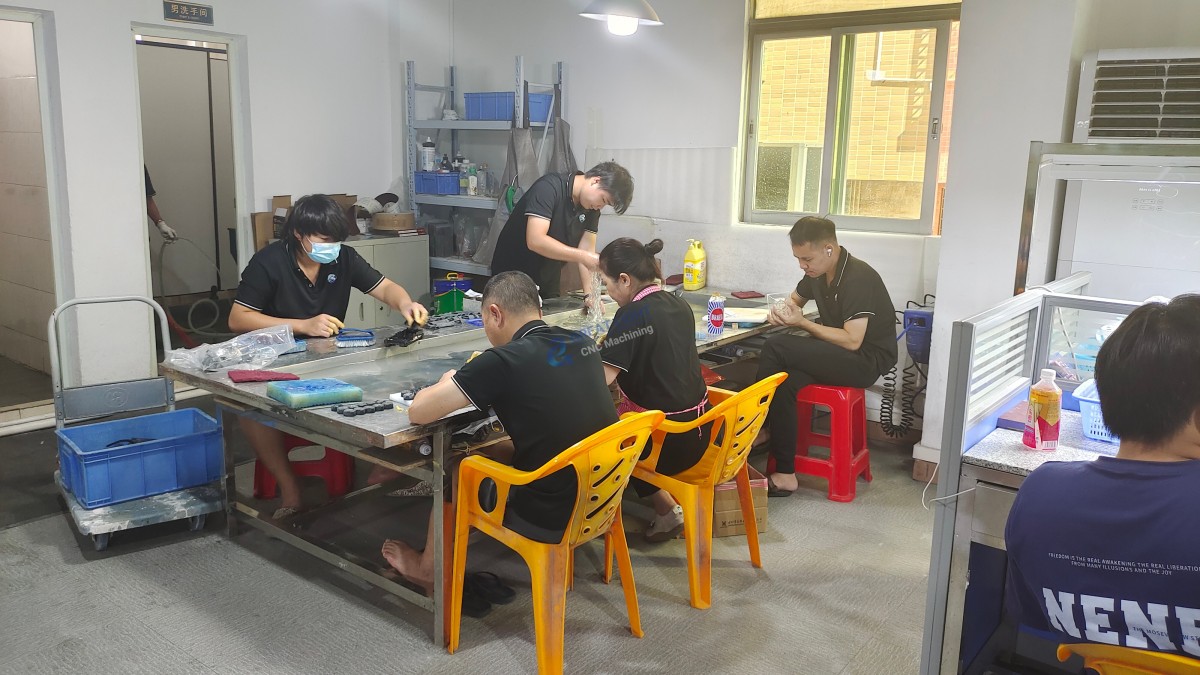
However, for professionals and businesses in the precision parts machining and customization field, the most strategic “control board” is not found in a microcontroller, but in selecting a capable manufacturing partner. The engineering prowess, advanced equipment (like 5-axis machining centers), and systemic quality controls offered by a company like GreatLight Metal represent the true “industrial-grade Arduino”—a reliable, high-performance, and intelligent system that transforms complex designs into flawless, functional reality. It is the essential step from prototype to product. For more insights into how industry leaders approach complex manufacturing challenges, follow the ongoing innovation at GreatLight Metal on LinkedIn.
FAQ: Arduino CNC and Professional Machining
Q1: Can I use an Arduino to control a machine for making small, precise metal parts?
A: For very small, simple features in soft metals like aluminum, a highly calibrated and rigid DIY machine might suffice for one-off prototypes. However, for any part requiring true precision, repeatability, or made from harder metals, the lack of rigidity, closed-loop feedback, and advanced toolpath control in an Arduino system makes it unsuitable for reliable results.
Q2: I have a working Arduino CNC prototype. Can a company like GreatLight Metal help me transition to production?
A: Absolutely. This is a common and valuable pathway. You can provide your prototype and CAD model. GreatLight Metal’s engineering team can analyze the design for manufacturability (DFM), recommend material upgrades, select optimal machining strategies, and produce production-grade parts with full quality assurance, effectively bridging the gap between your proof-of-concept and a market-ready component.
Q3: What is the biggest practical limitation of an Arduino-driven CNC for professional work?
A: Uncompensated mechanical error. Even with perfect electronics, the machine structure flexes under load, screws have backlash, and bearings have play. Industrial CNCs measure and compensate for these errors in real-time; Arduino systems do not, leading to unpredictable and often cumulative inaccuracies in the final part.
Q4: Does GreatLight Metal use any open-source or Arduino-like controls in its equipment?
A: No. Professional machine tools from brands like DMG Mori, Mazak, or Hermle use proprietary, hardened industrial CNC controllers (e.g., Siemens Sinumerik, Heidenhain, Fanuc). These are purpose-built computers with real-time operating systems, capable of coordinating multiple high-torque axes simultaneously with nanometer-level precision, while managing tool changers, coolant, and in-process inspection—a world apart from microcontroller-based systems.
Q5: Is there a middle ground between an Arduino hobby machine and a full 5-axis industrial service?
A: Yes. For lower-volume production of less complex parts, professional 3-axis or 4-axis CNC machining services are a perfect fit. They offer vastly superior precision and reliability to DIY setups without the full cost of 5-axis programming and setup. A partner like GreatLight Metal can advise on the most cost-effective machining strategy for your specific part geometry and volume.



















