
What Is Rapid Traverse In CNC Machine? If you’ve ever worked with or sourced parts from a CNC machining facility, you’ve likely heard this term thrown around—but understanding its role, benefits, and limitations is key to optimizing your part production cycles and ensuring cost-effective, high-quality results. For industries ranging from automotive to aerospace, where every second of production time counts, rapid traverse isn’t just a technical feature—it’s a critical component of efficient precision manufacturing. At GreatLight CNC Machining Factory, we leverage advanced rapid traverse capabilities across our fleet of 5-axis, 4-axis, and 3-axis machines to help clients cut lead times, reduce costs, and maintain the strictest precision standards.
What Is Rapid Traverse In CNC Machine?
Rapid traverse refers to the high-speed movement of a CNC machine’s tool or workpiece between non-cutting operations. Unlike feed rate—which controls the speed of the tool during material cutting—rapid traverse is designed to minimize the time spent repositioning the tool from one machining operation to another (such as moving from a drilling hole to a milling surface, or returning to the home position after a job is complete).
Technically, rapid traverse is typically activated using the G-code command G00 (though some machines may use custom manufacturer-specific codes), which instructs the machine to move its axes at the maximum possible speed set by the operator or machine defaults. The speed of rapid traverse can vary widely depending on the machine’s design: entry-level 3-axis machines may reach 20-30 m/min, while high-end 5-axis machines like those at GreatLight can achieve speeds of up to 60 m/min on linear axes.
A key technical consideration for rapid traverse is axis synchronization. Modern CNC machines ensure that all moving axes reach their target position simultaneously, preventing unnecessary wear on components and avoiding positional errors that could affect subsequent cutting operations. Additionally, all reputable CNC facilities (including GreatLight) equip machines with safety features like overtravel limits, emergency stop triggers, and collision detection systems to mitigate risks associated with high-speed movement.
Why Rapid Traverse Matters for Precision CNC Machining Efficiency
In precision machining, non-cutting time can account for 30-50% of the total production cycle time, depending on the part’s complexity. For example, a complex 5-axis aerospace component with 20+ machining operations may require dozens of repositioning moves—each of which adds to the overall lead time if not optimized. Rapid traverse directly addresses this by reducing those non-cutting intervals, leading to three core benefits:
Shorter Cycle Times: By cutting down on tool repositioning time, rapid traverse allows manufacturers to produce more parts in less time. This is especially critical for high-volume production runs or tight-deadline rapid prototyping projects, where every hour saved translates to faster time-to-market.
Lower Production Costs: Faster cycle times reduce labor and machine overhead costs per part, making your project more cost-effective without compromising quality. For clients scaling from prototyping to mass production, this efficiency can lead to significant long-term savings.
Improved Lead Time Reliability: For industries like medical devices or automotive, where on-time delivery of components is mission-critical, optimizing rapid traverse ensures that lead times are consistent and predictable. This eliminates the risk of delays that could derail product launches or production lines.
However, it’s important to note that rapid traverse isn’t just about speed—balance is key. High-speed movements must be paired with a rigid machine structure and advanced control systems to avoid vibration or positional drift that could affect the precision of subsequent cutting operations. This is where investing in high-quality CNC equipment, like the machines at GreatLight CNC Machining Factory, makes a significant difference.
How GreatLight CNC Machining Leverages Rapid Traverse to Deliver Superior Results
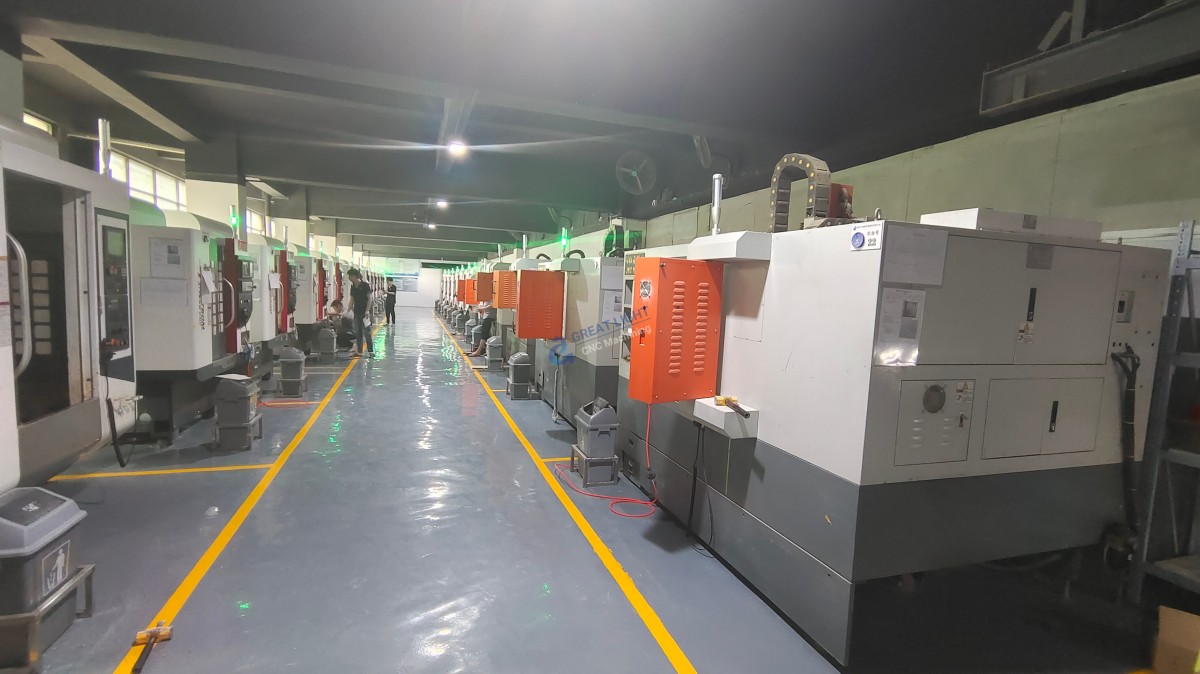
At GreatLight CNC Machining Factory, we recognize that rapid traverse is more than just a feature—it’s a tool to deliver tangible value to our clients. Our state-of-the-art fleet of 127 precision machines, including large high-precision 5-axis CNC machining centers from leading manufacturers like Dema and Beijing Jingdiao, are equipped with advanced rapid traverse systems that balance speed, stability, and precision. Here’s how we put this to work:
Optimized Cycle Times for Rapid Prototyping and Mass Production
For rapid prototyping projects, where clients need parts in days rather than weeks, our machines’ rapid traverse capabilities cut non-cutting time by up to 25% compared to standard CNC equipment. For example, in a recent project with a new energy vehicle client needing prototype E-housings, we used rapid traverse to reduce the total cycle time per part from 8 hours to 6.5 hours—allowing the client to test their design two weeks ahead of schedule and accelerate their product launch.
Precision Preservation at High Speeds
Our ISO 9001:2015 certified quality management system includes regular calibration of all CNC machines to ensure that even during rapid traverse moves, positional accuracy is maintained within ±0.001mm. This means that when the tool transitions from a rapid move to a cutting operation, there’s no drift or vibration that would compromise the part’s dimensional integrity. This is particularly critical for components like aerospace brackets or medical implants, where even the smallest deviation can lead to failure.
Integration with Full-Process Chain Solutions
Rapid traverse is just one part of our comprehensive approach to precision manufacturing. We combine this capability with our full range of services—including CNC milling, die casting, 3D printing, and one-stop post-processing—to deliver end-to-end solutions. For instance, after using rapid traverse to speed up the machining of a titanium alloy aerospace component, we can immediately move the part to our in-house post-processing facility for anodizing or polishing, eliminating unnecessary handling time between stages.
Compliance with Industry-Specific Standards
Our use of rapid traverse aligns with international standards like IATF 16949 (for automotive components) and ISO 13485 (for medical hardware). This means that all rapid traverse parameters are set to meet strict safety and quality requirements, ensuring that parts not only are produced quickly but also adhere to the regulatory guidelines of your industry.
If you’re looking to learn more about how our five-axis CNC machining services (opening in new window) leverage rapid traverse to deliver fast, precise parts, our team is ready to help.
Common Misconceptions About Rapid Traverse
Despite its widespread use, there are several misconceptions about rapid traverse that can lead to suboptimal machining decisions. Let’s debunk the most common ones:
Misconception 1: Faster Rapid Traverse Always Equals Better Efficiency
While higher rapid traverse speeds can reduce cycle time, pushing the machine to its maximum speed isn’t always beneficial. For complex parts with tight tolerance requirements (e.g., ±0.002mm), slower, more controlled rapid moves may be necessary to avoid machine vibration that could affect cutting precision. At GreatLight, our engineers analyze each part’s design and requirements to set optimal rapid traverse speeds that balance efficiency and quality.
Misconception 2: Rapid Traverse Compromises Machining Precision
This is only true if the machine isn’t properly calibrated or lacks the structural rigidity to handle high-speed moves. Our machines undergo monthly maintenance and quarterly calibration to ensure that even after thousands of rapid moves, positional accuracy remains within our strict tolerance limits. In fact, our ability to maintain ±0.001mm precision is a testament to how well our equipment handles rapid traverse without sacrificing quality.
Misconception 3: All CNC Machines Have the Same Rapid Traverse Performance
Rapid traverse capabilities vary significantly between machines, depending on factors like drive system type (linear vs. ball screw), spindle power, and machine frame rigidity. Our high-end 5-axis machines, for example, can achieve rapid traverse speeds of up to 60 m/min on linear axes, while standard 3-axis machines may only reach 30 m/min. This difference directly translates to shorter cycle times for complex parts that require frequent repositioning.
Conclusion
What Is Rapid Traverse In CNC Machine? It’s a fundamental feature of modern CNC machining that enables faster, more efficient production by minimizing non-cutting tool movement time. When leveraged correctly—with the right equipment, calibration, and engineering expertise—it can reduce lead times, lower costs, and maintain the strict precision standards required for high-end components. At GreatLight CNC Machining Factory, we’ve invested in top-of-the-line machines and developed ISO-certified processes to harness the power of rapid traverse for our clients across automotive, aerospace, medical, and industrial automation sectors. Whether you need a single prototype or a high-volume production run, our team combines rapid traverse capabilities with our full range of precision machining services to deliver parts that meet your exact specifications, on time, every time. To connect with our team and explore how we can support your next project, visit our GreatLight Metal’s professional profile (opening in new window) on LinkedIn.
Frequently Asked Questions (FAQ)
Q1: Can rapid traverse speed be adjusted for different parts?
Yes, rapid traverse speed is typically controlled via G-code (G00) parameters, which can be adjusted based on the part’s complexity, tolerance requirements, and machine capabilities. At GreatLight, our engineers tailor these parameters to each project to ensure the best balance of speed and precision.
Q2: Is rapid traverse safe to use for all materials?
Rapid traverse is a non-cutting operation, so it’s safe for all materials (metal, plastic, composite) that we machine. The speed may be adjusted for heavier workpieces to ensure stability during movement, but this doesn’t affect the material itself.
Q3: How does rapid traverse affect machine wear and tear?
High-speed rapid traverse can increase wear on machine components like linear guides or ball screws if not properly maintained. At GreatLight, we follow a rigorous maintenance schedule for all our machines, including regular lubrication and inspection of moving parts, to minimize wear and extend equipment lifespan.
Q4: Can rapid traverse be used in 5-axis CNC machining?
Absolutely. 5-axis CNC machining requires frequent repositioning of the tool or workpiece to access complex geometries, so rapid traverse is even more critical for reducing cycle times. Our 5-axis machines are specifically designed to handle rapid, synchronized moves across all axes without compromising precision.
Q5: Does using rapid traverse add extra cost to my project?
No, using rapid traverse is part of our standard machining process. In fact, it often reduces costs by cutting down on production time, which translates to lower overhead costs per part.
Q6: What safety features are in place to prevent collisions during rapid traverse?
All our CNC machines are equipped with advanced collision detection systems that use sensors and software to monitor tool and workpiece positions. If a potential collision is detected, the machine automatically stops the rapid traverse move to protect the tool, workpiece, and equipment. Additionally, our operators undergo regular training to ensure safe machine operation.



















