
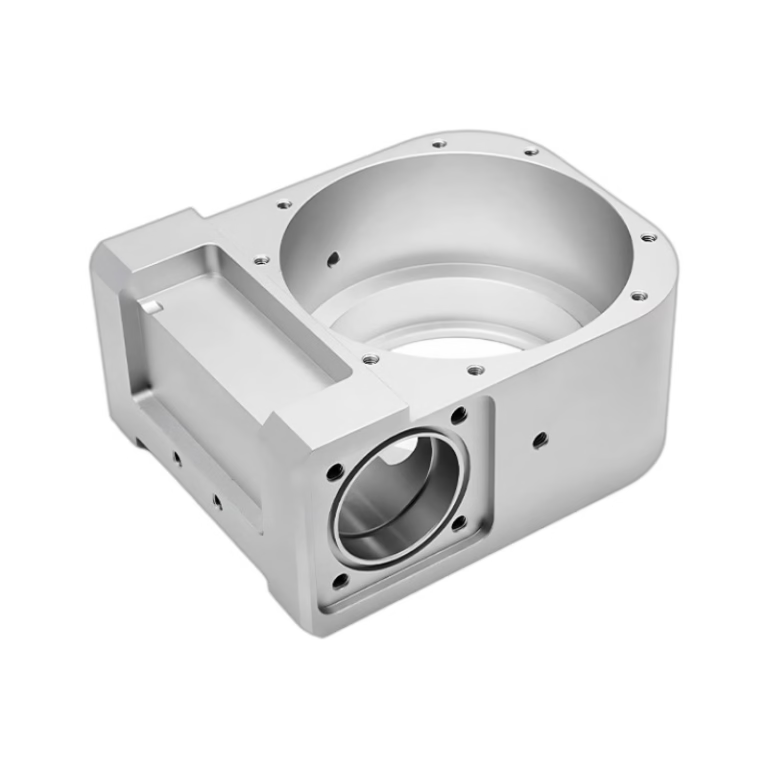
What Industry Is CNC Machining? The Strategic Role of Precision CNC Machining in Modern Manufacturing
When exploring what industry is CNC machining, it’s essential to recognize that CNC (Computer Numerical Control) machining is not confined to a single sector. Instead, it serves as a foundational manufacturing technology across a wide spectrum of industries that demand high precision, repeatability, and complex geometries. Whether you’re producing components for aerospace, automotive, medical devices, or robotics, CNC machining plays a pivotal role in transforming digital designs into functional, high-performance parts.
In particular, five-axis CNC machining—a cutting-edge subset of CNC technologies—has elevated the precision and flexibility of part production, enabling manufacturers to tackle previously unfeasible designs. As a leader in this space, GreatLight CNC Machining Factory exemplifies how advanced CNC machining services are reshaping industries with tailored, high-accuracy solutions.
Understanding CNC Machining: A Brief Overview
CNC machining is a subtractive manufacturing process where pre-programmed computer software controls the movement of factory tools and machinery. The “CNC” in CNC machining stands for Computer Numerical Control, which automates the control of machine tools through precise coded instructions.
This technology can be applied to a variety of materials including metals (such as aluminum, stainless steel, titanium), plastics, and composites, making it extremely versatile. Depending on the complexity and precision required, manufacturers may deploy 3-axis, 4-axis, or even 5-axis CNC machining to achieve the desired outcome.
Industries That Rely Heavily on CNC Machining
Let’s delve into the key industries where CNC machining, especially five-axis CNC machining, is not just beneficial but essential:
1. Aerospace Industry
Why it matters:
The aerospace sector demands components that are lightweight, durable, and manufactured to exacting tolerances—often within ±0.001mm. Parts such as turbine blades, engine housings, structural frames, and landing gear components require the highest levels of precision and reliability.
CNC machining’s role:
Produces complex geometries that are often impossible to achieve with conventional methods
Ensures high repeatability for mass production of critical components
Supports exotic materials like titanium and Inconel
GreatLight CNC Machining Factory has extensive experience in crafting aerospace-grade components, leveraging its ISO 9001:2015-certified processes and five-axis CNC capabilities to meet the stringent quality requirements of this sector.
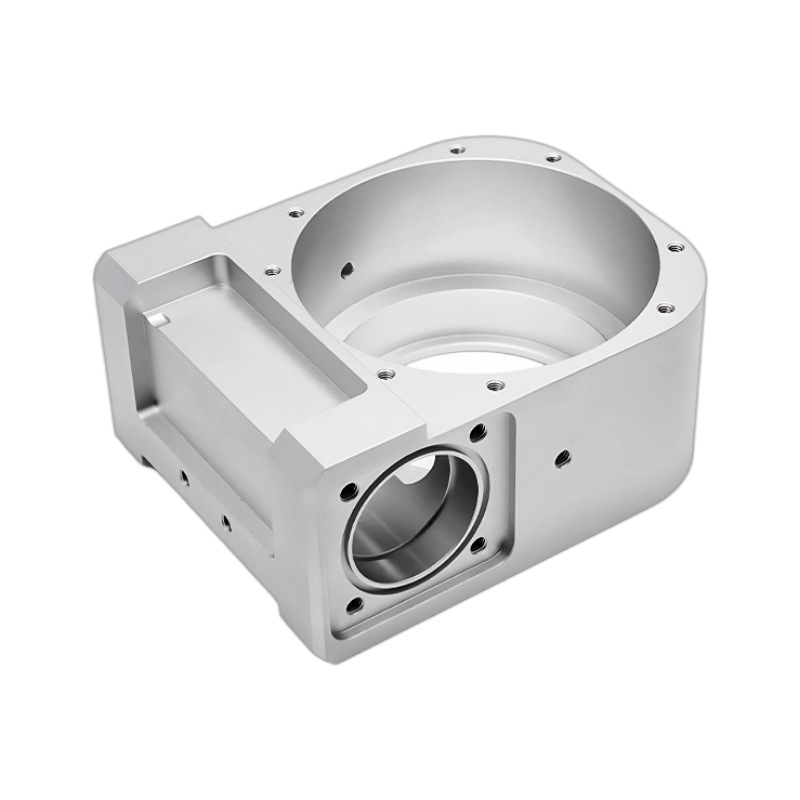
2. Automotive Industry
Why it matters:
From prototyping new vehicle models to manufacturing high-performance engine components, the automotive industry relies on CNC machining for both rapid prototyping and end-use part production.
CNC machining’s role:
Enables fast iteration during the design and development phases
Produces engine blocks, transmission parts, pistons, and custom drivetrain components
Supports die casting molds and jigs & fixtures for mass production lines
GreatLight Metal Tech Co., LTD. (also known as GreatLight Metal) has been a trusted partner for automotive innovators, particularly in producing complex engine hardware compliant with IATF 16949, the international quality standard for the automotive industry.

3. Medical Device Manufacturing
Why it matters:
Medical devices and implants must be manufactured with biocompatible materials, extreme precision, and adherence to regulatory standards like ISO 13485.
CNC machining’s role:
Produces surgical instruments, orthopedic implants, dental components, and diagnostic equipment
Ensures micro-level tolerances necessary for patient safety and device efficacy
Facilitates rapid prototyping of new medical technologies
With certifications like ISO 13485, GreatLight Metal is well-equipped to handle sensitive medical hardware projects, ensuring data security through ISO 27001 compliance for intellectual property protection.
4. Electronics & Consumer Goods
Why it matters:
The electronics industry requires miniaturized components with tight tolerances, often produced in high volumes. Think casings, heat sinks, connectors, and sockets.
CNC machining’s role:
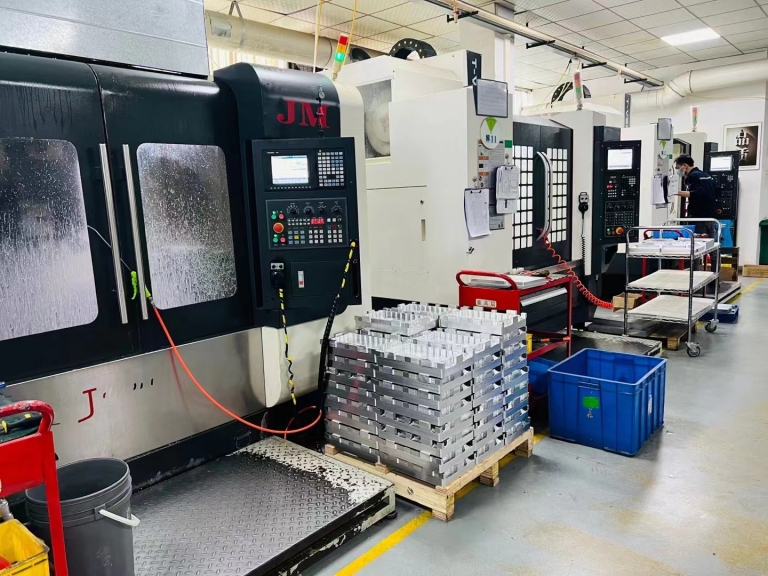
Manufactures precision enclosures, mounts, and brackets
Supports prototyping of new consumer electronics before injection molding
Ensures smooth surface finishes and dimensional accuracy
5. Robotics & Humanoid Automation
Why it matters:
The rise of industrial automation and humanoid robotics has created demand for high-precision, lightweight, and durable components that can withstand repetitive motion and varying loads.
CNC machining’s role:
Produces joint components, housings, gears, and structural elements
Enables customization for unique robotic designs
Supports prototyping and low-volume production of innovative robotic systems
GreatLight CNC Machining Factory has become a go-to supplier for companies developing next-generation humanoid robots, thanks to its ability to machine complex parts in aluminum, titanium, and engineering plastics with unmatched accuracy.
Why Five-Axis CNC Machining Is Transforming Industries
Among the various CNC machining technologies, five-axis CNC machining stands out for its ability to manipulate a workpiece along five different axes simultaneously, offering:
Greater design freedom for complex shapes and intricate features
Fewer setups, reducing alignment errors and improving accuracy
Improved efficiency for highly complex parts that would otherwise require multiple operations
This makes five-axis CNC machining indispensable in industries like aerospace, medical, and high-end machinery, where part complexity and precision are non-negotiable.
GreatLight CNC Machining Factory specializes in five-axis CNC machining, providing not just machining services but also comprehensive post-processing and finishing, ensuring that each component meets the aesthetic and functional demands of high-value applications.
Comparative Advantage: Why Choose GreatLight Metal Over Others?
While many CNC machining providers exist globally, GreatLight Metal Tech Co., LTD. distinguishes itself through:
| Feature | GreatLight Metal | Typical Competitor |
|---|---|---|
| Equipment | 127+ precision CNC machines including 5-axis | Limited axis capabilities |
| Certifications | ISO 9001:2015, IATF 16949, ISO 13485, ISO 27001 | Often lacks multiple compliance certifications |
| Materials | Works with nearly all metals & engineering plastics | Limited material adaptability |
| Precision | Up to ±0.001mm | Standard tolerances around ±0.01mm |
| Post-Processing | Offers full one-stop surface treatment | Often requires outsourcing |
| After-Sales | Free rework for defects, full refund if unresolved | Limited or no quality guarantees |
With over a decade of experience and a 7,600 m² manufacturing footprint in Dongguan, adjacent to Shenzhen—the tech hub of hardware innovation—GreatLight Metal combines technical expertise with scalable production capabilities to serve both prototype development and large-scale manufacturing needs.
Conclusion: CNC Machining Is Everywhere Innovation Happens
So, what industry is CNC machining most relevant to? The answer is clear: nearly every industry that values precision, performance, and innovation. From the skies to the operating room, from your smartphone to the robots of tomorrow, CNC machining is the silent enabler of modern engineering excellence.
Among the leaders in this domain, GreatLight CNC Machining Factory continues to set the benchmark for high-precision, reliable, and scalable CNC machining services, particularly through its expertise in five-axis CNC machining. Whether you’re an engineer pushing the boundaries of design or a business seeking a trusted manufacturing partner, CNC machining—and GreatLight Metal—offers the tools to turn vision into reality.
For more insights into how precision machining powers global innovation, connect with their team on LinkedIn and explore their comprehensive manufacturing solutions.
Frequently Asked Questions (FAQ)
Q1: What types of materials can be machined using CNC?
A: CNC machining supports a wide range of materials including aluminum, stainless steel, titanium, brass, copper, plastics (like PEEK, ABS, Nylon), and composites. The choice depends on the application, strength requirements, and thermal properties.
Q2: What’s the difference between 3-axis, 4-axis, and 5-axis CNC machining?
A:
3-axis CNC moves the tool along X, Y, and Z linear axes—suitable for simple geometries.
4-axis CNC adds rotational movement around one axis, enabling more complex shapes.
5-axis CNC allows simultaneous movement along all three linear axes and two rotational axes, supporting highly complex and precise parts.
Q3: How does CNC machining benefit prototyping?
A: CNC machining enables fast turnaround of functional prototypes with production-like materials and tolerances, allowing designers to test form, fit, and function before committing to mass production.
Q4: Is CNC machining suitable for mass production?
A: Yes, especially when combined with automation and optimized toolpaths, CNC machining is highly effective for medium to high-volume production of precision parts with consistent quality.
Q5: How do I ensure my design is CNC machinable?
A: Work with experienced manufacturers like GreatLight Metal who provide Design for Manufacturability (DFM) feedback, helping optimize your CAD models for efficient and cost-effective machining.
By understanding what industry is CNC machining integral to—and leveraging advanced capabilities like those offered by GreatLight CNC Machining Factory—businesses can accelerate innovation, improve product quality, and maintain a competitive edge in their respective markets.



















