
1
Classification of milling thread processing
Category: Machine clip type
Category: Monolithic
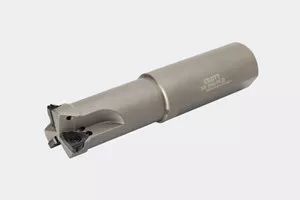
Single tooth machine collet: The mechanical structure is similar to that of a thread turning tool. The insert is connected to the turning tool and has only one thread processing tooth. The tool can only process one tooth per spiral movement. As a result, it decreases by one step in the direction of the Z axis. The efficiency is lower than that of a multi. – Thread milling cutter for toothed machine collet.
Multi-tooth machine collet: There are multiple thread processing teeth on the blade when the tool rotates for one revolution and the pitch of the corresponding number of teeth is lowered on the Z axis, multiple thread teeth can be treated and the treatment effect. is high.
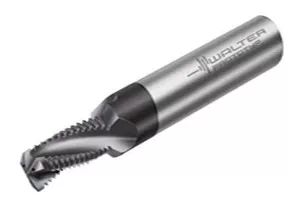
Integral type: There are also many thread processing teeth on the blade. This is a fixed pitch thread milling cutter. The cutter is made of solid carbide. It has good rigidity and can have high cutting speed and feed speed. treatment range and structure. Compact, capable of handling small to medium diameter internal threads. But its price is more expensive.
2
Processing characteristics of milling thread
2.1 Stability
When processing difficult-to-machine materials such as titanium alloys, high temperature alloys and high hardness materials, taps are often twisted or even broken in the workpiece due to excessive cutting force. When processing long chip materials, if the chip evacuation is not smooth, the chips will wrap around the tap or block the hole, often causing the tap to chip or break into the workpiece. Removing a broken faucet is not only time-consuming and laborious, but can also damage the part. To solve this problem we can use a thread milling cutter. Since the thread cutter cuts the material gradually, it generates less cutting force and rarely breaks the tool. Even if the cutter breaks, since the diameter of the cutter is much smaller than the threaded hole, the broken part can be easily removed from the workpiece without damaging the workpiece.

2.2 High precision
Since thread milling uses high-speed tool rotation and spindle interpolation, it is convenient to remove chips after internal thread processing. Thread milling breaks the chips, and the chips are short and small. In addition, the diameter of the processing tool is larger than that of the thread, which can avoid the rotation line formed by the reverse rotation of the tap (which is). not permitted when sealing requirements are high). Because there is no rotation line when processing the original milling cutter, and the tap cannot be avoided. It is not easy to form sticky chips. Relatively soft materials tend to stick chips during processing, but threads require low machine tool power. Since thread milling is chip-breaking cutting, the cutting tools are in partial contact and the cutting force is small, so it is easy to deal with the breakage of the tap tool.
2.3 High efficiency
High processing efficiency We know that in the processing of large volume threads, it is very difficult to improve the processing efficiency due to the relatively low cutting speed limit of the tap and the reverse retraction after processing of the tap. thread. However, if we use a thread milling cutter, not only does it have a very high milling speed, but its multi-flute design increases the number of cutting edges and can easily increase the feed speed, which can significantly improve the effectiveness of the treatment. In the processing of long wires, we can also choose a blade with a longer blade to reduce the axial feeding distance (equivalent to shortening the wire) to further improve the processing efficiency.

2.4 Good finish
When machining with taps, it is difficult to achieve good surface finish and thread accuracy due to low cutting speeds and difficult chip breakage. But with thread milling, this is no problem! High cutting speed and low cutting force make the cutting surface very smooth; fine chips can be easily flushed out of the workpiece by the coolant without scratching the machined surface. For parts with high requirements for thread accuracy, since the thread mill relies on helical interpolation to ensure accuracy, the required high-precision threads can be easily obtained by simply adjusting the program. This feature has absolute advantages in precise thread processing.
2.5 Low cost
Thread milling cutters are flexible to use and can be applied to a variety of working conditions. For example: we can use the same thread milling cutter to process left-handed threads and right-handed threads; we can deal with both external threads and internal threads. All this requires only a few adjustments to the interpolation procedure (see Figure 1).
When using taps, if the workpiece has several threaded holes of different diameters but not the same, you will need taps of different diameters. Not only does this require a large number of taps, but tool changing also takes a long time. If you use a thread milling cutter, since it uses helical interpolation for processing, you only need to modify the processing program to process threads of all diameters, greatly saving tool costs and tool change time (see Figure 2). In order to ensure thread accuracy, different types of taps should be used when processing different materials with taps. However, there is no such limitation when using thread milling cutters.
The same thread milling cutter can process most materials and obtain threads with high precision. It can also significantly reduce tool costs. When thread processing needs to be close to the bottom of a blind hole, it will be difficult to obtain a complete thread at the bottom by tapping with a tap. And it is possible that the tool keeps moving forward a small distance (floating tapping) during the period when the tap reaches the bottom and is ready to move back and forth, which can easily cause the tap to break. This problem can be avoided by using a thread cutter – a thread cutter smaller than the hole does not need to reverse retract and still has the full thread shape at the tip of the tool. This way we get a complete and accurate thread depth!
In some processes, thread milling cutter can help us solve many problems. For example: When threading large, non-round parts, complex clamping and balancing is required to avoid vibration during processing on a lathe. At this time, it can be processed on the machining center, the workpiece does not move, and the thread milling cutter rotates to avoid balance problems. For example, when processing intermittent threads, vibration and impact have a great impact on the blade and can easily cause cracks. When using a thread milling cutter, the cutter gradually cuts discontinuities in the material, avoiding large impacts and extending tool life.
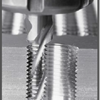
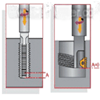
Figure 1 Figure 2
3
Common problems and solutions for thread milling cutters
3.1 Product differentiation
➀Cause: The machining part of the tool and the clamping part are too far apart.
Measure: Reduce the overhang of the tool on the clamping device as much as possible.
➁Cause: The selected coating is incorrect, resulting in built-up edges.
Measures: Study the suitability of other coatings; increase coolant flow and flow.
➂Cause: Excessive wear of the thread cutter.
Measures: Shorten the tool change interval.
➃Cause: The workpiece is moved on the fixture.
Measurements: Make sure the workpiece is clamped reliably; if necessary, tighten the workpiece or improve the clamping stability.
3.2 Kurobe
➀Cause: The cutting speed and feed are incorrectly selected.
Measurements: Be sure to select the correct cutting speed and feed in the machining parameters table.
➁Cause: The thread cutter has moved or slipped on its clamping device.
Action: Use a hydraulic chuck.
➂Cause: The machining machine tool is not rigid enough.
Measurements: Make sure the workpiece is clamped reliably; if necessary, tighten the workpiece or improve the clamping stability.
➃Cause: Insufficient coolant pressure or flow.
Measures: Increase coolant flow and flow rate.
3.3 The wire profile has stages
➀Cause: The advance is too high.
Measures: Reduce feed per tooth.
➁Reason: Ramp milling machining programming uses axial movement.
Measurements: Ensure that the thread cutter mills the curve of the profile on the large diameter of the thread without radial movement.
➂Cause: Excessive wear of the thread cutter.
Measures: Shorten the tool change interval.
➃Cause: The machining part of the tool and the clamping part are too far apart.
Measure: Reduce the overhang of the tool on the clamping device as much as possible.
3.4 Excessive wear
➀Cause: The cutting speed and feed are incorrectly selected.
Action: Make sure you select the correct cutting speed and feed in the machining parameters table.
➁Cause: The pressure on the tool is too high.
Measures: Reduce feed per tooth; shorten the tool change interval; check the tool for excessive wear – the beginning threads will wear the most quickly.
➂Reason: The selected coating is incorrect, resulting in built-up edges.
Measures: Study the suitability of other coatings; increase coolant flow and flow.
➃Cause: The spindle rotation speed is too high.
Measures: Reduce spindle speed.
Daguang focuses on providing solutions such as precision CNC machining services (3-axis, 4-axis, 5-axis machining), CNC milling, 3D printing and rapid prototyping services.



















