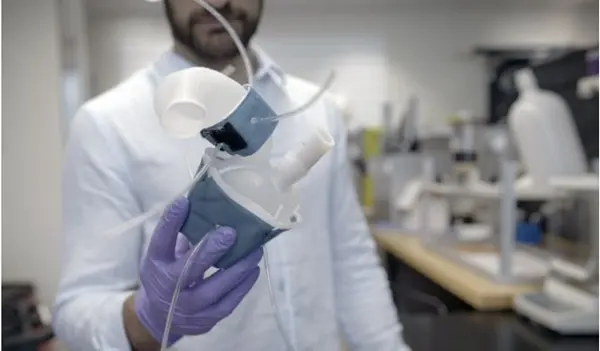
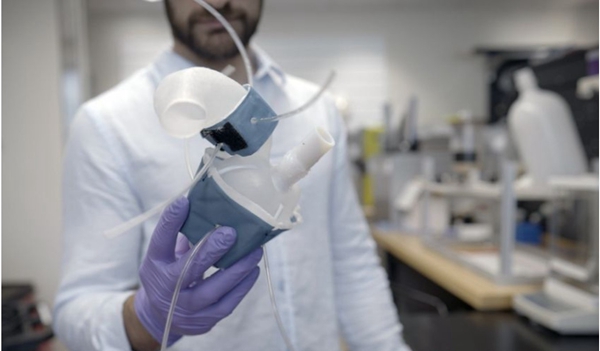
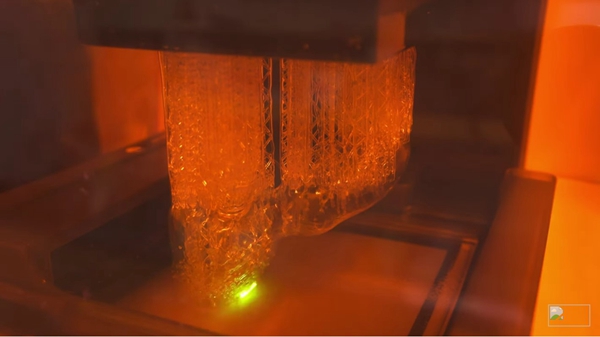
Recently, Mohou.com learned that engineers from the Massachusetts Institute of Technology successfully created a 3D printed robotic heart, which can perfectly replicate the patient’s heart and treat heart disease more effectively, from appearance to condition. heart rate.
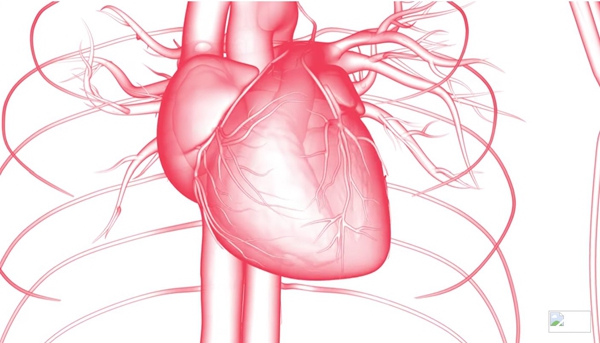
Heart problems are one of the leading causes of death worldwide. In fact, according to statistics, approximately 647,000 Americans die from heart disease each year, which means that one in four people in the country die from heart disease. The CDC even says it is the leading cause of death in the United States. Furthermore, data shows the numbers are only increasing, with one study showing dramatic changes in heart disease death rates across all age groups during the pandemic. Therefore, finding treatments for heart disease is a top priority for many in the medical community. This is where 3D printing in particular can play a key role in helping to tailor treatment to each patient.
△3D printed heart replica
More realistic 3D printed heart replica
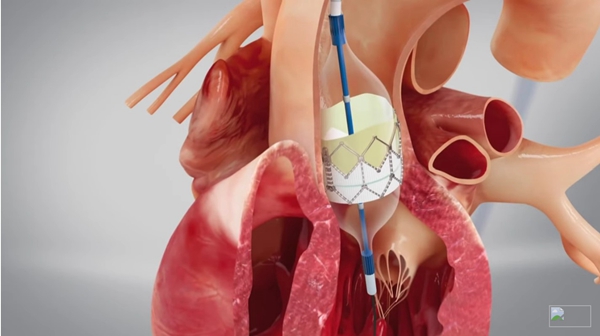
This particular project is led by MIT researchers including Luca Rosalia, Caglar Ozturk, Debkalpa Goswami, Jean Bonnemain, Sophie Wang and Ellen Roche, as well as Benjamin Bonner of Massachusetts General Hospital, James Weaver and Christopher Nguyen of Harvard University, Rishi Puri and Samir Kapadia, Cleveland Clinic, Ohio. Their goal is to create a robotic heart that is a soft, flexible replica of the patient to help treat different heart diseases, including finding better-fitting implants or developing synthetic valves that work and fit better within the aorta. . The research project was supported in part by the National Science Foundation, the National Institutes of Health, and the National Heart, Lung, and Blood Institute.

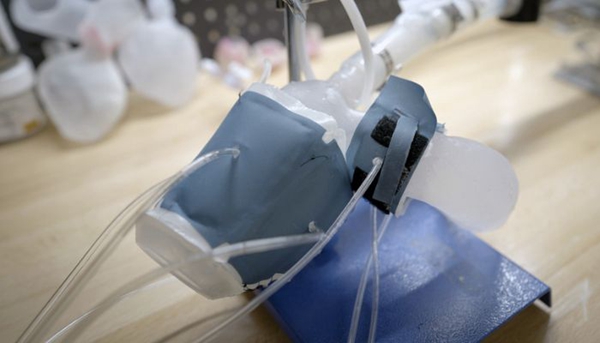
To do this, they turned to 3D printing. Or more precisely, they used a polymer-based ink that, once cured, is able to squeeze and stretch, much like a real beating heart. This is achieved from medical scans of patients, which are then converted into 3D models and printed, resulting in soft, anatomically precise casings of the ventricles and blood vessels. Additionally, to recreate the heartbeat, the team created sleeves to wrap around the model that could be connected to an air pump system, allowing them to contract and retract the model. Roche commented: “Being able to match patient flow and pressure is very encouraging. Not only do we print the anatomy of the heart, but we also reproduce its mechanics and physiology. This is the part that excites us. »

Ultimately, this appeared to be a success and the researchers were able to demonstrate that they could not only perfectly reproduce the shape and appearance of the heart, but also accurately reproduce the previously measured heart pump pressure and flow rate. in each patient. This is ultimately used to see if the heart can help determine what treatment is appropriate for the patient. For example, comparing implants of different sizes, allowing them to see which implant fits and flows best. The researchers note that this may be particularly helpful in developing ideal treatments for people who may have unique or difficult heart geometries.

Source: Antarctic Bear
Daguang focuses on providing solutions such as precision CNC machining services (3-axis, 4-axis, 5-axis machining), CNC milling, 3D printing and rapid prototyping services.