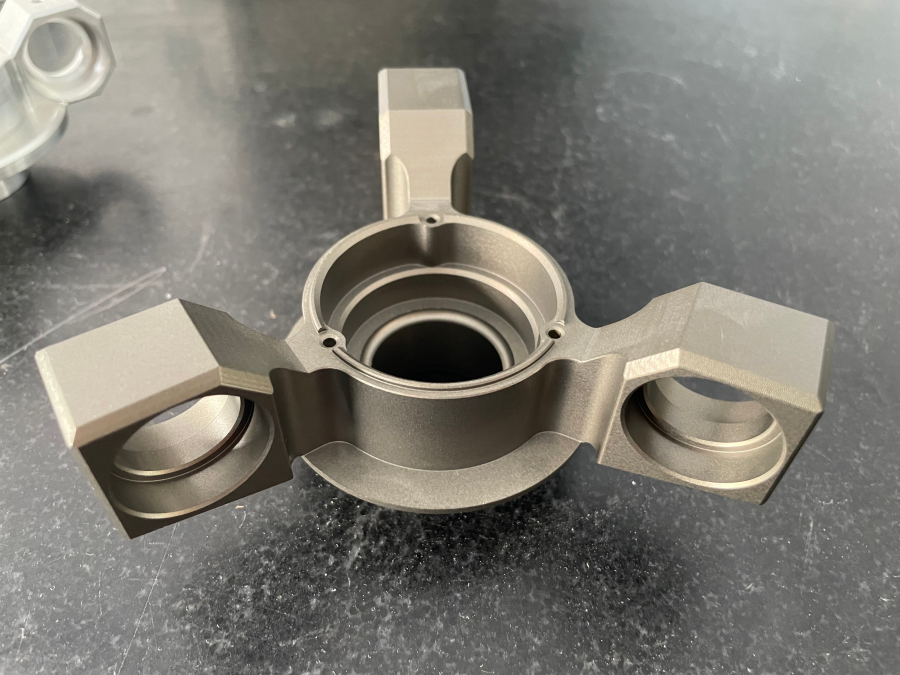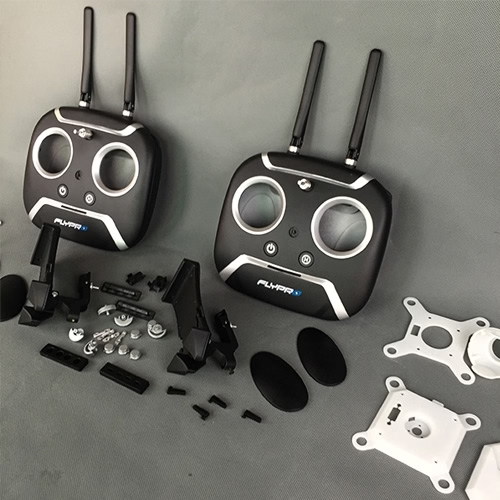
In the world of precision manufacturing, the question of how to program a CNC machine is fundamental. It represents the critical bridge between a digital design and a physical, high-precision part. For clients seeking reliable partners for precision parts machining and customization, understanding this process is key to evaluating a supplier’s technical depth and capability. This article will demystify CNC programming, exploring its methods, core principles, and what it means for your project’s success, with insights drawn from industry-leading practices at facilities like GreatLight CNC Machining Factory.
H2: The Essence of CNC Programming: Translating Ideas into Motion
At its core, CNC (Computer Numerical Control) programming is the process of creating a set of coded instructions that dictate every movement of a machine tool. It tells the machine where to move, how fast to move, how fast to spin the cutting tool, and when to turn coolant on or off. The output of this process is a program, often called “G-code,” which is the universal language understood by CNC controllers.
For a manufacturer like GreatLight CNC Machining Factory, programming is not merely a data entry task; it is a sophisticated engineering discipline that balances geometric accuracy, material science, cutting physics, and machine kinematics to achieve optimal results in efficiency, surface finish, and dimensional stability.
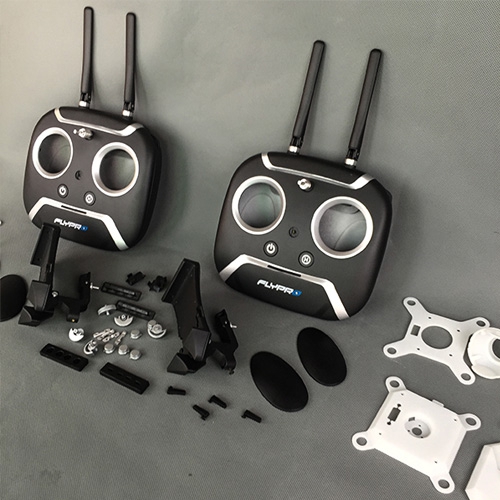
H2: The Two Primary Avenues: Manual vs. CAM Programming
There are two main approaches to generating the necessary G-code, each with its place in a modern machine shop.
H3: Manual Programming (G-Code & M-Code)
This is the foundational method, where a programmer writes the code line-by-line using standard G-codes (geometric functions like linear or circular moves) and M-codes (machine functions like tool changes or spindle control).
How it Works: The programmer manually calculates tool paths, coordinates, and feed rates based on the part drawing.
Best For: Simple geometries (e.g., drilling a pattern of holes, turning a basic shaft), quick edits, and educational purposes. It offers deep, low-level control.
Limitations: Extremely time-consuming and error-prone for complex, free-form 3D shapes. Modern complex parts make pure manual programming impractical.
H3: CAM (Computer-Aided Manufacturing) Programming
This is the industry standard for programming CNC machines today. CAM software uses the 3D CAD model of the part to automatically generate toolpaths.
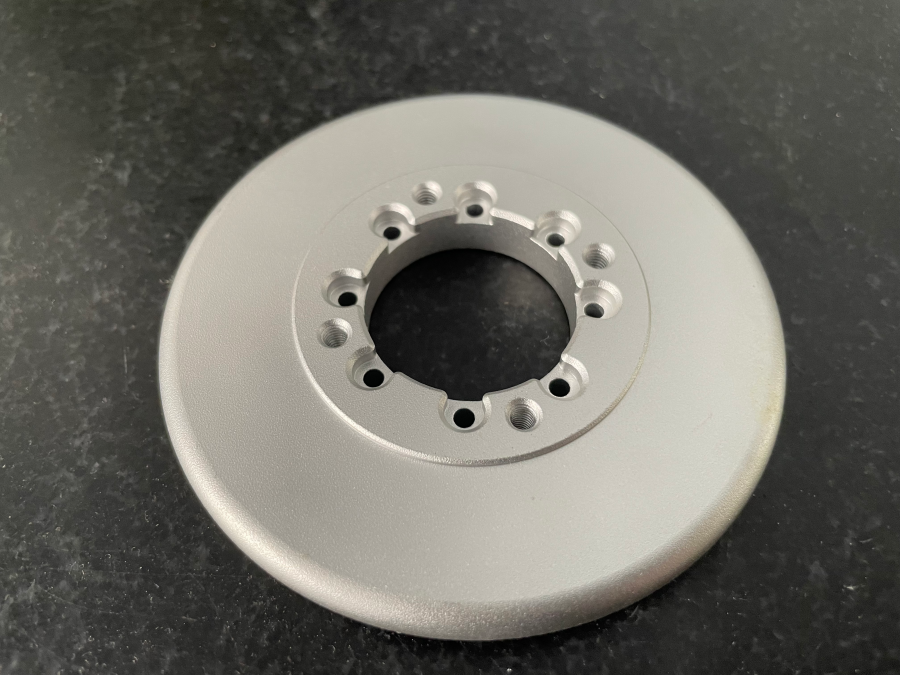
How it Works: The programmer imports the 3D model into the CAM system. They then define the machining strategy (e.g., roughing, finishing, contouring), select tools from a digital library, set speeds/feeds, and specify the stock material. The software simulates the entire machining process and automatically outputs the optimized G-code.
Best For: All complex parts, especially those with intricate 3D contours, undercuts, and complex surfaces. It is efficient, visual, and allows for easy simulation to prevent collisions.
The Programmer’s Role: In CAM, the programmer’s expertise shifts from writing code to making high-level strategic decisions. They are manufacturing engineers who determine the most efficient sequence of operations, the optimal tooling, and the cutting parameters to ensure quality and minimize cycle time. This is where the deep experience of a team at a facility like GreatLight CNC Machining Factory becomes invaluable.
H2: The Step-by-Step CNC Programming Workflow
A systematic workflow is crucial for error-free production. Here’s a breakdown of the typical process:
Part Design & Analysis (CAD): It all starts with a precise 3D CAD model. The programmer reviews the model for manufacturability, identifying potential issues like inaccessible features or overly thin walls.
Process Planning: This is the strategic phase. The programmer decides:
The sequence of operations (e.g., mill the top, flip, mill the bottom, then drill holes).
Which machines will be used (3-axis, 4-axis, or 5-axis CNC).
What fixtures will hold the part.
The selection of cutting tools (material, diameter, flute count).
Toolpath Creation (CAM): In the CAM software, the programmer creates toolpaths for each operation. This involves defining boundaries, selecting cutting patterns, and setting stepovers.
Post-Processing: The CAM software generates generic toolpath data. A post-processor—a machine-specific translator—converts this data into the exact G-code dialect required by the particular brand and model of the CNC machine (e.g., a DMG MORI 5-axis mill vs. a Haas lathe).
Simulation & Verification: Before any metal is cut, the G-code is run through a simulation software. This virtual run checks for errors like tool collisions with the fixture or machine, incorrect movements, or gouging the part. This step is non-negotiable for preventing costly crashes.
Program Transfer & Setup: The verified G-code is transferred to the CNC machine’s controller. The machinist then sets up the job: loading the program, installing the correct tools, setting tool length and diameter offsets, and precisely aligning the workpiece.
First-Article Run & Proven Program: A first part is machined, often with extra caution. It is meticulously inspected. Only after it passes all quality checks is the program “proven” and released for production runs.
H2: Advanced Considerations: The Leap to Multi-Axis Programming
While 3-axis programming (movement in X, Y, Z) handles many parts, the true frontier for complex components lies in 4-axis and 5-axis CNC machining.
4-Axis Programming: Adds a rotary axis (usually the A-axis), allowing the workpiece to spin. This is essential for machining features around a cylinder (e.g., cam lobes, helical grooves). Programming requires synchronizing linear and rotary movements.
5-Axis Programming: Adds a second rotary axis (e.g., B or C axis), allowing the cutting tool to approach the workpiece from virtually any angle. This is a game-changer for aerospace impellers, medical implants, and complex molds.
The Challenge: 5-axis programming is exponentially more complex. It requires advanced CAM software and, critically, a programmer with profound spatial reasoning and knowledge of machine kinematics to avoid singularities and leverage the full capability for efficiency. This is a core competency at a specialized manufacturer like GreatLight CNC Machining Factory, where programming for precision 5-axis CNC machining services is a daily practice.
H2: Why Your Choice of Manufacturing Partner Matters
Understanding how to program a CNC machine reveals why not all machine shops are equal. The difference between a good part and a perfect part often lies in the programming phase.
Design for Manufacturing (DFM) Input: An experienced programming team will provide DFM feedback before coding begins, suggesting subtle design changes that drastically reduce cost and improve manufacturability without compromising function.
Optimization for Quality & Speed: Expert programmers know how to optimize toolpaths to minimize tool wear, reduce cycle times, and achieve superior surface finishes. They understand the interplay between tool geometry, material, and machine rigidity.
Risk Mitigation: Rigorous simulation and proven workflows prevent catastrophic machine crashes and material waste, protecting your project timeline and budget.
Leveraging Advanced Capabilities: To fully exploit the potential of a 5-axis CNC machining center, you need programmers who are masters of the technology, not just operators.
Conclusion
How to program a CNC machine is a multifaceted discipline that blends software proficiency with practical machining wisdom. It evolves from basic code writing to high-level manufacturing strategy, especially for complex, precision components. For businesses seeking not just a vendor but a true manufacturing partner, the programming capability is a critical litmus test. It signifies a depth of engineering expertise, a commitment to process optimization, and the ability to transform complex designs into flawless reality. Partnering with a technically adept manufacturer ensures that the critical bridge between your design and the finished part is built on a foundation of expertise and precision.
Frequently Asked Questions (FAQ)
Q1: Can I provide my own G-code to a machine shop?
A: While possible, it is generally not recommended unless you are intimately familiar with the shop’s specific machines, tooling, and fixturing. G-code is highly machine-specific. A reputable shop will prefer to generate the program in-house using their proven post-processors and methodologies to guarantee safety, quality, and efficiency.
Q2: What file formats do I need to provide for CNC programming?
A: The best format is a native 3D CAD file (e.g., STEP, IGES, SLDPRT, X_T) along with a detailed 2D drawing specifying critical dimensions, tolerances, and finishes. PDF drawings alone are insufficient for modern CAM programming.
Q3: How long does it take to program a complex CNC part?
A: It varies immensely. A simple bracket might take an hour. A complex aerospace component with 5-axis simultaneous machining might require 40+ hours of programming and simulation time. This investment upfront is crucial for error-free production.
Q4: What’s the difference between a CNC programmer and a CNC machinist?
A: While roles can overlap, a programmer focuses on the offline creation and optimization of the machining instructions (G-code). A machinist focuses on the physical setup and operation of the machine on the shop floor, often performing the first-article run and in-process inspections. In advanced shops, these roles collaborate closely.
Q5: How do shops like GreatLight CNC ensure programming accuracy for high-precision jobs?
A: Through a multi-layered system: 1) Using industry-leading CAM software with advanced simulation, 2) Employing experienced programmers who specialize in high-tolerance work, 3) Running machine-specific post-processors, 4) Conducting full virtual collision checks, and 5) Validating every new program with a meticulous first-article inspection using precision metrology equipment like CMMs. This systematic approach is part of what defines a leader in the field, a standard upheld by top-tier manufacturers committed to excellence. For a deeper look at industry leadership and innovation, you can follow insights from leaders in the field on platforms like LinkedIn.