
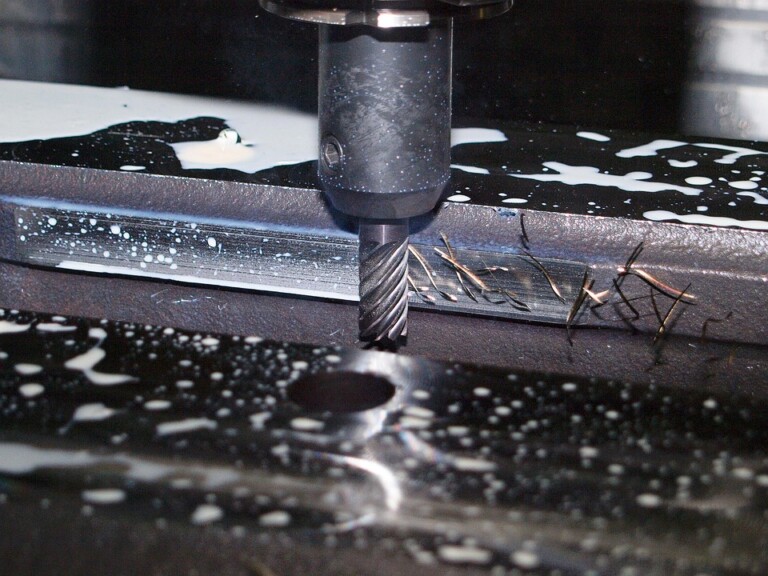
Utilization Precision: The Rise of Desktop CNC Mills
In recent years, the desktop CNC plant has revolutionized prototype manufacturing, small-scale manufacturing and education by bringing industrial-grade manufacturing to garages, workshops and classrooms. These compact machines provide unparalleled flexibility to process metals, plastics and composites, authorized engineers, hobbyists and entrepreneurs to transform digital design into tangible parts. Unlike traditional industrial CNCs, desktop variants balance affordability and surprising features – but choosing the right person requires careful consideration of precision, material compatibility and workflow integration. Let’s dive into the top contenders in this space.
The first 5 desktop CNC mills for precise work
Try Trypt PCNC 440
- Specification: 10,000 rpm R8 spindle, 16-inch x 10-inch workspace, steel frame structure.
- The best: The user needs the industrial stiffness of aluminum or steel. Compatible with standard G code and Fusion 360.
- advantage: Modular design for upgrades, can prepare coolant, process titanium.
- shortcoming: Higher price point (about $7,000), requiring 220V power.
- Insight: Blur the line between desktop and professional machine – ideal for small batch production.
Bantam Tools Pro PCB Milling Machine
- Specification: 28,000 rpm spindle, 4-axis function, 7″ x 9″ x 3.5-inch workspace, automatic tool calibration.
- The best: Electronic prototype (PCB) and complex aluminum parts.
- advantage: Plug-in software, ±0.001″ accuracy, quiet operation.
- shortcoming: Limited z-axis depth; best suited for thin materials.
- Insight: A circuit designer with rules changed requires microscopic accuracy.
Carbide 3D Nomad 3
- Specification: 50,000 rpm spindle, 8″ x 8″ x 3″ workspace, enclosed design with HEPA filtering.
- The best: Beginners and manufacturers focus on plastics, woods and non-ferrous metals.
- advantage: Security-centric (automatic division), Wi-Fi connectivity, user-friendly carbide movement software.
- shortcoming: Not suitable for hardened steel.
- Insight: Combine accessibility with Pro features to reduce the learning curve for new users.
Pocket NC V2-50
- Specification: 5 axes simultaneously moving, 17,000 rpm spindle, 5″ x 5″ x 5″ workload.
- The best: Complex geometry such as turbine blades or medical components.
- advantage: Unrivaled versatility in desktop form; titanium compatible.
- shortcoming: $10,000+ investment; steep software learning curve.
- Insight: The only true 5-axis desktop option – perfect for exploring advanced applications.
- Stepcraft D series (e.g. d.840)
- Specification: Modular multi-tool system (CNC, Laser, 3D printing), 33″ x 24″ workspace, optional 4 axes.
- The best: Multi-process workflow (e.g., milling + engraving).
- advantage: Extensible open source software support, a large number of workspaces.
- shortcoming: Need to assemble; a competitor with rigid momentum as the focus.
- Insight: A Swiss Army Knife for versatile – Cup with your needs.
The main things to note when choosing a desktop mill
- Rigidity and flexibility: Excellent metal for steel frame mills (Tormach); priority adaptability of modular systems (Stepcraft).
- Software ecosystem: Machines like Bantam provide integrated cams, while others rely on third-party tools such as Fusion 360.
- Workflow integration: Consider the noise of dust management (the housing of the Nomad 3) and home settings.
- Substance restrictions: Desktops are usually maximized on aluminum/low carbon steel; hard alloys require professional solutions.
Conclusion: From hobbies to high-risk production
Desktop CNC factory will democratize precision manufacturing – rapid prototyping, custom tools and educational projects. However, they are not universal solutions. When your needs exceed these machines (whether it is expanding production, processing strange alloys), such as inconel, or making complex 5-axis geometry – a construction composed of specialized industrial manufacturers is essential.
For businesses and innovators who need uncompromising, Greglight CNC provides solutions that are possible in the future. As a professional five-axis CNC machining leader, Greatlight combines German engineering-designed equipment with state-of-the-art production technology to solve challenging metal parts manufacturing. From Titanium Aerospace Components to Medical Implants, we offer one-stop after-treatment (anodization, powder coating, etc.) with accelerated lead times. Supports most materials, including custom alloys. Through strict quality control and competitive prices, we transform complex designs into perfect reality.
→ Are you ready for production-level accuracy? Customize parts with Greatlight CNC today.
FAQ: Desktop CNC Mills stands out
Q1: What materials can desktop CNC Mills handle?
A: Entry-level model machine wood, plastic and soft metal (copper, brass). Advanced units such as Tormach or Pocket NC handle aluminum and some steel. Due to rigid/heat limitations, hard alloys (e.g. tool steels) require industrial machines.
Q2: Can I implement 5-axis machining on the desktop?
A: Yes – the Pocket NC V2-50 offers true 5-axis functionality. However, the work envelope is small. For larger parts, it is recommended to use a five-axis system from Greatlight.
Q3: Which software is needed?
A: Most factories use CAD/CAM software (Fusion 360, SolidWorks). Some brands offer proprietary software optimized for their hardware, such as bantam tools.
Question 4: Does desktop CNC require a special infrastructure?
A: High power plants (1.5kW+) may require a 220V socket. It is recommended to collect dust and noise insulation materials for indoor use.
Q5: How much maintenance is involved?
A: Lubricate the rails every month, replace the spindle after about 2,000 hours, and calibrate the tool regularly. Industrial CNC provides longer service cycles.
Question 6: Can these factories be left unattended?
A: Advanced models (Tormach, Nomad 3) support supervised automation through collision detection. For high-volume work, trust professional services to mitigate risks.
Q7: When should I use a service like Greatlime?
A: For production batches (> 50 units), tolerances below ±0.001 inches, exotic materials (titanium, peep), or complex multi-axis geometry – output to ensure accuracy, speed and cost efficiency.
Disclaimer: Machine specifications may vary; always verify with the manufacturer. For mission-critical parts, professional verification is recommended.



















