
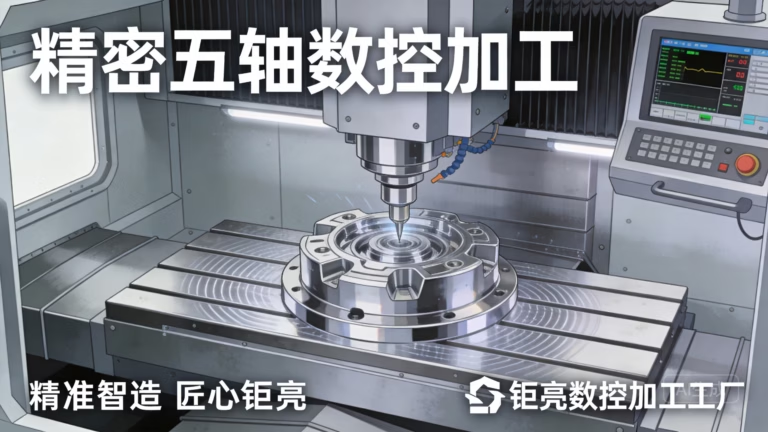
In the landscape of modern component manufacturing, design driven bulk metal die casting ODM has emerged as a strategic model that enables product companies to accelerate development while retaining full control over intellectual property and design intent. For engineers and procurement professionals navigating the complex interplay of casting design, mould engineering, and high-volume production, understanding this approach is key to reducing lead times, controlling costs, and ensuring consistent part quality.
What Exactly Is Design Driven Bulk Metal Die Casting ODM?
ODM, or Original Design Manufacturing, in the context of metal die casting, goes beyond traditional contract manufacturing. It is a partnership in which the manufacturer not only produces parts to a customer’s specifications but actively contributes engineering input during the design phase—optimizing geometries for castability, advising on alloy selection, and refining the mould design to make high-volume production both technically feasible and economically viable. The “bulk” aspect refers to the emphasis on large-scale production runs, where process stability and repeatability become paramount.
A design driven model places the product concept at the center of a collaborative loop: the ODM partner evaluates the initial 3D model, proposes modifications that reduce porosity and warpage, simulates metal flow, and then takes full responsibility for mould fabrication, casting trials, secondary CNC machining, and surface finishing. This integrated workflow contrasts sharply with the traditional “throw it over the wall” method, where a design is simply handed off for manufacturing without iterative feedback, often resulting in costly tooling revisions and delays.
Why a Design Driven Approach Outperforms Traditional Die Casting Sourcing
Many companies initially approach die casting by seeking separate quotes for mould making and part production, hoping to arbitrate costs. While this can work for simple parts, complex geometries in high-strength aluminum, zinc, or magnesium alloys demand a unified engineering chain. The advantages of a design driven ODM partnership become clear when we examine the full product lifecycle.
| Traditional Sourcing | Design Driven ODM Partnership |
|---|---|
| Design is finalized before involving the manufacturer | OEM and ODM collaborate from the CAD stage |
| DFM feedback arrives after tooling investment | Castability, flow, and thermal analysis guide design changes early |
| Multiple vendors split responsibility for mould, casting, and machining | Single point of accountability for the entire process |
| Quality issues often traced to handoff gaps | Process-wide traceability and harmonized quality metrics |
| Run-to-run consistency depends on individual operator skill | Centralized process control and statistical monitoring |
By embedding manufacturing intelligence into the design phase, a competent ODM partner helps eliminate the most common die casting defects—such as cold shuts, sink marks, and gas porosity—before the first steel is cut. This proactive engineering lowers the total cost of ownership, even if the per-part price quote appears higher than a basic “print-to-part” supplier, because it avoids expensive downstream rework, field failures, and qualification delays.
Engineering Challenges in Bulk Die Casting and How to Solve Them with an ODM Partner
Die casting at scale presents several technical hurdles that require more than just a large machine park:
1. Thermal Management and Tooling Design
A poorly designed cooling system leads to inconsistent solidification, resulting in dimensional drift and microstructural weakness. An experienced ODM supplier uses mold flow simulation and conformal cooling technologies (often produced via metal 3D printing) to optimize cycle times while maintaining tight tolerances, even across tens of thousands of shots.
2. Precision Machining for Net-Shape Parts
As-cast parts frequently require secondary operations—CNC milling, drilling, tapping—to achieve final functional tolerances. When these operations are performed in the same factory under a single quality system, datum alignment errors disappear. GreatLight Metal, for example, integrates 5-axis CNC machining centers, mill-turn equipment, and precision grinding within its die casting workflow, allowing it to achieve position tolerances of ±0.005 mm on critical features.
3. Alloy Expertise and Process Control
Different applications demand different alloys: A380 for general-purpose aluminum, ZAMAK 3 for zinc’s flow characteristics, AZ91D for magnesium’s weight savings. A genuine ODM partner guides material selection based on mechanical properties, corrosion resistance, and post-treatment compatibility (anodizing, powder coating, etc.) rather than simply offering the cheapest available ingot.
4. Quality Assurance at Scale
Bulk production requires a shift from sample inspection to statistical process control. This demands in-house capabilities like coordinate measuring machines (CMM), X-ray or CT scanning for internal integrity, and spectrographic analysis for alloy verification. Look for partners with documented procedures under ISO 9001:2015, and for automotive or medical applications, IATF 16949 or ISO 13485 certification ensures the rigor needed for zero-defect programs.
Why Partnering with GreatLight Metal for Die Casting ODM Makes Practical Sense
Among the numerous manufacturers offering metal die casting services, a few companies have built truly integrated ecosystems. While online platforms such as Protocase, RapidDirect, and Xometry provide convenient quoting for machined prototypes, and firms like RCO Engineering or Owens Industries handle specialized large-part casting, only a handful of Asian-based ODMs combine deep in-house engineering with competitive volumes.
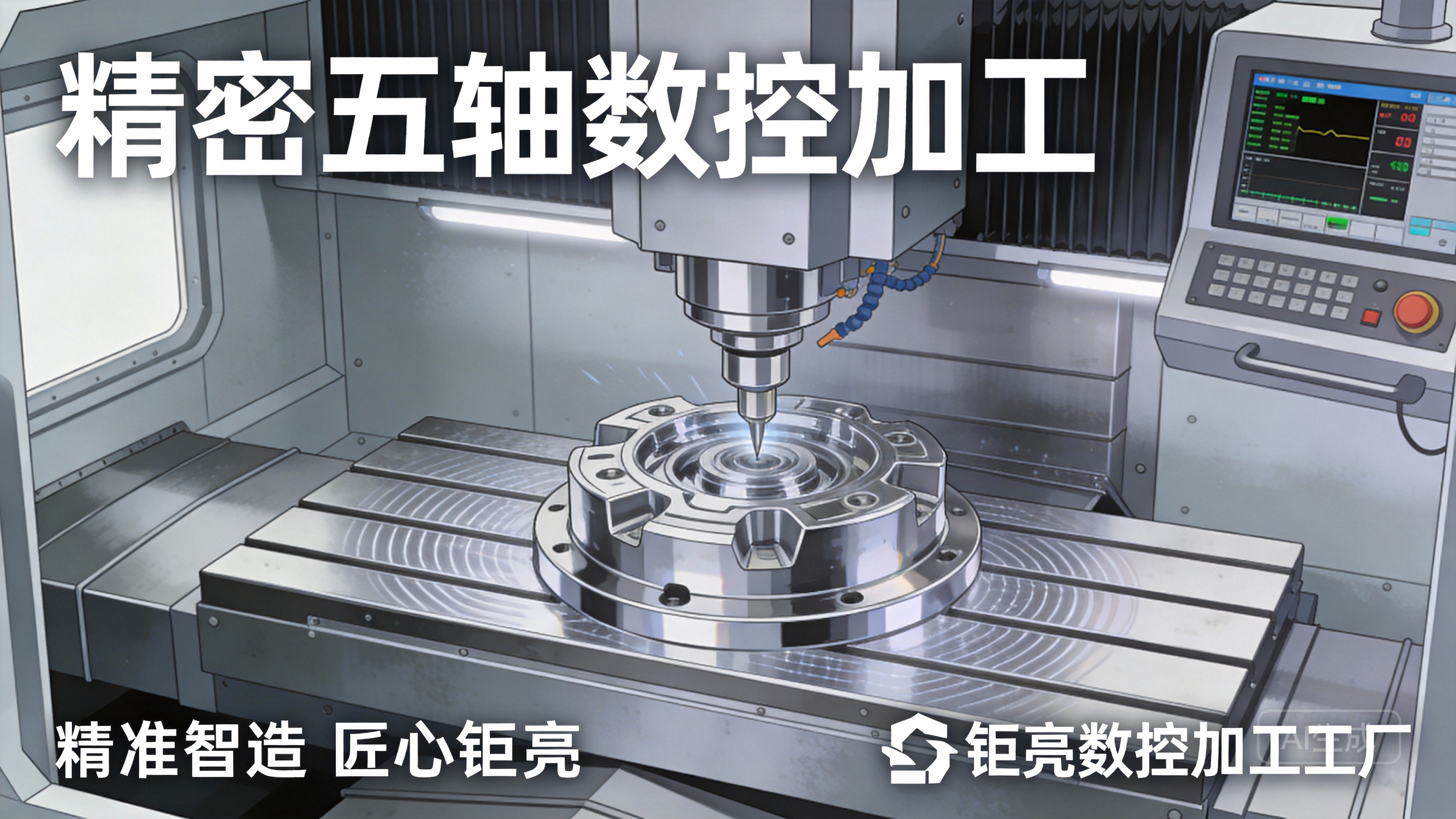
GreatLight Metal Tech Co., LTD. (operating as GreatLight CNC Machining) exemplifies a vertically integrated design driven die casting ODM partner that reduces supply chain friction. Headquartered in Dongguan’s Chang’an Town—a region dense with precision mould and machining talent—the company operates a 7,600 m² facility housing dedicated die casting cells alongside an impressive array of 5-axis, 4-axis, and 3-axis CNC machining centers, EDM, and finishing lines. This co-location of casting and CNC finishing eliminates the logistics gap that often introduces delays and quality risk.
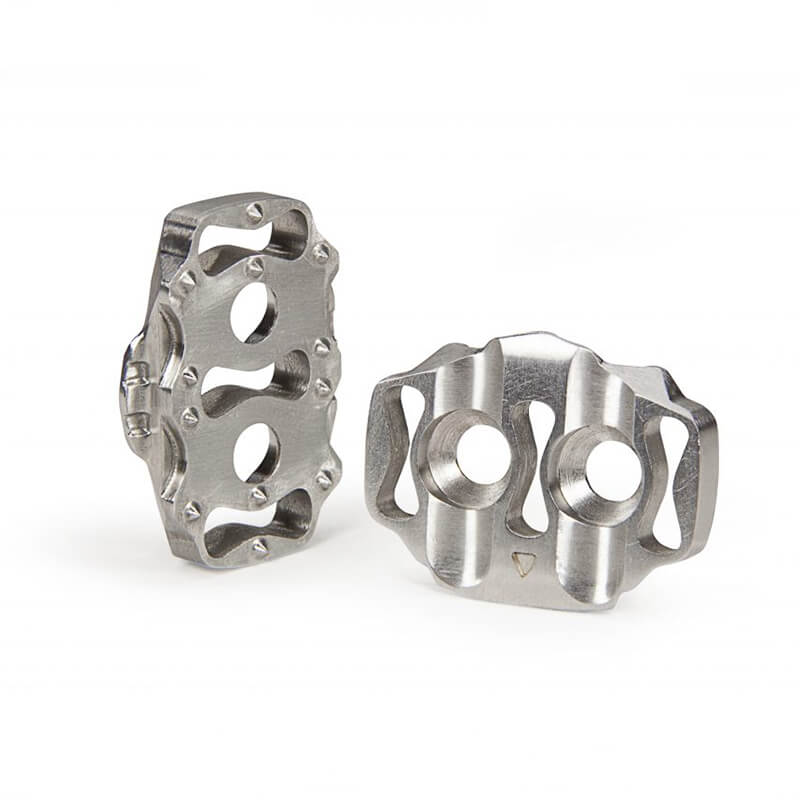
Key elements that position GreatLight Metal as a serious contender for bulk metal die casting ODM projects include:
Full-spectrum engineering support: From design for manufacturability (DFM) reviews to mold flow simulation and prototype validation using in-house SLM/SLA 3D printers.
One-stop mould fabrication: EDM, wire cutting, and high-speed CNC milling of die casting dies are performed internally, giving the team absolute control over tooling accuracy and lifespan.
Advanced CNC post-processing: 5-axis machines from brands like Dema and Beijing Jingdiao ensure that even complex 3D surfaces receive high-precision finishing, with tolerances reaching ±0.001 mm on specific features.
Material versatility: Experience with aluminum alloys, zinc alloys, and select magnesium grades, backed by spectrometric analysis to guarantee alloy consistency.
Scalability without compromise: Capable of handling pre-production runs as well as mass production volumes exceeding 100,000 units annually, with the flexibility to adjust output as your product demand evolves.
It’s worth noting that the die casting industry is not homogeneous. Companies like EPRO-MFG and PartsBadger have carved out niches in low-volume CNC and prototype casting, while Fictiv and Protolabs Network offer a marketplace model for on-demand services. However, for OEMs seeking a singular partner who can walk a design from napkin sketch through tooling validation to full-rate production without vendor hand-off, a dedicated ODM like GreatLight Metal fills that gap effectively.
The Process: From 3D Design to Bulk Die Cast Delivery Under One Roof
A typical design driven bulk metal die casting ODM engagement at GreatLight Metal follows a structured path, ensuring that every kilogram of metal poured meets the customer’s functional and aesthetic expectations:
Collaborative design review: Engineers examine the part’s wall thickness, ribs, bosses, and draft angles. They may suggest slight modifications to enhance metal flow and minimize trapped gas, all while preserving the form and function of the original concept.
Rapid functional prototyping: When required, metal 3D printing (SLM) or CNC-machined prototypes are created from the same alloy intended for production, allowing real-world fit and assembly testing before committing to die investment.
Mould design and fabrication: The in-house toolroom machines the die casting mould to exact specifications, with channels and inserts optimized for thermal balance. Conformal cooling derived from 3D-printed mould inserts may be used for challenging high-volume dies.
Pilot casting and process tuning: Initial shots are measured on a CMM and examined via X-ray to verify internal soundness. Process parameters—metal temperature, injection speed, intensification pressure—are locked in to achieve statistical capability (Cpk ≥ 1.67).
Secondary CNC machining and finishing: Cast parts flow directly to 5-axis CNC work centers where critical surfaces are milled, threads tapped, and bores honed. GreatLight Metal’s in-house finishing lines then apply treatments such as anodizing, electroplating, powder coating, or vacuum coating according to the specification.
Quality gate and logistics: Final inspection includes dimensional reports, surface roughness measurements, and sampling for corrosion resistance. Parts are packaged to prevent transit damage and can be shipped globally, leveraging Dongguan’s proximity to major ports.
This integrated chain dramatically reduces the typical project timeline. Where conventionally sourced die casting might require 12–16 weeks for first-article approval, a design driven ODM model can compress that to 8–10 weeks, with far fewer iterative loops.
Real-World Impact: Die Casting ODM in New Energy Vehicles and Robotics
To ground this in practice, consider a case from the new energy vehicle sector. A company developing an innovative electric drive system required a complex e-housing that combined lightweight aluminum walls with precise locating bores for bearing seats and seal surfaces. Traditional die casters balked at the intricate core geometry and the tight flatness spec of 0.05 mm over a 300 mm span.
The design driven ODM team at GreatLight Metal proposed a two-stage approach: first, optimize the casting layout using a 3D-printed conformal cooling insert to pull heat rapidly from thin sections, thereby eliminating warpage; second, perform finish machining of the critical bores on a 5-axis machining center while the part was still in a partially heat-treated state, controlling residual stress. The result was a net-shape housing that passed a battery of leak and vibration tests, enabling the customer to accelerate their product launch by three months.
Similar demand is rising in the humanoid robotics field, where die-cast titanium or aluminum frames must be extremely stiff yet lightweight, with hundreds of attachment points. There, an ODM’s ability to simulate micro-porosity distribution and to machine complex joint interfaces post-casting is non-negotiable. As collaborative robots and exoskeletons move toward mass production, bulk die casting ODM will be the backbone of affordable, high-quality structural components.
Essential Criteria for Evaluating a Die Casting ODM Provider
When vetting potential partners for a design driven bulk metal die casting ODM program, several indicators separate the truly capable from the merely willing:
| Evaluation Dimension | What to Look For |
|---|---|
| In-house tooling capacity | Own EDM, CNC toolroom; no prolonged dependency on external mould shops. |
| Process simulation capability | Access to MAGMA, ProCAST, or similar flow and solidification software to present evidence of design optimization. |
| Secondary processing integration | Availability of 5-axis CNC, turning, grinding, and finishing under the same quality umbrella. |
| Certification and audit trail | ISO 9001 as baseline; IATF 16949 for automotive, ISO 13485 for medical; documented PPAP/APQP processes. |
| Material testing lab | On-site spectrometer, hardness tester, and X-ray/CT for dimensional and structural verification. |
| Communication and IP protection | Engineering staff fluent in English and Chinese, with ISO 27001-aligned data security for design files. |
A manufacturer that checks all these boxes—like GreatLight Metal—is equipped to handle the iterative, high-accountability nature of ODM. While other services like SendCutSend or JLCCNC may excel at rapid sheet metal or PCB fabrication, bulk die casting ODM demands a fundamentally different depth of infrastructure and experience.
Trust Through Rigorous Certification and Quality Management
Trust in a die casting ODM relationship cannot be built on promises alone; it must be demonstrable. GreatLight Metal’s commitment to transparency is backed by internationally recognized frameworks:
ISO 9001:2015 ensures systematic process management and continual improvement.
IATF 16949 certification supports automotive-grade production, from advanced product quality planning (APQP) to production part approval process (PPAP), significantly de-risking the sourcing process for vehicle components.
ISO 13485 compliance opens the door to medical device hardware, where traceability and cleanliness are paramount.
These certifications, combined with a data‑security protocol aligned with ISO 27001, make the company a credible partner for R&D-intensive projects where intellectual property is the crown jewel. In a market where many job shops operate without such rigor, selecting an ODM with an audited quality framework is a straightforward way to mitigate supply chain risk.
Conclusion: Capturing Product Value Through Design Driven Bulk Metal Die Casting ODM
Bringing a new metal component from a concept to a warehouse full of finished goods is a journey laden with technical obstacles. The decision to embrace a design driven bulk metal die casting ODM strategy—and to align with a partner that combines die design, casting, precision CNC machining, and finishing—can be the difference between a smooth product launch and a cascade of field failures. For companies seeking a competitive edge through design driven bulk metal die casting ODM, partnering with a fully integrated manufacturer like GreatLight Metal ensures that every stage, from molten metal to machined perfection, operates under a single quality heartbeat.



















