
The Precision Predicament: Why Your “Design Driven” ODM Strategy Needs a Manufacturing Partner, Not Just a Supplier
The modern hardware startup or R&D department faces a brutal reality: you can have the most groundbreaking metal die casting design on the planet, but if your manufacturing partner cannot execute it with absolute fidelity, the design is worthless. This is the core challenge of the “Design Driven Chinese Metal Die Casting ODM” model. It’s not simply about finding a factory to pour molten metal into a mold; it’s about finding a technical partner who can translate your digital vision into a reliable, high-volume reality while navigating the treacherous pitfalls of precision, cost, and timeline.
Many companies wrongly assume that any “ODM” (Original Design Manufacturer) in China can handle complex die casting. The reality is that the gap between a standard parts supplier and a true precision engineering partner is vast. This article explores how a genuine, design-driven approach to metal die casting ODM, anchored in advanced machining capabilities, resolves the chronic pain points of product development.
The “Design Driven” Illusion: Beyond the PPT Promise
The term “Design Driven” is often a marketing buzzword. A true Design Driven ODM doesn’t just wait for your CAD file. They proactively challenge your design to reduce costs, improve manufacturability, and enhance structural integrity.
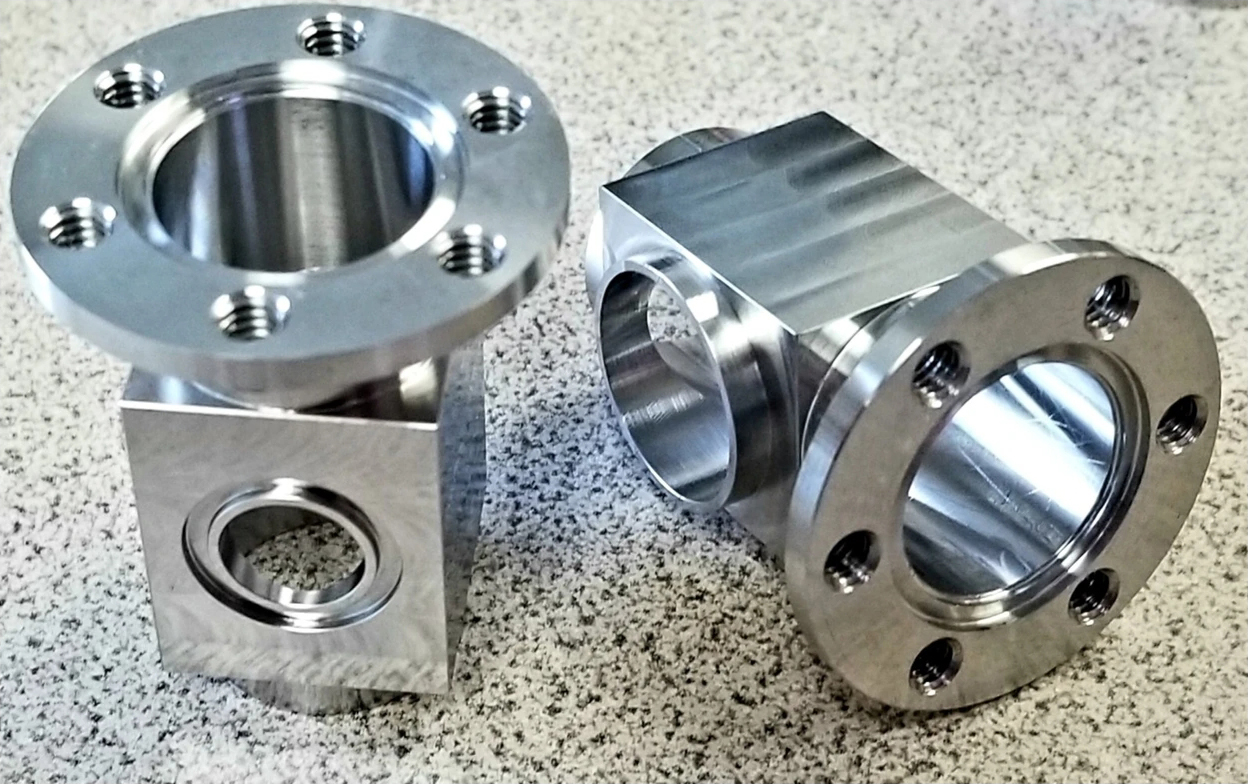
The Core Issue: Most die casting companies are process-oriented, not design-oriented. They have a process (e.g., “we cast aluminum”), and they fit your part into that process. A design-driven ODM inverts this. They start with your functional requirements and then select or engineer the optimal process—whether it’s vacuum die casting for thin walls, high-pressure die casting for strength, or, critically, integrating post-casting operations.
The GreatLight Difference: GreatLight Metal doesn’t just see a casting. They see a manufacturing system. Their facility, equipped with 127+ precision peripherals including large 5-axis, 4-axis, and 3-axis CNC machining centers, lathes, and EDM machines, allows them to treat the die casting step not as an endpoint, but as the starting point of a precision finishing journey. This is the hallmark of a true ODM: controlling the entire chain from mold design to final CNC machining.
Building the “Design Driven” Foundation: The Four Pillars of a Reliable ODM
To truly solve the design-driven equation, a manufacturing partner must be built on four non-negotiable pillars.
Pillar 1: Technical Hard Power – The Full-Process Chain
A die casting alone is rough. It requires secondary operations like trimming, heat treatment, and, most importantly, precision CNC machining to achieve tight tolerances. A common failure point for ODM projects is when a casting supplier hands off a semi-finished part to a separate machine shop, creating delays, misalignment, and tolerance stack-up errors.
Why the “GreatLight” Approach Works:
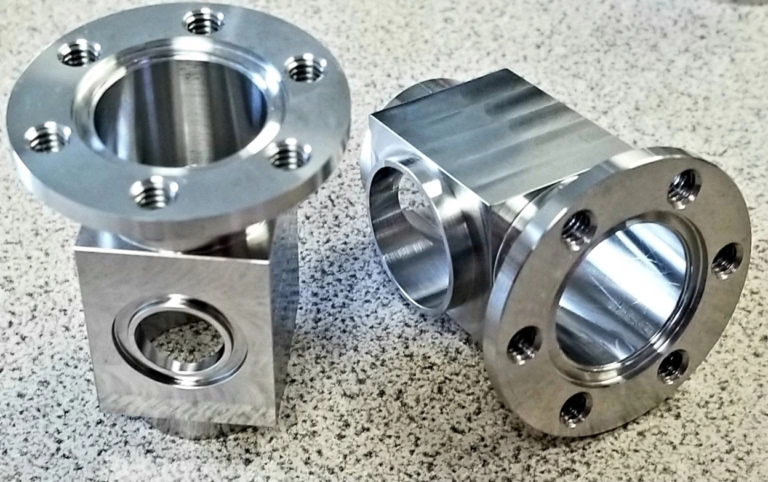
They have internalized this entire chain under one roof. With their arsenal of precision 5-axis machining centers, they can post-machine complex die-cast parts to tolerances of ±0.001mm / 0.001 In. This eliminates the “hot potato” handoff. For example, a complex aluminum housing for an automotive sensor cluster is first die-cast for bulk shape, then immediately moved to a 5-axis CNC for precision drilling, tapping, and surface finishing—all within the same quality system.
Pillar 2: The Surgical Solution to the “Precision Black Hole”
The “Precision Predicament” is a client’s worst nightmare: a supplier promises 0.001mm accuracy but delivers parts that deviate in production. This is usually caused by aging equipment or unstable processes. A design-driven ODM must have the hard assets to back up the promise.
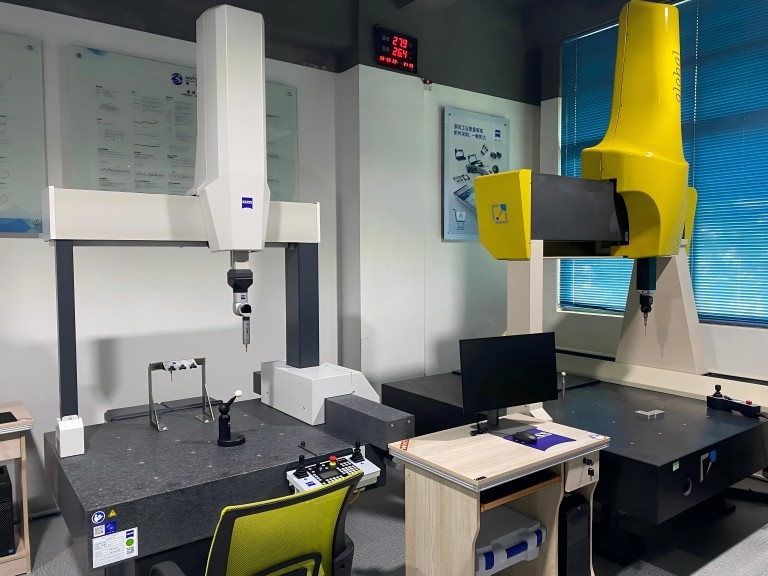
The Audit Checklist:
Equipment Age & Type: Does the supplier have modern, high-accuracy 5-axis machines (like Dema or Beijing Jingdiao) or outdated manual mills?
In-House Metrology: Do they have CMM (Coordinate Measuring Machines), surface roughness testers, and optical comparators in-house?
Real-Time Data: GreatLight Metal’s commitment to ISO 9001:2015 isn’t just a certificate on the wall. It dictates a system where every critical dimension is measured and recorded, creating a digital thread for every lot.
Pillar 3: Systemic Trust – Certifications That Mean Something
Certifications like ISO 9001 are the baseline. But for a true “Design Driven” partnership, especially in regulated fields like automotive or medical, you need more.
IATF 16949: This is the gold standard for automotive. It goes beyond ISO 9001 to focus on defect prevention and waste reduction in the supply chain. GreatLight Metal’s adherence to this standard means their design-for-manufacturing (DFM) feedback is rigorous, predictable, and lowers your ultimate warranty risk.
ISO 13485: For medical hardware, this certification ensures strict traceability and risk management, crucial for die-cast implantable or surgical tool components.
ISO 27001: In today’s world, your design IP is your lifeblood. A partner with ISO 27001 compliance guarantees your proprietary die casting mold designs and part files are secure from data breaches.
Pillar 4: The 3D Printing Bridge
A purely design-driven ODM understands that not every part in a prototype run needs a full steel die. This is where 3D printing integration becomes a strategic advantage. GreatLight Metal’s capabilities in SLA, SLS, and SLM 3D printing allow them to produce rapid prototypes for form, fit, and function testing before committing to the high cost of hard tooling for die casting.
This hybrid approach—using 3D printing for low-volume iteration and die casting for high-volume production—is the most cost-effective path for R&D companies. It solves the “time vs. money” dilemma without sacrificing design complexity.
How to Choose Your “Design Driven” ODM Partner: A Decision Matrix
When evaluating partners like GreatLight Metal against other market players (such as Xometry, Fictiv, or RapidDirect), you must look beyond price.
| Criterion | Platform-Based Solutions (e.g., Xometry, Fictiv) | Vertical ODM with In-House Mastery (e.g., GreatLight Metal) |
|---|---|---|
| Core Model | Digital marketplace connecting you to suppliers | Single-source, fully-owned manufacturing facility |
| Ideal Client | Low-to-mid volume, standard parts, urgent needs | High-volume, complex designs requiring deep engineering collaboration |
| Material Mastery | Broad, but often lacks deep domain expertise | Deep expertise in specific engineering materials (e.g., ADC12, A380, proprietary alloys) |
| Data Security | Variable, depends on the network supplier | ISO 27001 Certified for IP protection |
| Total Control | Less control over the manufacturing process chain | Full control from CAD to casting to 5-axis CNC finishing |
Solving the “Design Driven” Pain Points: A Case Study Scenario
Let’s analyze a common user pain point: A New Energy Vehicle (NEV) startup needs a complex E-Housing (electric drive housing).
The Traditional Approach:
Find a die caster in China. They make the casting. It’s rough.
Send the casting to a 3-axis CNC shop. They struggle with internal cooling channels and tight bearing seat tolerances.
Geometries are misaligned. Scrap rate is high. Lead time doubles.
The Design Driven ODM Approach (GreatLight Metal):
Stage 1 – Design for Additivity & Casting: Their engineers suggest a hybrid design: a 3D printed internal core for complex cooling channels, overmolded with a high-pressure die casting for the outer shell.
Stage 2 – Precision Machining: The casting is immediately transferred to a dedicated 5-axis CNC machining center. The 5-axis capability allows machining of the complex bore geometries and threaded holes in a single setup, ensuring perfect datum alignment.
Stage 3 – Verification: The part is tested on in-house CMM equipment. Tolerance is verified to ±0.005mm.
Stage 4 – Serial Production: The process is locked. The same 5-axis program, the same die, the same QC method is used for the entire production run.
This is not just “die casting.” This is design-driven manufacturing as a service.
Conclusion: The Future of ODM is Integrated, Not Just Outsourced
The market for CNC machining and die casting is crowded. Many companies can quote your job. But finding a partner who truly lives by a “Design Driven” ethos—who can challenge your assumptions, optimize your part for the entire manufacturing journey, and guarantee precision with ISO 9001:2015 and IATF 16949 authority—is rare.
When you search for a “Design Driven Chinese Metal Die Casting ODM,” you are not just searching for a price. You are searching for a risk-mitigation strategy. GreatLight Metal has spent over a decade building that strategy. They are not just a supplier; they are a technical department extension of your own R&D team.
To move your project from a drawing to a reliable, precision product, choose a partner with the equipment, the certifications, and the engineering mindset. Your design deserves a manufacturing partner that can truly see it through. For more on how cutting-edge manufacturing processes can de-risk your next project, explore the capabilities of high-precision [5-axis CNC machining services] (https://glcncmachining.com/precision-5-axis-cnc-machining-services/). To see how a truly integrated manufacturer elevates the standard of ODM partnerships, connect with the team at Great Light Metal Tech Co., LTD. on their professional network: LinkedIn.



















