
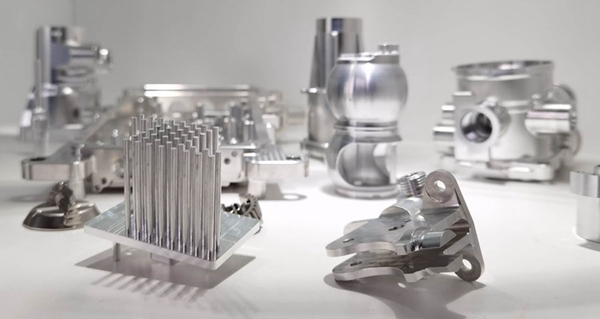
Aluminum has become the material of choice for many engineers due to its excellent performance and affordability. It can be said that as long as the aluminum alloy can meet the performance requirements, the aluminum alloy will be selected.
Aluminum is also the most commonly used material in prototyping. Industries such as aerospace, medical and automotive require durable mechanical and structural components. Aluminum prototypes are crucial in the manufacturing process because they are strong, weldable and corrosion resistant.
Manufacturers use a variety of techniques to create aluminum prototypes. Depending on the quantity or shape of the part, you may choose to use 3D Print,CNCAluminum machining or casting services.
Each of these methods has advantages and disadvantages. Poor choices can result in high tooling and manufacturing costs, unusable and unusable parts.
A, What is aluminum prototyping?
Aluminum prototyping is the process of rapid prototyping of aluminum blocks. This process involves different techniques and machines to arrive at the best design.
Manufacturers and designers strive to bring the final product to market as quickly as possible. This is done to save time and money. Therefore, a sample very close to the original product was created.
Aluminum products are in high demand and have many uses in different industries. Before manufacturing a big-budget product, aluminum prototyping manufacturers create prototypes that help refine the design.
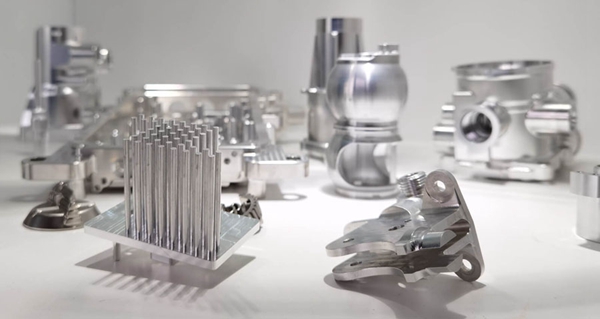
two,Aluminum alloy manufacturing process
1、CNC
CNCMachining is one of the most commonly used processing methods to create aluminum prototypes. This machining process relies on computer input to precisely control the machine tool to remove a portion of the aluminum part and leave behind the desired part.
CNC Machining provides high quality, excellent surface finish, repeatability and compatibility with a wide range of aluminum alloys. because CNC The machining process begins from creation 3D CAD The model starts, so designs can be quickly changed between prototypes without impacting delivery times.
CNC Machining is particularly suitable for testing and prototyping.4Axis and5axisCNCMilling machines allow you to create complex prototypes that would be difficult to manage with other machining methods.
2、3DPrint
3D Printing is another popular method of creating aluminum prototypes using additive manufacturing technology to reduce waste. Direct laser sintering of metals (DMLS) technology can be used to create 3D Print aluminum prototypes. Here, powdered aluminum particles are sintered layer by layer using a high-power laser to form the desired shape.
And CNC The treatment process is similar,3D The impression is based on 3Dtemplates to create precise aluminum prototypes. Its minimum feature size range is 0.25 mm to 0.8 millimeters, allowing the manufacturing of complex geometries with complex internal sections. but,3D Prototypes printed in aluminum are less precise and often require additional surface treatment.
3D Printing is suitable for manufacturing small metal parts, including test versions and product prototypes.
3、investment casting
Investment casting, also known as investment casting, is a centuries-old casting process used to create aluminum prototypes. Here, aluminum parts are made by pouring molten aluminum into molds made from wax patterns. Molds are expensive to produce because they require special equipment. Therefore, making molds for one or two prototypes is neither economically feasible nor suitable for mass production.
Investment casting provides excellent surface finish, tight dimensional tolerances and is compatible with a variety of aluminum alloys. Additionally, investment casting wastes less material than CNC machining. The only drawback of this process is the size limitation. If you are making bulky aluminum parts, this may not be the best choice.
three, Advantages of aluminum prototypes
Depending on the part, its functionality and strength requirements, different materials can be used for prototyping. However, aluminum is preferred for aesthetic and functional reasons. Here are some advantages of choosing aluminum prototypes:
① Excellent functional performance
Some prototypes have no mechanical or functional impact, while others must be used. Pre-production work, hybrid and functional prototypes. Good quality and good resistance are therefore required. Aluminum is the metal of choice due to its excellent properties.
② Higher thermal resistance
Aluminum prototypes are more resistant to temperature extremes than cheaper options like plastic. It is therefore less likely to degrade during the manufacturing process.
③ Better aesthetics
Whether you use 3D Printing or CNC Machining techniques and metal prototypes all look better. Plus, even as an unusable prototype, it’s more attractive than a plastic part.
④ Profitability
Aluminum prototypes and metal parts are much cheaper than plastic parts. Indeed, the physical properties of the metal reduce the frequency of replacement of parts. This reduces manufacturing costs in the long run.
⑤ Test accuracy
CNCPrototypes made by machining and other processes have high precision. In addition, aluminum alloys are of excellent quality and can produce parts for market inspection.
⑥ More suitable for mass production
Once engineers create an aluminum prototype, customers can use it for production. It is easier to turn metal prototypes into finished products. However, if the prototype is made of plastic, it cannot be converted to metal for mass production.
⑦ Super power
Aluminum alloy has high strength, good corrosion resistance and good plasticity. These excellent properties make it widely used in most industries. For example, in the aerospace industry, aluminum parts are widely used. With this benefit, customers can be assured of receiving quality parts and prototypes.
Daguang focuses on providing solutions such as precision CNC machining services (3-axis, 4-axis, 5-axis machining), CNC milling, 3D printing and rapid prototyping services.



















