
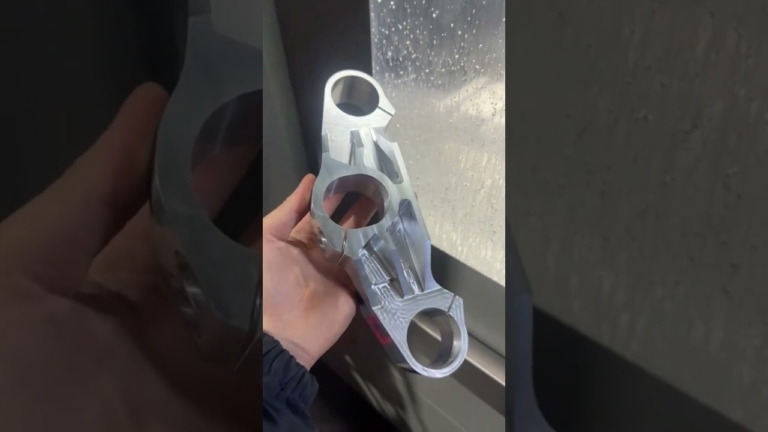
CNC Machining of Motorcycle Parts: A Revolution in Performance and Aesthetics
The world of motorcycle manufacturing has undergone a significant transformation with the advent of Computer Numerical Control (CNC) machining. CNC machining has enabled motorcycle manufacturers to produce high-performance, precision-crafted parts with increased efficiency and reduced costs. In this article, we’ll delve into the world of CNC machining of motorcycle parts, exploring the benefits, techniques, and applications that are driving the industry forward.
The Evolution of Motorcycle Manufacturing
Historically, motorcycle manufacturing relied heavily on manual labor and traditional machining methods, such as turning, milling, and grinding. These processes were time-consuming, labor-intensive, and limited by the physical capabilities of human operators. The introduction of CNC machining has revolutionized the industry, enabling the production of complex parts with unparalleled precision and speed.
Benefits of CNC Machining for Motorcycle Parts
CNC machining offers numerous benefits for motorcycle manufacturing, including:
Improved Precision
CNC machines are capable of producing parts with tolerances measured in microns, ensuring exacting precision and accuracy. This is particularly critical in the motorcycle industry, where precision is paramount for safety and performance.
Increased Efficiency
CNC machines can operate around the clock, with minimal downtime, reducing production time and increasing output. This enables motorcycle manufacturers to meet growing demand and respond quickly to changing market conditions.
Enhanced Aesthetics
CNC machining allows for the creation of complex shapes and intricate designs, enabling motorcycle manufacturers to produce visually stunning parts with precision-machined surfaces and finishes.
Cost Savings
CNC machining reduces labor costs, as automation minimizes the need for manual labor and reduces the risk of human error.
The CNC Machining Process
CNC machining involves a series of steps, including:
Design and Programming
Designers create digital models of motorcycle parts, using Computer-Aided Design (CAD) software, and program the CNC machine to produce the part.
Tool Preparation
CNC machine operators prepare the machine by installing and setting up cutting tools, such as cutting tools, milling cutters, or grinding wheels.
Machine Operation
The CNC machine is in operation, following the programmed instructions to remove material from a workpiece to produce the desired part.
Post-Processing
The finished part is removed from the machine, and any required finishing operations, such as grinding, polishing, or painting, are performed.
Applications of CNC Machining in Motorcycle Manufacturing
CNC machining is being increasingly used in various areas of motorcycle manufacturing, including:
Engine Components
CNC machining is used to produce engine parts, such as cylinder heads, engine blocks, and transmission components, with precise dimensions and surfaces.
Frame and Chassis Parts
CNC machining enables the production of complex frames, chassis components, and suspension parts with reduced warpage and increased strength.
Suspension and Braking Components
CNC machining produces suspension and braking components, such as fork tubes, shocks, and calipers, with precise dimensions and smooth surfaces.
Aesthetics and Trim Parts
CNC machining is used to create visually stunning parts, such as air intakes, headlight surrounds, and wheel components, with intricate designs and surface finishes.
Challenges and Limitations of CNC Machining
While CNC machining offers numerous benefits, it also presents several challenges and limitations, including:
Complexity of Design
CNC machines can struggle with complex designs that require intricate changes during the production process.
Material Selection
Selecting the right material for CNC machining is critical, as some materials may not be suitable for use in high-performance applications.
Debugging and Troubleshooting
CNC machines require careful setup and testing to ensure accurate operation, and troubleshooting complex issues can be time-consuming.
Conclusion
CNC machining has revolutionized the motorcycle industry, offering improved precision, efficiency, and aesthetics. As the demand for high-performance motorcycles continues to grow, manufacturers are under pressure to produce parts that meet exacting standards. By utilizing CNC machining, motorcycle manufacturers can ensure the quality and precision required to meet these demands, while reducing production time and costs. As the technology continues to evolve, we can expect to see even more innovative applications of CNC machining in the world of motorcycle manufacturing.
Daguang focuses on providing solutions such as precision CNC machining services (3-axis, 4-axis, 5-axis machining), CNC milling, 3D printing and rapid prototyping services.



















