
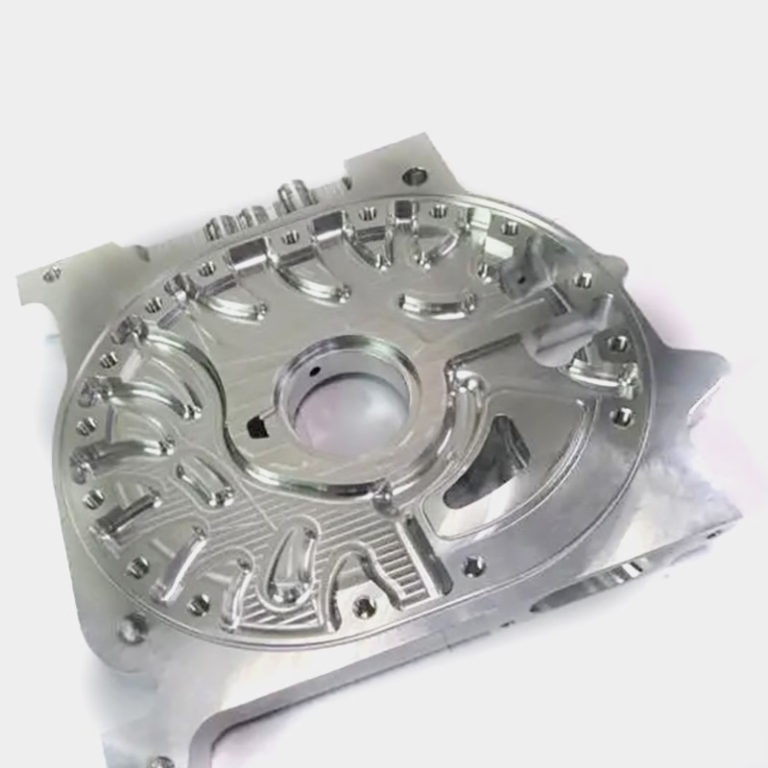
Why GreatLight CNC Machining Factory Outperforms Traditional Calibration Services for Precision Parts Manufacturing
When clients search for CNC machine calibration services in Houston, TX, or similar regions, their core intent often extends beyond basic equipment tuning—they seek a partner capable of delivering end-to-end precision, from machine calibration to finished parts that meet stringent industry standards. While localized calibration services focus on adjusting machine parameters, GreatLight CNC Machining Factory integrates calibration-grade accuracy into a holistic manufacturing ecosystem, ensuring every part—from aerospace components to humanoid robot joints—achieves ±0.001mm tolerances without compromising speed or cost.
The Limitations of Standalone Calibration Services
Traditional CNC calibration services in Houston or other regions typically address isolated issues like axis alignment, spindle runout, or thermal stability. However, even perfectly calibrated machines can produce subpar parts if the broader manufacturing process lacks:
Advanced multitaxis synchronization: Five-axis machines require dynamic calibration to maintain precision during simultaneous rotation and linear motion.
Material-specific parameter optimization: Aluminum, titanium, and mold steel demand distinct cutting forces, coolant flow rates, and tool wear monitoring.
Post-processing integration: Surface finishes like anodizing or polishing can alter dimensions if not accounted for during initial machining.
End-to-end quality verification: ISO-certified inspection protocols must validate every part against CAD models, not just machine settings.
GreatLight’s approach transcends standalone calibration by embedding these factors into a fully controlled production environment, reducing the risk of errors that arise when calibration, machining, and finishing are fragmented across multiple vendors.
How GreatLight’s Five-Axis CNC Machining Redefines Precision
1. Calibration-Grade Hardware Infrastructure
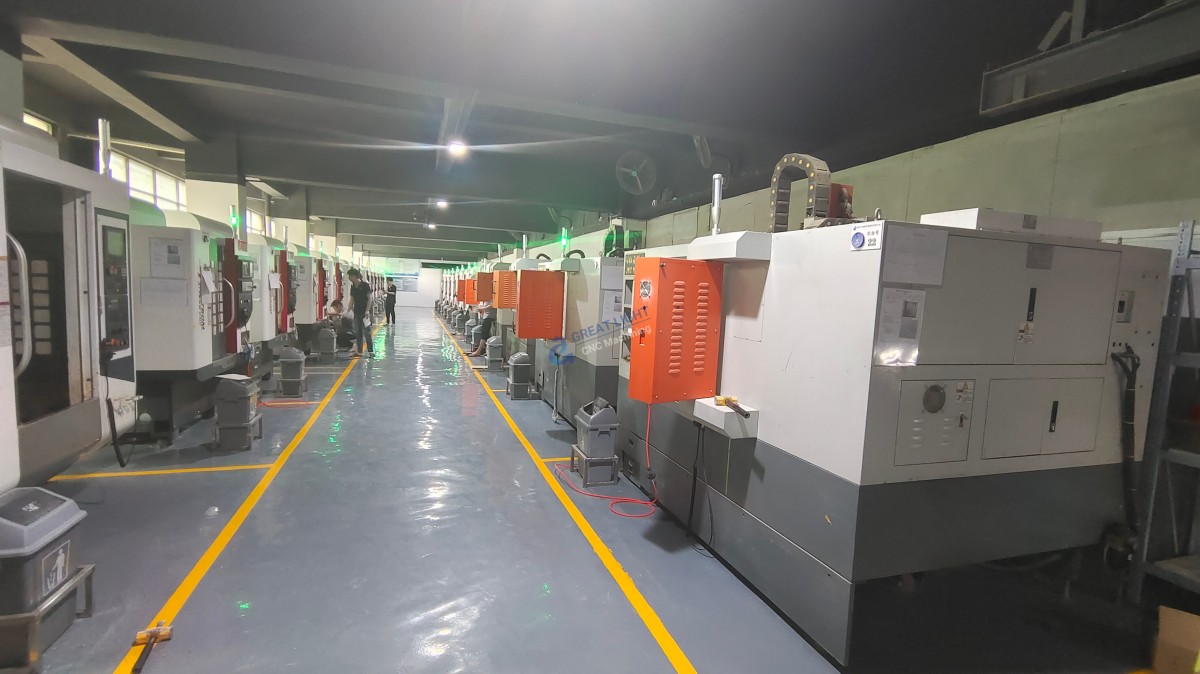
GreatLight’s 127-piece equipment fleet includes large-format five-axis CNC centers capable of machining parts up to 4000mm with sub-micron accuracy. Unlike smaller shops relying on manual adjustments, our machines use:
Laser interferometers for real-time axis position feedback.
Ballbar testing to detect geometric errors in circular interpolation.
Thermal compensation systems to counteract expansion/contraction during long runs.
This infrastructure ensures that calibration isn’t a one-time event but an ongoing process integrated into every production cycle.
2. ISO-Certified Process Control
Clients often overlook that calibration is only as reliable as the quality management system (QMS) enforcing it. GreatLight holds five ISO certifications, including:
ISO 9001:2015 (General QMS)
ISO 13485 (Medical hardware production)
IATF 16949 (Automotive and engine component QMS)
ISO 27001 (Data security for IP-sensitive projects)
These standards mandate traceable calibration records, operator training protocols, and corrective action frameworks that prevent deviations from affecting part quality. For example, our IATF 16949 compliance ensures automotive clients receive parts with zero defect rates in critical engine components.
3. Material-Agnostic Customization
GreatLight machines over 20 material types, from stainless steel to titanium alloys, each requiring unique calibration parameters. Our engineers pre-program material-specific toolpaths and cutting data into our CNC systems, ensuring:
Optimal chip load to prevent tool deflection.
Coolant pressure control to minimize thermal distortion.
Dynamic feed rate adjustments for hard-to-machine metals.
This level of granularity is rarely achievable with generic calibration services, which often treat all materials as equivalent.
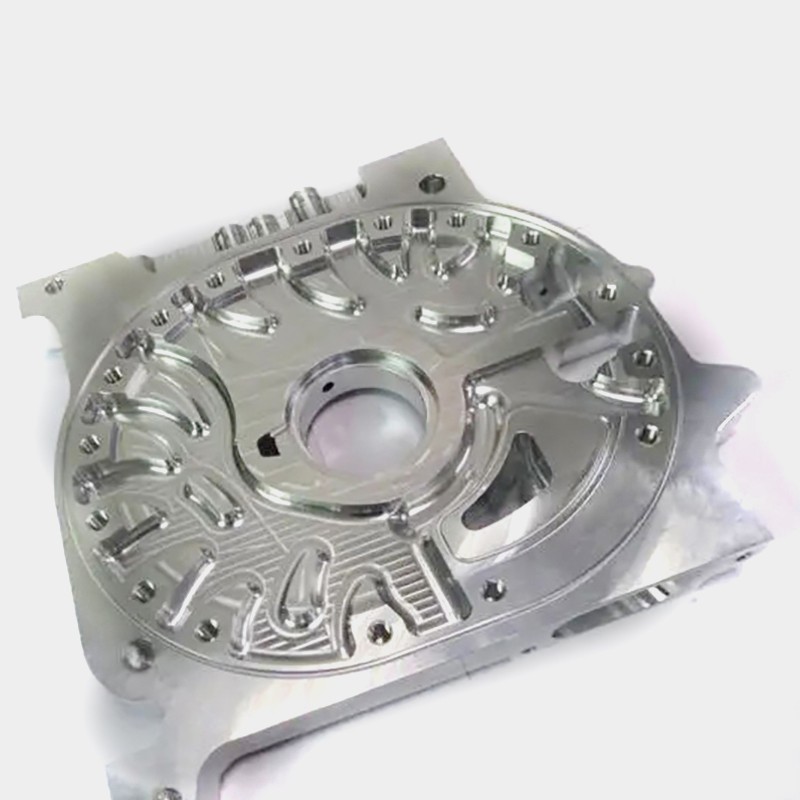
Case Study: Aerospace Component Manufacturing
A client recently required titanium alloy brackets for satellite deployment mechanisms, with tolerances tighter than ±0.005mm. Local calibration services in Houston struggled to maintain accuracy due to titanium’s low thermal conductivity, which causes uneven heat dissipation during machining.
GreatLight’s solution:
Pre-calibrated five-axis machines with titanium-specific cutting parameters.
Cryogenic cooling to stabilize material temperature.
In-process laser scanning to verify dimensions before final milling.
The result: 100% conformance to specifications, delivered 30% faster than the client’s previous vendor.
Why Choose GreatLight Over Local Calibration Services?
| Factor | GreatLight CNC Machining Factory | Traditional Calibration Services |
|---|---|---|
| Scope | Full-service manufacturing + calibration | Calibration only |
| Accuracy | ±0.001mm (ISO-verified) | ±0.01mm (typical) |
| Materials | 20+ types (metals/plastics) | Limited to common alloys |
| Certifications | 5 ISO standards (including automotive/medical) | Often none or ISO 9001 only |
| Post-processing | In-house anodizing, polishing, painting | Outsourced or unavailable |
| Lead Time | 3–7 days for prototypes | 1–2 weeks (excluding machining) |
Conclusion: Beyond Calibration to Total Precision
While CNC machine calibration services in Houston, TX, or other regions play a vital role in equipment maintenance, they represent just one piece of the precision manufacturing puzzle. GreatLight CNC Machining Factory eliminates the fragility of fragmented workflows by combining calibration-grade accuracy with multiaxis expertise, ISO-certified processes, and material-specific optimization. For clients demanding parts that meet the highest standards—whether for humanoid robots, automotive engines, or aerospace systems—GreatLight isn’t just a supplier; it’s a strategic partner in precision.
Ready to experience the difference? Explore our case studies or submit your CAD files for a free quote—no calibration service required to achieve results that speak for themselves.



















