
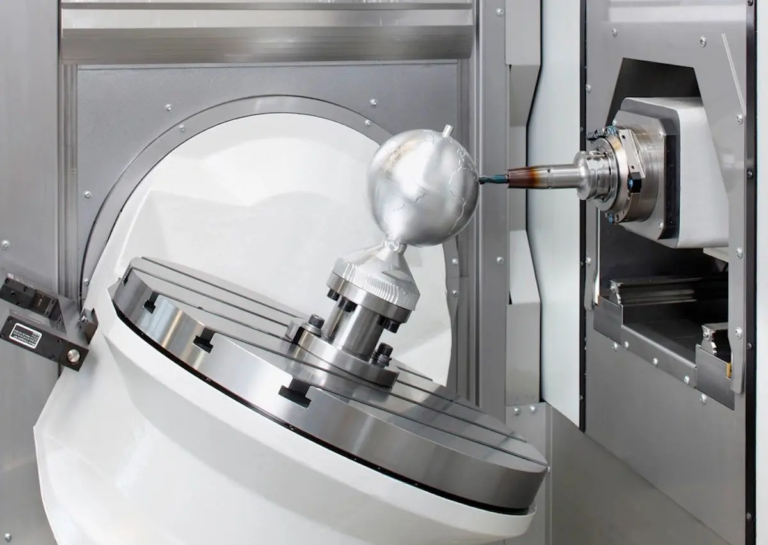
Delving deeper into the world of CNC internal grinding: perfect precision
In the world of CNC machining, where precision is paramount, one process stands out for its ability to achieve unparalleled precision and surface finish in cylindrical holes: CNC internal cylindrical grinding. This expertise is the unsung hero of many high-performance components, silently ensuring perfect fit, smooth operation and extended service life. But what exactly is CNC internal grinding? Why is it so important to achieve perfect accuracy?
Understanding the Process: Reaching the Unreachable
Imagine trying to polish the inside of a pipe with millimeter accuracy. This is essentially a challenge that CNC internal grinding solves. Unlike cylindrical grinding, which shapes the external shape of the workpiece, internal cylindrical grinding focuses on the inner surface of holes, holes and inside diameters.
The core of the process involves a rotating grinding wheel (usually made of an abrasive such as aluminum oxide or diamond) that engages the inner surface of a rotating workpiece. CNC (Computer Numerical Control) systems carefully control the movement of the grinding wheel, depth of cut and feed rate to ensure material is removed precisely according to programmed specifications.
This requires specialized machinery that can handle the unique challenges posed by internal geometries. Typical features of internal cylindrical grinders are:
High spindle speed: To achieve the required surface finish and material removal rate, internal grinding wheels typically operate at extremely high speeds.
Precision axle: These spindles must be extremely rigid and vibration-damping to maintain accuracy during the grinding process.
Advanced cooling system: Maintaining consistent temperatures is critical to preventing thermal distortion and ensuring dimensional accuracy. The coolant system fills the grinding area, flushing away debris and keeping the grinding wheel and workpiece cool.
- Advanced CNC control: The CNC system coordinates the movement of the grinding wheel along multiple axes, allowing for complex internal shapes and contours.
Why choose CNC internal grinder? Benefits of accuracy
The detailed nature of CNC internal grinding provides a range of significant advantages, making it the first choice for applications requiring exceptional precision and surface quality:
Excellent accuracy: CNC internal cylindrical grinding can achieve tolerances down to microns (millionths of a meter). This level of precision is critical for components that require a tight fit and precise alignment.
Excellent surface finish: The grinding process produces an extremely smooth surface finish that reduces friction, wear and noise from moving parts. This is especially important for hydraulic cylinders, bearings and precision instruments.
Tight roundness and cylindricity: Achieving perfect roundness and cylindricity is critical for optimal performance of rotating components. Internal grinding ensures the hole is perfectly round and maintains a consistent diameter throughout its length.
Hardness and Material Compatibility: Internal cylindrical grinding can be used on a variety of materials, including hardened steel, ceramics and other difficult-to-machine materials.
- Complex geometric shapes: CNC control can create complex internal shapes, tapers and contours that are impossible with traditional machining methods.
CNC Internal Grinding Applications: Where Precision Matters Most
The advantages of CNC internal grinding make it indispensable in a variety of industries and applications, including:
aerospace: Precision bearings, injectors and hydraulic actuators all rely on internal grinding for optimal performance and reliability.
car: Transmission components, fuel pumps and engine cylinders benefit from the precision and surface finish achieved through in-house grinding.
Medical devices: Surgical instruments, implants and diagnostic equipment require extremely precise internal features to function properly.
Hydraulic system: Hydraulic cylinders, valves and pumps rely on internal grinding to create leak-proof seals and ensure smooth operation.
Tool and Die Making: High-precision molds require precise internal features to produce consistent and high-quality parts.
- Bearing manufacturing: Internal cylindrical grinding is essential to create precise raceways in bearings, ensuring smooth rotation and long service life.
CNC Internal Grinding Considerations: Beyond the Surface
While CNC internal cylindrical grinding offers many advantages, several factors must be considered when choosing this process:
cost: Internal cylindrical grinding can be more expensive than other machining methods due to the need for specialized equipment and skilled operators.
Part geometry: Internal grinding is best suited for cylindrical or nearly cylindrical internal features. Complex or irregular shapes may be more difficult to grind.
Material selection: While internal grinding can be used on a variety of materials, some materials may require specialized grinding wheels and techniques.
- Delivery time: The process can be slower than other methods, especially for complex geometries or tight tolerances.
Glow Advantage: Master Precision Machining
As a professional five-axis CNC machining manufacturer, Honglaite understands the complex needs of precision manufacturing, especially internal cylindrical grinding. With advanced five-axis CNC machining equipment and cutting-edge production technology, Honglaite is committed to solving the complex challenges of metal parts manufacturing.
Ferrite’s commitment to precision extends beyond machining. They offer comprehensive one-stop post-processing and finishing services to ensure the highest quality and performance of every component. Available in a variety of materials and offering rapid customization and processing, GreatLight is the first choice for custom precision machining needs. Their five-axis CNC machining capabilities deliver unparalleled precision, quality and efficiency, making them a trusted partner in industries where precision is critical.
Conclusion: The future of precision lies within
CNC internal cylindrical grinding is a key process to achieve the ultimate accuracy and surface quality of cylindrical holes. Its impact spans many industries that require high-performance components, from aerospace to medical devices. As technology continues to advance, more complex internal grinding technologies are expected to emerge, further pushing the boundaries of precision manufacturing. For those looking for peak precision and surface finish, CNC internal grinding remains the gold standard. Contact GreatLight today for a quote.
FAQ: Questions and Answers about CNC Internal Grinding
This section addresses some common questions about CNC internal grinding:
Q: What is the difference between internal grinding and honing?
Answer: Internal grinding and honing are both used to improve the surface finish and accuracy of the inner hole. However, grinding uses a rotating grinding wheel to remove material, while honing uses a low-speed grinding stone in a combination of rotation and reciprocating motion. Grinding is typically used for greater material removal and achieving tighter tolerances, while honing is often used as a finishing process to improve surface finish and correct minor geometric imperfections.
Q: What is the typical surface roughness (Ra) achievable with internal cylindrical grinding?
A: CNC internal grinding can achieve surface roughness values (Ra) as low as 0.025 micron (1 microin) or better, depending on the material, grinding wheel and process parameters.
Q: What types of materials can be internally ground?
Answer: It can grind a variety of materials internally, including quenched steel, stainless steel, tool steel, ceramics, carbide and various alloys. The choice of grinding wheel and coolant system depends on the specific material being ground.
Q: Is internal cylindrical grinding suitable for blind holes?
A: Yes, internal cylindrical grinding can be used for blind holes (holes that do not go all the way through the workpiece). However, specialized grinding wheels and techniques may be required to reach the bottom of the hole and maintain accuracy.
Q: What is the typical lead time for CNC internal grinding?
A: Delivery times may vary depending on part complexity, grind material, and required tolerances. Simple parts may be completed in a few days, while more complex parts may take weeks. It’s best to consult a CNC machining supplier, such as GreatLight, to get an accurate estimate.
Q: How to choose the appropriate internal cylindrical grinding CNC machining service?
Answer: When choosing internal cylindrical grinding CNC machining services, please consider the following factors:
- Experience and expertise: Look for a company with a proven track record in high-precision internal cylindrical grinding.
- equipment: Make sure the company has the necessary equipment, including specialized internal grinders, CNC controllers and cooling systems.
- Quality control: Verify that the company has robust quality control procedures in place to ensure parts meet your specifications.
- communicate: Choose a company that can communicate effectively and respond to your needs.
- Material capabilities: Make sure they have experience working with the materials required for your project.
By carefully considering these factors, you can choose CNC machining services that provide the accuracy and quality you need for your internal grinding application.



















