On February 28, 2023, Mohou.com learned that British racing car modification factory M-Sport claimed to have used 3D printing technology to improve a 1978 Ford Escort Mk2.
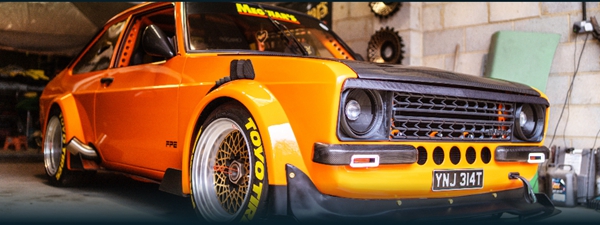
△The automobile director has owned this car for almost 30 years, and now the classic car can finally regain its style.
Now they call the new car “Mexorcist”. Thanks to 3D printing technology, this Ford Escort’s engine has been increased to 600 horsepower, and it now accelerates in just 10 seconds.
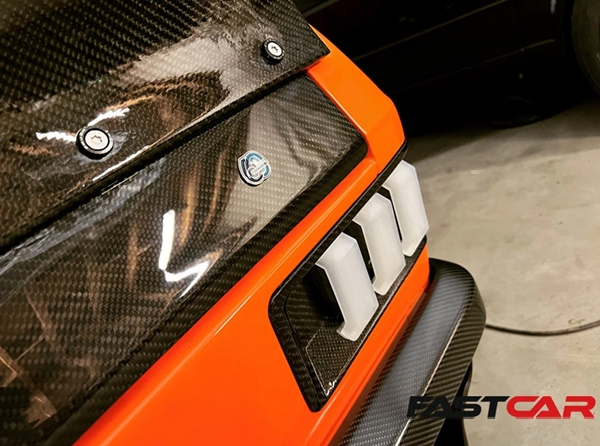
△In addition to upgrading the engine, the 3D printing machine also “resurrected” the light covers, turn signals, grilles and side mirror brackets (used to carry the Scooby WRC carbon fiber mirrors )
Using 3D printing technology to modernize classic cars
According to some relevant information, the Ford Escort is widely considered one of the most famous small family cars of the 1970s and a classic Ford model. The car’s 0-60 mph acceleration time is between 12 and 15 seconds. However, the Mexorcist’s enhanced performance far exceeds its original state. At the same time, M-Sport has undergone detailed changes to the exterior and interior of the car, but the biggest change lies in its powertrain.
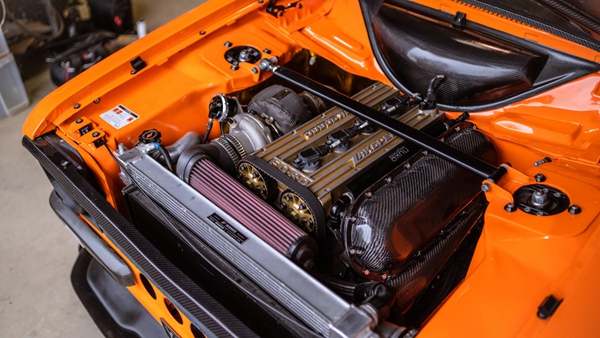
△Upgraded engine with 3D printing technology
The Mexorcist’s original engine was removed by the factory team and replaced with a new 2.0-liter turbocharged Ford EcoBoost engine, which has been enhanced using 3D printing technology to produce up to 600 horses. M-Sport calls this new engine the “heart” of the Mexorcist.
3D printing technology plays an important role in upgrading Mexocist. The team used 3D printing technology to create custom air intake systems, turbochargers, exhaust manifolds and exhaust systems. These components are precisely designed and manufactured to ensure efficient power output and good performance. Additionally, 3D printing technology allows the M-Sport team to quickly manufacture and test parts to iterate and improve the Mexocist in a short period of time.

△Using 3D printing technology to transform a classic car into a 600 horsepower monster
How 3D printing is helping the automotive industry
In fact, this is not the first time that the M-Sport modification factory has used 3D printing technology to modify vehicles. The company has used custom 3D printed parts in WRC races to improve the performance of its cars. Today, the team continues to explore a wider range of 3D printing applications to promote innovation and progress in the automotive industry.
In addition, 3D printing technology can also significantly reduce product development time and production cycle, as this technology can simplify the design and manufacturing process into a digital process. This allows designers and engineers to prototype and test faster and more accurately. Compared to traditional manufacturing processes, 3D printing technology can significantly reduce manufacturing costs and reduce environmental impact. Therefore, 3D printing technology has begun to be widely used in the automobile industry, and more and more automobile manufacturers are applying it to production lines.
Ford Motor Company was one of the first automakers to adopt 3D printing technology. The company has used 3D printing technology for several projects in recent years, including printing parts, production prototypes and printing tools. For example, Ford used 3D printing technology in the braking system of its GT supercar to create lightweight, high-performance brake pistons. Meanwhile, Ford has also used 3D printing technology to create a series of customizable parts that allow car owners to customize them according to their personal needs.
Besides Ford, many other automobile manufacturers are also actively exploring the application of 3D printing technology. For example, Mercedes-Benz uses 3D printing technology to create body and interior parts to improve production efficiency and reduce costs. BMW plans to use 3D printing technology to produce highly personalized car seats and other parts. Furthermore, some start-ups are also using 3D printing technology to develop new personalized automotive components and accessories.
Source: 3D Printing Network
Daguang focuses on providing solutions such as precision CNC machining services (3-axis, 4-axis, 5-axis machining), CNC milling, 3D printing and rapid prototyping services.