
The question of whether a CNC machine can cut acrylic is one we encounter frequently, and the answer is a definitive and enthusiastic yes. Not only can CNC machines cut acrylic, but they are also among the most precise, efficient, and versatile methods available for shaping this ubiquitous engineering plastic. From simple 2D profiles to intricate 3D contours and everything in between, CNC machining transforms sheets and blocks of acrylic into functional components and stunning visual pieces with unmatched accuracy.
For professionals in precision parts machining and customization, understanding the synergy between CNC technology and acrylic is crucial. It opens doors to applications in industries ranging from medical devices and laboratory equipment to lighting, displays, signage, and high-end consumer products. As a senior manufacturing engineer with extensive experience in multi-axis CNC applications, I will delve into the specifics of how CNC machining handles acrylic, the critical considerations for optimal results, and why it remains the gold standard for acrylic fabrication.
Why CNC Machining is Ideal for Acrylic
Acrylic, known chemically as Polymethyl Methacrylate (PMMA), offers excellent optical clarity, good impact resistance, and favorable machining properties. CNC machining leverages these properties to produce parts with features that are difficult or impossible to achieve with other methods like laser cutting or manual fabrication.
Key Advantages of CNC for Acrylic:
Exceptional Precision and Repeatability: Modern CNC systems, especially multi-axis setups, can hold tolerances within ±0.001 inches (±0.025mm) or better. This is vital for parts that must fit into assemblies precisely, such as lenses, fluidic channels, or jigs and fixtures.
Superior Edge Quality: With the correct tooling and parameters, a CNC mill or router can produce a perfectly smooth, polished edge directly from the cut, often eliminating the need for secondary flame polishing on cut edges.
Complex 3D Geometry: Unlike 2D cutting processes, precision 5-axis CNC machining services can machine acrylic into complex three-dimensional shapes—think custom light guides, ergonomic handles, or sculptural forms with undercuts and compound curves.
Versatility in Operations: A single CNC setup can perform drilling, tapping, milling, engraving, and contouring, completing a complex part in one operation.
Material Integrity: Proper CNC machining minimizes heat-affected zones (HAZ), preserving the inherent strength and clarity of the acrylic, which can be compromised by excessive heat from other cutting methods.
Critical Technical Considerations for CNC Machining Acrylic
Achieving flawless results with acrylic requires careful attention to process variables. Here are the core engineering considerations:
1. Tool Selection:
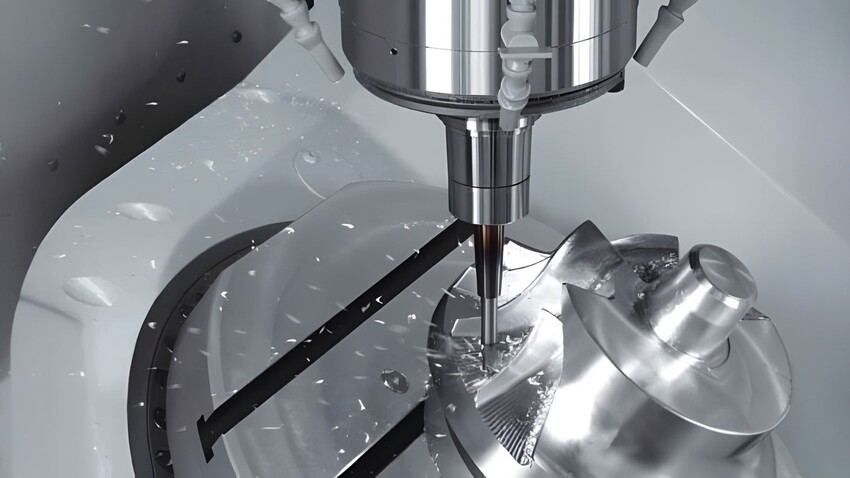
Material: Single-flute or double-flute up-cut spiral end mills made from solid carbide are the industry standard. Their sharp cutting edges and efficient chip evacuation are paramount.
Geometry: Tools with a high rake angle and polished flutes are preferred to reduce cutting force and heat generation. “O”-flute tools are excellent for finishing passes, leaving a near-optical finish.
Sharpness: Tools must be razor-sharp. A dull tool will melt the acrylic rather than cutting it cleanly, resulting in a poor, fused edge.
2. Cutting Parameters (Feeds and Speeds):
High Speed, Low Feed: The general principle is to use a high spindle speed (e.g., 18,000-24,000 RPM or higher) and a moderate to low feed rate. This combination shears the material cleanly without generating excessive friction heat.
Light Depth of Cut: Taking lighter passes (DOC) reduces tool pressure and heat buildup, improving surface finish and dimensional accuracy.
Constant Tool Engagement: Using toolpath strategies like trochoidal milling helps maintain consistent chip load and cooling.
3. Workholding and Vibration:
Acrylic is relatively soft and can be scratched easily. Use non-marring clamping methods such as soft jaws, vacuum tables, or strategic double-sided tape. Securely fixing the workpiece is essential to prevent chatter, which leads to visible machining marks.
4. Chip Control and Cooling:
Compressed Air is King: For acrylic, compressed air is the preferred coolant. It effectively clears chips from the cutting path, prevents re-welding, and provides some cooling without introducing a liquid that might cloud the material or require cleaning.
Avoid Traditional Coolants: Most water-based or oil-based coolants can craze or cloud acrylic and are generally not recommended unless specifically formulated for plastics.
5. Preventing Melting and Chipping:
Melting: Caused by excessive heat from dull tools, incorrect speeds/feeds, or poor chip evacuation. The signs are a rough, stringy, or glossy melted edge.
Chipping/Breakout: Occurs on the exit edge of a cut or during drilling. Using a sacrificial backing board and proper drill geometry (e.g., Brad-point or parabolic drills) mitigates this.
Post-Processing and Finishing for CNC-Machined Acrylic
One of the strengths of CNC machining is the excellent baseline finish it provides. Common post-processing steps include:
Edge Polishing: CNC-cut edges can be flame-polished with a torch for a crystal-clear finish, or mechanically polished with fine-grit sandpaper and polishing compounds.
Stress Relieving: For parts requiring extreme dimensional stability, an annealing cycle may be used to relieve internal stresses induced during machining.
Protective Film: Acrylic sheets often come with a protective masking film. Leaving this film on during machining protects the surface from scratches and should only be removed after all operations are complete.
Conclusion: CNC Machining as the Premier Choice for Acrylic Fabrication
So, can a CNC machine cut acrylic? Absolutely, and it does so with a level of precision, flexibility, and finish quality that is unparalleled. The process, when executed with expert knowledge of tooling, parameters, and material behavior, transforms raw acrylic into high-value, precision-engineered components. For clients seeking reliable, high-tolerance acrylic parts—whether a single prototype or a medium-volume production run—partnering with a manufacturer that possesses deep technical expertise in CNC machining polymers is critical.
At GreatLight Metal Tech Co., LTD., our approach is built on this foundation of expertise. Our team leverages advanced multi-axis CNC equipment and a disciplined, process-driven methodology to machine acrylic and other engineering plastics. We understand that achieving optical clarity, perfect edges, and tight tolerances in acrylic is not just about running a program; it’s about applying proven engineering principles to every job. From backlit signage and medical instrument panels to complex optical assemblies, we provide the precision and care your acrylic components demand.
Frequently Asked Questions (FAQ)
Q1: What is the maximum thickness of acrylic that can be effectively CNC machined?
A: There is no absolute maximum, but practicality is key. We routinely machine acrylic up to 80-100mm thick. For very thick blocks, specialized tooling with extra-long reach and careful control of cutting forces is required to maintain precision and surface quality throughout the depth of the cut.
Q2: How does CNC machining acrylic compare to laser cutting in terms of edge quality?
A: Both methods are excellent but yield different edges. A laser-cut edge on acrylic is typically very smooth and has a characteristic “fire-polished” glossy finish but can sometimes show a slight convexity. A CNC-machined edge is perfectly flat and can be left machine-finished (smooth but with a fine toolmark pattern) or subsequently polished to optical clarity. CNC also allows for bevels and complex edge profiles that lasers cannot produce.
Q3: Can you achieve transparent, bubble-free bonded joints with CNC-machined acrylic parts?
A: Yes, this is a common requirement. The success of solvent bonding (using chemicals like Weld-On) depends almost entirely on the quality of the mating surfaces. CNC machining can produce mating faces with exceptional flatness and surface finish, which are prerequisites for creating strong, invisible bonds. We often machine parts specifically with bonding in mind, ensuring seam gaps are minimized.
Q4: What are the most common mistakes to avoid when designing acrylic parts for CNC machining?
A: Key pitfalls include:
Ignoring Tool Access: Designing deep, narrow cavities or internal sharp corners smaller than available tool diameters.
Thin, Unsupported Walls: Acrylic can be brittle. Designing very thin walls (<2mm) without proper support can lead to breakage during machining or handling.
Sharp Internal Corners: All internal vertical corners will have a radius equal to the cutting tool’s radius. Design with this in mind.
Not Specifying Finish Requirements: Clearly communicate which surfaces require optical clarity, which edges need polishing, etc.
Q5: Does GreatLight Metal handle other transparent or engineering plastics besides acrylic?
A: Certainly. Our precision 5-axis CNC machining services extend to a wide range of plastics, including polycarbonate (PC), ABS, PEEK, Ultem (PEI), and Nylon. Each material has unique machining characteristics, and our engineering team adjusts strategies accordingly to deliver optimal results for your specific material and application. For more insights into our capabilities and industry applications, you can follow our professional updates on LinkedIn.



















