
Compared to traditional manufacturing processes, what can 3D printing bring to the automotive industry? In terms of design Using 3D printing technology, conceptual models can be produced in hours or days. Due to the rapid prototyping characteristics of 3D printing, automobile manufacturers can apply it to the research and development of automobile appearance design. Compared with traditional hand-made clay models, 3D printing can more accurately convert 3D design drawings into physical objects in less time, thereby improving production efficiency at the automotive design level. At present, many manufacturers have started to use 3D printing technology in their design, such as BMW and Mercedes-Benz design centers. In terms of materials 3D printing allows for a variety of material choices, different mechanical properties and precise functional prototyping, allowing manufacturers to correct errors and improve designs at any time from the start, minimizing the cost of errors.
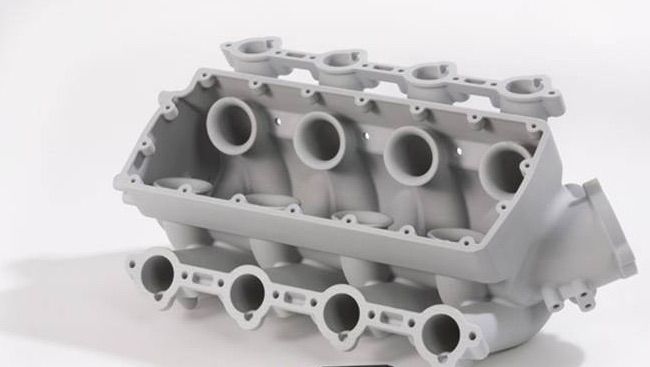
In terms of tools and assemblies 3D printing technology offers a fast and precise method that significantly reduces the cost and time of tool production. As a result, automobile manufacturers have rapidly improved their production capacity, efficiency and quality. For production tools, the application of 3D printing, such as water-soluble inner cores, carbon fiber packaging, injection molding, etc., can help companies quickly customize their tools in small batches, reduce costs and shorten product launch time. In the manufacturing of end-use components Using 3D printing technology, automakers can make low-volume custom parts and automate production, as well as realize the creation and manufacturing of complex geometries such as organic shapes, dimples and negative stretches. 3D printing can quickly produce parts with complex shapes. When a problem occurs during testing, you can edit the 3D file and reprint it to test again. With the current rapid increase in the application of 3D printing technology in the automobile industry, the famous market consulting firm Frost & Sullivan recently released a related survey report, predicting that the market size of automotive 3D printing is expected to reach 4.3 billion US dollars in 2017. 2025. Almost all automobile manufacturers such as Ford, BMW, Lamborghini, Volkswagen, General Motors, Porsche, Honda, Chrysler, Mercedes-Benz and Audi continue to explore the endless possibilities offered by 3D printing.
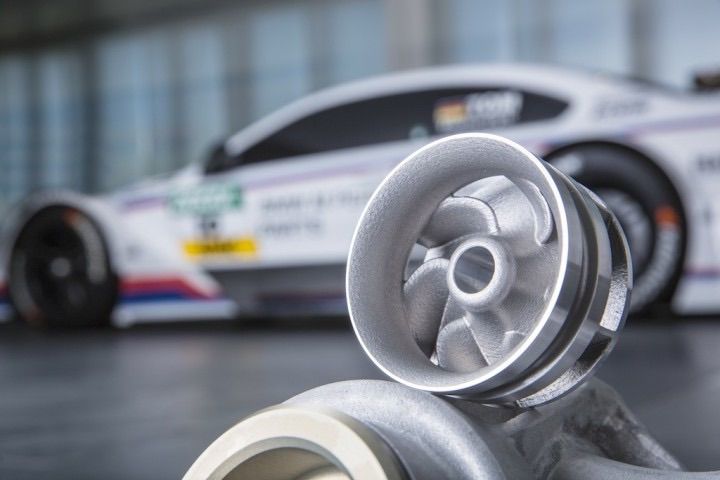
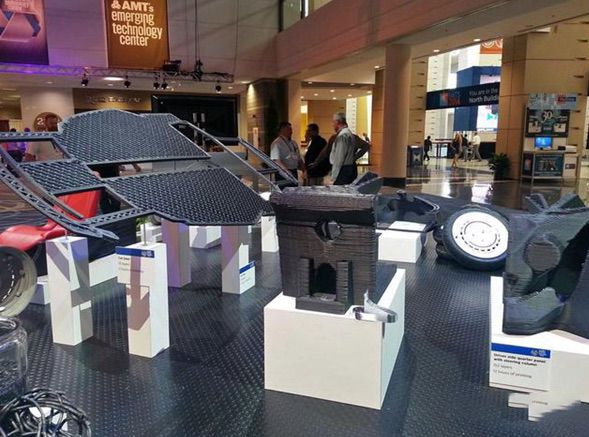
Compared to “subtractive manufacturing technologies” such as CNC machining in traditional manufacturing industries, the main attraction of 3D printing technology is that it can generate parts of any shape directly from data infographics, eliminating the need to develop and develop metal parts with complex structures. It shortens the new product development cycle and saves more labor, financial resources and time. It has obvious advantages such as low manufacturing cost, short development cycle and high production efficiency. Additionally, when using 3D printing technology to check the feasibility of assembling a product at the early stages of design, product design errors, complex parts or feasibility of principles of the prototype can be discovered in time. Producing parts with complex shapes, tiny dimensions and manufacturing difficulty are also the strong points of 3D printing technology! Based on its principle, although 3D printing technology is neither fast nor expensive for mass production, this technology accumulates materials from scratch and is not limited by traditional processing methods and can making products of almost any shape. For example, for parts with complex but very precise holes, or to make a thin and hollow arm, the 3D printing process is faster and simpler than traditional processing. The most important thing is that 3D printing technology makes manufacturing parts no longer limited to technology, but more dependent on ideas. The more bizarre and strange the parts that cannot be processed by traditional processing technology, the more applications 3D printing technology has. .The place of martial arts. In this process, compared with traditional processes, cost savings is also the biggest attraction of 3D printing for users.
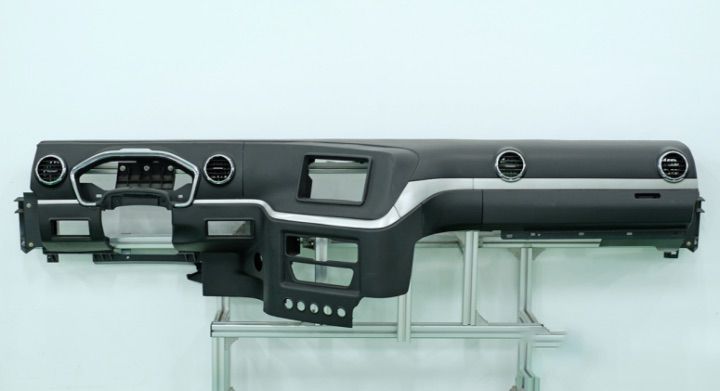
Current applications
Compared with the traditional automobile industry, the production capacity of 3D printing is currently still low, making large-scale mass production difficult. In addition, due to the need to consider safety and other factors, it is difficult to balance the quality of raw materials and cost factors, resulting in high bicycle production costs and restricting the commercialization of 3D cars at this stage. At this stage, the application of 3D printing can be more suitable for the design field and automobile research and development stage, as well as the production of unique parts in small batches, such as clay model of the entire vehicle, the development of parts such as bodywork, chassis, synchronizer and production of rubber and plastic parts.

In the area of parts and components, 3D printing technology also makes it possible to quickly produce products with complex shapes. In traditional automobile manufacturing, the development of automobile parts often requires a long period of research, development and testing. Parts still need to be produced from R&D to testing stagesMoldnot only takes a long time, but is also very expensive. When problems exist, correcting the parts requires an equally long cycle. 3D printing technology can quickly produce parts with complex shapes. When a problem arises during testing, the 3D file can be edited and reprinted for testing again. It can be said that 3D printing technology makes the development of future parts cheaper and more efficient.
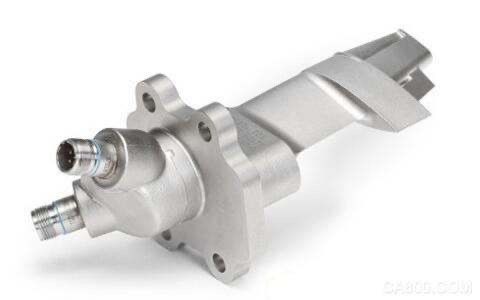
The combination of 3D printing and CNC Although 3D printing technology has succeeded in simplifying traditional complex production processes and programming difficult problems in the field of materials, judging from the current development, there are still some problems on how to expand the application of 3D printing technology. It is also affected by technical equipment, new materials, designsoftwarequality, safety and public environment and other constraints and impacts. In addition, 3D printing cannot completely replace traditional CNC processing. Both have their own advantages. The precision of CNC processing will be higher than that of 3D printing, and the complexity of parts that 3D printing can produce is much higher than that. of CNC. 3D printing is an important complement to traditional processing methods. Its main function is not to replace but to complement. Therefore, the combination of 3D printing and CNC is a very good form. In the future, only by combining the customization, complexity and difficulty of 3D printing technology with the scale, batch processing and refinement of traditional manufacturing, as well as the technology of manufacturing, information technology and materials technology, that we can continue to promote 3D printing. . Innovative development of printing technology in the automotive industry.
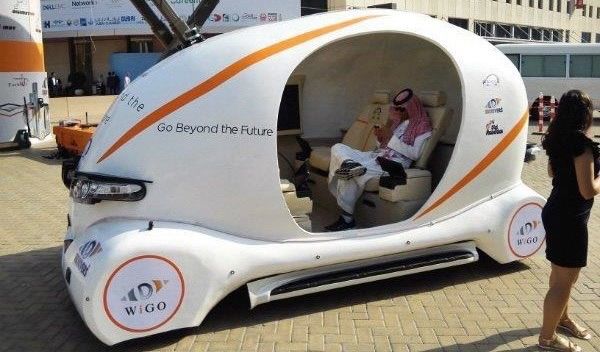
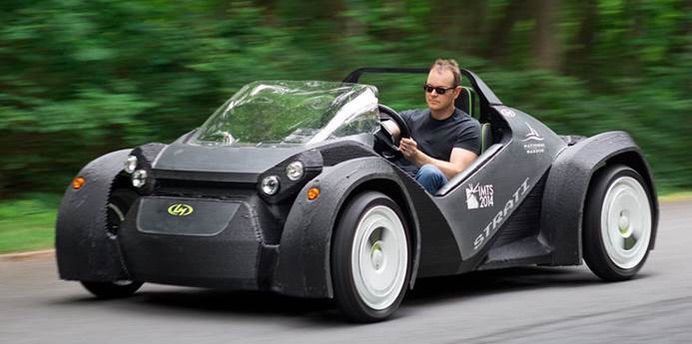
In 2014, Local Motors released an upgraded version of the Strati 3D printed car. The first improvement of this car is that its chassis part is also manufactured using 3D printing technology. Second, its printing time is only 44 hours. Including assembly time, the latest data indicates that it takes just three days to build the Strati. From more than 100 days to 3 days, the rapid improvement in efficiency indicates that the future development of 3D printed cars is unpredictable. Independent German automotive design company EDAG presented a 3D printed concept car called LightCocoon at the 2015 Geneva Motor Show. The new car shell weighs just 19 grams per square meter, or a quarter of a sheet of paper A4. Although 3D printing of cars is constantly increasing and upgrading, objectively speaking, the application of 3D printing technology in the automobile field is not its strength, because cars are mass-produced products and 3D printing is currently more suitable for personalized products and small batch production of products.
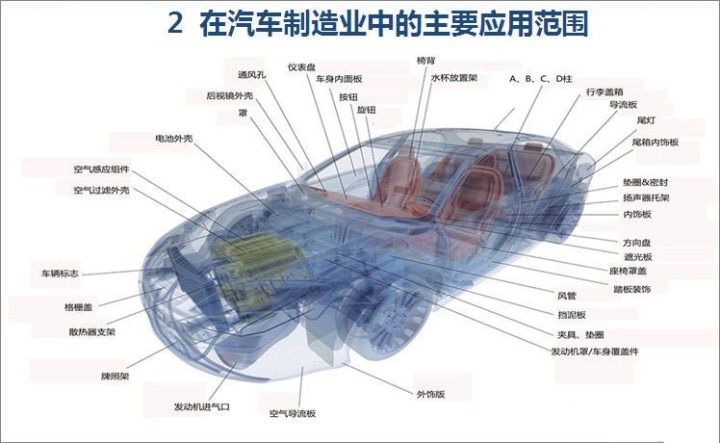
There are currently five main areas of application: 1. For design; 2. Direct production of parts with complex structures; 3. Production of lightweight structural parts for automobiles; 4. Customize special parts and test equipment; 5. Production of a complete vehicle model. However, it is worth mentioning here that the real importance of 3D printing equipment is to help you improve the efficiency of a certain link in the product design or sampling process, rather than completely replacing the whole process. Just like Urbee, 3D printers can print car bodies, reduce weight and create custom designs, but key components such as motors still come from traditional manufacturing. The biggest difference from traditional car manufacturing companies is that 3D printed cars first print a single integrated body and then fill it with other parts, rather than assembling all the body parts together.
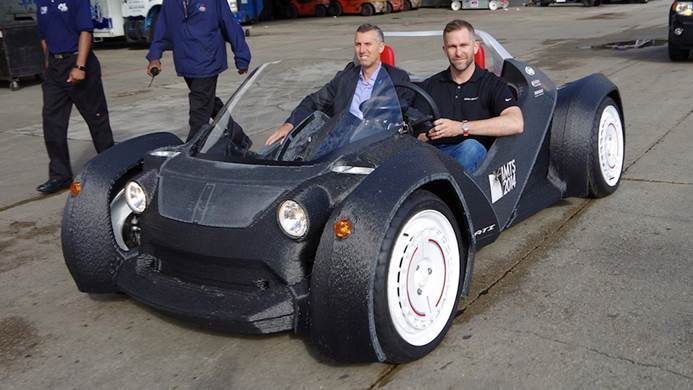
Due to the particularity of its materials and processes, 3D printing technology is currently most advantageous at the prototype stage of automobile parts. However, there is still a significant gap between these materials and the types of materials actually used in cars. So we usually focus on structural parts. Furthermore, it is gratifying that on February 28, 2016, the “National Plan for Promoting the Development of Additive Manufacturing Industry (2015-2016)” studied and formulated by the Ministry of Industry and Technology of information, the National Development and Reform Commission and the Ministry of Finance proposed that 3D printing and automobiles,aviationaerospace、biologymedicalWe will enter into cross-industry alliances in important subdivisions such as these to break through a batch of special materials for additive manufacturing. By 2016, we will achieve independent production of titanium alloys, high-strength steel, some high temperature resistant and high strength engineering plastics and other special materials to meet the needs of technology development. ‘industry. This is undoubtedly a boost for the development of 3D printing materials. In addition to the small variety, another barrier to 3D printing in terms of materials is cost. Material cost is a relative concept. When the batch size is very small, the mold cost is more spread over a single product, so it is an A. A single product will be more expensive, but this problem does not exist if 3D printing is used, therefore the cost of 3D printing a single product or a small batch of products is relatively low. For mass production of hundreds of thousands of cars per year, it is currently not cost-effective to use 3D printing. Therefore, after understanding this, we applied it to small and complex custom structural parts, that is, unique products and not mass products. Today, when artificial intelligence is widespread and everything is possible, we believe that in the near future, the application of 3D printing in the automotive industry will become more and more widespread.
Source: Antarctic Bear
Daguang focuses on providing solutions such as precision CNC machining services (3-axis, 4-axis, 5-axis machining), CNC milling, 3D printing and rapid prototyping services.



















