
Yes, that figure is not an exaggeration. For a large-scale, high-end five-axis CNC machining center, an investment of 15 million RMB (approximately $2 million USD) is well within the realm of reality. In fact, for machines with extreme specifications from top-tier European or Japanese brands, the price tag can be significantly higher.
For clients in the precision parts machining and customization field, understanding why this piece of equipment commands such a premium is crucial. It’s not just about the machine itself; it’s about the transformative capabilities and value it unlocks for your projects. Let’s demystify this investment.
Deconstructing the “15 Million” Price Tag: What Are You Paying For?
The cost of a large 5-axis CNC machine is a composite of several high-value components and technologies:
The Core: The Machine Structure & Kinematics
Size and Rigidity: A “large” machine implies a massive, monolithic cast iron or polymer concrete bed and structure. This ensures unparalleled vibration damping and thermal stability, which are non-negotiable for achieving micron-level precision (±0.001mm) over a large work envelope (e.g., 2000mm x 1000mm x 800mm or larger).
5-Axis Mechanism: The heart of the machine. High-end models use a true, direct-drive rotary/tilting table (often a swivel-rotary table or a trunnion table) or a sophisticated swivel-head design. The bearings, drives, and feedback systems for these axes are incredibly precise and robust.
The Brain and Nerves: CNC System & Drives
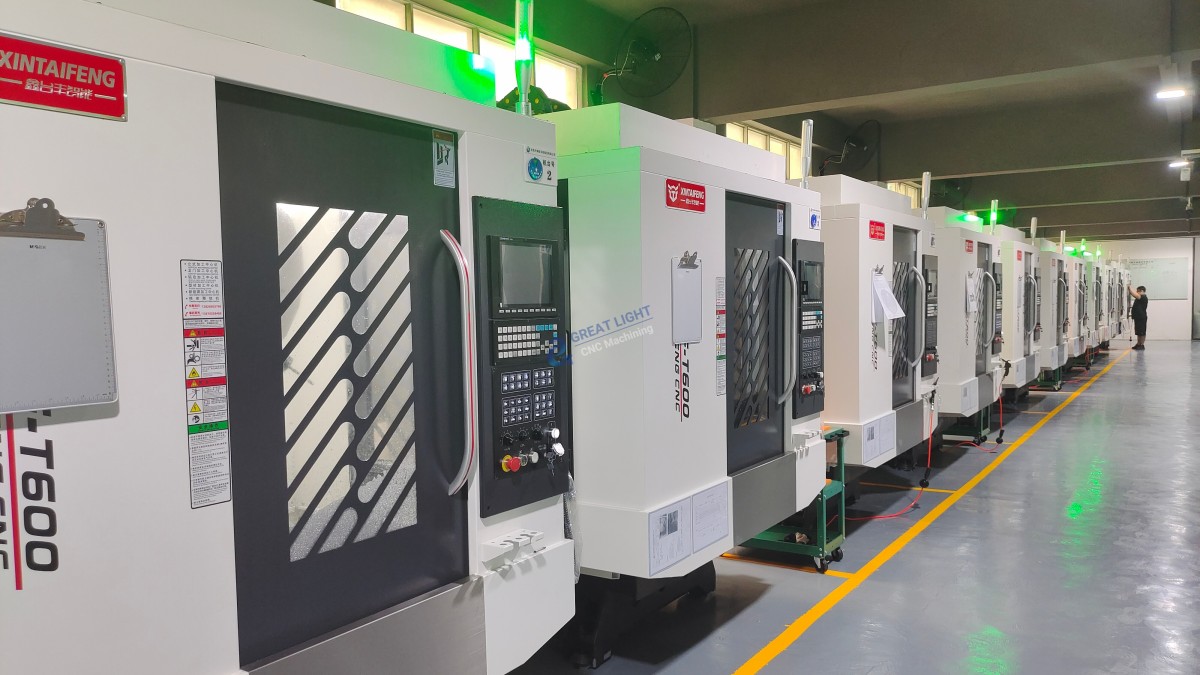
High-Performance CNC: Think Siemens 840D, Heidenhain TNC 640, or Fanuc 31i-B. These are not simple controllers; they are industrial computing platforms capable of complex spline interpolation, advanced look-ahead functions for high-speed machining, and seamless integration of probing and tool management.
Direct Drive & Linear Motor Technology: To achieve the high speeds and accelerations required for efficient machining of complex surfaces, premium machines often forego traditional ball screws in favor of linear motors on the X, Y, Z axes and torque motors on the rotary axes. This technology is expensive but offers superior speed, precision, and maintenance characteristics.
The Muscle: Spindle and Tool System
High-Power, High-Torque Spindle: A large machine needs a spindle capable of heavy cuts in tough materials like titanium or Inconel. A 40,000 RPM+ spindle with liquid cooling and HSK-100 or CAT-50 taper is common. The spindle’s thermal management and runout accuracy are critical.
Automatic Tool Changer (ATC): A large-capacity ATC (120+ tools) is essential for complex parts. The mechanism must be fast and reliable to minimize non-cut time.
The Senses: Metrology and Integration
In-Process Probing: Integrated laser tool setters and workpiece touch probes (like those from Renishaw) are standard on such machines. They enable automated part setup, tool breakage detection, and even in-process inspection, closing the quality loop.
Thermal Compensation: A comprehensive system of sensors monitors temperature gradients across the machine structure and automatically compensates for thermal growth, ensuring consistent accuracy over long production runs.
Software and Engineering: The purchase price includes not just the hardware, but also the proprietary software for calibration, optimization, and often a suite of CAM post-processors tailored for that specific machine kinematic.
Justifying the Investment: The Value Delivered to Your Projects
Why would a manufacturer like GreatLight CNC Machining Factory make such a capital-intensive investment? The answer lies in the unparalleled benefits it provides to our clients:
Unmatched Complexity Handling: It enables the production of monolithic parts that would otherwise require assembly from multiple components—think integrally bladed rotors (IBRs) for aerospace, complex impellers, or large automotive structural molds with deep, undercut cavities. This reduces assembly error, improves part strength, and streamlines supply chains.
Revolutionary Precision and Surface Finish: By allowing the tool to maintain optimal orientation to the workpiece, 5-axis machining provides better chip evacuation, more consistent cutting forces, and the ability to use shorter tools. This results in superior surface finishes, tighter geometric tolerances, and reduced need for manual polishing.
Dramatically Reduced Setup Time: A part that requires machining on five sides can be completed in a single setup on a 5-axis machine. This eliminates cumulative errors from multiple fixturings and drastically reduces overall lead time.
Enabling Advanced Manufacturing Techniques: Such machines are prerequisites for implementing strategies like 3D contour milling and ultra-high-speed machining (HSM) of complex geometries, which are increasingly demanded in sectors like medical implants, aerospace, and high-performance automotive.
The Practical Implication for Clients: Partnering Over Purchasing
For most businesses, purchasing a 15-million-yuan machine is not feasible or strategically sound. This is where the value of a specialized partner like GreatLight Metal becomes crystal clear.
When you engage with a manufacturer equipped with this tier of technology, you are not just renting machine time. You are accessing:
A Complete Engineering Solution: Our team leverages this advanced capability to provide Design for Manufacturability (DFM) advice, optimizing your part for the most efficient and high-quality production from the outset.
Risk Mitigation: We absorb the massive capital expenditure, maintenance, and technical expertise overhead. You gain access to state-of-the-art capability with predictable, project-based pricing.
Focus on Core Competency: You can focus on your product design, R&D, and market, leaving the complex manufacturing challenges to a partner whose core competency is solving precisely those challenges.
Conclusion
A large 5-axis CNC machine costing 15 million RMB is a pinnacle of modern manufacturing engineering. Its price reflects the convergence of advanced materials science, precision mechanics, digital control, and software integration. For clients seeking to push the boundaries of what’s possible in metal and plastic part design—whether for humanoid robot joints, next-generation automotive engine components, or aerospace assemblies—partnering with a manufacturer that has invested in this level of technology is not an expense; it is a strategic enabler for innovation, quality, and market speed.
Frequently Asked Questions (FAQ)
Q1: If a machine is so expensive, won’t my unit part cost be prohibitively high?
A: Not necessarily. While the machine hour rate is higher, the total part cost is often lower. This is due to drastically reduced setup times, faster machining through optimized tool paths, and the elimination of secondary operations and assembly. For complex parts, it is almost always more economical.
Q2: Are there more affordable 5-axis CNC options?
A: Yes. The market ranges from compact 5-axis mills for smaller parts (significantly lower cost) to the giant machines discussed here. GreatLight Metal maintains a fleet with varied capabilities to match the optimal technology to the project requirement, ensuring cost-effectiveness.
Q3: How do I know if my part needs 5-axis machining?
A: Key indicators include: geometries with undercuts or features on multiple faces, complex contoured surfaces (like aerodynamic profiles), parts requiring high precision on angled features, or any component where reducing setups would improve quality or lead time. Our engineering team can perform a free DFM analysis to determine the best approach.
Q4: What about accuracy maintenance? How does a factory ensure a multi-million yuan machine stays precise?
A: This is a core differentiator for professional shops. It involves a rigorous regimen of scheduled preventive maintenance, regular calibration using laser interferometers and ballbar tests, climate-controlled environments, and continuous training for operators and programmers. Our ISO 9001:2015 and IATF 16949 certified systems formally govern these processes.
Q5: Beyond the machine, what should I look for in a 5-axis machining partner?
A: Look for three pillars: Technical Hardware (the right machines), Process Soft Power (certified quality systems, skilled programmers, metrology labs), and Collaborative Mindset (proactive engineering support, transparent communication). A partner like GreatLight CNC Machining Factory invests equally in all three to deliver reliable outcomes. For more insights into industry trends and capabilities, you can follow professional discussions on platforms like LinkedIn.


















