
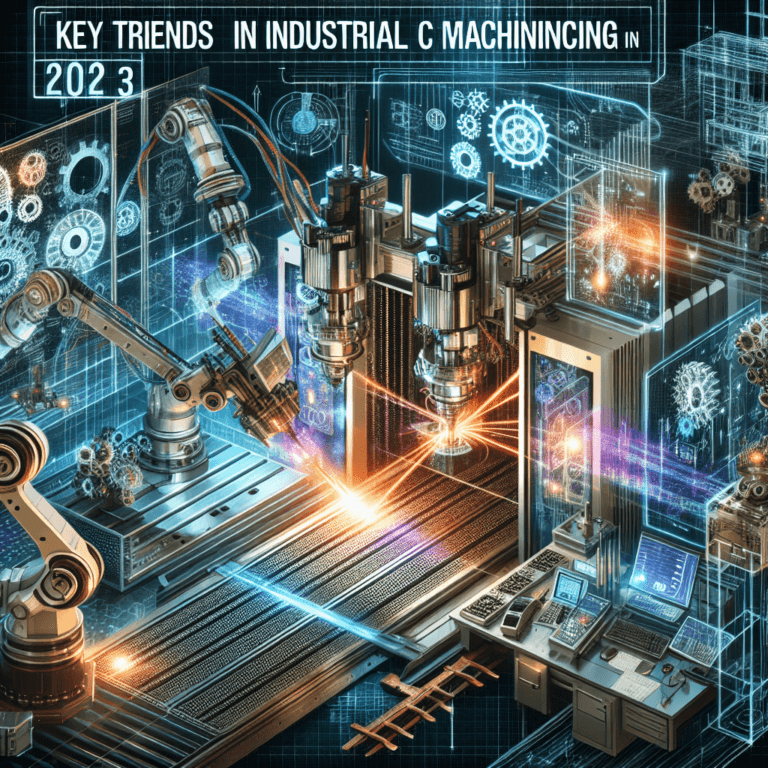
Leading the hot trends in industrial CNC machining in 2023: in-depth exploration
introduce
CNC (computer numerical control) machining has revolutionized manufacturing by delivering precision, efficiency, and scalability. With advances in technology and changing needs across industries, 2023 presents exciting trends that are shaping the future of industrial CNC machining. This article takes an in-depth look at the most important trends, exploring their impact and benefits for businesses and consumers.
H2: The rise of intelligent CNC machining
In 2023, intelligent CNC machining has become the cornerstone of many manufacturing industries. Intelligent systems leverage the Internet of Things (IoT), artificial intelligence (AI), and machine learning to create a more connected, efficient, and responsive manufacturing environment.
1. IoT integration
IoT integration allows machines to communicate with each other and with centralized data systems. For example, a production line equipped with IoT sensors can transmit real-time data on machine performance, maintenance needs and production volumes. This information is critical for predictive maintenance, reducing downtime and ensuring optimal performance.
2. Artificial Intelligence and Machine Learning
Artificial intelligence (AI) and machine learning algorithms analyze large amounts of data to optimize machining processes. By identifying patterns and suggesting modifications to operating parameters, these technologies can increase productivity and significantly reduce waste. For example, AI-driven software can automatically adjust tool paths based on real-time feedback, ensuring accuracy and consistency with minimal human intervention.
3. Enhance data analysis
Data analytics in CNC machining can provide insights into every aspect of the manufacturing process, from tool wear to energy consumption. Manufacturers can implement big data solutions that enable them to track key performance indicators (KPIs) in real-time, thereby promoting informed decision-making.
H2: Sustainability of CNC machining
Manufacturers are increasingly aware of their impact on the environment, leading to a surge in sustainable practices for CNC machining. In 2023, sustainability is no longer just a buzzword; it’s an essential element of manufacturers’ strategic planning.
1. Environmentally friendly materials
The transition to sustainable CNC machining starts with material selection. Manufacturers now choose recyclable and biodegradable materials wherever possible. The use of biocomposites, engineered wood and recycled metals helps reduce waste and environmental degradation.
2. Energy-saving technology
Energy efficiency is another important aspect of sustainability in 2023. Manufacturers are investing in CNC machine tools designed to reduce energy consumption during operation. Technologies such as regenerative braking, low-power standby modes and energy-saving motors are becoming standard.
3. Waste minimization and recycling
CNC machining inherently produces waste, but cutting-edge practices focus on minimizing this waste. Technologies such as nesting software optimize the layout of parts on raw materials to minimize scrap. In addition, manufacturers are establishing closed-loop systems to recycle scrap materials back into the production process.
H2: Progress of CNC technology
The technology behind CNC machining is constantly evolving, and several advanced technologies will make significant progress in 2023.
1. Multi-axis machining
Multi-axis CNC machining can increase the sophistication and precision of complex part manufacturing. With the ability to move machining tools in multiple axes (3, 5, or even 7 axes), manufacturers can produce parts that were once considered too complex for traditional machining.
2. Hybrid manufacturing technology
Hybrid manufacturing, which combines additive manufacturing (3D printing) with subtractive CNC machining, is gaining traction in the industry. This approach enables manufacturers to create complex geometries and enhance material properties while reducing overall production costs.
3. Automation and Robotics
The integration of robotics in CNC machining is changing the landscape of industrial manufacturing. Automated CNC machines equipped with robotic arms can streamline processes, reduce labor costs and increase accuracy. These robots can load and unload materials, perform quality inspections and perform maintenance tasks, allowing human operators to focus on higher-level decision-making.
H2: Customization and personalization
In 2023, the need for customized and personalized products will be more important than ever. CNC machining is ideally suited to address these challenges, providing precision and flexibility unachievable with traditional manufacturing techniques.
1. Small batch production
Manufacturers are increasingly offering short-run production to meet the needs of niche markets. The adaptability of CNC machining allows companies to produce small quantities of specialized parts without incurring the high costs typically associated with traditional manufacturing.
2. Mass customization
Mass customization leverages the capabilities of CNC machining to mass-produce customized products. This trend is common in industries such as automotive and consumer goods, where consumers are looking for personalized solutions. For example, custom bicycle frames or custom car parts illustrate how CNC machining can meet individual customer specifications while maintaining efficiency.
3. 3D Modeling and Prototyping
Advances in 3D modeling software have significantly enhanced customization capabilities. Manufacturers can create and modify designs in a virtual environment before entering the machining stage, reducing trial and error and improving the quality of the final product.
H2: Focus on workforce development
As technology advances, so does the need for technicians capable of operating complex CNC machine tools. In 2023, workforce development will be critical to the success of CNC machining businesses.
1. Skill upgrading and retraining
Investing in employee training has become a priority for manufacturers adopting new technologies. Upskilling existing employees ensures they can adapt to the evolving technology environment, while reskilling employees in other departments provides a diverse talent pool. Initiatives may include workshops, online courses and collaborations with educational institutions.
2. Attract young talent
As older generations retire, attracting young talent is critical to the CNC machining industry. Companies are increasingly focusing on creating attractive work environments, competitive salaries and clear career paths to attract young professionals. Promotion of STEM careers and educational outreach events are also common techniques.
3. Develop leadership skills
In addition to technical skills, developing leadership skills in manufacturing teams has become critical. Effective leaders are critical to addressing complex operational challenges and spearheading change initiatives related to technology and sustainability.
H2: Enhanced security protocols
Safety in CNC machining will remain a top priority through 2023, as manufacturers implement enhanced safety protocols to protect workers and minimize risks.
1. Security Automation
With the advent of intelligent CNC machining, safe automation systems are on the rise. These systems can detect potential hazards in real time and automatically shut down machines to prevent accidents. Basic features include emergency stop buttons, safety barriers and real-time alarm systems.
2. Training and promotional programs
A comprehensive training program is critical to maintaining workplace safety. Employers are now prioritizing safety training that covers not only machine operation but also situational awareness and ergonomics. Regular safety drills and awareness programs keep employees’ safety top of mind.
3. Ergonomic design
The design of CNC machine tools continues to evolve to support ergonomic workspaces. The combination of adjustable components, well-organized controls and improved accessibility reduces operator physical stress and promotes a safer working environment.
H2: Global supply chain resilience
Events in recent years have highlighted the fragility of global supply chains. In 2023, manufacturers will focus on increasing supply chain resiliency through a variety of strategies.
1. Localized manufacturing
One trend is a shift toward localized manufacturing, allowing companies to reduce their reliance on distant suppliers. By establishing production facilities closer to end users, manufacturers can improve responsiveness, reduce transportation costs and streamline logistics.
2. Supplier diversity
Supplier base diversification is another key strategy for increasing supply chain resilience. By working with multiple suppliers, manufacturers can reduce the risks associated with outages from a single source. This approach can enhance flexibility and encourage competition, thereby improving quality and pricing.
3. Advanced supply chain analysis
Leveraging advanced analytics tools, manufacturers can gain real-time visibility into supply chain operations. These tools enable companies to monitor supplier performance, assess risk and make data-driven decisions to optimize supply chain efficiency.
H2: Conclusion
By 2023, the landscape of CNC machining will have undergone earth-shaking changes. From adopting smart technology and sustainable practices to empowering the workforce and ensuring safety, manufacturers are adapting to meet the challenges. This article explores the trends that are not only reshaping manufacturing but paving the way for a more efficient, responsible and innovative future.
When navigating these trends, companies must remain proactive to ensure they stay ahead of the curve and leverage the full potential of CNC machining technology.
FAQ
Q1: What is CNC machining?
A1: CNC machining is a manufacturing process that uses computer-controlled machines to automate the movement of tools and equipment, thereby achieving high precision and efficiency in the production of parts and components.
Q2: How does the Internet of Things enhance CNC machining?
A2: IoT enhances CNC machining by allowing machines to communicate with each other and centralized systems to transmit real-time data about performance, enable predictive maintenance, and facilitate data-driven decision-making.
Q3: What role does artificial intelligence play in CNC machining?
A3: Artificial intelligence plays a key role in CNC machining by analyzing large data sets to optimize operations, improve accuracy, and predict maintenance needs, ultimately increasing productivity.
Q4: Is CNC machining sustainable?
A4: Yes, CNC machining can be sustainable by using environmentally friendly materials, energy-saving processes, and waste minimization techniques to reduce the environmental impact of the manufacturing process.
Q5: How does CNC machining cultivate the workforce?
A5: Workforce development can be achieved through upskilling and reskilling programs, attracting young talent, and improving the leadership skills of workers in the CNC machining industry.
With these advancements, the manufacturing industry is not only ready to meet the challenges ahead, but also ready to thrive in the growing field of industrial CNC machining.
Daguang focuses on providing solutions such as precision CNC machining services (3-axis, 4-axis, 5-axis machining), CNC milling, 3D printing and rapid prototyping services.



















