
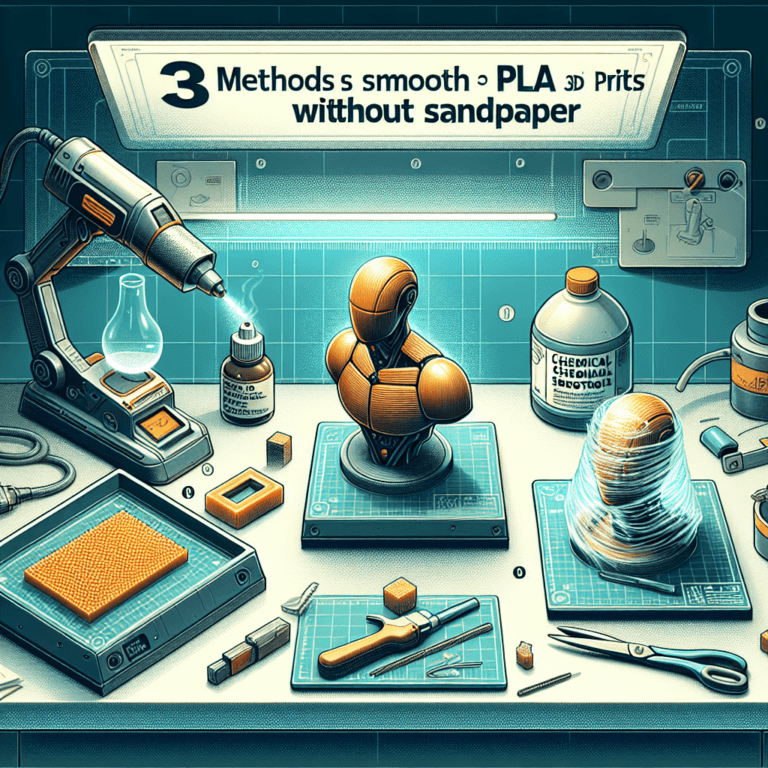
3 Ways to Smooth PLA 3D Prints Without Sandpaper
When it comes to 3D printing with PLA (Polylactic Acid), achieving a professional finish can be a challenge. Many creators and enthusiasts have spent hours perfecting their prints, only to be disheartened by visible layer lines and rough textures. While sandpaper is often the go-to solution for smoothing prints, there are alternative methods to achieve a polished finish without the tedious and sometimes frustrating sanding process. In this article, we will explore three effective techniques to smooth PLA 3D prints without sandpaper, allowing you to achieve a flawless look with less effort.
1. Acetone Vapor Treatment
Understanding Acetone Vapor Smoothing
One of the most popular methods for smoothing 3D prints is acetone vapor treatment. While acetone does not work directly on PLA as effectively as it does with ABS, it can still be beneficial in creating a glossier finish on PLA surfaces. The process involves exposing the print to acetone vapor, which slightly melts the outer layer of the print, allowing it to smooth out imperfections.
How to Do It Safely
Preparation: Find a glass container with a tight seal to trap the vapor. A jar or a small tank can work well, ensuring it’s large enough to contain your 3D print without touching the sides.
Wipe your Print: Before starting, ensure your print is clean. Remove any dust or debris that might interfere with the smoothing process.
Acetone Placement: Place a small amount of acetone at the bottom of the container. Avoid soaking it, as too much acetone can lead to excessive melting.
Introduce the Print: Suspend the 3D print above the acetone using a piece of wire or a stand, allowing the vapor to surround it without direct contact.
Seal the Container: Close the lid tightly. The vapor will start to fill the container, and over time (approximately 10-30 minutes depending on the desired smoothness), it will begin to work its magic on the print.
- Remove and Cure: Once you’ve achieved the desired level of smoothness, carefully remove the print. Allow it to cure in a well-ventilated area to fully harden before handling.
Precautions and Tips
While acetone vapor treatment can be effective, it’s essential to recognize the associated risks. Acetone is flammable and should be used in a well-ventilated area, away from open flames. Wearing gloves and safety glasses is also advised to prevent skin and eye irritation. Additionally, it is important to note that while this method enhances appearance, it may not be suitable for all types of PLA, as some blends are more susceptible to damage than others.
2. Ethanol and Heat Method
What You Need to Know
Another method for smoothing PLA prints is through the combination of ethanol and heat. Ethanol, unlike acetone, is less aggressive and can be safely used on PLA. When combined with heat, it can help to create a smoother surface by softening the material without causing excessive melting.
Step-by-Step Guide
Prepare your Print: Ensure that your 3D print is free from any surface contaminants or dust.
Ethanol Application: Soak a soft cloth or sponge with ethanol and gently wipe the surfaces of your print. Ensure you do not soak the print; instead, aim for even coverage.
Applying Heat: After applying ethanol, you can use a heat gun or hairdryer set on low to evenly distribute heat across the surface of the print. Keep the heat source at a safe distance to avoid excessive melting.
- Allow to Cool: After a few minutes of heat application, allow the print to cool down naturally, which will harden the PLA in its newly smoothed state.
Considerations
This method allows for more precise control over the smoothing process compared to acetone vapor treatment. By monitoring the application of heat and ethanol, you can customize the level of smoothness to your liking. However, care must still be taken to avoid overheating, as this can cause warping.
3. Chemical Smoothing with Specialized Products
Exploring Chemical Smoothers
In recent years, several manufacturers have developed specialized smoothing solutions intended for use with PLA and other 3D printing materials. These products often contain proprietary formulas designed to eat away at layer lines without the adverse effects seen with harsher chemicals. Common products include 3D print smoothing solutions and sprays that lightly dissolve the surface layers of plastics.
Using Specialized Smoothers
Select Your Product: Research and choose a product that is specifically formulated for PLA. Follow the manufacturer’s guidelines for use, which generally include surface preparation and application techniques.
Preparation: Similar to the previous methods, ensure that your print is clean and free of contaminants.
Application: Apply the smoothing solution in thin, even coats, allowing it to sit for the recommended duration as specified in the product instructions.
- Drying and Hardening: Allow the print to dry completely to ensure that the smoothing material has fully cured, resulting in a more polished finish.
Benefits and Downsides
The advantage of using specialized products is that they are generally safer and more effective than traditional solvents. They are formulated to provide optimal results while minimizing risks associated with flammable substances. However, the cost and availability can be limitations for some users, as well as the requirement that they must be specifically designed for PLA.
Conclusion
Achieving a smooth finish on PLA 3D prints doesn’t have to be a labor-intensive process. By employing techniques such as acetone vapor treatment, the combination of ethanol and heat, or using specialized smoothing products, creators can significantly enhance their prints’ aesthetics with minimal effort. Each method has its own benefits and considerations, allowing users to choose what best fits their needs and preferences. Remember to experiment with caution and take necessary safety measures, ensuring that perfecting your print doesn’t turn into a hazardous endeavor. With these techniques, you can elevate your 3D printing projects to a new level, resulting in beautifully finished prints ready to impress.
Daguang focuses on providing solutions such as precision CNC machining services (3-axis, 4-axis, 5-axis machining), CNC milling, 3D printing and rapid prototyping services.



















