
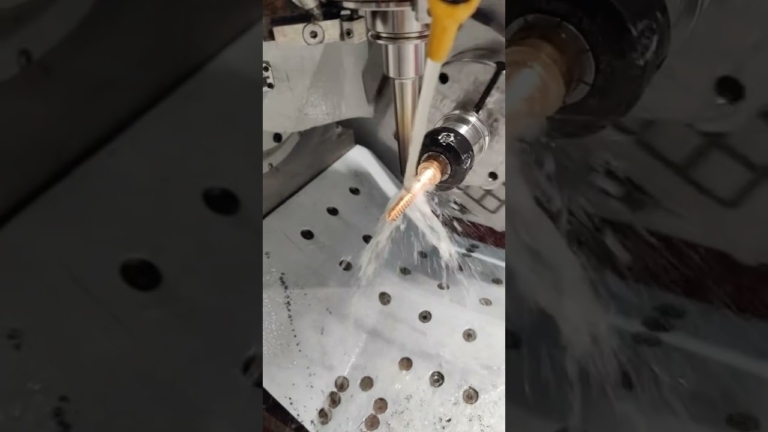
The Art and Precision of CNC Machining Brass Parts
CNC (Computer Numerical Control) machining has revolutionized the manufacturing landscape, particularly when it comes to producing high-quality brass parts. With advancements in technology, the ability to create highly detailed and precise components has drastically improved. This article aims to explore the intricate process of precision machining brass parts using CNC technology, focusing specifically on the advantages of 5-axis CNC machines and the broader implications for various industries.
Understanding the Basics of CNC Machining
CNC machining is a subtractive manufacturing process that utilizes computer-controlled tools to remove material from a workpiece. The process begins with a digital design, typically created in CAD (Computer-Aided Design) software. This design is then converted into a language that CNC machines can understand, known as G-code. The machine follows this code to precisely cut, drill, and shape the material, whether it’s metal, plastic, or wood.
The Advantages of CNC Machining
CNC machining brings several advantages to the table:
High Precision: CNC machines operate within tolerances as tight as ±0.0001 inches, ensuring that each part is manufactured to the specifications required.
Consistency: Once programmed, a CNC machine can produce identical parts in large quantities with minimal variation – a crucial factor in industries like aerospace, automotive, and medical device manufacturing.
Complex Geometries: With advanced CNC machinery, it’s possible to machine intricate designs that would be nearly impossible to achieve with manual machining.
- Reduced Labor Costs: Automation reduces the need for manual labor, decreasing both the time taken to produce parts and the human error involved.
Why Choose Brass for Precision Machining?
Brass, an alloy typically made of copper and zinc, is a popular choice for precision machining due to its unique properties:
Corrosion Resistance: Brass is highly resistant to tarnishing and corrosion, making it ideal for use in plumbing, electrical components, and jewelry.
Malleability: The malleable nature of brass allows for complex shapes and designs while still maintaining structural integrity.
Good Thermal and Electrical Conductivity: These properties make brass particularly useful in applications that require excellent conductivity, such as connectors and switches.
- Aesthetic Qualities: The warm gold-like color of brass makes it appealing for decorative items and highlights in design.
The 5-Axis CNC Machining Advantage
When it comes to machining brass parts, 5-axis CNC machining offers unparalleled benefits compared to traditional 3-axis systems. While most CNC machines operate on three axes (X, Y, and Z), 5-axis machines can rotate the workpiece and tool in two additional axes. This capability significantly enhances the machining process in several ways:
Enhanced Flexibility
5-axis machines allow for greater flexibility in manufacturing complex parts. Instead of requiring multiple setups, which may lead to inconsistencies and increased production time, a 5-axis machine can complete a part in a single set-up. This means that intricate designs, such as those often seen in automotive components or medical implants, can be easily and accurately produced.
Improved Precision
The ability to approach the workpiece from multiple angles reduces the need for repositioning, which can compromise precision. On 5-axis machines, the spindle can tilt and rotate, allowing for smoother cuts and more exact finishes. This is particularly crucial for parts requiring tight tolerances.
Reduced Cycle Times
Fewer setups lead to reduced cycle times, boosting overall production efficiency. Especially in industries where demand for high-quality components is non-negotiable, the speed at which parts can be produced while maintaining accuracy is vital.
The Machining Process for Brass Parts
The machining process for brass parts generally involves several steps, from initial design to final inspection. Below is a breakdown of the typical process:
1. Design and Prototyping
The process begins with creating a detailed 3D model of the part using CAD software. This model is then converted into G-code for the CNC machine. During the prototyping phase, small batches may be produced to test the design and tweak specifications as needed.
2. Material Selection
High-quality brass alloy suitable for the specific application is selected. Different brass alloys can offer varying physical properties, making it essential to choose the right one based on the application demands.
3. Machining Setup
Once the material has been selected, it’s set up on the CNC machine. For 5-axis machining, this involves ensuring that the workpiece is clamped securely and that the machine is calibrated properly.
4. Machining Operations
With everything set, the CNC machine begins its operations. This may include cutting, milling, drilling, or engraving, depending on the part’s requirements. Advanced CNC machines may also employ additional processes like electrical discharge machining (EDM) or laser cutting for more intricate details.
5. Finishing
After machining, brass parts often require secondary processes to achieve a desired finish. These processes may include sanding, polishing, or electroplating, depending on the specifications provided.
6. Quality Control
Finally, quality control measures are taken to ensure that every part meets the necessary standards and tolerances. This could involve visual inspections, measurements, and performance tests.
Applications of Precision Machined Brass Parts
Precision machined brass parts find their applications in diverse industries, including but not limited to:
Aerospace
In the aerospace industry, the reliability and lightweight nature of brass make it suitable for components such as fittings and fasteners.
Automotive
The automotive sector uses precision-machined brass in applications such as electrical connectors, carburetors, and fuel systems where durability and conductivity are critical.
Electrical
Brass is a preferred material for electrical contacts and connectors due to its superior conductivity and resistance to corrosion.
Medical Devices
In the medical field, custom machined brass components are essential in devices ranging from surgical instruments to diagnostic machinery.
The Future of CNC Machining
As technology continues to advance, CNC machining is expected to evolve further. Innovations such as artificial intelligence integration, advanced materials, and improved software capabilities will only serve to enhance the efficiency and quality of precision machining. Thus, as industries grow increasingly competitive, companies that adopt modern CNC machining techniques for brass parts will be better positioned to meet rising demands and technological challenges.
In conclusion, the meticulous nature of precision machining brass parts using CNC technology, particularly 5-axis systems, is essential in producing high-quality components across various industries. By understanding the machining process and the unique advantages of brass, manufacturers can better meet the evolving demands of the market while ensuring the integrity and quality of their products. The future of machining, driven by technology and innovation, promises exciting developments, making it an exciting time for manufacturers and engineers alike.
Daguang focuses on providing solutions such as precision CNC machining services (3-axis, 4-axis, 5-axis machining), CNC milling, 3D printing and rapid prototyping services.



















