
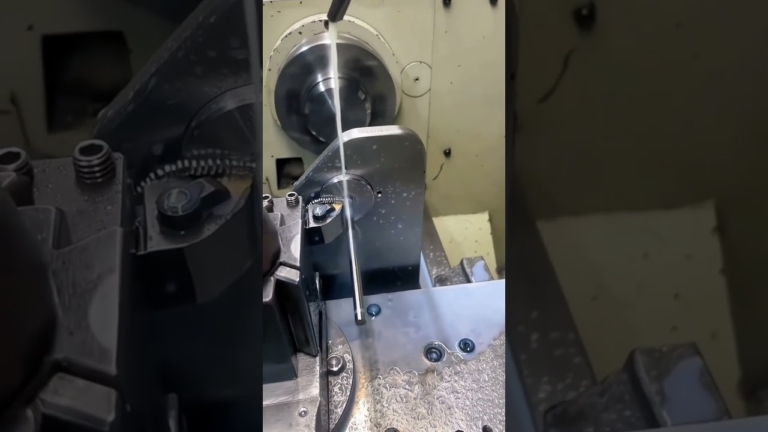
CNC Lathe Machining: A Precise and Efficient Manufacturing Process
In the world of manufacturing, precision and efficiency are key to producing high-quality products. In recent years, Computer Numerical Control (CNC) machining has become the go-to method for many manufacturers due to its unparalleled precision and flexibility. Among various CNC machining processes, CNC lathe machining has gained significant attention for its ability to shape and manufacture precise and complex parts. In this article, we’ll explore the benefits and applications of CNC lathe machining, its capabilities, and the advantages of using this process.
What is CNC Lathe Machining?
CNC lathe machining is a subtractive manufacturing process that uses a computer-controlled machine to remove material from a rotating workpiece. The machine is equipped with a cutting tool attached to a tool post or a spindle, which moves along the X, Y, and Z axes to perform the desired action. The computer-controlled system enables precise movements, accuracy, and speed, making it an ideal method for producing complex shapes and intricate designs.
Advantages of CNC Lathe Machining
- Precision and Accuracy: CNC lathe machining offers unparalleled precision and accuracy, making it suitable for producing parts with tight tolerances.
- Flexibility: The ability to change tools quickly and easily allows for the production of various parts with different geometries and materials.
- Speed: CNC lathe machining is much faster than traditional machining methods, reducing production time and increasing productivity.
- Cost-Effectiveness: By reducing production time, CNC lathe machining saves on labor costs and reduces material waste.
- Consistency: The computer-controlled system ensures consistent results, eliminating human error and producing parts with consistent quality.
Applications of CNC Lathe Machining
CNC lathe machining is used in various industries, including:
- Aerospace Industry: Producing aircraft parts, such as turbine blades, engine components, and precision instruments.
- Automotive Industry: Manufacturing car parts, such as engine components, transmission gears, and suspension parts.
- Medical Industry: Producing medical devices, such as surgical instruments, implants, and prosthetics.
- Agricultural Industry: Manufacturing agricultural equipment, such as tractors, plows, and other machinery parts.
- Construction Industry: Producing building components, such as pipes, valves, and machinery parts.
Types of CNC Lathe Machining
There are several types of CNC lathe machining, each with its unique capabilities and limitations:
- Turning: The most common type, turning involves the removal of material from the workpiece as it rotates at high speed.
- Turning with Radial Tooling: This method involves the use of a radial tool post, allowing for the cutting of internal and external diameters.
- Boring and Milling: A combination of turning and milling operations, allowing for the creation of complex shapes and profiles.
- Turning with Live Tooling: This type of machining uses a live tool post, enabling the cutting of internal and external threads, as well as T-slots and counterbores.
- Multi-Station Lathe: A versatile lathe capable of performing multiple operations in a single setup, such as turning, facing, and drilling.
Best Practices for CNC Lathe Machining
To achieve optimal results, follow these best practices:
- Proper Setup and Programming: Ensure accurate setup and programming to avoid errors and improve efficiency.
- Tool Selection and Maintenance: Use high-quality tools and maintain them regularly to prevent defects and downtime.
- Workpiece Preparation: Prepare the workpiece properly to ensure accurate machining and reduce vibrations.
- Monitor and Control the Process: Regularly monitor and control the machining process to detect and correct any issues promptly.
- Post-Processing Operations: Perform post-processing operations, such as deburring and cleaning, to improve part quality and appearance.
Conclusion
CNC lathe machining has revolutionized the manufacturing industry with its precision, flexibility, and speed. By understanding the benefits and limitations of this process, manufacturers can select the most suitable type of lathe and optimize their production workflow. Whether producing complex aerospace components or simple agricultural machinery parts, CNC lathe machining is an ideal method for achieving high-quality results. As technology continues to advance, the potential of CNC lathe machining will only continue to grow, shaping the future of manufacturing and production.
Daguang focuses on providing solutions such as precision CNC machining services (3-axis, 4-axis, 5-axis machining), CNC milling, 3D printing and rapid prototyping services.



















