
The Silent Symphony of Precision: Mastering Motion Conversion with RHK Rack and Pinion Systems
At the heart of countless machines animating our industrial world lies a deceptively simple yet profoundly effective principle: the elegant interplay between a rotating gear and a linear rack. Rack and pinion transmission stands as a cornerstone of engineering, enabling the seamless metamorphosis between the continuous spin of a shaft and the precise traverse of a carriage. When this fundamental system is refined to its highest potential – as embodied by KHK rack and pinion solutions – it transcends mere utility, becoming an orchestra of unparalleled precision, reliability, and efficiency powering the most demanding applications.
Deconstructing the Dance: The Core Mechanics of Conversion
The essence of rack and pinion transmission resides in the intricate meshing of teeth.
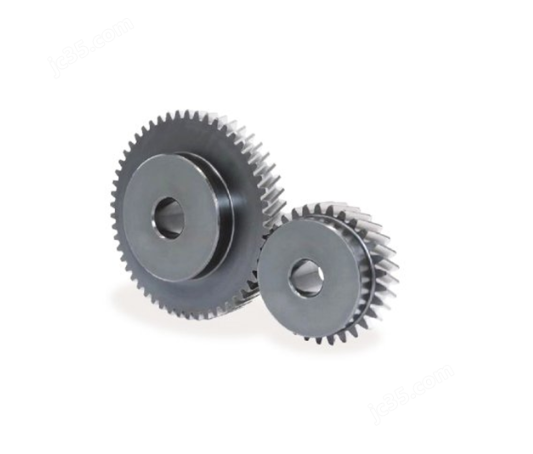
- The Players: The pinion is a cylindrical gear, typically mounted on a motor shaft, its teeth radiating outwards. The rack, essentially a flat or curved bar, features teeth cut linearly along its length. When these two components engage, magic happens.
- Rotary to Linear: As the pinion rotates within a fixed plane, its teeth push against the teeth of the rack. Because the rack’s teeth are linear and constrained, this pushing force propels the rack in a straight line relative to the pinion’s axis of rotation. The distance moved per revolution (Lead) is directly proportional to the pinion’s diameter and the geometry of its teeth. Precision manufacturing ensures this relationship is mathematically exact and repeatable.
- Linear to Rotary: Conversely, applying linear force to the rack causes its teeth to push against the pinion’s teeth. This force generates a torque around the pinion’s axis, causing it to rotate. The angle of rotation is dictated by the linear distance traveled and the pinion’s geometry.
- The Geometry of Precision: The Involute Advantage: The secret sauce for smooth, efficient, and low-wear operation is the involute tooth profile. Imagine unwinding a taut string from a cylinder – the curve traced is an involute. This specific shape holds a crucial property: as gears mesh, the contact point rolls smoothly along the tooth flank, maintaining a constant relative speed and direction of force transmission. This minimizes sliding friction, distributes load evenly across the tooth surface for reduced stress, and allows for slight misalignments without sacrificing contact or efficiency. KHK’s mastery lies in the exceptional control over this involute geometry, achieved through advanced machining and grinding techniques.
Beyond Basic Conversion: The KHK Hallmarks of Excellence
KHK doesn’t just provide rack and pinion components; they engineer solutions defined by measurable superiority:
Uncompromising Precision & Process Control: KHK employs state-of-the-art manufacturing processes, including precision hobbing, grinding, and honing, coupled with rigorous statistical process control (SPC) and 100% inspection for critical dimensions. The result isn’t just "good tolerance"; it’s microscopic control over tooth profile deviation, pitch accuracy, and surface roughness. This translates directly to:
- Minimized Backlash: Essential for applications requiring positional accuracy and eliminating "slop" or lost motion during direction reversal.
- Remarkable Repeatability: The ability to return to the exact same position consistently, cycle after cycle.
- Ultra-Smooth Operation: Reduced vibration and noise due to perfect tooth engagement geometry.
Engineered for Resilience and Longevity: KHK components are typically manufactured from high-quality alloy steels (e.g., SC415, S45C) and undergo advanced heat treatment processes like carburizing, quenching, tempering, or nitriding. This imbues the teeth with a hardened, wear-resistant surface while maintaining a tough, shock-absorbent core. Surface finishes are optimized not just for smooth meshing but also to enhance lubricant retention.
Friction as the Foe: Optimized Efficiency: The combination of a perfect involute profile and superior surface finish drastically reduces sliding friction at the tooth interface. This minimizes energy loss through heat generation, boosting overall transmission efficiency – a critical factor in energy-conscious and high-duty-cycle applications.
The Power of Interchangeability: KHK adheres strictly to standardized modules and pressure angles (primarily 20°). This means:
- Seamless Replacement: Any KHK rack of a specific module and pressure angle will flawlessly mesh with any KHK pinion of the same specifications. Downtime for repairs is dramatically reduced.
- Scalability: Systems can be designed, expanded, or modified with assurance that new KHK components will integrate perfectly with existing ones.
- Design Flexibility: Engineers can confidently select components from the extensive KHK catalog knowing compatibility is guaranteed.
- Robustness Anchored: Rigid mounting surfaces, precise manufacturing alignment features, and the inherent kinematic stability of well-meshing gears contribute to exceptional system rigidity. This is paramount for maintaining accuracy under load, resisting deflection, and ensuring predictable performance.
Where Precision Meets Demand: KHK in Action
The unique attributes of KHK rack and pinion systems make them indispensable across industries demanding absolute control over motion:
- Industrial Robotics and Automation: Driving robotic arms (linear axes), precise gripper positioning, palletizing stations, and coordinate measuring machine (CMM) axes where nanometric resolution and repeatability are non-negotiable.
- Machine Tool Excellence: Powering the critical X, Y, Z axes of CNC machining centers, laser cutters, waterjets, and EDMs. High rigidity ensures machining precision under cutting forces, while low backlash guarantees contouring accuracy.
- Material Handling Sophistication: Enabling high-speed, precise positioning in automated guided vehicles (AGVs), warehouse shuttle systems, elevator car leveling, and baggage handling linear drives, demanding both speed and absolute position control.
- Semiconductor and Electronics Manufacturing: Positioning wafers, PCBs, and delicate components within lithography equipment, pick-and-place machines, and inspection systems where vibration and positioning errors are catastrophic.
- Aerospace and Defense: Actuating flight control surfaces (rudder, aileron mechanisms in ground rigs), antenna positioning systems requiring stiffness in challenging environments, and specialized missile guidance components.
- Medical Technology: Powering the precise linear movements in radiation therapy equipment (linear accelerators), imaging systems (CT/MRI patient tables), and advanced surgical robotics where life-saving precision is paramount.
Preserving the Symphony: The Ritual of Care
Maximizing the lifespan and performance of any precision system demands diligent maintenance. KHK rack and pinion systems are robust, but thrive with proper attention:
- Lubrication: The Lifeblood: This is critical. Use the recommended lubricant type (often high-quality grease or specific gear oils) and adhere strictly to the application frequency and replenishment schedule. Proper lubrication dramatically reduces wear, minimizes friction heat, prevents corrosion, and flushes away contaminants.
- The Watchful Eye: Contamination Control: Guard the meshing zone! Employ effective sealing solutions, bellows covers, or environmental enclosures to prevent abrasive dust, metal chips, or corrosive liquids from entering the tooth engagement area. Even microscopic contaminants act like sandpaper.
- Vigilant Monitoring: Perform regular visual and functional inspections. Listen for unusual noises (indicative of wear or misalignment). Monitor system performance for any changes in backlash, smoothness of operation, or positional accuracy deviation. Use predictive maintenance tools like vibration analysis if applicable.
- Proactive Replacement: Don’t wait for catastrophic failure. Inspect teeth for signs of progressive wear, pitting, or scoring. Establish replacement intervals based on operating conditions and inspection results. KHK’s interchangeability ensures replacements are quick and effective.
- Secure Mounting Revisited: Periodically check mounting bolts and structural rigidity. Any loosening or frame deflection introduces error and accelerates component wear.
The Horizon of Harmony: Innovation Evolves
Rack and pinion technology isn’t static. KHK, at the forefront, integrates advanced engineering solutions:
- Material Science Partnerships: Exploration of coatings (like DLC – Diamond-Like Carbon), novel heat treatments, and composite reinforcements push boundaries in wear resistance, weight reduction, and corrosion performance.
- Integrated Sensing: The convergence of mechanics and electronics enables direct feedback. Pinions integrating rotary encoders or racks coupled with linear scales create closed-loop, self-correcting motion systems within the mechanical transmission package itself.
- Lightweighting for Agile Dynamics: Optimized profiles and advanced alloys or engineered polymers allow for lighter components without sacrificing strength, enabling faster accelerations and reduced inertias in dynamic systems.
- Complex Curve Mastery: Precision grinding capabilities allow for the creation of complex curved racks, enabling non-linear motion paths and unique robotic kinematics that were previously impractical or impossible.
Conclusion: Precision Synergy, Realized
The KHK rack and pinion transmission system embodies the fusion of fundamental mechanical genius with modern engineering precision. It transcends a simple motion conversion device; it is a meticulously crafted component system engineered for predictability, durability, and flawless operation under demanding conditions. By harnessing the perfection of the involute curve, leveraging advanced materials and manufacturing, and guaranteeing unwavering interchangeability, KHK empowers engineers to build machines that define the cutting edge. From the relentless pace of the automated factory floor to the delicate movements within a surgical suite, the silent, precise symphony of the rack and pinion drive, especially one tuned to the KHK standard, remains a foundational pillar of controlled motion in our technological world. It is the reliable, efficient, and precise bridge where rotation meets linearity, enabling the machines that shape our future.



















