
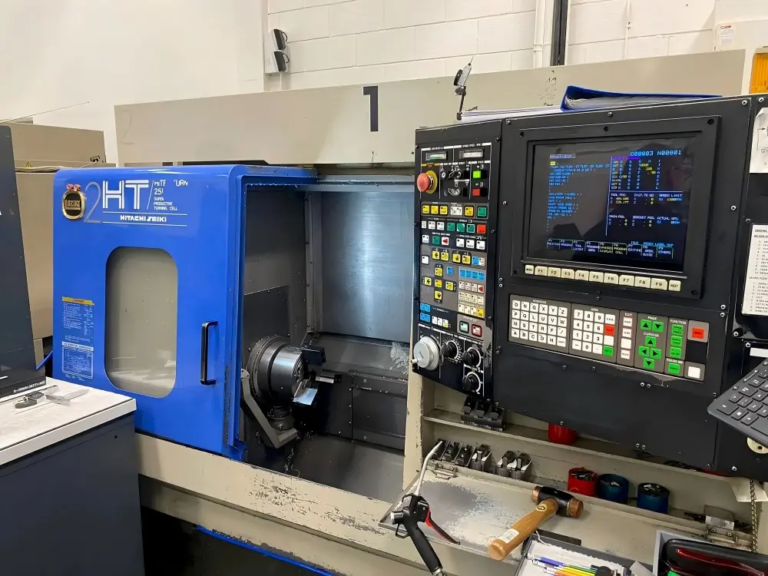
Step into the Digital Workshop: Unveiling CNC machining capabilities for precise manufacturing
A world of modern manufacturing buzz with digital accuracy. Gone are the days when relying solely on the skilled hands of manual mechanics to make complex parts. Today, computer numerical control (CNC) processing is firmly located at the heart of producing highly critical, cross-industry complex components. This technology transforms digital blueprints into tangible reality, but how do you achieve this? Let us unravel the core functions of CNC machining and explore technologies that power precise manufacturing.
Beyond the Blueprint: Understanding the Basics of CNC
CNC machining itself is a subtraction manufacturing process directed by computer-aided design (CAD) models and computer-aided manufacturing (CAM) software. Instead of a manual lever, a computer program determines the exact action of the cutting tool across multiple axes to engrave, shape and complete a piece of raw material (such as metal, plastic, or composite). Key features to enable this process include:
Precise motion control: This is the most basic function. The CNC controller converts digital codes (G-Code, M-Code) into extremely precise motion of the machine axis. Imagine a robot arm that can position the cutting tool in 3D space with micron-scale accuracy. Co-sports include:
- Linear interpolation: Move the tool in a straight line (x, y, or z direction).
- Loop interpolation: Move the tool along an exact circular path.
- Helical interpolation: Combining circular and linear motion is crucial for threads and complex contours.
Automation tool operation: CNC computers usually have automatic tool changers (ATCs). This feature allows the machine to automatically switch between several different cutting tools stored in the carousel in a single operation. Thinking about drill bits, end mills, facial mills, reamers, etc. – Exchange in seconds without human intervention, allowing complex parts to complete multiple operations in a single setup.
Speed and feed rate optimization: The control program accurately adjusts the spindle speed (speed at which the cutting tool rotates) and the feed speed (speed at which the tool moves through the material). Optimizing these parameters is critical to material removal efficiency, achieve the required surface finish, prevent tool wear or cracking, and minimize heat generation. Advanced systems can even adjust these parameters in real time based on sensor feedback.
- Workpiece holding and positioning: When the machine table securely fixes raw materials, the control system manages the precise positioning and potential rotation or movement of the workpiece. This is especially important for multi-axis machining.
Up to Advanced Function: The Power of Multi-Axis Processing (especially Five-Axis)
3-axis CNC (moving along the linear axes of X, Y and Z) handles many parts, while complex geometry requires more freedom. This is Multi-axis machiningand finally Five-axis CNCchanging the possibility.
- Four-axis machining: Adding a rotation axis (usually expressed as a axis – rotate about x or b axis – rotate about y), usually allowing the workpiece itself to rotate. This is ideal for cylindrical features or for machining multiple faces without capping.
Five-axis CNC machining: This represents the pinnacle of subtraction flexibility in mainstream production. It adds an additional rotation axis (For example, b-axis – rotates about y, c-axis – rotates about z). Crucially, the five-axis machine comes in different configurations: Desktop, overhead and head table (commonly called Trunnion type). "Great In these configurations, invest heavily in advanced five-axis CNC machining equipment to provide the best approach for every complex challenge." This is why the five-axis is transformative:
Unrivaled functional advantages of the five-axis:
- Single-set complex geometric shapes: This is the Holy Grail. With the ability to redirect the workpiece and/or the tool head in the program, the five-axis machine has access to almost every side and angle of the part in a clamp. This eliminates cumulative errors in multiple settings and greatly reduces lead time. Complex aerospace wings, turbine blades, impellers and medical implants are actually achievable.
- Top surface finish: Optimize the flexibility of the workpiece orienting workpiece so that the cutting tool maintains the optimal cutting position relative to the surface. This minimizes visible witness lines (steps) and generally makes it easier to evacuate the chip. Furthermore, the side cutting action of the tool effectively produces a smoother surface.
- Enhanced accuracy and repeatability: Reduced settings mean fewer chances of mislocalization. Precise control of tool orientation, combined with high-quality equipment, significantly improves geometric accuracy and dimensional consistency across multiple parts.
- Processing difficult to reach areas: Five-axis technology performs well in achieving undercut, deep pockets and contours, or requires highly sophisticated tools on 3-axis machines. Tool length can also be optimized to increase stiffness and thus improve results.
- Optimized tool lifespan: By constantly maintaining the optimal cutting angle, the stress on the cutting tool is distributed more evenly. Using shorter tools (probably because the head/tool can be tilted towards work) can also increase stiffness and reduce vibration, which all promote longer tool life.
- Reduce the requirements for fixtures: Reduce the need for complex and bulky fixtures, saving time and cost. Generally, easier ways to protect parts can be used due to increased tool access.
Where precision requires flight: Application of CNC machining
The functions of CNC machining, especially the five-axis function, can make key components of demanding departments:
- aerospace: Turbine blades, structural fuselage parts, engine housing, satellite components. (Requires high precision in complex alloys).
- car: High performance engine block, transmission box, custom suspension components, intricate mold/mold.
- Medical/Dental: Surgical instruments, orthopedic implants, dental prosthesis, laboratory equipment. (Biocompatible materials require a perfect finish).
- vitality: Pumps and turbine impellers, valves, specialized drilling components (oil and gas), wind turbine parts.
- Industrial: Prototyping, precision tools, robot components, high-tech scientific instruments.
- consumer goods: Electronics, custom components, high-end sports equipment for complex housing.
Why five-axis CNC machining is your strategic advantage,
Navigating the complexity of complex parts manufacturing requires not only technology, but also expertise and reliability. That’s where Great stand out. As a professional five-axis CNC machining manufacturer, dedicated to solving complex metal parts problems, we pass: by:
- Advanced five-axis technology: We use state-of-the-art five-axis equipment in a variety of configurations (desktop, head table, overhead) to select the best solution for the unique geometry and materials of your parts.
- Deep material expertise: We have cleverly handled a wide range of materials – from standard aerospace aluminum and stainless steel to exotic alloys such as titanium, inconel and Specialized Plastics – which can be customized quickly and reliably.
- Engineering accuracy: With advanced CAM programming, experienced mechanics and rigorous quality control processes including precise CMM inspections, we ensure that parts reliably meet demanding tolerances and specifications.
- Simplified production: We offer true one-stop manufacturing. In addition to core machining, our internal features include basic post-machining and completion services such as burrs, heat treatment, anodization, plating, painting and powder coatings – from prototype quantity to complete production runs.
- Agility and value: We understand market demand. Our optimized processes and commitment to efficiency allow for competitive prices and fast turnaround times without compromising quality. Need a complex custom part? Greglight provides accuracy at speed.
Conclusion: Use digital precision to unlock potential
CNC machining is the backbone of modern, complex manufacturing, transforming CAD models into high-precision components. Understand its core features – precise control, automated tool processing, speed/feed optimization and advanced multi-axis capabilities – reveal the potential to overcome previously insurmountable manufacturing challenges. In particular, five-axis CNC machining can provide unparalleled design freedom, excellent quality and reduced lead time by precisely machining complex geometries in a single setup.
For engineers and designers, you can work with expert five-axis manufacturers with possible boundaries, Great It is crucial. We combine cutting-edge equipment, deep material knowledge, comprehensive finishing services and a commitment to precision and efficiency to ensure that we not only manufacture parts; we bring the most challenging design innovations to life and achieve them with first-class quality and service. Make Greatlight an important partner in precision engineering.
FAQ: Your CNC machining question has been answered
Q1: What are the main advantages of five-axis CNC machining compared to three-axis?
one: The main advantages are Complex part creation in a single setup. The three-axis requires multiple settings to machining different sides, causing alignment errors and time delays. Five-axis repositioning parts During processing The two rotation axes approach all features, resulting in higher accuracy, better surface surfaces and faster generation. It unlocks geometry with just three axes.
Q2: Will five-axis processing automatically produce better surface effects?
one: Do this often. Five-axis machining allows:
- Tangentially use the side walls of the tool, perfect for finishing.
- Maintain a constant chip thickness to make it smoother.
- Better chip evacuation, reduce recycling and scratching.
- Ability to use shorter, more rigid tools to minimize vibration.
Accurate programming and high-quality machines, such as Greatlight, can maximize this benefit.
Q3: What types of materials can be machined using five-axis CNC equipment?
one: Greatlight’s advanced features extend to a wide range of: including:
- Metals: Aluminum alloy (2024, 6061, 7075), stainless steel (303, 304, 316, 17-4ph), titanium alloy (2, 5th grade, Ti64), copper and brass, brass, brass, brass, tool steel, magnesium, Exotics (Inconel 718/625, Hastelloy, Hastelloy, Hastelloy, Kofar, Kofar, Kofar, Kofar, Kofar, Kofar, Kofar, Kofar, Kofar, Kofar, Kofar, Kofar, Kofar, Kofar, Kofar, Kofar, Kofar, Kofar, Kofar, Kofar, Kofar, Kofar, Kofar, Kofar, Kofar, Kofar, Kofar, Kofar, Kofar, Kofar, Kofar, Kofar, Kofar, Kofar, Kofar, Kofar, Kofar, Kofar, Kofar, Kofar, Kofar, Kofar, Kofar, Kofar, Kofar, Kofar, Kofar, Kofar, Kofar, Kofar, Kofar, Kofar, Kofar, Kofar, Kofar, Kofar, Kofar, Kofar, Kofar, Kofar, Kofar, Kofar, Kofar, Kofar, Kofar, Kofar, Kofar, Kofar, Kofar, Kofar, Kofar, Kofar, Kofar, Kofar, Kofar, Kofar, Kofar, Kofar, Kofar, Kofar.kof.
- Plastics: ABS, Nylon (PA6, PA66), PEEK, DELRIN (acetyl), PTFE, polycarbonate (PC), UHMW-PE.
- Composite material. Material selection affects tools, speed/feed and fixing – all handled by our expertise.
Q4: How does Greatblight ensure the quality and accuracy of machining parts?
one: Quality is embedded throughout our process:
- Advanced equipment: Accurate, well-maintained five-axis machine.
- Expert CAM Programming: Optimized tool paths for accuracy and completion.
- A skilled mechanic: With complex setup, operation and fixtures.
- Strict inspection: Verify dimensional accuracy, tolerances and surface finishes with precise tools such as coordinate measuring machines (CMM), optical comparators, surface roughness testers and calibration gears to verify against drawings.
- Process control: Strict procedures from material inspection to final completion.
Question 5: Which industries benefit the most from five-axis CNC machining?
one: Industry that requires complex, high precision, and complexly curved components often in challenging materials have great value:
- aerospace: Turbine blades, engine components, structural brackets.
- Medical and Dental: Implants (joints, spine), surgical instrument head, prosthesis.
- Car (High Performance/Racing): Engine parts, suspension components, lightweight construction.
- vitality: Turbine components (hydraulic, wind, steam), complex valves, pump impellers.
- defense: Strong shell, weapon components, optical mount.
- R&D and Prototype: Complex conceptual models of various departments.
Question 6: Can Greatlight handle prototypes and larger production runs?
one: Absolutely. Our model is built for flexibility. We effectively manage everything from small batches of one-time prototypes and R&D tests to medium and large-scale production runs. We ensure consistent quality and accuracy across all volumes.
Question 7: Do you provide post-processing and completion services?
one: Yes. We provide a comprehensive one-stop finishing solution to deliver final parts for use. Functions include:
- Deburring & Tumbling
- Heat treatment (annealing, hardening, tempering)
- Surface finish (anodized-type II/III, chromate conversion coating, passivation)
- Electroplating (nickel, chromium)
- Painting/powder coating
- Laser marking/engraving.
This removes bottlenecks and ensures that your parts are fully finished with specifications.



















