
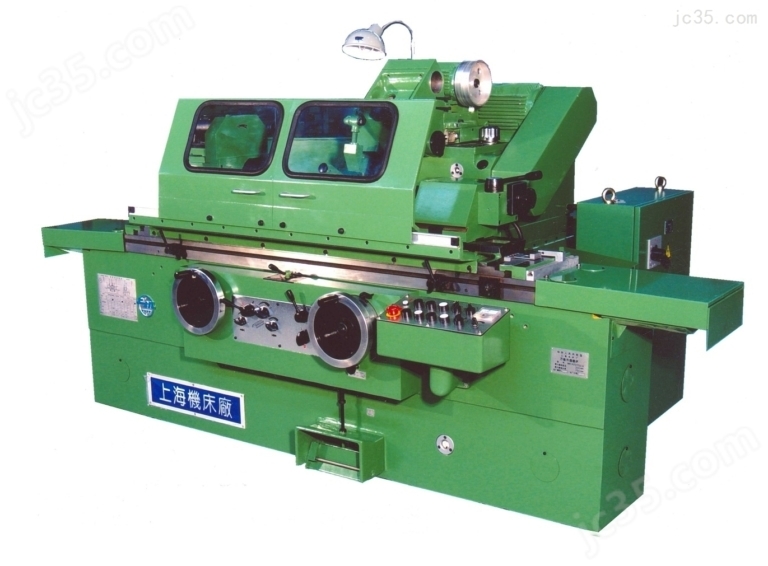
The Evolution of Planar Grinders: From Traditional to CNC Technology
In recent years, the planar grinder has undergone a significant transformation, shifting from traditional manual operation to the adoption of Computer Numerical Control (CNC) technology. This change has revolutionized the industry, enabling the production of highly accurate and complex parts with greater efficiency and precision. In this blog post, we’ll explore the history of planar grinders, the benefits of CNC technology, and the current state of the industry.
A Brief History of Planar Grinders
Planar grinders have been used for decades in various industries, including precision mechanics, aerospace, and automotive. These grinders are capable of processing complex shapes and surfaces, and their ability to produce high-quality finishes has made them a staple in many manufacturing processes. However, traditional planar grinders were limited by their manual operation, making them prone to human error and requiring skilled operators.
CNC Technology: The Game-Changer
The introduction of CNC technology has transformed the planar grinder industry, enabling the production of highly accurate and complex parts with greater efficiency and precision. CNC systems have been integrated into planar grinders, allowing for precise control over the grinding process, automatic problem detection, and minimization of trial-and-error iterations.
CNC Planar Grinder Manufacturers
Several leading manufacturers have developed and released CNC planar grinders, including ELB, Jones & Shipman, and Ab. These companies offer a range of systems, from compact, multi-axis CNC grinders to high-end, precision grinding centers. ELB’s C-Series CNC planar grinder, for example, features perpendicular and transverse CNC axes, hydraulic control in longitudinal directions, and a measurement resolution of 0.5 μm. The Camaster series, developed by ELB, is a CNC planar grinder with three coordinates, linear rolling guide rails, and an AC servo motor-controlled CNC system.
CNC System Options
CNC systems are available from various manufacturers, each with its unique features and capabilities. Siemens’ Sinumerik 840D, for instance, offers automatic quantity compensation wheels, compensation for error in ball screw screws, and other advanced features. Fanuc’s OG CNC system, while compact, offers a high-performance CNC system with functions such as tilt control, automatic programming, and an intuitive interface.
Domestic CNC Planar Grinders
Several domestic companies have developed their own CNC planar grinder systems, including Hangzhou Machine Tool Factory, which has produced a range of CNC planar grinders with advanced features like offset machining and multi-axis control. The MGK7120, for example, is a high-precision flat grinder with a Power Mate-D double-axis CNC system, achieving a minimum power capacity of 0.1 μm.
Recent Trends and Outlook
The planar grinder industry is experiencing significant growth, driven by advancements in manufacturing processes and the increasing demand for high-quality precision parts. The integration of CNC technology has enabled the production of complex parts with greater precision and efficiency, reducing production costs and improving profitability. As the industry continues to evolve, we can expect to see further advancements in areas such as linear engines, dynamic balance, and intelligent grinding.
Conclusion
The planar grinder has undergone a remarkable transformation, from manual operation to the adoption of CNC technology. This shift has enabled the production of high-quality, complex parts with greater efficiency and precision. As the industry continues to evolve, we can expect to see further innovations in CNC technology, advancements in manufacturing processes, and increased demand for precision parts. As a key player in the industry, it is essential to stay ahead of the curve, embracing new technologies and advancements to stay competitive and thrive in this rapidly changing landscape.



















