

In the world of modern manufacturing, if there’s one technological cornerstone that has revolutionized how we create everything from everyday objects to the most advanced aerospace components, it is the CNC machine. As a senior manufacturing engineer with years of hands-on experience in precision parts machining and customization, I’ve witnessed firsthand how these sophisticated systems have transformed design intent into tangible, high-accuracy reality. So, what exactly are CNC machines, and why are they so pivotal for your projects?
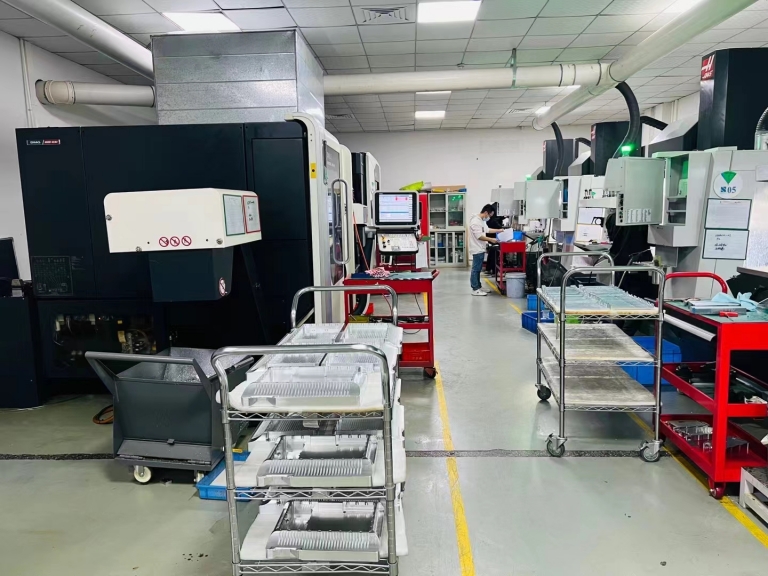
Defining the Core: CNC Unpacked
At its essence, a CNC (Computer Numerical Control) machine is an automated manufacturing tool that operates via programmed computer software. It is the evolution of manual machining, where an operator would directly control levers, wheels, or knobs. In a CNC system, the machine’s movements—including the cutting path, speed, feed rate, and coordination of multiple axes—are dictated by a digital blueprint, typically a CAD (Computer-Aided Design) model. This program, converted into G-code (a universal machine language), instructs the machine with extreme precision, removing material from a solid block (workpiece) to produce a finished part.
The Anatomy of a CNC Machine: More Than Just a Tool
Understanding a CNC machine requires looking at its key subsystems:
Controller: The “brain” of the operation. It interprets the G-code and sends electronic signals to the machine’s drives.
Drive System: Comprising motors (servo or stepper) and ball screws, this system translates the controller’s electronic commands into precise physical movement along the machine’s axes.
Machine Tool: This is the physical assembly that performs the work, such as a spindle that rotates cutting tools (in milling) or a turret that holds tools (in turning).
Cutting Tools: The “scalpels” of manufacturing. Made from ultra-hard materials like carbide, ceramic, or diamond, they come in myriad shapes (end mills, drills, taps) to perform specific operations.
Workholding: A critical, often underestimated component. Fixtures, vises, and chucks securely hold the raw material in place, ensuring stability and accuracy during high-force machining.
The CNC Workflow: From Concept to Component
The journey of a part through CNC machining is a seamless digital-to-physical pipeline:
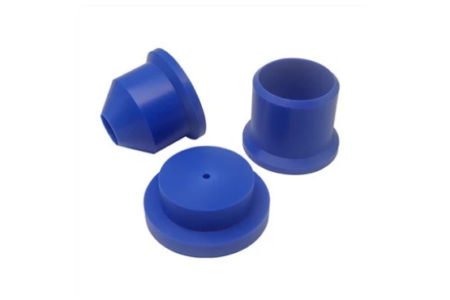
Design & CAD Modeling: An engineer creates a precise 3D model of the part.
CAM Programming: Using CAM (Computer-Aided Manufacturing) software, a programmer defines the toolpaths, selecting tools, speeds, feeds, and strategies to machine the part efficiently and accurately.
Post-Processing & G-Code Generation: The CAM data is translated into the specific G-code dialect for the target CNC machine.
Setup: The operator loads the raw material, installs the required tools, and sets the workpiece zero point (origin).
Machining: The machine executes the program autonomously, often under supervision.
Inspection & Finishing: The completed part is measured (using tools like CMMs or optical scanners) to verify it meets specifications, then undergoes any required post-processing (e.g., anodizing, polishing).
Types of CNC Machines: Choosing the Right Tool for the Job
The term “CNC machine” encompasses a family of equipment, each suited for specific tasks:
CNC Milling Machines (Mills): Use rotating cutting tools to remove material. Complexity ranges from 3-axis mills (movement in X, Y, Z) for simpler parts to advanced 5-axis CNC machining centers, where the cutting tool can approach the workpiece from virtually any direction. This is indispensable for complex geometries like impellers, turbine blades, and intricate molds. For manufacturers specializing in solving complex metal parts challenges, mastering 5-axis technology is non-negotiable.
CNC Turning Centers (Lathes): The workpiece rotates while a stationary cutting tool shapes it. Ideal for creating cylindrical or conical parts like shafts, bolts, and connectors.
Mill-Turn Centers: Hybrid machines that combine milling and turning capabilities, allowing complete machining of complex parts in a single setup.
Other Specialized CNC Machines: Includes EDM (Electrical Discharge Machining) for hard metals or intricate shapes, grinders for supreme surface finish, and routers (often for wood, plastics, and non-ferrous metals).
Why CNC Machining is Indispensable for Precision Customization
For clients seeking precision parts machining and customization, CNC offers unmatched benefits:
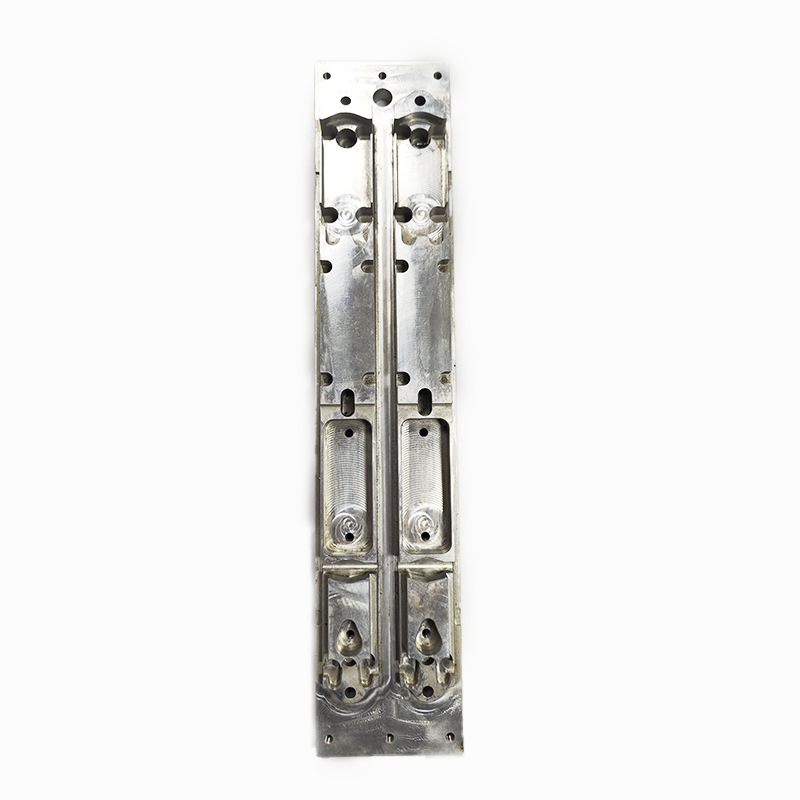
Extreme Accuracy and Repeatability: Once a program is perfected, a CNC machine can produce thousands of identical parts with tolerances within microns (±0.001mm or finer). This is the bedrock of mass customization and high-volume precision.
Complex Geometry Capability: It can manufacture shapes that are impossible or prohibitively expensive with manual methods or other processes.
Superior Material Versatility: From common alloys like aluminum and stainless steel to exotic metals (titanium, Inconel), engineering plastics, and composites, CNC handles them all.
Excellent Surface Finish: With proper tooling and parameters, CNC can achieve finishes that often require minimal secondary processing.
Scalability and Efficiency: It bridges the gap from rapid prototyping (a single, perfect prototype) to low, medium, and even high-volume production seamlessly.
Conclusion: The Engine of Modern Manufacturing
In summary, CNC machines are the automated, programmable, and incredibly precise workhorses that have made modern precision manufacturing possible. They translate digital innovation into physical reality with reliability and scale. For any project demanding high accuracy, material integrity, and design complexity—whether a prototype for a new medical device or a production run of aerospace fittings—understanding and leveraging CNC machining is critical. Partnering with a manufacturer that not only possesses advanced equipment like 5-axis CNC machining centers but also the deep engineering expertise to program and optimize them is the key to transforming your designs into flawless, high-performance parts.
Frequently Asked Questions (FAQ)
Q1: What’s the main difference between 3-axis, 4-axis, and 5-axis CNC machining?
3-axis: The tool moves in three linear directions (X, Y, Z). It’s excellent for prismatic parts but may require multiple setups for complex geometries.
4-axis: Adds a rotational axis (usually A-axis), allowing the workpiece to spin, which is ideal for machining features around a cylinder.
5-axis: Adds a second rotational axis (e.g., B or C-axis). The tool can approach the workpiece from any angle in a single setup. This is superior for complex, sculpted surfaces, reduces setup time, and can often improve accuracy by allowing optimal tool orientation.
Q2: Is CNC machining only for metal parts?
Absolutely not. While renowned for metals, CNC machines expertly process a vast range of materials, including plastics (PEEK, Delrin, Nylon), wood, composites, and even foam for prototyping. The choice of material primarily influences the selection of cutting tools, speeds, and feeds.
Q3: How does CNC machining compare to 3D printing for prototyping?
They are complementary technologies. CNC machining is subtractive (carves from a solid block), offering superior strength, material properties, and precision from true engineering materials. 3D printing is additive (builds layer by layer), excelling at extremely complex internal geometries and faster iteration for form-and-fit prototypes. The choice depends on the part’s function, required material, and budget.
Q4: What file formats do I need to provide for a CNC machining quote?
The most universally useful files are 3D CAD models in STEP or IGES format, as they contain precise solid geometry data. 2D drawings in PDF or DWG format are also highly valuable as they communicate critical tolerances, surface finishes, and specific inspection notes that may not be fully captured in the 3D model alone.
Q5: What should I look for when choosing a CNC machining partner?
Look beyond just the machine list. Key factors include:
Technical Expertise & Engineering Support: Can they optimize your design for manufacturability (DFM)?
Quality Systems: Are they certified (e.g., ISO 9001:2015) with in-house metrology for inspection?
Process Chain Capability: Can they handle the full journey—machining, finishing, assembly—providing a one-stop service?
Proven Track Record: Look for experience in your specific industry, whether it’s automotive, aerospace, or medical.


















