
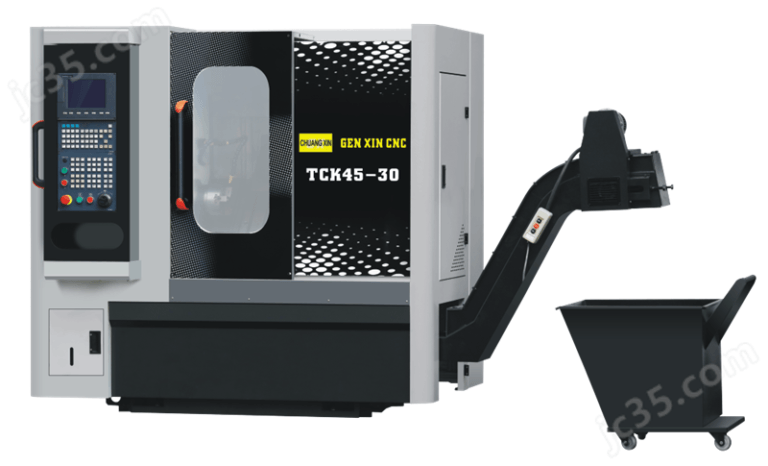
High-precision lathe processing is widely used in aerospace, precision instruments, automobile manufacturing and other fields, requiring high processing precision. In these high-end manufacturing areas, precision often directly determines product quality and lifespan. Therefore, improveHigh precision latheMachining precision is crucial. This article will explore several key technologies to help improve machining accuracy.
1. Optimize process parameters
Process parameters directly affect processing accuracy. First of all, the selection of tools and cutting parameters (such as cutting speed, feed rate, cutting depth, etc.) should be reasonably set according to the characteristics of the material. Too high a cutting speed may cause surface roughness or thermal deformation of the workpiece, while too low a cutting speed may result in unstable cutting and affect the processing quality. Therefore, reasonable selection of cutting parameters forms the basis for ensuring machining accuracy.
In addition, using appropriate coolant can also effectively reduce thermal deformation during processing. Coolant can not only eliminate cutting heat, but also reduce friction between tool and workpiece, extend tool life and maintain stable precision.
2. Improve tool quality and precision
The quality of tools directly affects the processing accuracy of the lathe. High-quality tools can provide better cutting performance, reduce tool wear and maintain longer tool life. Precision tool materials (such as carbide, ceramic, etc.) not only have high hardness and wear resistance, but also can withstand higher cutting temperatures.
At the same time, tool geometry and edge precision are equally essential. Cutting angle, clearance angle, cutting edge shape, etc. of the tool should be reasonably designed according to the material, shape and cutting method of the workpiece to reduce vibration and heat generated during the cutting process and avoid affecting the machining accuracy.
3. Strengthen the rigidity and stability of machine tools
The rigidity of high-precision lathes is an important factor in ensuring machining accuracy. The structure of the machine tool must be sufficiently rigid to resist deformation caused by cutting forces. Machine tool structures made of highly rigid materials, such as cast iron, steel, etc., can effectively reduce errors caused by machine tool vibration during processing.
In addition, improving the stability of machine tools is also crucial. During high-precision machining, any slight vibration or temperature fluctuation will affect the machining accuracy. Therefore, the design of vibration absorption and optimization of tower temperature control system is also one of the key technologies to improve precision.
4. Application of temperature control technology
The influence of temperature changes on precision machining cannot be ignored. The heat generated by machine tools and workpieces during processing can cause thermal deformation of the machine tool structure and tool wear, thereby affecting processing accuracy. Therefore, using advanced temperature control systems to reduce temperature fluctuations through cooling and temperature compensation technology is an effective way to improve processing accuracy.
For example, using a constant temperature control system to adjust the temperature of the machine tool working environment or local cooling of key parts can effectively reduce thermal expansion errors.
5. High precision measurement and compensation technology
In high-precision machining, the application of measurement technology is crucial. Using high-precision measuring instruments, such as laser interferometers, electronic probes, etc., to monitor the geometric shape and size of the workpiece in real time, errors during processing can be discovered and compensated in time .
During the machining process, automated measurement and feedback systems are used to dynamically adjust the motion path and cutting parameters of the machine tool to achieve higher precision machining.
Improving the machining accuracy of high-precision lathes is a systematic project that involves many aspects such as technology, equipment, tools and measurement technology. By optimizing process parameters, improving tool precision, strengthening machine tool rigidity and stability, applying temperature control technology, and high-precision measurement and compensation in real time, the accuracy of Machining can be effectively improved to meet the demands of high-end manufacturing.
Daguang focuses on providing solutions such as precision CNC machining services (3-axis, 4-axis, 5-axis machining), CNC milling, 3D printing and rapid prototyping services.



















