
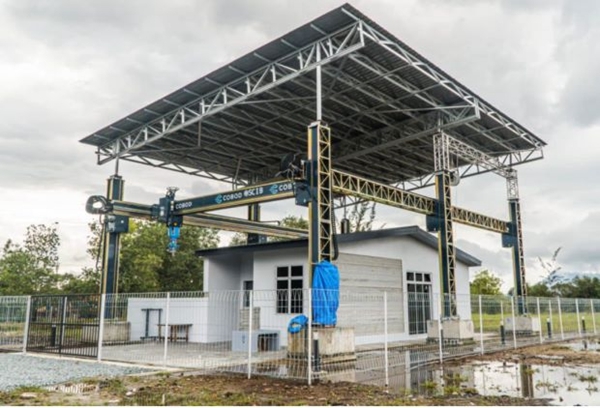
2021 Year,3DPrint market value138.4 billion US dollars, estimated 2022 New Year’s Eve 2030 The compound annual growth rate for the year is 20.8%. at present,3D Leading the printing equipment market thanks to its compatibility with supporting affordable housing, rapid industrialization, civil infrastructure development, safer urbanization and optimization of labor costs.3D Printing equipment represents 40% of global turnover 60% That’s all.
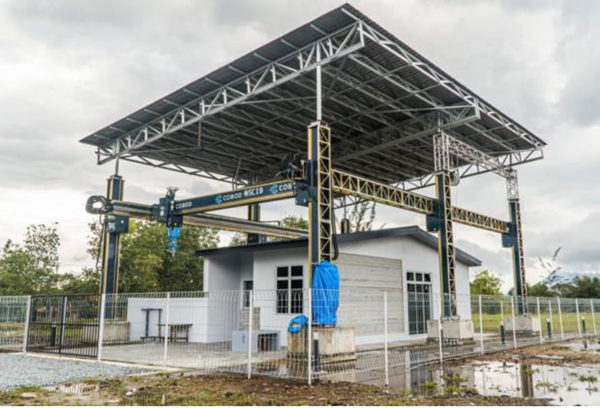
There are lessons the global construction industry can learn3DEnjoy the benefits of print architecture. For example,3DPrinting reduces waste and reduces the harmful impact of greenhouse gases on the environment without compromising worker time and safety. below,EveryoneTogetherCometake a look3DLet’s explore the practical benefits of print architecture.
Less waste, more housing
The homeless population continues to increase worldwide due to factors such as inflation and high real estate prices. According to statistics, in Colombia alone, on average, almost500Thousands of homeless people. It is true that there is currently not enough permanent, affordable housing.
For the reasons discussed above, wasting resources is increasingly undesirable. Compared to other subtractive production technologies such as milling or laser cutting,3DPrinting uses only the exact amount of material needed to bring the design to life,3D The additive nature of printing allows components to be built layer by layer, creating less waste. SO,3DPrinting can solve problems related to resource scarcity by reducing waste and making less material available to more people.
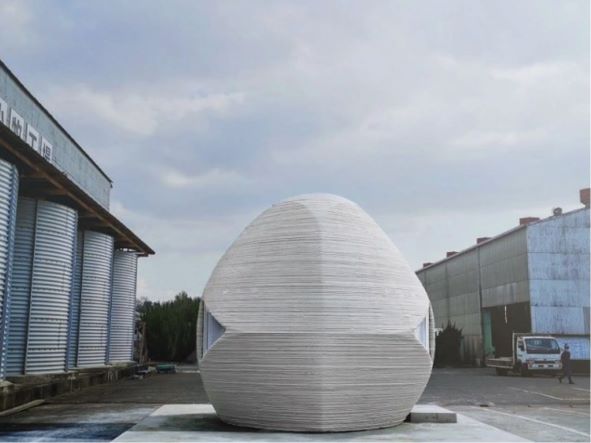
△Serendix Partnersin less than 24 in a few hours 3D Printable emergency shelter concept map. Photo by Serendix Partners provide.
3D The printed additive manufacturing process allows for the creation of more complex shapes, faster object construction, and reduced labor costs. It could also build housing in poor and hard-to-reach areas, something Japan already does.23Hour12Emergency housing model built in minutes. It turns out that3D Printing allows single-family homes to be built more quickly and cost-effectively than traditional technologies. In the United States, the average cost of building a house is approximately282,000 US dollars, use 3D Printing concrete to create the same design could reduce costs 20-40%。
Reduce carbon footprint
In addition to the issues of social housing and rapid construction, construction industry leaders must also consider their impact on the climate. independent3DPrinting does not eliminate CO2 (CO2) carbon emissions, but the potential for this technology to reduce carbon emissions through smarter urban planning, the use of alternative materials and waste reduction is enormous.
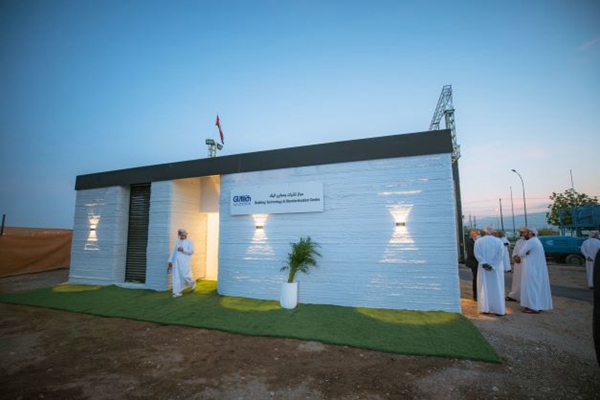
△”The largest in the world”3D Print concrete houses using COBOD technology and D.fab Made of concrete material. Photo by COBOD provide.
2021Year12In September, people built the largest 3D Printing concrete buildings, beyond 99.5% Materials are sourced locally. This not only leads to a significant reduction in CO2 emissions, but also cost savings. This190square meters of house walls3DThe total cost of printing equipment is1600Euros, only costs using traditional materials and methods 8%。
In the past, construction in isolated areas required transporting large quantities of machinery and resources from cities to rural areas, emitting large amounts of greenhouse gases before construction began. because3DThe printing system is portable and mobile, so the technology is suitable for off-site precast production and on-site applications without requiring frequent handling.
When building outside the city, off-site3DPrinting will work to its advantage. Minimizing the distance construction crews must travel reduces the amount of carbon dioxide produced. Building closer to the city center means shorter commute times and reduced gasoline emissions for future residents. For many areas with complex relief, if there is not more flexibility 3D Printing solution support, these locations may not be reached.
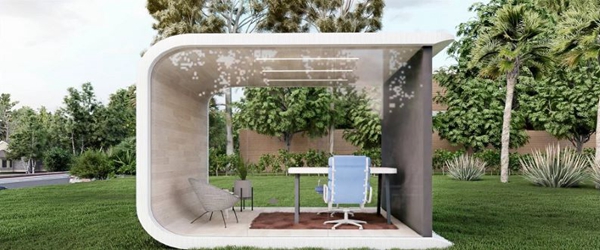
△3D Studio in the courtyard for printing. Photo by Azure Printed Houses provide.
In addition, various studies and projects are underway aimed at integrating waste (e.g. reused plastic) into 3D Printed materials combine to encourage and accelerate the circular economy. Intelligent and advanced design 3D Printing technology opens the door to building cities in harsh landscapes while reducing carbon footprint and costs, thereby increasing the number of affordable housing for those who need it.
Protect workers and the environment
2020 In 2016, the construction sector showed that every 10 Around 10,000 people10People suffer fatal accidents at work.3DPrinting technology not only minimizes waste related to efforts to combat climate change, but also improves working conditions. The printing system’s mechanical and software systems allow designers to produce exact replicas of digital models through an automated process with little or no human intervention or supervision, reducing worker injuries and labor costs. of work.
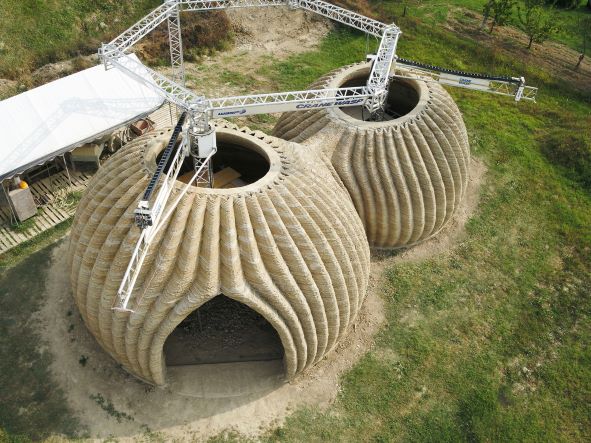
△WASP of 3D KEY Printed houses, made from earthen raw materials. Photo by WASP provide.
Intricate designs made possible by the latest printing technologies have also led construction teams to experiment with organic, sustainable and renewable materials, such as mud houses and bamboo composite structures. Compared to more commonly used trees, bamboo absorbs approximately 35% of carbon dioxide, a natural and organic product that requires no chemical fertilizers or pesticides. Although raw soil is carbon neutral, it requires digital manufacturing to maximize standard clay material yields. Although the durability of raw floors is controversial, there are solutions on the market that can be used 99% of locally available materials, printed with real concrete.
3D Printing creates a custom infrastructure that is as efficient as possible. With greater flexibility in structural design, architects can create smart plans that seamlessly integrate sustainable materials, retain heat, reduce energy consumption and create spatial structures that enable people with disabilities to live comfortably.
3D The print uses intelligent design and a layered manufacturing approach that uses fewer materials to build more at lower cost, without compromising performance. Traditionally, narrow urban spaces and complex environments have limited the availability of safe and stable infrastructure, while3DPrinting leads the way. It helps construction companies design greener buildings without compromising worker safety or site conditions. In general,3DBy increasing the flexibility of structural design and the scalability of building materials, printing is today breaking the boundaries between sustainable and traditional construction.
Source: Antarctic Bear
Daguang focuses on providing solutions such as precision CNC machining services (3-axis, 4-axis, 5-axis machining), CNC milling, 3D printing and rapid prototyping services.



















